
How to Remove Stains From Clothes in 2026: Match the Method to the Stain
Short answer: Identify the stain family first — protein, oil, plant colour, or soil. Blot (never rub), rinse from the back with cold water for 30 to 60 seconds, treat with the method that fits the family, wash at the temperature the care label allows, and check the garment while it is still damp before it goes anywhere near heat. If you cannot identify the stain, start with cool water and a small amount of liquid laundry detergent on a washable, colourfast item, and keep heat and bleach away until you know what it is.
If you read this guide, you will know how to identify any stain by its family, the first 60 seconds that decide whether it comes out, the exact method for each stain family, and when a stain needs a professional instead of a home remedy — without buying anything new.
This guide contains no affiliate links and no product picks.

The things named here — dish soap, white vinegar, baking soda, oxygen bleach, an enzyme cleaner, rubbing alcohol — are product types, not picks. This guide names no brands and carries no affiliate links.
Everything here uses ordinary household types, not brand-name products: dish soap, white vinegar, baking soda, 3% hydrogen peroxide, oxygen bleach, an enzyme cleaner, rubbing alcohol, cornstarch, and salt.
This guide is chemistry-first. It starts with the two answers that decide your method — what family the stain belongs to, and what the care label allows — then gives the exact steps for each family, the set-in rescue ladder, and the fabric exceptions that change everything. No product picks, and nothing that asks you to scrub harder when the real problem is heat.
The short answer
A stain comes out when the treatment breaks the thing holding it in the fabric. Plant colour (tannin) is held by pigment, so a mild acid or oxygen bleach lifts it. Protein (blood, egg, milk, sweat) is held by protein bonds, so cold water and an enzyme cleaner digest it. Oil and grease are held by fat, so an absorbent powder pulls the oil out first and dish soap dissolves what is left. Soil and clay are held by particles, so you remove the dry matter before you add water.
Four rules do most of the work, and they apply to every stain on this page. Act fast — a fresh stain sits on top of the fibres, a dry one has sunk in and bonded, and minutes matter far more than any product. Blot, never rub — press a clean white cloth into the stain and lift, working from the outside toward the centre so the mark does not grow. Start cold when in doubt — cold water almost never makes a stain worse, while hot water often sets it permanently.
Two more rules protect the garment itself. Read the care label before you use water, bleach, a solvent or heat — it sets the maximum wash temperature, whether chlorine bleach, non-chlorine bleach or no bleach is allowed, and whether the item is washable at all. And test every treatment on a hidden seam or inside hem first, then wait a minute and check for colour change, texture change or damage.
Pick your method: the decision table
Do not start with a product. Start with the table. Find the stain, read across to what holds it in the fabric, and the method follows from that.
| Stain family | Common stains | What holds it in the fabric | What lifts it |
|---|---|---|---|
| Tannin (plant colour) | Red and white wine, coffee, tea, beer, fruit juice, soda, soy sauce, mustard, ketchup | Plant pigment | Cold water, then white vinegar or dish soap; oxygen bleach once set |
| Protein | Blood, egg, milk, sweat, urine, vomit | Protein bonds | Cold water, then an enzyme cleaner |
| Oil and grease | Butter, cooking oil, salad dressing, motor oil, tar, tree sap | Fat | Cornstarch or talc, then dish soap and the warmest wash the label allows |
| Oil plus colour | Lipstick, foundation, mascara, sunscreen, ballpoint ink, permanent marker, nail polish, shoe polish, crayon | Oil and dye together | Cornstarch and dish soap, then rubbing alcohol or acetone |
| Mixed food | Chocolate, gravy, ice cream, tomato sauce, curry, BBQ sauce | Fat, protein and colour at once | Scrape, rinse cold, then dish soap with an enzyme cleaner or vinegar |
| Plant and dirt | Grass, pollen, mud, soot, smoke, water-based paint | Pigment and particles | A pretreater, dish soap or white vinegar; oxygen bleach once set |
| Mineral and metal | Rust, hard-water marks, some sunscreen reactions | Mineral deposits | A fabric-safe rust or mineral treatment; never chlorine bleach |
If the stain is not in the table, use the unknown-stain rule from the short answer: cool water and a small amount of liquid laundry detergent on a washable, colourfast item, no heat and no bleach until the stain is identified.
What a stain actually is
A stain is a substance that has bonded to the fibres of a fabric, and the bond is different for every substance. Tannins are the plant compounds that give wine, tea and coffee their colour; they dye the fibre the way tea dyes a mug. Proteins — blood, egg, milk, sweat — are chains that heat locks into place, which is why hot water on blood is the single most common way a removable stain becomes permanent. Oils are lipids, and lipids do not dissolve in water at all, which is why rinsing a grease stain under the tap does nothing and why dish soap — designed to cut grease — is the right tool.
Time changes the bond. A fresh stain sits on top of the fibres and comes off with a blot and a rinse. A dried stain has soaked into the fibres and needs a soak — 30 to 60 minutes in cool water with oxygen bleach for plant colour, dirt and sweat, or 15 to 30 minutes in cold water followed by an enzyme cleaner for blood, egg and milk. A stain that has already been washed, and especially one that has been through a hot dryer, has been heat-bonded to the fibres, and the odds drop sharply.
The fabric changes the bond too. Wool, silk and cashmere are protein fibres themselves, which means an enzyme cleaner digests them the same way it digests a blood stain — no enzymes, no bleach, cold water only. Synthetics such as polyester and nylon usually let a stain sit on the surface rather than soaking in, so grass and mud wash off them far more easily than they wash off cotton. The care label is the final word on all of this, because blends, finishes, thread, elastic and decorative parts can react differently from the main fabric — a white garment is not automatically safe for chlorine bleach.

First aid for a fresh stain: the first 60 seconds
The first minute decides more than the next hour. Do these five things in order, before you reach for any product.
First, lift what is on top. Scrape solids off with a spoon or the edge of a card — chocolate, egg, gravy, wax, chewing gum. Blot liquids by pressing a clean white cloth into them. Do not rub. Rubbing spreads the stain wider and pushes it deeper into the fibres, and on delicate fabric it frays the weave.
Second, move the stained layer away from clean parts of the garment, and put a white absorbent towel behind the area when you blot, so the stain has somewhere to transfer to instead of soaking through to the next layer.
Third, rinse from the back. Hold the back of the stain under cold running water for 30 to 60 seconds, so the water pushes the stain out the way it came in instead of driving it through the fabric.
Fourth, keep it damp until you can treat it properly. If you cannot treat the stain now, blot it with cold water and keep the garment damp.
Fifth, decide whether it is a clothes problem at all. If the spill went past the clothes, our guide to cleaning carpet covers the same stains on a surface you cannot wash, and the same blot-first, cold-first rules apply there too.
The kit: what to keep at home
One small kit covers almost every stain on this page, and the single most useful item in it is an oxygen-based stain remover — the powder or liquid kind you add to a soak. It handles the widest range of stains safely on most coloured, washable fabrics, and it is the safer bleach: no harsh fumes, colour-safe, and it does not react with sweat the way chlorine bleach does. Pair it with cold water, dish soap for grease, and hydrogen peroxide for protein stains.
| Item | What it does | Use it for |
|---|---|---|
| Liquid laundry detergent | General cleaning, mild surfactant | Most washable food and body-soil stains, the unknown-stain starting point |
| Dish soap (liquid) | Cuts grease and fat | Oil, butter, salad dressing, makeup, chocolate, tomato sauce |
| White vinegar | Mild acid, lifts plant colour | Wine, coffee, tea, juice, sweat, deodorant, mildew, rust (with lemon and sun) |
| Baking soda | Mild alkali, deodoriser, gentle abrasive as a paste | Sweat yellowing, grease absorption, odour in the wash |
| 3% hydrogen peroxide | Gentle oxidiser, whitens | Blood on whites, grass on whites, iron scorch on whites — test first, it can lighten colours |
| Oxygen bleach (powder or liquid) | Colour-safe bleach, soaks out set stains | Set tannin, dirt and sweat stains; 30 to 60 minute soaks; the safest all-rounder |
| Enzyme cleaner / enzyme pretreatment | Digests protein | Blood, egg, milk, sweat, chocolate, ice cream — never on wool, silk or cashmere |
| Rubbing alcohol | Solvent for ink and pigment | Ballpoint ink, permanent marker, lipstick, tree sap |
| Cornstarch, talc or baby powder | Absorbs oil from fibres | Grease, butter, oil, lipstick, foundation — sprinkle, wait, brush off |
| Salt | Absorbs liquid before it sets | Red wine, liquid spills, grease (with cornstarch) |
| Lemon juice | Natural bleaching action in sunlight | Rust on whites with sun; old stains on white cotton only — never on colours |
| Clean white cloths and paper towels | Blotting and transfer surface | Every stain — white cloths so dye does not transfer back into the garment |
Two things do not belong in the kit. Chlorine bleach is not a stain remover for everyday use — it is a last resort on white, label-approved cotton, and it makes several stains worse.
Method 1: tannin stains — wine, coffee, tea and juice
Tannins are the plant compounds that give wine, tea and coffee their colour, and they dye fabric the way they dye a mug.
For red wine, blot immediately and do not rub, then pile salt or baking soda over the wet spot and wait 5 minutes — the salt turns pink as it absorbs the wine, and the sooner it goes on, the more it pulls out. Brush it off, rinse from the back with cold water, then dab with a 1:1 mix of white vinegar and water and wait 5 minutes. Wash as cold as the label allows. For coffee, tea, fruit juice, soda and soy sauce, rinse from the back with cold water, then work in a drop of dish soap for coffee and soda, or the vinegar mix for tea, juice, berries, mustard and ketchup, and wash as warm as the label allows.
Once a tannin stain has set, soak the garment for 30 to 60 minutes in cool water with a scoop of oxygen bleach dissolved in it, then wash — red wine, coffee, tea, mustard and ketchup also get the vinegar mix after the soak. Dried soda needs only a cold water soak. If the coffee had milk and sugar in it, treat it as a combined stain — tannin plus protein plus oil — and hit it with cold water, a touch of dish soap and an enzyme cleaner together.
Method 2: protein stains — blood, egg, milk and sweat
Protein stains have one rule above all others: cold water only, always. Hot water cooks protein into the fibres, and cooked protein does not come out.
For blood, rinse under cold running water from the back of the fabric to push the stain out, not through. Fresh blood often vanishes with cold water alone. For what remains, dab 3% hydrogen peroxide on white or colourfast fabrics with a cotton swab — test first, because peroxide can lighten colours — or rub in a little liquid soap. Then soak in cold water for 30 minutes and wash cold. For egg, scrape off what is solid, rinse cold from the back, then apply an enzyme cleaner and wait 10 minutes. Enzymes break protein down.
For sweat, the yellowing is proteins and body oils reacting with aluminium in antiperspirant: make a paste of baking soda and water, work it into the stain and leave it for 30 to 60 minutes, or use hydrogen peroxide on whites. For set-in yellowing, soak in warm water with oxygen bleach for a few hours, then wash normally. Never use chlorine bleach on sweat stains — it can react and make the yellowing worse. And never use chlorine bleach on urine: urine contains ammonia, and the two together release a toxic gas. For urine and vomit, rinse cold, dab with the vinegar mix, apply an enzyme cleaner, and wash warm as the label allows.
For a set protein stain, soak it in cold water for 15 to 30 minutes first — sweat, urine and vomit get an oxygen bleach soak instead — then apply the enzyme cleaner and wash. If the stain has already been through the dryer, the odds drop, but a cold soak and two patient rounds of the enzyme treatment still lift some of them.
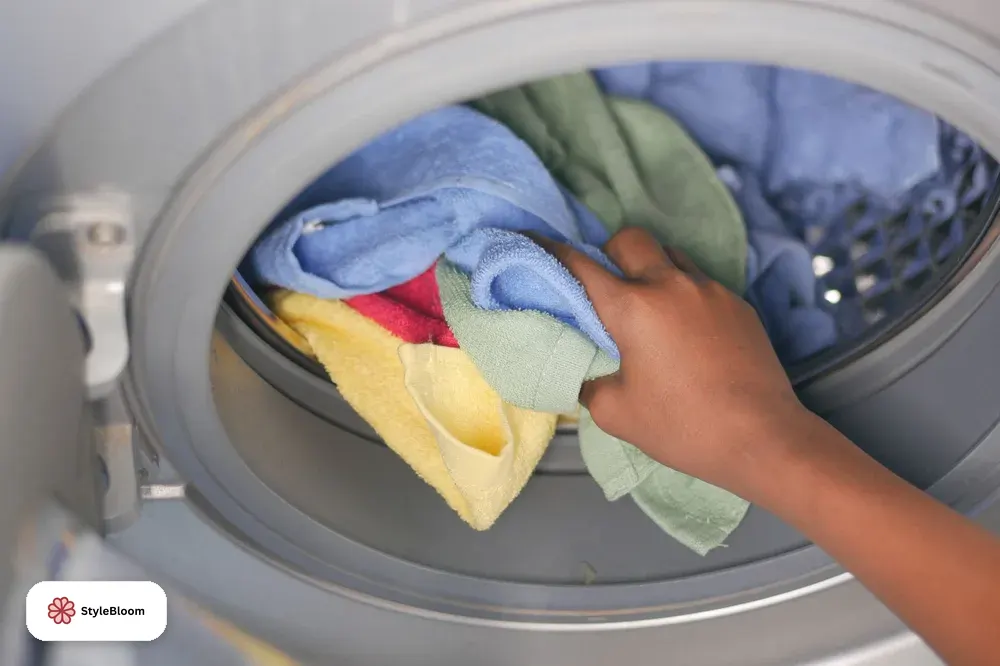
Method 3: oil and grease — cooking oil, butter, dressing, motor oil
Water alone will not touch grease. Grease clings to clothing because it is a lipid and it is insoluble in water, so rinsing it under the tap does nothing at all.
Blot up the excess oil, then sprinkle cornstarch, talc, baby powder or baking soda on the spot to absorb what has soaked in. Leave it for 10 to 15 minutes and brush it off — on a fresh stain you can watch the baking soda change colour as it pulls the oil out; scrape the first coating away and add a fresh one, and repeat until the powder stops turning brown. For a stubborn stain, talc works best left for a few hours, preferably overnight, somewhere warm, because warmth makes the powder more effective at absorbing the oil.
Then work a small drop of liquid dish soap directly into the stain and wait 5 minutes — dish soap is designed to cut grease, and it is the right tool here in a way laundry detergent is not. For motor oil, add a stain pretreater for 5 to 10 minutes before the wash, and do the same for olive oil that has already set. For tree sap, put the garment in a bag in the freezer for 1 to 2 hours, peel the sap off, then dab what is left with rubbing alcohol. For tar, scrape away the surface deposits with a blunt knife first, then work dish soap into what remains and wash at the highest temperature the care label allows.
Method 4: oil plus colour — makeup, ink, marker, nail polish
These stains hold both oil and dye, so the oil comes out first and the colour second.
For lipstick, sprinkle cornstarch over the mark, work in dish soap, then dab with rubbing alcohol on a cotton swab. For foundation, mascara and sunscreen, cornstarch and then dish soap, with a pretreater if the stain is old. Sunscreen deserves a warning of its own: some sunscreens leave an orange discoloration where the minerals in the product react with the fabric, and that orange mark is a mineral reaction, not dirt — treat it as a rust-type stain, not an oil stain, and keep chlorine bleach away from it.
For ballpoint ink, place the stain face-down on a paper towel and dab the back with rubbing alcohol or alcohol-based hand sanitiser — the ink transfers down onto the towel, and you move to a clean section of towel as it lifts. Rinse and wash. For permanent marker, rubbing alcohol and dish soap, and an old mark gets acetone after the alcohol. For nail polish, dab acetone (nail polish remover) on a swab and blot often — but never use acetone on acetate, triacetate or modacrylic, because acetone damages them and acetate dissolves. For shoe polish, absorb the oil first, then dish soap. For crayon, scrape off what you can, lay brown paper over the mark and press with a warm iron so the paper soaks up the wax, then dish soap.
Method 5: mixed food — chocolate, tomato sauce, curry, gravy
Mixed food stains carry fat, protein and colour at the same time, so they need the methods combined. Chocolate is fat, protein and colour.
For chocolate, scrape off the hardened chocolate first — chill it if you need to, so it hardens enough to lift — then rinse from the back with cold water, work in dish soap to handle the cocoa oil, soak in cold water with detergent, and wash. For gravy and ice cream, scrape, rinse cold, dish soap, then an enzyme cleaner for 10 minutes. For tomato sauce, curry and BBQ sauce, scrape, rinse cold, dish soap, then the vinegar mix. Once set, start with a 30 to 60 minute oxygen bleach soak, then the enzyme cleaner or the vinegar.
Tomato deserves its own note because it is the stain people meet most often in the kitchen, and the method is the same whether it is sauce, ketchup or soup: scrape off the excess, rinse from behind with cold water, work in dish soap or detergent, and add a little white vinegar for the acidity and colour. Wash cold and check before drying, because the pigment can linger after the oil is gone. The full step-by-step for tomato alone is in our guide to removing tomato stains, including the version for dried tomato on a white shirt.
Method 6: soil and plant — grass, mud, soot, pollen, paint
Grass is the hardest stain in this family because it is pigment and protein together, and both bind tightly to natural fibres. Pretreat with liquid detergent or a paste of baking soda and water, let it sit 15 minutes, then wash in the warmest water the fabric allows. For a stubborn stain on whites, dab hydrogen peroxide — test first — and white vinegar also helps break the chlorophyll down. For a set grass stain, start with an oxygen bleach soak.
Mud is the opposite of what most people expect: do not touch it while it is wet. Let it dry completely, then brush or scrape away the loose soil, rinse cold, add dish soap and wash. Smearing wet mud across the fabric drives it into the weave and turns a small mark into a large one. A set mud stain gets a soak first — one quart of warm water with half a teaspoon of liquid dish detergent and one tablespoon of vinegar, for 15 minutes — then a rinse and a wash with an enzyme product.
For soot, scrape off the loose soot, then dish soap and a warm wash. For smoke, dab with the vinegar mix, then a warm wash. For pollen, lift it off with the edge of a card — never brush it, because brushing drives the grains into the weave — then dish soap. For water-based paint, rinse cold while it is still wet, then dish soap. Oil-based paint is a different problem: pretreat with a solvent recommended on the paint container, or mineral spirits if none is given, rinse thoroughly to remove all solvent before the garment goes anywhere near a washer or dryer, then pretreat with a stain remover or detergent and wash. Solvents and washer heat together are a fire risk, so the rinse step is not optional.
Method 7: special cases — rust, mildew, wax, gum, deodorant, glue, scorch
These stains do not fit the four families, and each one has a method that looks wrong until you know why it works. Rust is a mineral, not a colour, so it needs a mineral treatment: saturate the mark with lemon juice and leave it in sunlight for 30 minutes, then wash. Whites only, since sunlight can fade dyes. Never use chlorine bleach on rust — it can make the rust permanent.
Mildew needs speed, because mildew damages fabric and sometimes cannot be removed at all. Dab with white vinegar, soak in oxygen bleach for 30 to 60 minutes, then wash warm. For candle wax, rub with ice and scrape off the excess wax, place the stain between paper towels and press with a warm iron so the wax melts into the paper, then place the stain face-down on paper towels and sponge with rubbing alcohol. For chewing gum, rub with ice and scrape off the excess, or freeze the garment in a bag for 1 to 2 hours and peel the gum off, then dish soap. For deodorant marks, dab with the vinegar mix, then dish soap and a warm wash. For underarm yellowing, vinegar first, then a paste of oxygen bleach and a little water for 30 minutes, then a warm wash.
For glue, rinse or soak in cold water, then dish soap. For an iron scorch on white fabric, dab with 3% hydrogen peroxide and wash — an old scorch has damaged the fibres themselves, and no cleaner fixes that; a dry cleaner is the only honest next step.
Set-in stains: old, washed-in, and dryer-set
An old stain gets the deeper set-in steps, and the honest news comes first: results may be partial. A stain that went through a hot dryer has been heat-bonded to the fibres, and some of them will not come out fully.
For plant colour, dirt and sweat, soak the garment for 30 to 60 minutes in cool water with oxygen bleach dissolved in it — several hours to overnight for the worst cases — then wash again and air dry. For blood, egg and milk, soak in cold water for 15 to 30 minutes first, then apply an enzyme cleaner and wash. If the mark is still there, repeat the same safe treatment while you can still see the stain. Two or three patient soak-and-wash cycles lift stains that one aggressive attempt sets permanently.
A stain that has been washed has changed — detergent, minerals and heat can alter its appearance, so reassess what family it belongs to before you treat it again. If a safe home treatment has already failed twice, or the garment is valuable, vintage or structurally delicate, take it to a professional cleaner and tell them what caused the stain, how old it is and every treatment already tried.
When the fabric changes the steps
The methods above suit washable cotton, linen and most synthetics. Some fabrics need different handling, and the fabric rule overrides the stain rule every time.
Wool, silk and cashmere are protein fibres. No enzyme cleaners, which digest protein. No bleach. Cold water only. Silk also skips vinegar and lemon juice, which can lift its dyes. Leather and suede: blot gently, never soak or rub, then take the item to a leather specialist. Denim: wash inside out in cold water to protect the indigo, and expect dye transfer on the first few washes of a new pair. Activewear and rain jackets: skip fabric softener, because it clogs the breathable membrane and the water-repellent coating, and rinse thoroughly. Stretch fabrics with elastane: avoid treatments that weaken the elastic and follow the temperature limit on the label.
Dry-clean-only garments get one move at home: blot the excess without spreading it, and tell the cleaner what caused the stain and what products have already been applied. Do not experiment with water or solvent unless the label and the garment construction support it.
Keeping stains from setting: the routine that saves the most clothes
The best stain remover is a habit, not a product. Keep the kit in one place — the oxygen bleach, dish soap, white vinegar, baking soda, 3% hydrogen peroxide, enzyme cleaner, rubbing alcohol and cornstarch from the table above — so the first 60 seconds do not get lost looking for a bottle.
For a working household, the routine is one garment at a time, ten to twenty minutes a day: blot and rinse the fresh stain when it happens, pretreat it before the wash, check it while it is still damp, and never let a marked garment reach the dryer. That rhythm fits a cleaning schedule for working moms and a room-by-room deep cleaning checklist: the stain gets dealt with in its place, when it happens. Bedding follows the same rule, and anything that went past the sheets is covered in our guide to deodorizing a mattress.
Three habits stop most stains from ever setting. Do not overload the washer — clothes need room to move, and an overloaded load leaves detergent residue and half-treated marks behind. And wash school kits and work clothes the same day they are stained, because grass, mud, chocolate and ink are the stains that set fastest, and they are also the stains children bring home most often.
What to skip: the moves that set stains permanently
| What people do | Why it sets the stain | Do this instead |
|---|---|---|
| Hot water on blood, egg, sweat, coffee or wine | Heat cooks protein into the fibres and bonds pigment permanently | Cold water first, always, until the stain is identified |
| Boiling water poured on red wine | Heat sets tannin; every other method says cold only | Salt or baking soda to absorb, then the vinegar mix, then a cold wash |
| Rubbing the stain | Spreads it wider, pushes it deeper, frays the weave | Blot with a clean white cloth, from the outside toward the centre |
| Drying before checking | Dryer heat bonds any surviving stain for good | Inspect while damp; air-dry anything still marked |
| Chlorine bleach as the first step | Makes sweat yellowing worse, can make rust permanent, toxic with ammonia or vinegar | Oxygen bleach — the safer all-rounder — and only where the label allows bleach |
| Mixing cleaners, or switching without rinsing | Bleach + ammonia releases chloramine gas; bleach + vinegar releases chlorine gas | One product at a time; rinse thoroughly before changing methods |
| Household ammonia on blood or urine stains | Ammonia + any bleach residue releases toxic gas; not needed — enzymes do the job | Cold water, then an enzyme cleaner |
| Extra detergent, or a stronger and stronger mixture | Leaves residue; repeated aggressive attempts damage the fabric | The normal dose; repeated safe attempts instead of one aggressive one |
| Scrubbing a delicate fabric with a brush | Distorts the surface and frays the weave | Work a pretreatment in gently with fingers, or leave delicates to a professional |
| Treating bleach damage as a stain | Bleach damage is missing dye, not dirt — no cleaner restores it | Repair or recolour; do not keep cleaning a spot that has no dye left |
One more skip: copying a household hack without checking the care label or the product instructions. Lemon juice and sunlight is a genuine method — on white cotton only. On a coloured shirt it bleaches the dye.
The method, in full
Match the method to the stain, lead with cold water and gentle blotting, and keep everything away from heat until the mark is truly gone. Identify the family — tannin, protein, oil, oil plus colour, mixed food, soil, or mineral — then blot, rinse from the back with cold water, treat with the method that fits, wash at the temperature the care label allows, and check the garment while it is still damp.
Verdict: Most stains come out when the method matches the chemistry and heat stays away until the end. Cold water and blotting for the first minute, the right treatment for the stain family, a wash at the label's temperature, and a check while the garment is still damp — that sequence saves more clothes than any product on the shelf. The stain was never the problem. The first response was.
What to try first: Blot the stain tonight, rinse it cold from the back for 30 to 60 seconds, and keep it damp in a plastic bag until you can treat it. Good looks like: the colour lifts a shade with the first treatment, the fabric feels clean under your fingers, and the mark is gone while the garment is still damp. If it fails: the stain is still there after two safe rounds — stop, let it dry, and take it to a cleaner before heat sets it. Learn next: Deep Cleaning Checklist: Room-by-Room Plan | StyleBloom — the deep cleaning checklist: a room-by-room plan for the whole house, with the laundry deep clean in its place.
Frequently asked questions
- What is the fastest way to remove an unknown stain?
- Check the care label, blot or lift the excess material, test colourfastness on a hidden seam, and start with cool water plus a small amount of liquid laundry detergent on a washable, colourfast item. Avoid heat, bleach and solvents until the stain is identified.
- Should I use hot or cold water on stains?
- It depends on the stain. Protein and pigment stains — blood, egg, sweat, coffee, wine — need cold water, because heat cooks the proteins and sets the colour permanently into the fibres. Greasy and oily stains respond better to warm water, which helps dissolve the fat. When unsure, start cold.
- Does the dryer make stains permanent?
- Dryer heat can make a remaining stain much harder to remove. Inspect the garment while it is still damp before heated drying, retreat it if the mark remains, and air-dry anything still marked until you are sure it is gone.
- Can I remove a stain after it has already been washed and dried?
- Sometimes, but the odds drop sharply once heat has bonded the stain. Before giving up, soak the garment in cold water with an oxygen-based stain remover for several hours to overnight, then wash again and air dry.
- Can I use bleach on a white shirt?
- Only if the care label and the bleach label allow it. A white garment is not automatically safe for chlorine bleach — fibre blends, finishes, thread, elastic and decorative parts can react differently from the main fabric.
- Can I mix stain removers?
- No. Use one product as directed, rinse thoroughly before changing methods, and never mix chlorine bleach with ammonia, vinegar, acids or another cleaner. Bleach mixed with ammonia releases chloramine gas, and mixed with vinegar or acids it releases chlorine gas.
- How do I remove blood from clothes?
- Rinse under cold running water from the back of the fabric. For what remains, dab 3% hydrogen peroxide on white or colourfast fabrics — test first, because peroxide can lighten colours — or rub in a little liquid soap. Soak in cold water for 30 minutes, then wash cold.
- How do I get grease out of clothes?
- Blot up the excess oil, sprinkle cornstarch, talc, baby powder or baking soda on the spot and leave it for 10 to 15 minutes, then brush it off. Work a small drop of liquid dish soap into the stain, wait 5 minutes, and wash in the warmest water the label allows.
- How do I remove red wine from clothes?
- Blot immediately and do not rub, then pile salt or baking soda over the wet spot and wait 5 minutes while it absorbs the wine. Brush it off, rinse from the back with cold water, dab with a 1:1 mix of white vinegar and water, wait 5 minutes, and wash cold.
- How do I remove ink from clothes?
- Place the stain face-down on a paper towel and dab the back with rubbing alcohol, moving to a clean section of towel as the ink transfers down onto it. Rinse and wash. Ink comes out in layers, so be patient.
- How do I remove sweat stains from white shirts?
- The yellowing is proteins and body oils reacting with aluminium in antiperspirant. Make a paste of baking soda and water, work it into the stain and leave it for 30 to 60 minutes, or use hydrogen peroxide on whites. For set-in yellowing, soak in warm water with oxygen bleach for a few hours, then wash normally.
- How do I remove grass stains?
- Pretreat with liquid detergent or a paste of baking soda and water, let it sit 15 minutes, then wash in the warmest water the fabric allows. For a stubborn stain on whites, dab hydrogen peroxide — test first — and for a set grass stain, start with an oxygen bleach soak.
- What is the single most useful stain remover to keep at home?
- An oxygen-based stain remover — the powder or liquid kind you add to a soak. It handles the widest range of stains safely on most coloured, washable fabrics.
- Can I use vinegar on all stains?
- No. White vinegar is right for tannin stains, sweat, deodorant and mildew, but it is wrong on silk (it can lift the dyes) and wrong mixed with chlorine bleach (it releases chlorine gas). Use it where the method calls for it, at the ratio the method gives, and never mix it with bleach.
- When should I take a stained garment to a professional cleaner?
- When the care label requires dry cleaning, when the garment is valuable, vintage or structurally delicate, when the stain is paint, adhesive, an unknown solvent or a large ink spill, when colour transfers during a hidden-area test, or when a safe home treatment has already failed. Tell the cleaner what caused the stain, how old it is and every treatment already tried.