
Best Walking Pad 2026: Which One Is Actually Worth It?
The WalkingPad C2 is the walking pad that the 2026 roundups keep ranking first — it folds in half, slides under a standing desk, and runs at roughly 48 dB, about the level of a soft conversation. The alternative is the UREVO CyberPad, for the quietest pad at under 35 dB, with a 14 percent auto incline.
By the end of this guide, you will know what a walking pad is, how much it costs, which one fits your height, your weight and your desk — and which one to buy instead if it does not, how to spot a dangerous pad, and how to use it so it lasts.
As an Amazon Associate, StyleBloom earns from qualifying purchases.
In a hurry? See the current price on Amazon.
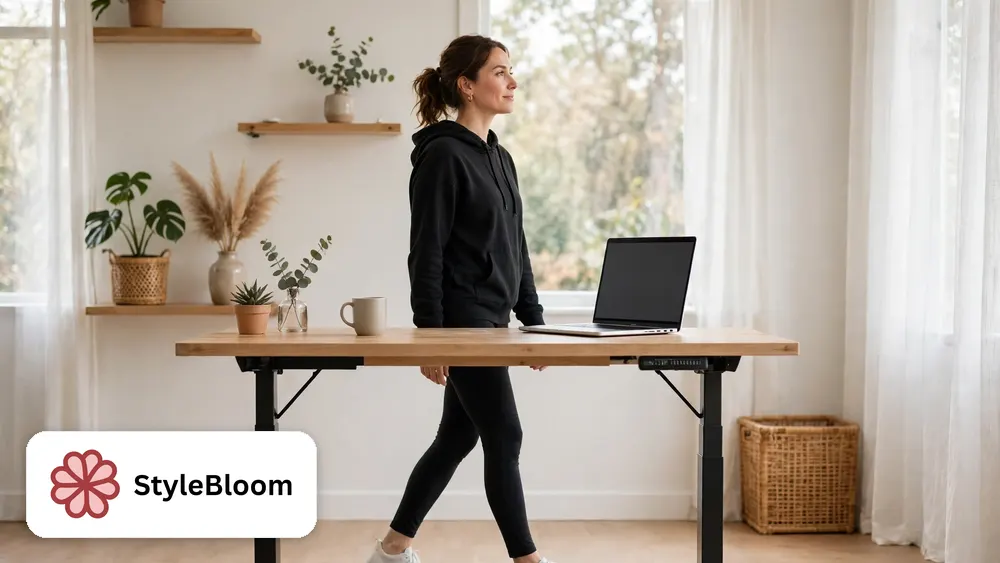
Photo: a botanical Christmas candle — one of the simplest cozy gifts that always works.
As an Amazon Associate, StyleBloom earns from qualifying purchases. This guide contains affiliate links — it costs you nothing extra and keeps our content free.
A walking pad is a slim, flat treadmill with no handlebars, no screen, and no incline on most models — a belt that slides under a standing desk so you can walk while you work. The reason it is one of the most-bought home fitness products right now is simple: it turns sitting into walking, and a pad that runs at 1 to 3 mph for hours a day adds thousands of steps without a workout. The catch is just as simple: it tops out around 3.7 to 4 mph, the 40-inch belt is short if you are tall, the listed weight capacity is inflated, and one brand — Sperax — carries a stop-use warning from the US Consumer Product Safety Commission. This guide works through both sides honestly, so you can decide with your eyes open.
Most walking pad articles either repeat the listing or bury you in ten machines. This one answers a single question — which walking pad is actually worth it for you — with the evidence buyers actually care about: which size fits your stride, which noise level works on calls, who it suits, who it fails, how to spot a dangerous pad, and when to buy a treadmill instead. Every specification below is attributed to the listing or the outlet that reported it. We did not run a lab, and this guide does not pretend otherwise. Check the live price on the product page before you order — prices move constantly, so we do not print them here.
The WalkingPad C2 is the best walking pad for most people. It folds in half, slides under a standing desk, and runs quietly enough for calls at desk pace — and it is the pad that four of the five 2026 roundups we checked rank first. If you want the quietest pad, buy the UREVO CyberPad instead — under 35 dB from a brushless motor, with a 14 percent auto incline. And one warning before you buy anything: do not buy a Sperax walking pad. The US Consumer Product Safety Commission warned in April 2026 to stop using Sperax pads immediately after 201 reports of sudden speed changes and abrupt stops, at least 66 injuries including a concussion, and 573 overheating and fire incidents. The company refused a recall, so there is no refund program. No Sperax machine appears in this guide's recommendations.
- The WalkingPad C2 is the best walking pad for most desk walkers — it folds in half, fits under a standing desk, and runs quietly enough for calls.
- A walking pad is a WALKING machine, not a treadmill — it tops out around 3.7 to 4 mph, has no handlebars, and most have no incline.
- Noise decides desk use — under 50 dB is call-safe, and the UREVO CyberPad is the quietest rated pad at under 35 dB.
- The 40-inch belt is short if you are over about six foot two — tall walkers need a 47-inch belt like the WalkingPad P1.
- Weight capacities are inflated — buy a pad rated well above your weight, and never buy a Sperax pad (CPSC stop-use warning, April 2026).
Quick verdict
The WalkingPad C2 is the best walking pad for most people. It is the pad that most of the 2026 roundups we checked rank first, and the reason is simple: it folds in half, it slides under a standing desk, it runs at roughly 48 dB — about the level of a soft conversation — and the belt is 16.5 by 40 inches, which fits a natural walking stride at desk pace.
The UREVO CyberPad is the best walking pad if noise is your top priority. It is rated under 35 dB from a brushless motor — quieter than a library reading room — and recent verified owners echo the spec: minimal noise, a smooth belt, and zero assembly. It also has a 14 percent auto incline, which is the feature that turns a walk into a workout.
The UREVO Strol 2E is the best walking pad for value. It is the most popular under-desk treadmill on Amazon right now, with over 11,000 verified reviews, and it runs under 45 dB at walking speeds.
The DeerRun Q1 Mini is the best walking pad on a tight budget. It is the cheapest starter pick in the 2026 roundups, at around a hundred and sixty, with a 39-inch belt and a 220-pound capacity. If the budget is under two hundred, buy the Q1 Mini. One warning: DeerRun sells several models with similar names — Q1 Mini, Q1 Classic, Q1 Urban — with different capacities and belt sizes, so check the exact model on the listing you order from. DeerRun's customer service also gets mixed reviews, so buy through Amazon for easy returns.
The Goplus 2-in-1 Treadmill is the best walking pad if you also want to jog. Most walking pads top out around 3.7 to 4 mph, which is a walk, not a run. The Goplus runs at 3.8 mph with the handlebars down and 7.5 mph with them up, and it carries 300 pounds.
What is a walking pad?
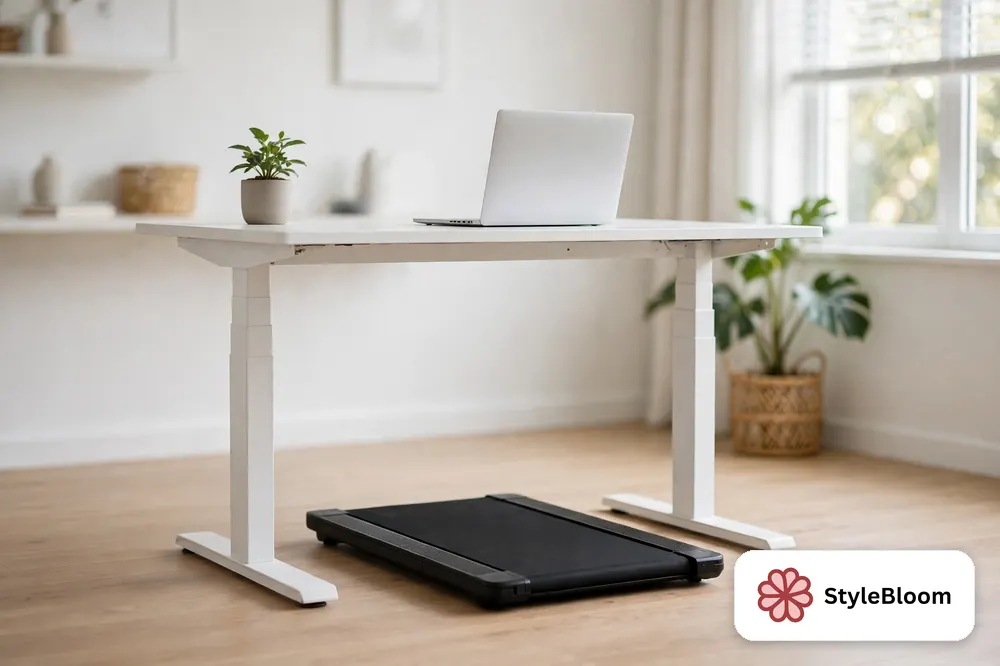
A walking pad is a slim, flat treadmill with no handlebars, no screen, and no incline on most models — a belt that slides under a standing desk so you can walk while you work. Most walking pads top out around 3.7 to 4 mph, which is a brisk walk, and they are built for 1 to 3 mph — the pace you can hold while typing, reading, or taking a call.
The difference between a walking pad and a treadmill is the job. A treadmill is built for running: it has handlebars, a screen, a higher top speed, and a longer belt. A walking pad is built for walking at your desk: it has no handlebars, it is slim enough to slide under a desk, it folds in half for storage, and it is quiet enough for calls.
The belt is the part that decides whether a walking pad fits you.
The motor is the part that decides whether a walking pad lasts. Under-desk treadmills run at 1.5 to 2.5 mph continuously for hours, and motor burnout is a real problem in this category — most reviews never address it. A cheap pad with a weak motor will burn out if you run it for hours every day, and the warranty is the part that tells you whether the maker knows it: the LifeSpan TR1200-DT3 carries a lifetime frame warranty, and the UREVO pads carry one year plus 180 days.
The honest rule for motors is to compare continuous horsepower, not the number on the box. The UREVO Strol 2E manual lists 550 watts of rated power, which is about 0.74 continuous horsepower, while the 2.25 HP on the box is a peak figure — that is normal for walking pads, but it is why long runs are not a 2-in-1's strength. The Cybergoing T10 does the same thing: the title advertises 2.5 HP, but the listing's own spec table shows 1 HP. The MERACH UltraWalk W60 is the honest exception — MERACH rates it at 1.25 continuous HP and 3.5 HP peak, and that continuous figure is well above the Strol 2E's 0.74.
The noise is the part that decides whether a walking pad works at your desk. A pad that runs at 65 dB is too loud for calls — the WalkingPad C2 is rated around 48 dB in one guide and 65 dB in another, and the difference is the speed and the surface, so treat every noise number as a claim, not a fact. Under 50 dB is call-safe, and the CyberPad at under 35 dB is the quietest rated pad.
How we picked these (honest version)
The payoff for walking while you work is backed by real data. A UMass Amherst study followed about 2,100 adults aged 38 to 50 for nearly 11 years, and those who took at least 7,000 steps a day had a 50 to 70 percent lower risk of early death than those who took fewer. The independent verdicts line up behind the picks here too: Garage Gym Reviews names the WalkingPad P1 the best overall under-desk treadmill and the UREVO Strol 2E the best foldable under-desk treadmill. And Consumer Reports adds a warning the roundups repeat: many walking pads it tested had decks so short or narrow that it was easy to step off the belt and lose your balance. One rule from the 2026 guides governs every number in this article: when two sources list different figures, we use the more conservative one — that matters most for weight limits, where an inflated figure can lead to early wear or a fall.
We did not run a lab, and this guide does not pretend otherwise.
The second source is the 2026 roundups we read in full: myactivetribe, fitfixlife, fitnessvolt, talkgyms, rigworthy, fitrise and besthealthncare. We do not print product prices in this guide, because prices move weekly on Amazon — check the live price on the listing before you order.
The third source is the safety record. In April 2026, the US Consumer Product Safety Commission warned consumers to stop using Sperax walking pads immediately — the red flags section names the warning in full. No Sperax machine appears in this guide's recommendations, and the red flags section names the warning in full.
The fourth rule is one job per pick.
At a glance: the best walking pads
| Walking pad | Best for | Standout spec | Amazon |
|---|---|---|---|
| WalkingPad C2 | Most desk walkers | Folds in half, ~48 dB, 40-inch belt | See the current price on Amazon |
| UREVO CyberPad | Quietest + incline | Under 35 dB, brushless, 14% auto incline | See the current price on Amazon |
| UREVO Strol 2E | Best value | 11,000+ verified reviews, under 45 dB | See the current price on Amazon |
| DeerRun Q1 Mini | Best budget | Cheapest starter pick, 39-inch belt | See the current price on Amazon |
| Goplus 2-in-1 Treadmill | Walking + jogging | 3.8 mph walking, 7.5 mph jogging, 300 lb | See the current price on Amazon |
| UREVO SpaceWalk 5L | Incline + heavier users | 12% auto incline, 320 lb capacity | See the current price on Amazon |
Best for: most desk walkers — the WalkingPad C2 folds in half, slides under a standing desk, and runs quietly enough for calls.
Best for: the quietest pad — the UREVO CyberPad runs under 35 dB from a brushless motor, with a 14 percent auto incline.
Best for: the best value — the UREVO Strol 2E is the most popular under-desk treadmill on Amazon, with over 11,000 verified reviews.
Best for: a tight budget — the DeerRun Q1 Mini is the cheapest starter pick, with a 39-inch belt and a 220-pound capacity.
Best for: walking plus jogging — the Goplus 2-in-1 runs at 3.8 mph with the handlebars down and 7.5 mph with them up.
Best for: incline plus heavier users — the UREVO SpaceWalk 5L has a 12 percent auto incline and a 320-pound capacity.
What buyers actually say
Buyers love the WalkingPad C2 for one reason: it folds in half and disappears. The reviews in the 2026 roundups describe the same pattern — a buyer slides it under a standing desk in the morning, folds it against the wall at night, and walks 1 to 3 hours a day without thinking about it.
The second thing buyers say is about the noise. The keyword data asks about noise in the desk group 109 times, and the reviews tell the same story: a pad that is quiet at 2 mph is loud at 3.5 mph, and a pad that is quiet on carpet is loud on a hard floor.
The third thing buyers say is about the weight. The keyword data asks about weight 109 times, and the reviews tell the same story: the listed capacity is inflated, and a pad rated at 220 pounds struggles at 200.
The honest strengths
The first strength is the movement. A walking pad turns sitting into walking, and the evidence is clear: treadmill desks raise energy expenditure and reduce sitting time, and a pad that runs at 1 to 3 mph for hours a day adds thousands of steps without a workout.
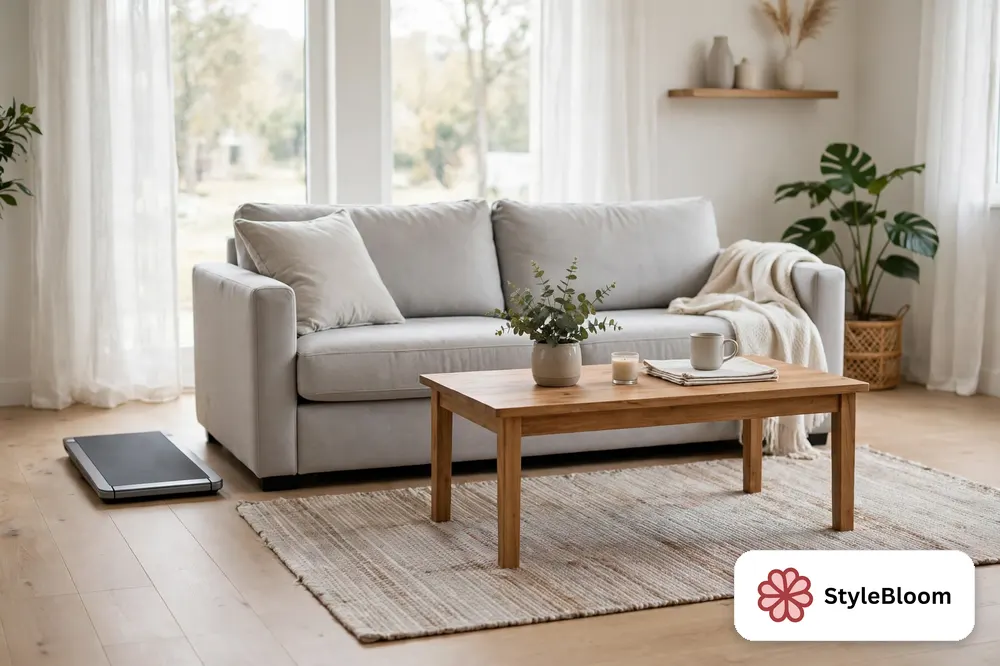
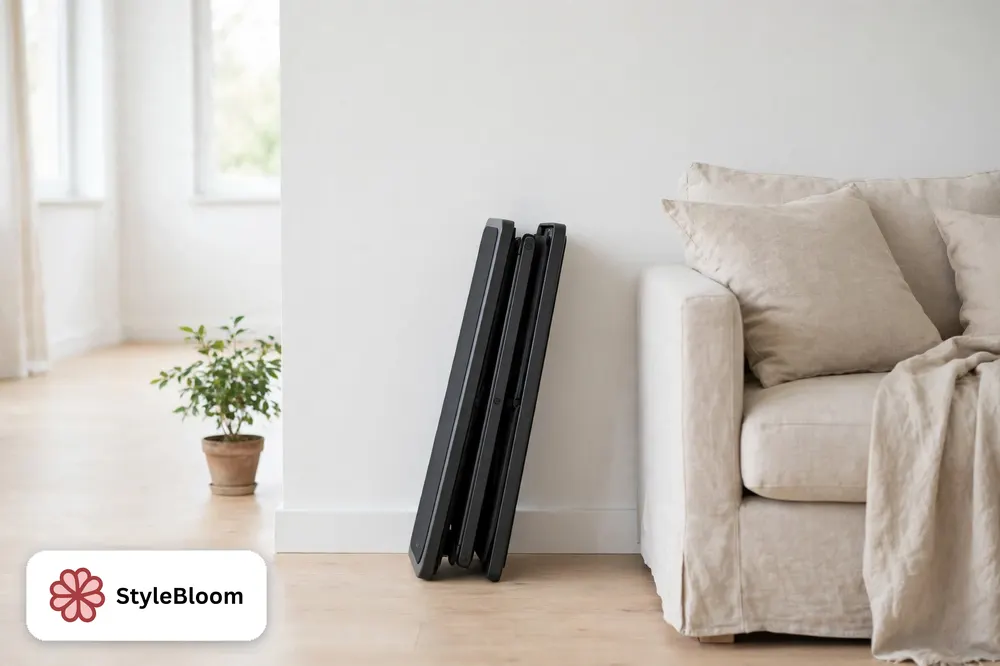
The second strength is the storage. A walking pad folds in half and slides under a bed, against a wall, or under a sofa — and the C2 is the pad that does it best, with a fold-in-half hinge that tucks it away in seconds. The audience for this guide is renters in small homes under about 600 square feet, and the walking pad is the renter's treadmill: it does not need a room, it does not need assembly, and it does not need a landlord's permission. The small bedroom storage ideas guide is the one to read for the room it lives in. Folded, the C2 is about 32.5 by 20.4 inches and 5.4 inches thick — closer to a large suitcase than a treadmill — and the Z1 folds to about 31.8 by 22 inches. Flat pads slide under furniture, but measure the height under your bed or couch first, including any centre support legs, and leave clear space behind the belt in case you step off the back.
The third strength is the quiet. A walking pad runs at 35 to 48 dB at desk pace — about the level of a soft conversation — and the CyberPad at under 35 dB is quieter than a library reading room.
The honest weaknesses
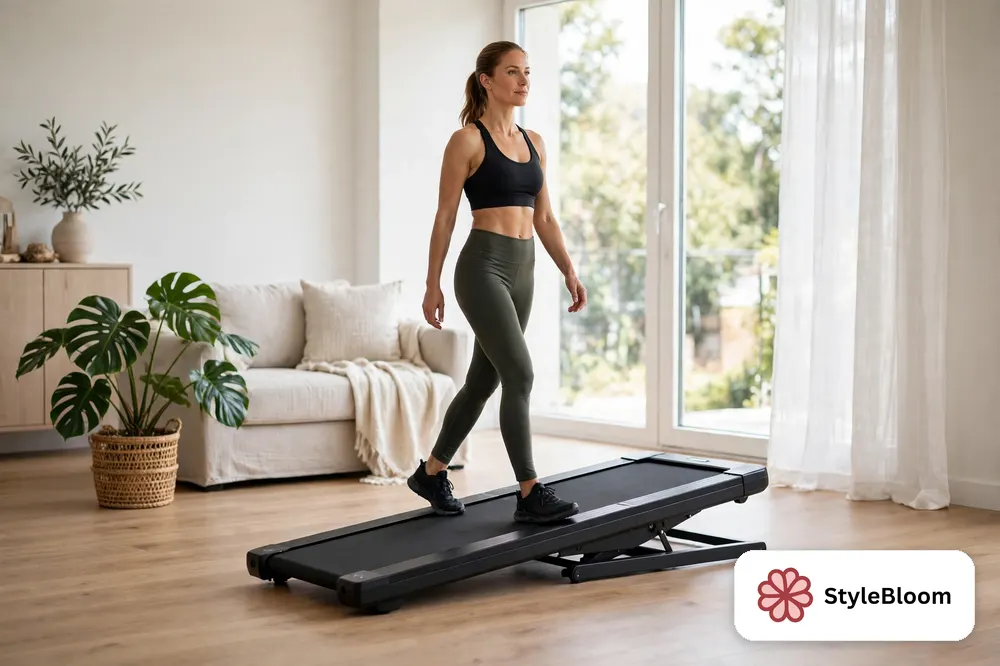
The first weakness is the speed. The honest answer is no: a walking pad is a walking machine, and if you want to run, buy a treadmill. The Goplus 2-in-1 is the exception — 7.5 mph with the handlebars up — and the UREVO Strol 2E Pro is the other one, at 6.2 mph with its handle raised.
The second weakness is the belt. Most walking pads have a 40-inch belt, which is short if you are over about six foot two, and the fix is to buy the WalkingPad P1 — a 47-inch belt for tall walkers, at a premium price. Measure your stride before you buy, and buy the belt that fits your height, not the belt that fits your budget.
The third weakness is the motor. The fix is to buy a pad with a brushless motor and a real warranty, and to never buy a pad with no warranty at all.
The fourth weakness is the weight capacity. The listed capacity is inflated, and a pad rated at 220 pounds struggles at 200 — the reviews say it plainly, and the keyword data asks about weight 109 times because buyers keep discovering it.
Who it is best for
A walking pad is best for a woman who works from home and wants to move without leaving her desk.
A walking pad is best for a renter in a small home. It folds in half and slides under a bed, against a wall, or under a sofa — and the best u-shaped modular sofa guide is the one to read for the room it lives in.
A walking pad is best for a walker who takes calls all day. The CyberPad is the call-safe pad — under 35 dB from a brushless motor, quieter than a library reading room — and the GoYouth is the Zoom-heavy pick, with 100 percent positive sentiment across 34 Reddit comments.
Who should skip this
Skip the walking pad if you want to run. The honest answer is no: a walking pad is a walking machine, and if you want to run, buy a treadmill.
Skip the walking pad if you are over about six foot two and you buy a 40-inch belt. Measure your stride before you buy, and buy the belt that fits your height.
Skip the walking pad if you need handlebars. A walking pad has no handlebars, no screen, and no incline on most models — and a walker who needs something to hold should buy a treadmill, not a pad. The Goplus 2-in-1 has handlebars that fold up for jogging, and the Sunny Treadpad Slim has fixed handlebars for balance — the two picks in this guide that hold you. If you need to hold on, buy the Goplus for jogging or the Sunny for steady walking, or buy a treadmill.
Skip the walking pad if you want a structured workout. A walking pad raises energy expenditure and reduces sitting time, but the best evidence does not turn it into a replacement for structured cardio or strength training. The best diffuser oil guide is the one to read for the room the pad lives in, and the pad is the one that moves you through it.
Skip the walking pad if you cannot verify the seller. A walking pad bought from a marketplace seller with no reviews, no returns and no warranty is a gamble, not a purchase.
Red flags
The first red flag is a Sperax walking pad. In April 2026, the US Consumer Product Safety Commission warned consumers to stop using Sperax walking pads immediately after 201 reports of sudden speed changes and abrupt stops, at least 66 injuries including a concussion, and 573 overheating and fire incidents, including four burns. The company refused a recall, so there is no refund program. No Sperax machine appears in this guide's recommendations, and no Sperax machine should appear in your home. One 2026 roundup still names a Sperax pad its best overall with 4.8 out of 5 — a listing that ranks a warned-against machine first is a listing you cannot trust.
The second red flag is a weight capacity with no margin. A walking pad rated at 220 pounds that struggles at 200 is a pad with an inflated capacity, and the reviews say it plainly. The fix is to buy a pad rated well above your weight — the SpaceWalk 5L at 320 pounds, the MERACH UltraWalk W60 at 330 pounds sustained (400 pounds peak), or the Trailviber at 450 pounds — and to treat the listed capacity as a maximum, not a target.
The third red flag is a pad with no remote. A walking pad that only works through an app is a pad that stops working when the app does — and the app is the part that breaks first. The fix is to buy a pad with a remote in the box, and to never buy a pad that only works through a phone.
The fourth red flag is a noise claim with no number. A walking pad that says "quiet" without a decibel number is a marketing claim, not a specification.
Setting it up: the first use
Apartment buyers face two kinds of noise, and a quiet motor only solves the first. The motor and belt noise travels through the air, which a roommate or someone on your call can hear. The second is impact noise: every footstep thumps into the floor and travels into the unit below, and no decibel number on a listing tells you how loud the footsteps will be downstairs. To keep the people downstairs happy, put a dense rubber equipment mat under the pad, walk instead of running, wear cushioned shoes, and avoid early mornings and late nights, especially if your floor is above a bedroom. Two more apartment rules from the 2026 guides: plug the pad directly into a wall outlet, not an extension cord or power strip, unless the manual allows it, and do not run it on the same circuit as a space heater. For safety, look for an easy stop button or remote and a safety key or auto-stop feature if you have kids or pets, unplug the machine when you are not using it, and never leave it running unattended.
The first use of a walking pad is the mat. Put a mat under the pad before you walk on it — a walking pad on a hard floor is louder than the same pad on carpet, and the mat is the part that decides whether it works at your desk.
The second step is the desk. Measure the desk at its lowest height, measure the pad at its tallest, and check that the pad clears the desk before you buy. A pad also raises you a few inches, so the desk must rise to match — your elbows should sit at about 90 degrees when you type, and a desk that is too low leads to hunching. The LifeSpan's step-up height is 4.6 inches, which is the number to check against your desk's maximum. The microfiber cleaning guide is the one to read for the cloth that cleans the pad without scratching it.
The third step is the call test. Walk on the pad during a call in the first week, and ask your colleagues whether they hear it. If your colleagues hear it, return it.
The fourth step is the stride. Walk on the pad at 2 mph for ten minutes, and check whether your stride feels natural. A 40-inch belt is short if you are over about six foot two, and a shortened stride is a sore knee.
How to use and care for it
Use a walking pad by walking at 1 to 3 mph while you work — the pace you can hold while typing, reading, or taking a call. The best body care set guide is the one to read for the lotion that goes on your feet after a long walk, never before it.
Care for a walking pad by lubricating the belt. The belt is the part that wears first, and a dry belt is a loud belt — and a loud belt is a burned-out motor. Lubricate the belt every month if you walk every day, and check the listing for the lubricant the maker recommends. UREVO asks for lubricant every 125 miles — at 2 mph for two hours a day, five days a week, that is about 20 miles a week, so roughly every six weeks — and the fold hinge on a folding pad is one more durability point to watch.
Do not run a walking pad for hours without a break. Give the motor a break every hour, and let it cool before you walk again.
When to spend more: the alternatives
Spend more on the LifeSpan TR1200-DT3 if you want the best walking pad for all-day use. The honest caveat is the price: it costs more than three C2s, and it is the pad for a buyer who walks all day, every day, and wants a machine that lasts. The belt is 20 by 50 inches — the widest and longest here — it carries 350 pounds, and the warranty is a lifetime frame with three years on the motor, two on parts and one on labour. The trade-off is size: 63 by 28.5 inches and about 114 pounds, it does not fold and it needs a dedicated spot under a standing desk, with its own separate console. See the current price on Amazon.
Spend more on the WalkingPad Z1 if you want the best walking pad under a standing desk. The 2026 guides rank it as the best under-desk pick — quiet enough for calls, with a 47.6-inch belt — the longest folding-pad belt in this guide — that is 15.7 inches wide, and a brushless motor that runs quieter than the P1's brushed one. It folds in half, stands only 4.1 inches tall when open, weighs about 50 pounds, and supports up to 242 pounds. See the current price on Amazon.
Choose between the Z1 and the P1 by what you value most. The Z1 is lighter, slimmer and longer, and it has a brushless motor: it folds in half, stands only 4.1 inches tall when open, weighs about 50 pounds, and supports up to 242 pounds — but its 1 mph minimum feels fast if you want an ultra-slow, all-day stroll. The P1 is wider at 16.5 inches and starts slower at 0.5 mph, which suits a careful first week, and it has been on sale since 2019, the longest track record here. One honest note on the numbers: the P1's 1,243 Amazon ratings are grouped across several WalkingPad models, so not every rating refers to the P1 alone.
Spend more on the WalkingPad P1 if you are over about six foot two. The P1 is the tall-user pick in the 2026 roundups — a 47-inch belt — one of the longest in this guide, and the widest of the folding pads at 16.5 inches, where the Z1's belt is a fraction longer at 47.6 inches but narrower at 15.7 — for a natural stride at desk pace. The honest caveat is the price: it costs more than the C2, and it is the pad for a tall walker, not a short one. Its motor is brushed, so expect a little more hum than the Z1's brushless one. See the current price on Amazon.
Spend more on the Trailviber Walking Pad if you are a heavier walker who wants an incline. The Trailviber is the heaviest-capacity pick in the 2026 roundups — 450 pounds, the only genuinely safe option for heavier users over 300 pounds, with a 12 percent auto incline. The honest caveat is the size: it is a bigger pad than the C2, and it needs more room to run and to store. And use the incline after work, not during it — an incline changes your posture and your foot strike, which makes typing awkward, so treat the incline as an off-keyboard feature. The Egofit's fixed 5 percent grade is the exception, because it is built into a slow, quiet walk. See the current price on Amazon.
Spend less on the Egofit Walker Pro if your room is the constraint. It takes up less than six square feet of floor — the smallest footprint in the 2026 roundups — with a short 34-inch deck, a 2.0 HP motor and, unusually for something this small, a fixed 5 percent incline that raises the burn at a slow, quiet speed. It tops out at 3.1 mph, holds up to 220 pounds, and arrives pre-assembled with an LCD readout plus app and remote control. The catch is the deck: 34 inches is the shortest here, so it fits shorter users and smaller strides best, and you pay a premium for the compactness. Spend less on the Yagud Walking Pad if you want the cheapest way in. It is the lowest-priced starter pick in the 2026 roundups — a simple flat design that slides away easily — and the honest way to buy it is as a trial: find out whether you will actually walk while you work before you spend more.
Spend more on the Sunny Health & Fitness Treadpad Slim if you want handlebars for balance. It suits older adults and anyone new to walking pads: fixed handlebars, speeds up to 6.0 mph, and a SunnyFit app with more than 1,000 workouts and 10,000 virtual routes. The safety features are the real reason to buy it — the belt pauses after five seconds without a user, it has a safety clip, and an energy-saving mode kicks in after ten minutes idle. It holds a 4.3 rating from 954 Amazon ratings, the best among the pads here with more than 900 ratings, but the belt is narrow at 14.2 inches and it is the heaviest pad here at 66 pounds. It arrives fully assembled with built-in transport wheels. Spend more on the HADMAX H100 if you want the pad a 90-day test actually walked on. The finforum test ran it at 1.8 mph for 90 minutes while editing an article: a 3.0 HP brushless motor that stayed under 45 dB on a decibel app held six inches from the belt housing, a manual 10 percent incline, a height-adjustable handlebar, a magnetic remote, and a 300-pound capacity with a two-year warranty.
Spend more on the MERACH W50 if you want the app-friendly pick. Its app ecosystem is stronger than the generic pads, the design is modern, and the tracking helps some users build a daily walking habit during work blocks — but belt fit, noise and storage still matter more than digital extras, so do not let the app distract you from the basics. Spend less on the PACEROCKER if you want heavy-duty incline value: a 12 percent auto incline with more capacity margin than a basic flat pad, similar in appeal to the Trailviber, though its brand support is less established than the premium names. The 2026 lists name two more budget picks worth knowing: the FUNMILY Walking Pad, a budget pad with a 5 percent fixed incline and a 300-pound capacity that reaches 5 mph, and the UREVO E4W, the design pick with a wood-style finish.
Spend more on the UREVO Strol 2E Pro if you want real incline and the option to jog in one compact frame. It adds a 12 percent incline and a fold-down safety handle, runs up to 6.2 mph, and its remote has a one-key mute. It carries 2,206 Amazon ratings — the most on this list — but its 4.0 rating is the lowest here and its belt is short at 36.6 inches. One honest conflict: the Amazon listing says 265 pounds while UREVO's own site lists 300 pounds, so plan around 265 to be safe. With the handle folded it works as a 0.6 to 4 mph desk walker; raise the handle and running mode reaches 6.2 mph. The standard Strol 2E deserves its own note: eight silicone shock absorbers plus two rubber pads, a five-layer anti-slip belt, and a remote with a magnetic back that sticks to the frame.
Spend more on the MERACH UltraWalk W60 if you want the biggest honest capacity. The W60 is the heavy-duty pick in the 2026 roundups — MERACH lists 400 pounds as the peak capacity and 330 pounds as the sustained capacity, so plan around 330 pounds for daily use, which is still the biggest sustained figure in this guide. The honest caveat is the same as the honest strength: the capacity is real, the margin is real, and the price is higher because the motor is bigger. Buy it if you need the capacity, not the name. See the current price on Amazon.
What to try first: Put a mat under the pad, slide it under your standing desk, and walk at 1 mph for ten minutes. Good looks like: a stride that feels natural, a belt that does not slip, and a call your colleagues cannot hear. If it fails: the belt feels short or your colleagues hear it — re-pick by the alternatives section. Learn next: Small Bedroom Storage Ideas — the system that puts the pad away when the workday ends.
Frequently asked questions
- What is a walking pad?
- A walking pad is a slim, flat treadmill with no handlebars, no screen, and no incline on most models — a belt that slides under a standing desk so you can walk while you work. Most walking pads top out around 3.7 to 4 mph, which is a brisk walk, and they are built for 1 to 3 mph — the pace you can hold while typing, reading, or taking a call.
- Which is the best walking pad?
- The WalkingPad C2 is the best walking pad for most people — it folds in half, slides under a standing desk, and runs quietly enough for calls at desk pace, and four of the five 2026 roundups we checked rank it first. The UREVO CyberPad is the quietest, at under 35 dB, and the UREVO Strol 2E is the best value, with over 11,000 verified reviews.
- How much is a walking pad?
- A walking pad costs from around a hundred and sixty for the DeerRun Q1 Mini to around four hundred for the WalkingPad C2, and more than a thousand for the LifeSpan TR1200-DT3. Prices move weekly on Amazon, so we do not print product prices in this guide — check the live price on the listing before you order.
- Is a walking pad worth it?
- A walking pad is worth it if you work from home and you want to move without leaving your desk — it turns sitting into walking, and it adds thousands of steps without a workout.
- Can you run on a walking pad?
- No, not on most walking pads. Most walking pads top out around 3.7 to 4 mph, which is a walk, not a run. The Goplus 2-in-1 Treadmill is the exception — it runs at 7.5 mph with the handlebars up — and it is the only pick in this guide that jogs. If you want to run, buy a treadmill.
- Is a walking pad as good as a treadmill?
- A walking pad is not as good as a treadmill for running, and a treadmill is not as good as a walking pad for walking at your desk. A treadmill is built for running: it has handlebars, a screen, a higher top speed, and a longer belt. A walking pad is built for walking at your desk: it is slim, it folds in half, and it is quiet enough for calls.
- How long does a walking pad last?
- A walking pad lasts as long as its motor lasts — and motor burnout is a real problem in this category. A brushless motor lasts longer than a brushed motor, a pad that is lubricated lasts longer than a pad that is not, and a pad with a real warranty lasts longer than a pad with none. The LifeSpan TR1200-DT3 carries a lifetime frame warranty, and the UREVO pads carry one year plus 180 days.
- What is the best walking pad for under a desk?
- The WalkingPad Z1 is the best walking pad for under a standing desk — quiet enough for calls, with a 47.6-inch belt — the longest folding-pad belt in this guide — that is 15.7 inches wide, and a brushless motor that runs quieter than the P1's brushed one. The WalkingPad C2 is the best overall, and the UREVO CyberPad is the quietest, at under 35 dB.
- Where can I buy a walking pad?
- Buy a walking pad from a verified seller on Amazon, and keep the receipt. A walking pad bought from a marketplace seller with no reviews, no returns and no warranty is a gamble, not a purchase. Never buy a Sperax walking pad — the US Consumer Product Safety Commission warned in April 2026 to stop using them immediately.
- Do walking pads work on carpet?
- A walking pad works on carpet, but it is quieter on carpet than on a hard floor — and the mat is the part that decides whether it works at your desk. Put a mat under the pad before you walk on it, and test it on a call in the first week. If your colleagues hear it, return it.
- How much weight can a walking pad hold?
- Most walking pads are rated at 220 to 300 pounds, but the listed capacity is inflated — a pad rated at 220 pounds struggles at 200.
- What is the difference between a walking pad and an under-desk treadmill?
- There is no difference — a walking pad and an under-desk treadmill are the same machine. A walking pad is a slim, flat treadmill with no handlebars that slides under a standing desk. The name changes, the machine does not — and the picks in this guide are the same either way.