Small Bedroom Storage Ideas: Under-Bed, Over-Door and the Nightstand Rule
Small bedroom storage ideas for tiny rooms and studio corners: under-bed zones, over-door helpers and the one-tray nightstand rule that keeps the calm in the room you wake up in.
- Start under the bed — 25 to 35 square feet of storage you already own.
- The one-tray nightstand rule keeps the room you wake up in calm.
- Over-door hooks beat wall shelves for renters; low flat bins keep under-bed tidy.
- Small closets need the same zone system as big ones, just tighter.
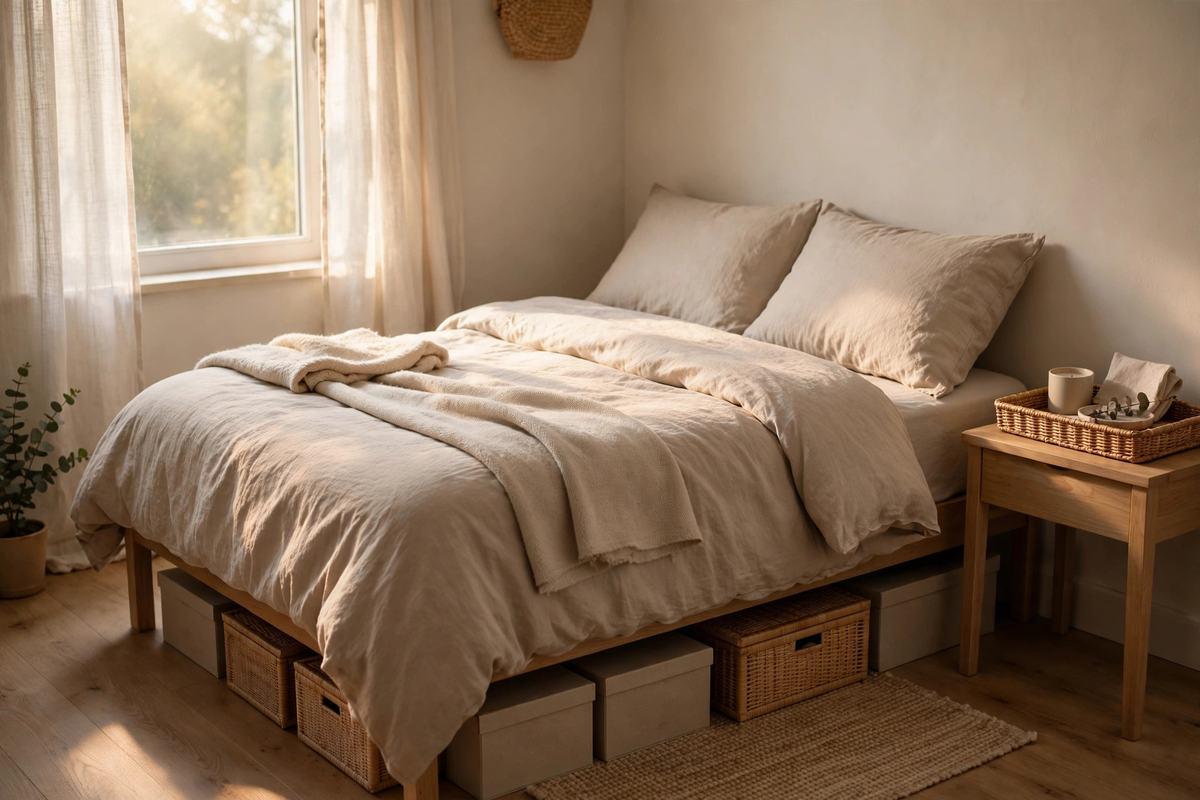
Small cozy bedroom with under-bed storage boxes and a tidy nightstand
The best small bedroom storage ideas use three zones you already own: the 25 to 35 square feet under your bed, the vertical strip above and behind your doors, and the 12 inches of your nightstand. Start under the bed with low flat bins (one for out-of-season clothes, one for spare bedding), move tomorrow's outfit and bags onto over-door hooks, and keep the nightstand to a single tray. That is the whole system — and it works in rooms as small as 8 by 10 feet.
Small bedroom storage ideas: where should you start first?
Start under the bed, not in the closet. The under-bed zone is the largest unused surface in most small bedrooms, and it is already yours — no drilling, no new furniture, no landlord permission. Measure the clearance first: most bed frames give you 6 to 8 inches, which fits low-profile fabric bins or vacuum-seal bags but not standard storage tubs. If your bed sits directly on the floor, 4-inch risers buy you a full storage drawer's worth of height for the price of a coffee.
How do I use under-bed space without it becoming a junk drawer?
Zone it, or it becomes a graveyard. Three bins, three jobs: out-of-season clothes in vacuum-seal bags (they compress bulky knits to about a third of their volume), spare bedding in one lidded box, and a single 'overflow' bin for everything else. Label the end of each bin that faces outward — you will never pull out three bins to find the one you want if the labels face you. The mistake most people make is buying the bins before deciding what goes in them; decide the categories first, then buy containers to fit.
What is the one-tray nightstand rule?
Everything on your nightstand must fit on one tray — book, water glass, charger, lip balm, hand cream. That is it. A tray corrals small items so the surface reads as styled instead of scattered, and the 2 a.m. water grab never knocks your phone onto the floor. If it does not fit on the tray, it lives somewhere else: chargers go in a drawer, the novel you finished goes back to the shelf. In a room you see first thing every morning, the nightstand sets the emotional tone for the whole space.
Over-door hooks or wall shelves — which is better for renters?
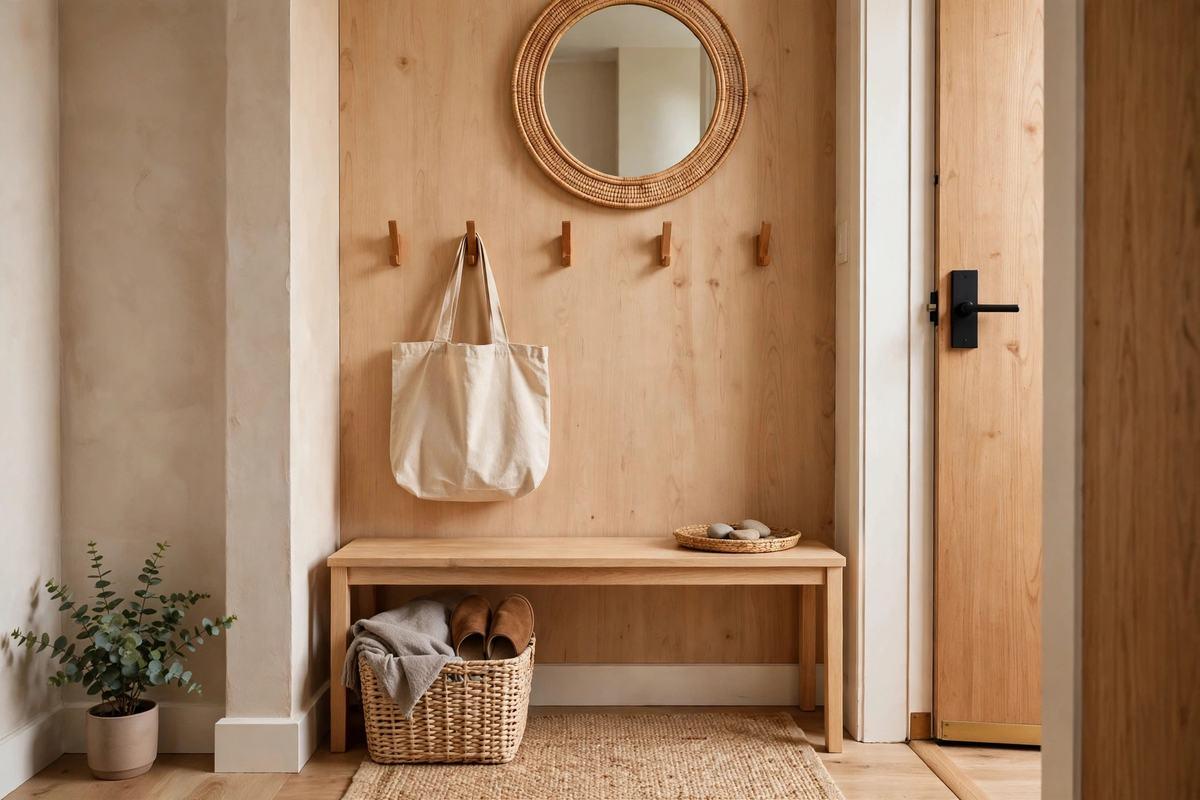
Over-door hooks win for renters, wall shelves win for owners. An over-door hook rack holds tomorrow's outfit, your robe and your tote bag with zero holes in the wall, and moves with you when the lease ends. If you own or your landlord allows small anchors, one slim shelf mounted above the door frame holds two storage boxes in dead space nobody uses — that is roughly 4 cubic feet of storage that costs you zero floor area. Either way, the principle is the same: in a small bedroom, storage goes vertical or it does not go at all.
Three mistakes that make small bedrooms feel smaller
First: storing 'someday' items in prime zones. The under-bed area is your most valuable real estate — it should hold things you touch monthly, not boxes you have not opened since moving in. Second: open shelving without bins. Open shelves in a tiny bedroom double as visual noise; every shelf needs a basket or the room looks busier, not tidier. Third: letting the floor become storage. The moment bags, shoes and laundry live on the floor, the room reads as half its size. Nothing lives on the floor except the bed — that single rule changes everything.
What about the closet?
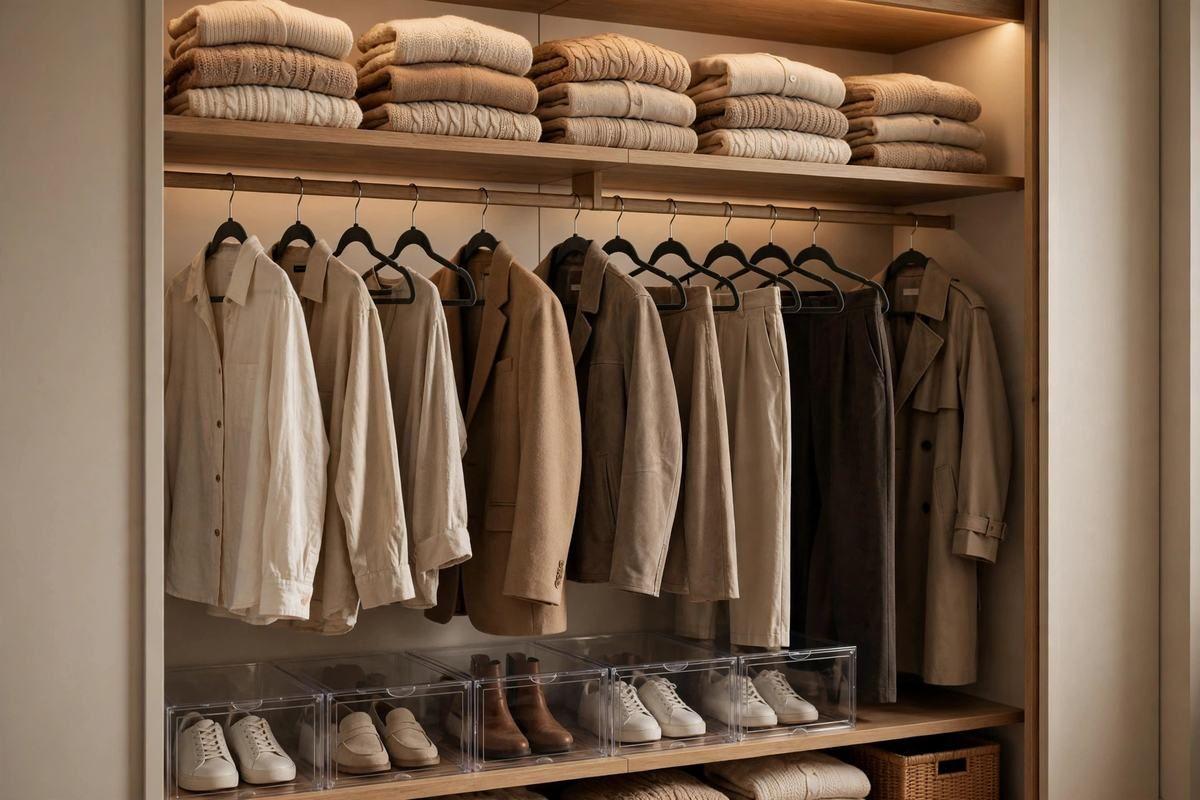
The closet is the second zone in a small bedroom storage plan — tackle it after under-bed. Double the hanging space with a hanging rod extender or a second tension rod, add slim velvet hangers (they take half the width of plastic ones and stop silk sliding off), and put shoes on an over-door rack instead of the closet floor. If your closet has no door, a curtain on a tension rod hides the visual chaos for under twenty minutes of effort. Pair this guide with our full closet reset for the complete system.
Frequently asked questions
- Where should I start when organizing a small bedroom?
- Start under the bed. It is the largest unused surface in a small bedroom — typically 25 to 35 square feet — and low flat bins turn it into a drawer you already own. Zone it: one bin for out-of-season clothes, one for spare bedding, one for everything else.
- Where do I store out-of-season clothes in a small bedroom?
- Vacuum-seal bags or low-profile boxes under the bed, labelled on the end that faces out. Vacuum bags cut bulky winter coats and sweaters to about a third of their volume, which is the difference between fitting and not fitting.
- How do I make a small bedroom feel bigger without buying furniture?
- Clear the floor first: nothing lives on the floor except the bed. Then enforce the one-tray nightstand rule, keep bedding to two matching tones, and move storage vertical — hooks, over-door racks and one high shelf.