Shoe Storage Ideas for Small Spaces: The Two-Pair Rule and Vertical Tricks
Shoe storage ideas for small spaces and small closets: the two-pair entryway rule, over-door and under-bed rotation, clear boxes and a seasonal swap that halves the pile.
- Start with the honest count — the 30-day wear test decides what stays.
- The two-pair rule: your two most-worn pairs live by the door; everything else rotates.
- Clear stackable boxes, over-door pockets, and under-bed storage each have a best use.
- Run the seasonal swap every October and April to halve the pile.
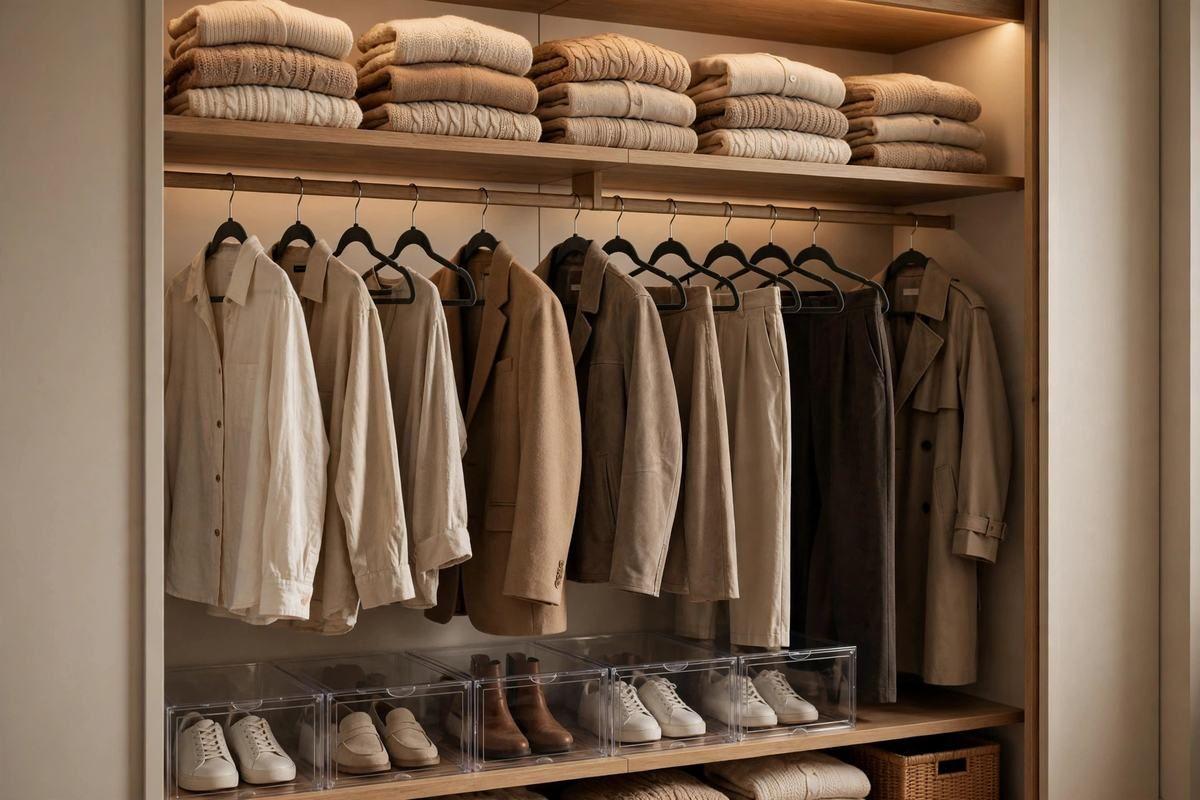
Shoes stored neatly in clear stackable boxes — visible means wearable
Shoes multiply quietly until they own the hallway. The shoe storage ideas for small spaces that actually work start with an honest count using the last-30-days test, then the two-pair rule — your two most-worn pairs live by the door on a slim rack, and everything else rotates through clear stackable boxes, over-door pockets or under-bed storage, with a seasonal swap twice a year. If you are wondering how to store shoes in a small apartment without a closet to spare, this system was built for exactly that.
Start with the honest count
Pull every pair out and sort by one question: did I wear these in the last 30 days? Worn pairs stay in the active zone. Untouched pairs split honestly — off-season or occasion shoes go into rotation storage, and the "maybe someday" pairs go to donation. Most women find the active number lands at 6 to 10 pairs, not the 25 the hallway suggests. You cannot organize a pile you have not counted.
The two-pair entryway, done right
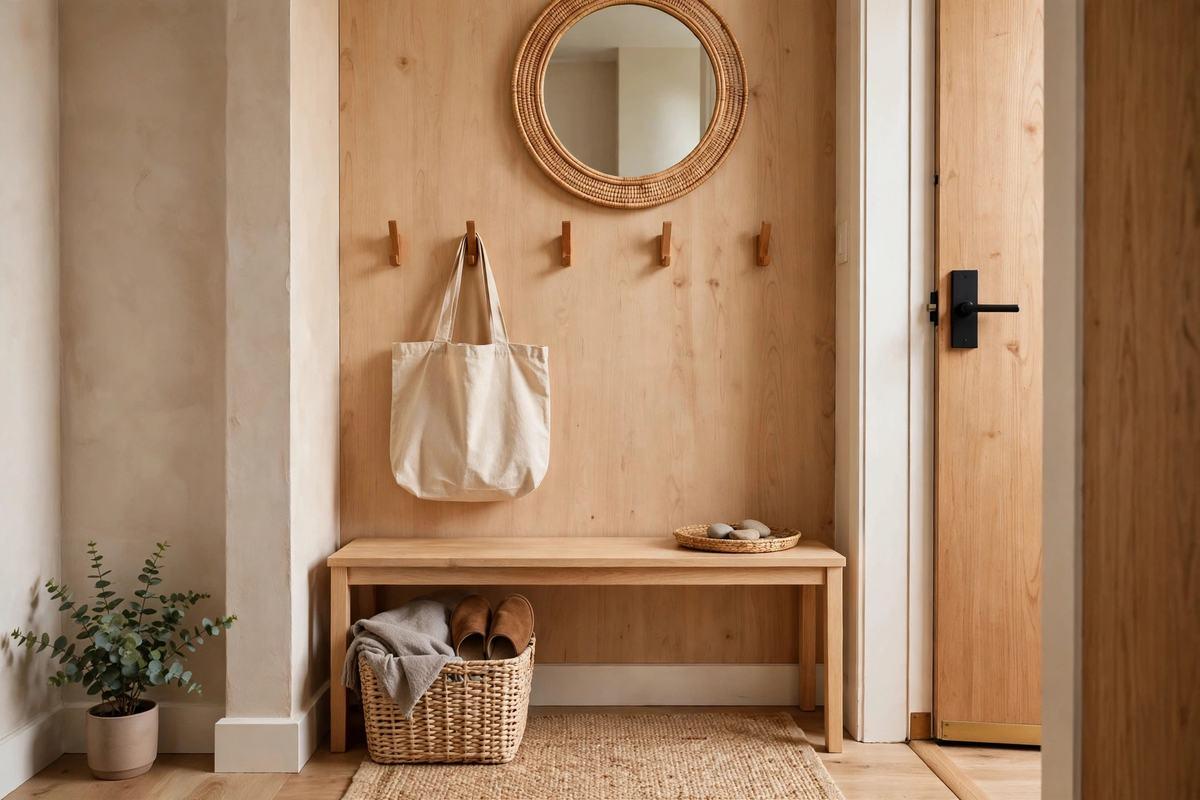
Only your two most-worn pairs earn a spot by the door — typically daily trainers and one work or going-out pair. They live on a slim rack or tray, never loose on the floor. The qualifying test is simple: if you hesitate reaching for a pair in the morning, it does not belong at the door. Two pairs out means the entryway stays a walkway, not a shoe museum.
Shoe storage ideas for small spaces, compared: boxes vs. over-door vs. under-bed
Each small entryway shoe storage method wins for a different shoe type, so match the method to the shoe:
- Clear stackable boxes — the best all-rounder. Visibility is everything: shoes you can see are shoes you wear. Best for heels, boots and anything structured. Buy one size and stack them; mixed sizes never stack neatly.
- Over-door pockets — unbeatable for flats, trainers and sandals in rentals, zero drilling. Weak for boots and heels, which do not fit the pockets.
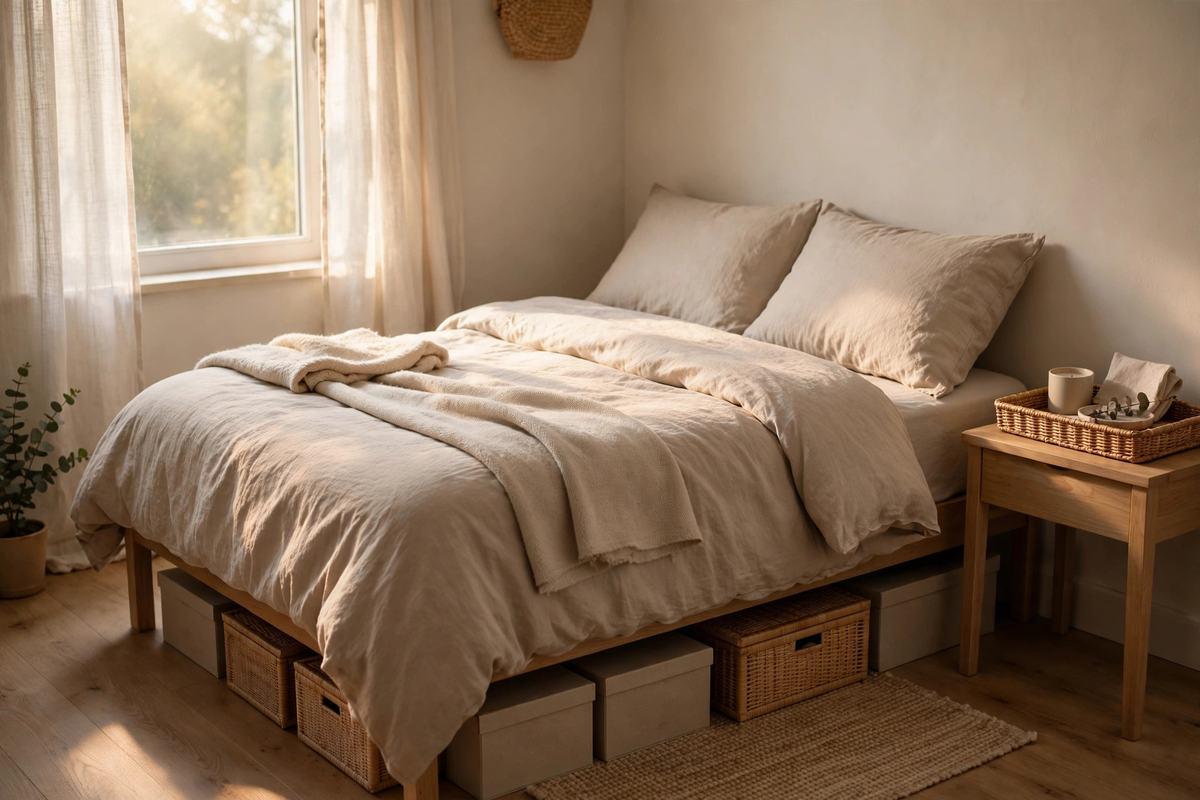
- Under-bed boxes — perfect for the off-season half of your collection. Out of sight is fine here because the seasonal swap brings them back on schedule.
Opaque boxes are the worst of all worlds: you forget what is inside, so you rebuy what you already own.
The seasonal swap: October and April
Twice a year, boots and sandals trade places. The outgoing season's shoes get cleaned — wiped down, soles checked, laces washed — then stored dry with a baking-soda sachet in each box. The incoming season's shoes get a condition check before they earn entryway space. The swap takes about an hour and halves the active pile instantly, which is why the entryway breathes again every spring and autumn.
Three mistakes that keep shoes chaotic
Storing shoes dirty. Dirt stored becomes permanent smell and permanent stains. The five minutes of wiping before storage saves the pair.
Keeping "aspirational" pairs. The heels that hurt, the boots that never matched anything — they occupy prime real estate while you wear the same three pairs. If a shoe has not been worn in a year despite fitting, it is decor, not footwear.
One giant shoe pile, no zones. A single heap by the door mixes daily pairs with occasion pairs and buries both. Zones — entryway, rotation, off-season — are the entire system.
Frequently asked questions
- How many pairs of shoes is reasonable in a small space?
- Forget a magic number — use the last-30-days test. Pairs you wore stay in the active zone; pairs untouched for a month go into rotation storage or donation. For most women that lands at 6 to 10 active pairs.
- What is the best shoe storage for renters?
- Over-door pockets for flats and trainers, a slim freestanding rack by the door, and clear stackable boxes for the rest. Everything freestanding, zero drilling, moves with you.
- How do I stop shoes smelling in storage boxes?
- Store shoes clean and fully dry with a small baking-soda sachet in each box, and air boxes out monthly. Smell in storage almost always means shoes went in damp.
- What is the best shoe storage for small closets?
- Clear stackable boxes, one uniform size so they actually stack. In a small closet, visibility beats capacity — shoes you can see are shoes you wear.
- Should shoes be stored in their original boxes?
- Original cardboard boxes hide shoes — out of sight becomes out of mind. Clear stackable boxes keep every pair visible, which is why visible shoes actually get worn.
- How do I store shoes if I have no entryway closet?
- Use the back of a bedroom door with an over-door rack, a slim rolling cart tucked beside furniture, or a lidded storage bench that doubles as seating. The best no-closet solution is one that keeps daily pairs within arm's reach of the door.
- How do I keep stored shoes from getting crushed?
- Stuff the toes with tissue paper or inexpensive shoe trees to hold their shape, and never stack heavy boots on top of soft flats. Breathable fabric boxes protect better than sealed plastic, which traps moisture and odor.
- What is the fastest way to find the right pair?
- Store by frequency, not by color. Daily pairs at grab height near the door, weekly pairs one shelf up, occasion shoes labeled and stored high or out of season rotation entirely.