
How to Remove Tomato Stains in 2026: Cold Water, Dish Soap, No Heat
Short answer: scrape the excess off with a spoon, working from the outside in, and never rub; rinse with cold water through the back of the fabric; work dish soap into the stain and leave it for 5 to 10 minutes; follow with an enzyme detergent for cooked sauce, or an oxygen-bleach soak for the pink tinge that remains; wash at the warmest temperature the care label allows, check in good light, and never tumble-dry until the stain is completely gone.
If you read this guide, you will know how to tell which method fits your fabric and how old the stain is, how to treat a fresh stain, a dried one, and one that already went through the dryer, which mixes work and which are dangerous, and what to skip entirely — without buying anything new.
This guide contains no affiliate links and no product picks.
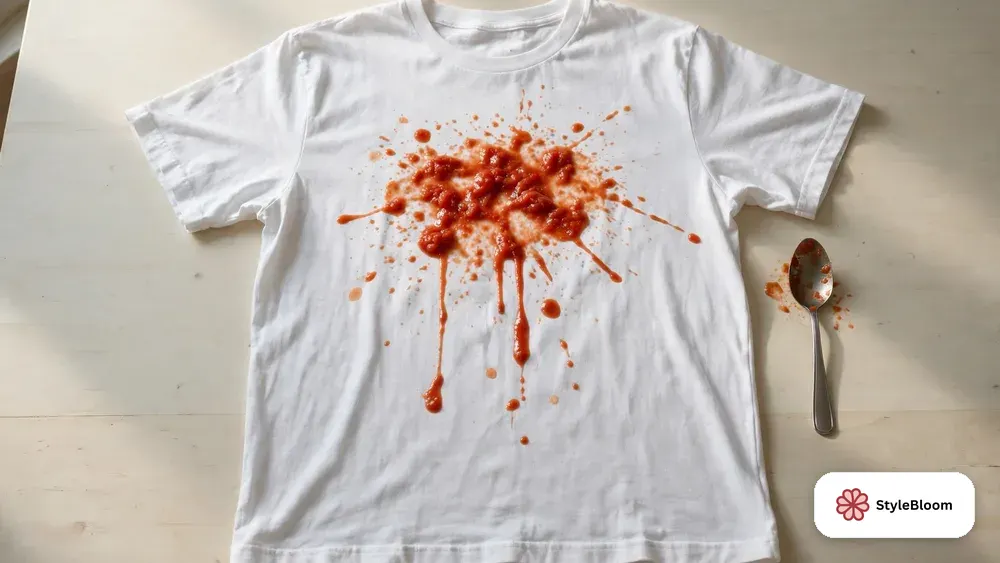
The treatments named here — dish soap, enzyme detergent, oxygen bleach, white vinegar, hydrogen peroxide — are things you may already own, not things to buy. The advice comes from the stain-removal guides and the safety information they cite, not from a seller.
The fastest honest answer to how to remove tomato stains is this: scrape the excess off first, rinse with cold water through the back of the fabric, work dish soap into the stain, and follow with an enzyme detergent for cooked sauce or an oxygen-bleach soak for the pink tinge that remains. Check in good light before the garment goes anywhere near heat, and never tumble-dry it until the stain is completely gone.
This guide is built for the white shirt at dinner, the school uniform at lunch, and the favourite top on laundry day. It does not ask you to buy anything. Most of the treatment in it costs nothing at all — the order of the steps is what does the work.
The short answer
Tomato sauce is not one stain. It is three layered together: lycopene, the red pigment, which is fat-soluble and will not dissolve in water; oil from the cooking, which carries the pigment into the fibres; and acidity and tannin, which help the pigment bond and set. A cooked sauce adds protein and starch from the pasta, the meat, or the cheese. Each part needs a different attack, which is why a single wash rarely works and why the sequence matters.
The sequence that works is scrape, rinse cold, dish soap, then a second treatment for what remains. Scrape the excess off with a spoon, a dull knife, or the edge of a credit card, working from the outside edge inward so you do not spread it. Rinse with cold water through the back of the fabric, so the stain is pushed out the way it came in rather than driven deeper. Work dish soap directly into the damp stain with your fingers, in small circles from the outside in, and leave it for 5 to 10 minutes — dish soap is a degreaser, and it is the only ordinary household product that lifts the fat-soluble lycopene. Rinse cold again.
Then look at what is left. If the sauce was cooked — pasta sauce, pizza sauce, ketchup — follow with a biological enzyme detergent, which targets the protein and starch, and leave it for 5 minutes. If a pink or orange tinge remains after that, it is pigment, and pigment needs an oxidiser: an oxygen-bleach paste for 30 to 60 minutes, or sunlight on a damp white garment. Wash at the warmest temperature the care label allows, check the stain in good light before it goes anywhere near heat, and air-dry it until you are sure it is gone.
Pick your method: fabric first, stain age second
Two questions decide everything: what fabric is it, and how long has the stain been there. A fresh stain on cotton forgives almost any sensible method. A dried stain on silk forgives almost none. Read the care label first, test anything new on a hidden patch, and then find your row.
| Fabric | Fresh stain | Dried or set stain |
|---|---|---|
| Cotton or linen | Dish soap 5 to 10 minutes, then enzyme detergent; wash warm | Soak cold with dish soap 15 to 30 minutes, enzyme and soft brush, oxygen-bleach paste 30 to 60 minutes |
| White cotton | Dish soap, then hydrogen peroxide and dish soap, 3 parts to 1, for 20 to 30 minutes | Dish soap first, then oxygen-bleach soak up to 6 hours, then sunlight on the damp garment |
| Coloured cotton or blends | Dish soap, then white vinegar soak, 1 part vinegar to 2 parts cold water, 20 to 30 minutes | Dish soap soak, then oxygen-bleach soak 2 to 4 hours; never peroxide on colours |
| Denim | Dish soap and cold water first, then a vinegar soak; wash inside out | Scrape, soak cold with dish soap, enzyme detergent, then wash inside out |
| Polyester and synthetics | Dish soap alone often handles it; add a vinegar soak if a tinge remains | Dish soap soak, then oxygen bleach for the remaining pink tinge; cool wash |
| Wool | Cold water blot and dish soap only; hand wash cold, lay flat to dry | Dish soap and cold water only; no enzyme, no oxygen bleach on coloured wool; dry-clean a severe stain |
| Silk | Cold water blot and very diluted dish soap only; no rubbing | Gentle detergent, soak no more than 5 minutes, rinse gently; dry-clean anything stubborn |
If you only remember one row, remember the cotton one, because most stained clothes are cotton or a cotton blend. And if you only remember one rule, remember this: cold water until the stain is gone, heat only after. Hot water sets the tannin and starch in tomato sauce, and dryer heat bonds whatever pigment is left into the fibres permanently.
The first five minutes
Speed matters more than strength. A stain treated within five minutes usually comes out completely with dish soap alone. A stain left a full day keeps a faint orange ring even after two full treatments. You do not need to finish the job in five minutes — you need to start it.
First, scrape. Use a spoon, a dull knife, or a credit card edge, and lift the sauce off the surface without pressing it in. Do not use a towel or a cloth at this stage: a cloth rubs the sauce deeper into the weave. Work from the outside edge of the stain inward, so the stain gets smaller instead of larger. If you are out, excuse yourself to a sink and take a spoon with you. The scraping is the step most people skip, and it is the step that keeps a small stain small.
Next, run cold water through the back of the stain. Hold the fabric so the stained side faces down and let the water push the sauce back out the way it came in. Then blot with a clean white cloth or paper towel — blot, never rub — and if dish soap is within reach, cover the stain with it and dab away the excess. That is enough for now. You can go back to dinner. The stain will wait, and the soap will already be working on the oil while you eat.
One warning for this moment: do not reach for a bar of soap or soap flakes. The fats in bar soap can bond with lycopene and make the stain worse, which is the opposite of what dish soap does. Liquid dish soap only. And do not use hot water, however tempting it is — hot water is the fastest way to set a tomato stain.

Fresh stains: the full treatment, step by step
Step 1: scrape and blot. Lift the excess with a spoon or a dull knife, outside in. Blot what remains with a clean white cloth. Use a white cloth, not a coloured towel: a dyed towel can transfer its own colour into damp fabric, and my microfiber guide explains which cloths are safe on which surfaces and how to wash them so they stay absorbent.
Step 2: rinse cold from the back. Run cold water through the back of the stained fabric for a minute or two. The water should run pink at first and then clearer. If it is still strongly red, the stain is mostly liquid still, and the rinse is doing its job — keep going until the runoff is pale.
Step 3: dish soap, worked in gently. Apply a generous amount of liquid dish soap directly to the damp stain. Work it in with your fingers in small circles, starting from the outside edge and moving inward. Leave it for 5 to 10 minutes. Dish soap is doing the real work here: it is a degreaser and a surfactant, and it lifts the fat-soluble lycopene that water cannot touch. Rinse thoroughly with cold water. If the water runs clear or very faint pink, move on. If it is still strongly red, repeat the dish soap step before doing anything else.
Step 4: enzyme detergent for cooked sauce. If the stain came from pasta sauce, pizza sauce, or ketchup rather than a fresh tomato, apply a biological enzyme detergent after the dish soap step. The enzymes target the protein and starch from the cooked ingredients — the part dish soap does not reach. Leave it for 5 minutes, then rinse cold. A fresh tomato needs no enzyme step; a cooked sauce usually does.
Step 5: oxygen bleach for the remaining tinge. If a pink or orange tinge remains, mix oxygen-bleach powder with cold water into a paste, spread it over the stain, and leave it for 30 to 60 minutes. Oxygen bleach breaks the colour bonds in the oxidised lycopene, and this step is often what achieves complete removal. It is safe on most colourfast fabrics — test dark or printed items on a hidden patch first. Then wash at the warmest temperature the care label allows, and check before drying.
Step 6: check in good light, then wash. Hold the garment up to a window or a bright lamp before it goes in the machine. A faint pink mark that is easy to miss indoors is still treatable now and permanent after the dryer. If you can still see it, repeat the treatment that matches what is left — dish soap for grease, oxygen bleach for colour — rather than washing and hoping. Take a photo of the stain between treatments if you are unsure whether it is fading.

Dried stains: rehydrate first, then treat twice as long
A dried tomato stain is harder because the lycopene has oxidised and bonded more strongly to the fibres, and because the crust has to be dealt with before any liquid can reach the pigment. The treatment is the same as for a fresh stain, with two changes: rehydrate first, and give every step more time.
Step 1: scrape the crust. Gently scrape any dried crust off with a blunt knife or a fingernail before wetting the stain. Removing the surface layer reduces the amount of pigment you have to treat, and wetting a crust just turns it into paste. Do not scrub at it — scrape lightly, outside in.
Step 2: soak cold with dish soap. Wet the stained area with cold water, apply dish soap generously, and let it soak for 15 to 30 minutes. Dried stains need the longer soak to soften the oxidised lycopene. If the whole garment can go in a basin, soak the stained area in cold water with a squirt of dish soap for the full half hour.
Step 3: enzyme and a soft brush. After soaking, apply biological enzyme detergent over the dish soap and work it in gently with a soft toothbrush, or by rubbing the fabric against itself. The combination of degreaser and enzyme attacks every part of the stain at once. Leave it for another 10 to 15 minutes.
Step 4: oxygen-bleach paste, then wash. For the stubborn pink or orange residue that usually remains after degreasing, apply oxygen-bleach paste and leave it for 30 to 60 minutes. Then wash at the warmest temperature the care label allows, and check before drying. A dried stain often needs two or three full treatment cycles, and that is normal — repeat the cycle rather than reaching for a stronger chemical. White cotton is the most forgiving fabric here; dark or printed fabrics may need fewer cycles because the tinge is less visible on them.
It already went through the dryer: the rescue
This is the situation almost nobody writes about, and the most frustrating one to be in. You washed the shirt, the stain was not fully gone, you put it in the dryer anyway, and now the heat has baked the pigment into the fabric. The honest truth is that a heat-set stain is much harder to remove, with no guarantee. But it is not always lost, and the rescue is worth trying before the shirt is.
Step 1: dish soap, worked in firmly. Apply liquid dish soap to the stain and work it in more firmly than you would on a fresh stain — a dried, heat-set stain can take the pressure. Let it sit for 15 minutes, then rinse cold.
Step 2: a long oxygen-bleach soak. Mix oxygen bleach with warm water and soak the entire garment for 6 to 8 hours, or overnight. The long soak gives the oxygen time to break down a stain that heat has bonded to the fibres. For white garments, use the whites soak: one scoop of powder per gallon of the warmest water the care label allows, for 6 hours.
Step 3: peroxide on whites, then check. After the soak, apply the hydrogen peroxide and dish soap mixture directly to the stain on white fabrics — 3 parts peroxide to 1 part dish soap, 20 to 30 minutes. This second round of oxidation often breaks through what the soak loosened. Rinse cold, check in good light, and never put it back in the dryer until the stain is definitively gone. Expect two to four treatment rounds for a heat-set stain. Old stains on silk or linen, where the fibres have really absorbed the pigment, may need a professional cleaner with commercial-grade oxidisers — that is the point to stop and hand it over, not the point to reach for a stronger household chemical.
By fabric: what changes, and what never to use
Cotton and cotton blends. The most forgiving fabric. Handles dish soap, enzyme detergent, vinegar soaks, and oxygen bleach equally well, and multiple treatment cycles will not damage it, so you can treat aggressively. White cotton is the easiest of all: peroxide, oxygen bleach, and sunlight are all available to you, and the only problem is that any remaining orange tinge is brutally visible on white.
Linen. Tricky, because its open weave lets the stain penetrate quickly and set fast. Act immediately, be patient, and expect to repeat. Extended oxygen-bleach soaks of four to six hours work best for coloured linen; the peroxide and dish soap mix is the choice for white linen. Never tumble-dry linen until the stain is gone.
Denim. The tight weave actually helps: the sauce tends to sit on the surface rather than penetrating deeply. Dish soap and cold water first, then a vinegar soak, and wash inside out. Avoid hot water, which can fade denim unevenly. Check before drying — a pink tinge on dark denim may be hard to see, but it still means the stain is not fully out.
Polyester and synthetics. Synthetic fibres do not absorb liquid as readily as natural ones, so the sauce tends to sit on the surface longer, and dish soap alone often handles a fresh stain. But polyester fibres can trap lycopene once it gets in, so add a vinegar soak for anything stubborn, and use oxygen bleach for the remaining pink tinge. Wash cool, at 30 to 40 degrees.
Wool. Cold water blot and dish soap only. No enzyme detergent — the protease in it damages wool — no hot water, and no oxygen bleach on coloured wool. Hand wash cold and lay flat to dry. For a severe stain on wool, take it to a dry cleaner rather than escalating the chemistry at home.
Silk. Cold water blot and very diluted dish soap only. No enzyme detergent — it attacks silk protein — no hydrogen peroxide, which can permanently damage silk fibres, and no scrubbing. Rinse carefully. If treating at home, use a small amount of gentle detergent, soak for no more than 5 minutes, and rinse very gently. A stubborn tomato stain on silk belongs at the dry cleaner.
Other surfaces: carpet, upholstery, and the table
Carpet. Tomato sauce on carpet follows the same rules with one extra: never soak it. Blot up as much as you can with a clean white cloth, then work a small amount of dish soap solution in lightly — do not pour cleaner directly onto the carpet, and do not saturate the pile. Leave a carpet cleaner to work for about 3 minutes, blot the residue away with a damp light-coloured cloth, and let the carpet dry completely. If it persists after drying, repeat once, then vacuum when fully dry. The full carpet routine, including the drying rules that keep the pad safe, is in my carpet cleaning guide.
Upholstery. The rule here is the opposite of clothes: apply the cleaning solution to a clean white towel, not directly onto the stain, and blot with the towel. Pouring liquid onto upholstery soaks the filling and leaves water marks and rings when it dries. Work lightly, leave it for about 3 minutes, dab the residue off with a damp light-coloured cloth, and repeat until the stain is no longer visible. Only treat upholstery that is labelled water-washable, and always test on a hidden patch first — a water mark on a sofa cushion is harder to fix than the stain was.
Tablecloths and napkins. Dining textiles absorb liquids fast, so tomato pigments, oils, and spices penetrate deep into the fibres quickly — act the same way as for clothes, and do not let the cloth sit in the laundry basket until the weekend. Scrape, rinse cold from the back, dish soap, and wash at the warmest temperature the label allows. White tablecloths get the full whites treatment: oxygen-bleach soak, then sunlight while still damp.
The oven and the hob. Sauce that splattered and baked onto the oven door or the hob is a different job — the heat has already set it, and it needs the baked-on treatment, not the stain treatment. My oven cleaning guide covers the paste, the steam, and the glass, and the same cold-first rule applies in reverse there: never pour cold water on a hot oven door.

The treatments, ranked: what actually earns its place
Every guide online lists the same remedies, but they are not equal, and the order you use them in matters more than which one you pick. Ranked from the step that does the most work to the step that finishes the job:
1. Dish soap. The foundation. It is the only ordinary household product that dissolves the fat-soluble lycopene, and it handles the oil at the same time. On a fresh stain it clears most of the grease but leaves the red behind — about half the job on its own, and the essential first step for everything else.
2. Enzyme detergent. The second step for cooked sauce. It breaks down the protein and starch that dish soap cannot reach, and it is the reason a pasta-sauce stain needs more than a fresh-tomato stain does. Use it after dish soap, never instead of it.
3. Oxygen bleach. The best choice for coloured fabrics, and the finisher for almost every stain. A soak of one to six hours, depending on the stain, lifts the pink and orange residue that degreasing leaves behind. It is colour-safe on most fabrics, which is why it beats peroxide everywhere except whites.
4. White vinegar soak. The solid choice for colours when you have no oxygen bleach: one part white vinegar to two parts cold water, soak 20 to 30 minutes. It loosens the pigment's grip without damaging colour. A 1-to-1 mix of vinegar and water is the stronger version for dried tomato and ketchup. The vinegar smell washes out completely.
5. Hydrogen peroxide and dish soap. The winner on whites only: 3 parts standard 3% peroxide to 1 part dish soap, 20 to 30 minutes, and you will see the stain lighten almost immediately. Never use it on colours — it has a bleaching effect and can permanently lighten or spot coloured clothing.
6. Sunlight. The free finisher for whites and light fabrics. If a faint ghost stain remains after washing, hang the garment in direct sunlight while it is still damp — ultraviolet light breaks down lycopene, and the stain needs to be wet for it to work. Leave it for one to four hours in strong sun, rewetting if the fabric dries out. Do not use sunlight on coloured fabrics: it can fade the surrounding fabric while it fades the stain.
7. Baking soda paste. Overhyped for clothes. It gets recommended constantly, but on fabric it does little beyond what dish soap already did. It works better on carpet and upholstery, where liquids are not practical. On clothes, skip it and use the vinegar soak instead.
Never mix: the safety table
Tomato stains tempt people to combine treatments, and some combinations are genuinely harmful — to skin, to eyes, and to the fabric. One treatment at a time, rinsed out completely before the next, is the rule.
| Combination | What happens | Do this instead |
|---|---|---|
| Oxygen bleach + vinegar in one session | Oxygen bleach breaks down into hydrogen peroxide in water; peroxide plus vinegar makes peracetic acid, which irritates skin and eyes and can damage fibres | Use one or the other per session; rinse completely, launder, and only then try the other in a separate session |
| Chlorine bleach on a tomato stain | Can leave a permanent yellow-orange mark where the tomato was, and weakens the fibres | Oxygen bleach for colours, peroxide for whites; never chlorine bleach on tomato |
| Bar soap or soap flakes | The fats in the soap bond with lycopene and make the stain worse | Liquid dish soap only |
| Bleach + ammonia, or bleach + acids | Toxic gas — chloramine with ammonia, chlorine gas with acids | One product at a time, exactly as its label directs; never mix cleaning chemicals |
| Hot water on a fresh stain | Sets the tannin and starch, and bonds the pigment | Cold water until the stain is gone; warm water only for the wash after treatment |
What to skip: the things that make it worse
Most tomato stains that become permanent were not too strong for the treatment — they were treated wrong first. These are the moves that cost shirts.
| Skip it | Why |
|---|---|
| Rubbing or wiping the stain | Spreads lycopene sideways into clean fabric and drives it deeper into the weave |
| Hot water first | Sets the tannin and starch components; cold water only during pre-treatment |
| Water alone, no dish soap | Water moves the liquid but leaves the fat-soluble pigment behind |
| Bar soap or soap flakes | Their fats bond with lycopene and make the stain worse |
| Baking soda paste on clothes | Does little beyond dish soap; the vinegar soak beats it every time |
| Chlorine bleach | Permanent yellow-orange mark on tomato, and fibre damage |
| Mixing oxygen bleach and vinegar | Makes peracetic acid — skin and eye irritant, damages fibres |
| The dryer before the stain is gone | Heat permanently bonds any remaining pigment to the fabric |
| Ironing over the stain | Same as the dryer: heat sets what is left |
| Treating a stain you have not identified | Wool, silk, and dry-clean-only items need different rules; check the label first |
School uniforms, kids' clothes, and white work shirts
If there is one place tomato stains actually live, it is the school uniform. Bolognese and spaghetti sauce on white school shirts is the stain parents name most often, and it is the hardest one to forgive, because a white uniform shows every faint orange ghost that a coloured shirt would hide. The method is the same, but the routine around it matters: treat the shirt the evening it comes home, not on laundry day, and keep a bottle of dish soap and a stain remover where the uniform comes off, not in the laundry room two floors away.
For children's clothes generally, the same rule applies — speed beats strength, and a five-minute scrape and cold rinse at the table saves a shirt that a weekend wash cannot. Ketchup deserves a note here: it carries oils and spices as well as tomato, so it usually needs the enzyme step even when a fresh tomato would not. For white work shirts, the whites-only tools are your advantage: peroxide and dish soap, the oxygen-bleach soak, and sunlight on the damp shirt after washing. A white shirt is both the easiest tomato stain to treat and the least forgiving of a missed one, so check it in good light before it goes in the dryer, every time.
The habit that makes all of this easy is a small one: a cleaning schedule that puts stain treatment in the evening routine instead of the weekend pile. Ten minutes on the night it happened beats an hour of rescue treatments on Saturday, and the shirt survives either way.

After the stain is gone: keep it from coming back
A stain that is gone is gone, but two habits keep it that way. First, air-dry the garment the first time after treatment, even if you are sure the stain is out — air drying is the safe check, because if a faint mark reappears as it dries, you can treat it again, and if it had gone in the dryer, that mark would be permanent. Second, wash the garment normally once more before it goes back into regular rotation, so no treatment residue is left in the fibres: leftover cleaner attracts dirt, and the spot gets dirty faster than the rest of the shirt.
For the rest of the home, the same logic applies — the stain you treat tonight is the stain you do not rescue on Saturday, and the room-by-room order that keeps it all moving is in my deep-cleaning checklist. A stain routine is not a separate chore; it is the first five minutes of the laundry routine you already have.
Verdict: a tomato stain is not permanent, it is just three stains at once, and each one has a treatment that works. Scrape first, rinse cold from the back, dish soap before anything else, enzyme for cooked sauce, oxygen bleach or sunlight for the colour that remains — and never heat until you have checked in good light. Treat it the night it happens and the shirt survives; treat it after the dryer and you are rescuing it, not cleaning it.
How this guide was put together
I put this guide together from the stain-removal guides that treat tomato as its own problem — the fabric-science pages, the brand guides from the oxygen-bleach and stain-remover makers, and the one writer who tested five methods side by side on identical shirts and ranked them honestly, including the method that disappointed her. Where those guides disagreed, I followed the ones that named their chemistry, and I left out the percentages and lab names I could not verify. The methods here use things already under the sink, not products to buy, and every warning in the safety table comes from a source that states the reaction by name.
What to try first: Scrape the excess off with a spoon and rinse cold from the back tonight. Good looks like: the red fading after the dish soap step, the rinse water running clear, and no pink tinge in good light. If it fails: the tinge is still there — soak it in oxygen bleach for 30 to 60 minutes and check again before it goes near heat. Learn next: How to Clean Carpet: The Honest Guide (2026) — the carpet guide: vacuum first, blot spills from the outside in, use a simple homemade mix, and dry it within a day.
Frequently asked questions
- How do you remove tomato stains from clothes?
- Scrape the excess off, rinse with cold water through the back of the fabric, work liquid dish soap into the stain for 5 to 10 minutes, then follow with enzyme detergent for cooked sauce or oxygen bleach for the remaining pink tinge. Wash at the warmest temperature the care label allows, check in good light, and never tumble-dry until the stain is completely gone.
- Why are tomato stains so hard to remove?
- Because the red pigment, lycopene, is fat-soluble, so water alone cannot dissolve it. Tomato sauce also contains oil, acidity, and tannin, and cooked sauces add protein and starch — a compound stain where each part needs a different treatment. Once it dries, the lycopene oxidises and bonds more strongly, which is why dried stains take longer.
- Does dish soap remove tomato stains?
- Dish soap is the essential first treatment, because it is a degreaser that lifts the fat-soluble lycopene and the oil that carries it. On a fresh stain it clears most of the grease but usually leaves the red behind, so it is the right first step rather than the whole job — follow it with enzyme detergent or oxygen bleach for the colour that remains.
- Can you use hot water on a tomato stain?
- No. Hot water sets the tannin and starch in tomato sauce and bonds the pigment into the fibres. Use cold water for every pre-treatment step, and only wash at a warm temperature after the stain has been treated. The same rule applies to the dryer and the iron: no heat until the stain is completely gone.
- How do you remove a dried tomato stain?
- Scrape the dried crust off first, then soak the stain in cold water with dish soap for 15 to 30 minutes. Apply enzyme detergent and work it in gently with a soft toothbrush, then apply an oxygen-bleach paste for 30 to 60 minutes for the remaining pink or orange residue. Wash at the warmest temperature the label allows, and expect two or three treatment cycles.
- How do you get tomato sauce out of white clothes?
- White clothes are the easiest case, because you can use every tool: dish soap, then a mix of 3 parts hydrogen peroxide to 1 part dish soap for 20 to 30 minutes, or an oxygen-bleach soak of one scoop per gallon for 6 hours. If a faint ghost remains after washing, hang the garment in direct sunlight while it is still damp for one to four hours.
- Will tomato sauce come out of coloured clothes?
- Yes, with the colour-safe treatments: dish soap, then a white vinegar soak of one part vinegar to two parts cold water for 20 to 30 minutes, or an oxygen-bleach soak for one to six hours. Never use hydrogen peroxide on colours — it bleaches — and test any treatment on a hidden patch first, especially on dark or printed fabrics.
- Does OxiClean remove tomato stains?
- Yes — oxygen bleach is very effective on the pink or orange lycopene residue that dish soap leaves behind, particularly on dried or set stains. Spray it on and wait 5 minutes, or soak whites for 6 hours at one scoop per gallon. Do not use it on wool, silk, leather, or anything labelled dry-clean-only, and never use it in the same session as vinegar.
- Can you put a tomato-stained shirt in the dryer?
- Not until the stain is completely gone. Dryer heat permanently bonds any remaining lycopene and tannin to the fabric, and a stain that was still treatable becomes permanent. Check in good light after washing — a faint pink mark is still treatable before drying, and permanent after. Air-dry until you are sure.
- How do you remove tomato stains from carpet?
- Blot up as much as you can with a clean white cloth, then work a small amount of dish soap solution in lightly — never pour cleaner directly on the carpet and never soak the pile. Leave it to work for about 3 minutes, blot the residue away with a damp light-coloured cloth, let the carpet dry completely, and vacuum once dry. Repeat once if the stain persists after drying.
- How do you remove tomato stains from upholstery?
- Apply the cleaning solution to a clean white towel, not directly onto the stain, and blot with the towel — pouring liquid on upholstery soaks the filling and leaves water marks. Work lightly, leave it for about 3 minutes, dab the residue off with a damp cloth, and repeat until the stain is gone. Only treat upholstery labelled water-washable.
- What removes tomato stains from silk or wool?
- Both need the gentlest treatment: cold water and dish soap only. For wool, no enzyme detergent and no oxygen bleach on coloured wool — hand wash cold and lay flat to dry. For silk, very diluted dish soap, no enzyme, no peroxide, no scrubbing, and a soak of no more than 5 minutes. A stubborn stain on either fabric belongs at the dry cleaner.
- Does sunlight remove tomato stains?
- Sunlight fades the residue on white and light fabrics: ultraviolet light breaks down lycopene, so hang the garment in direct sun while it is still damp for one to four hours, rewetting if it dries out. It is a free finisher after washing, not a treatment on its own. Do not use it on coloured fabrics, because it can fade the surrounding fabric too.
- Can you mix vinegar and OxiClean on a tomato stain?
- No, not in the same session. Oxygen bleach breaks down into hydrogen peroxide in water, and peroxide plus vinegar makes peracetic acid, which irritates skin and eyes and can damage fibres. Use one or the other per session — rinse the garment completely and launder it before trying the other one.
- What should you never do to a tomato stain?
- Never rub it, never use hot water, never use bar soap or soap flakes, never use chlorine bleach, never mix oxygen bleach with vinegar, and never put the garment in the dryer or iron it until the stain is completely gone. Check the care label first, test on a hidden patch, and treat the stain the night it happens.