
Best Satin Bonnet in Germany (2026): 6 Styles That Stay On, With Prices Verified in Germany
Germany has one local satin-bonnet editorial, written by a retailer about a single night with one bonnet. No independent buying guide, no comparison, no verified prices. Six styles, prices checked live on 31 October 2026, and honest advice for every hair type.
By the end, you will know what a satin bonnet can and cannot do, how satin differs from silk and why that matters for your wallet, what a good one should cost in Germany, where to buy it, and how to keep it on all night.
- Satin is a weave, not a fibre. Most satin bonnets are polyester satin: smooth and cheap, not silk. A listing that says "silk" without stating fibre content has not proven it is silk.
- Prices checked live on 31 October 2026: Kitsch €27.95 on its European store, Sari Curls €20.23 to €28.90 on its German shop, and a bonnet-and-pillowcase bundle at €37.50. Two budget listings carried no verified price that day.
- Fit beats brand: size for hair volume, a wide soft band, and an adjustable closure matter more than any label or print.
- A bonnet reduces breakage from friction. It does not make hair grow, repair split ends, or fix damage done during the day.
Offenlegung: Als Amazon-Partner verdiene ich an qualifizierten Käufen. As an Amazon Associate I earn from qualifying purchases.
Last updated: 31 October 2026. Prices were checked on retailer pages that day and can change; the Amazon.de links are search links, so always check price, fibre content, and seller on Amazon.de before buying.

Illustration: a woman in a champagne satin bonnet, resting on a white pillow.
What a satin bonnet actually does for your hair
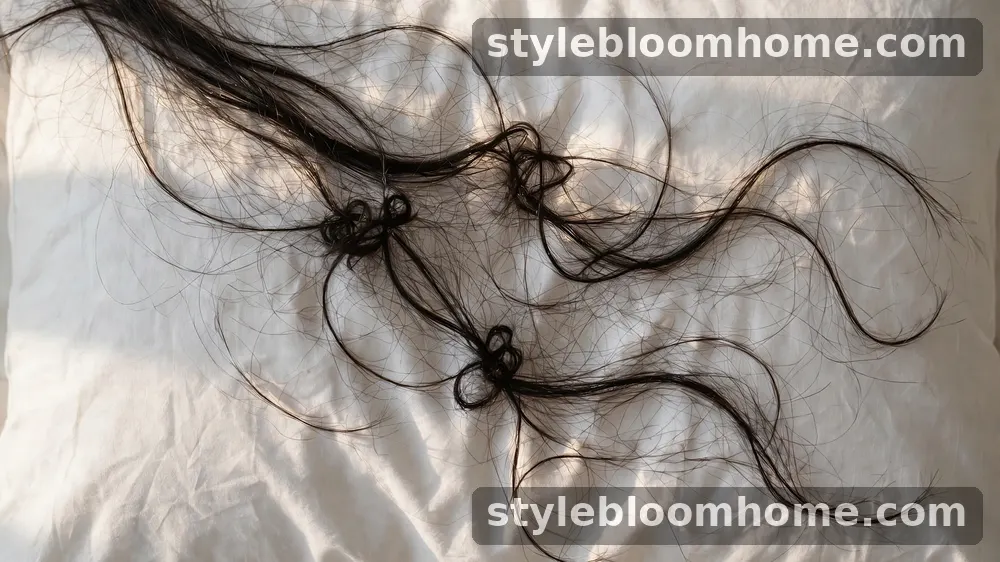
A satin bonnet does one job, quietly. While you sleep, hair rubs against the pillowcase. Cotton grips: it catches the cuticle, pulls at tangles, and drinks the moisture hair spent the day holding. Satin lets hair glide instead. The result is not magic — less friction, night after night, and hair that keeps its shape, moisture, and ends in better condition than hair abraded for eight hours.
That is the whole mechanism. A bonnet does not feed hair, add protein, repair split ends, or grow new hair. It protects the hair you have from the most boring damage there is: rubbing. Over weeks, that shows up as fewer morning tangles, curls and waves that hold to the second day, less frizz at the hairline, and ends that thin out more slowly.
Satin earns its place on smoothness alone. The weave puts most threads on the surface, so the fabric feels slick and hair slides over it instead of catching. What satin cannot promise is what silk adds: breathability and moisture behaviour. Polyester satin, which is what most satin bonnets are made of, is a plastic fibre woven smooth. It glides well and costs little, and for many people that is enough.
One honest limit before the picks: a bonnet protects hair while you sleep and does nothing for the other sixteen hours — heat styling, harsh brushing, and tight ponytails do more damage in minutes than a pillowcase does in a night.
The best satin bonnets in Germany at a glance
Four picks name a specific product whose price and specification we verified live on 31 October 2026. Two describe types whose prices could not be verified live that day, and the table says so.
| Style | Best for | Fabric, verified | Price, verified |
|---|---|---|---|
| Kitsch oversized, Haze Blue | Adjustable fit; most hair types | Satin; double-layer | €27.95, Kitsch (EU) |
| Kitsch oversized, Cherry Print | Print lovers; OEKO-TEX certified | Satin; double-layer | €27.95, Kitsch (EU) |
| Sari Curls Silky Satin Bonnet, Cream | Curls; sized fit in 3 sizes | Polyester satin, vegan | €28.90, Sari Curls (DE) |
| Sari Curls Sleep & Satin Box | Bonnet plus pillowcase bundle | Polyester satin bonnet | €37.50, Sari Curls (DE) |
| Yanibest double-layer (type) | Testing the habit at the lowest spend | Satin; double-layer | No price verified live 31 Oct |
| GLOV Anti-Frizz (type) | Simplest one-size, no ties | 100% polyester | No price verified live 31 Oct |
How we chose these picks
We did not test these bonnets at home, and this guide does not pretend otherwise. On 31 October 2026 we opened the retailer pages and read fibre content, size, closure, care, price, shipping, and returns. That rule cost two picks their prices: the Amazon.de listing pages would not serve a fresh price check on the day, and older crawls showing €14.99 and €15.99 for the Yanibest bonnet are months old.
The search behind this guide started with the questions people actually ask: whether a satin bonnet is good for hair, which is best, its benefits, satin against silk, how to wear one, how to wash one, what to use instead, and what it costs. Smaller groups get their own sections: straight hair, wavy hair, wet hair, men, children, locs and braids, and fit.
We also read the only Germany-local editorial in full: the Galaxus piece of 29 January 2025, in which one wavy-haired tester tried one X-Tac satin bonnet. It is a single-person test, not a buying guide: no knots, styled hair preserved overnight, but a sweaty scalp, greasier roots, forehead spots, and a fringe left a mess. This guide answers it with six options, verified prices, sizes, wash care, and the same negatives reported rather than smoothed over.
Every price here was verified on a German-facing shop page on 31 October 2026; nothing was assumed from another country's listing, and no price was converted from another currency.
The 6 best satin bonnet styles for Germany
Six answers to six different heads of hair. The first four name verified products with prices checked live; the last two are types — buy them only when the listing passes the checks in the label section.
1. Best verified adjustable fit: Kitsch oversized satin bonnet, Haze Blue — €27.95
Best for: most hair types, and anyone whose last bonnet slipped off or pinched. Verified live on 31 October 2026: the Kitsch European store lists the Haze Blue Oversized Satin Bonnet at €27.95, in stock, rated 4.7 out of 5 from 312 reviews. The page describes a high-quality double-layered satin bonnet with extra-long adjustable ties and a roomy fit. Why it earns the top spot: the closure is the feature: extra-long ties let you set the tension night by night. The honest limit, stated plainly: the European store page states the fabric only as "satin", with no fibre breakdown. Kitsch's Amazon listings describe the same line as polyester satin, and this guide treats it as such. Watch out for: the print range: colours sell out. Search Amazon.de for adjustable satin bonnets.
2. Best verified print: Kitsch oversized satin bonnet, Cherry Print — €27.95
Best for: anyone who wants the same bonnet with a print, and anyone who values an independently certified fabric. Verified live on 31 October 2026: the Kitsch store lists the Cherry Print Oversized Satin Bonnet at €27.95, in stock, with the same 4.7 rating from 312 reviews. This page also states OEKO-TEX certification. The page prints three wear steps: tuck, adjust the band at the hairline, wrap the ties and tie a bow. Why it earns its place: identical construction to the top pick, with the certification stated and fit instructions included. Watch out for: the store page says "satin" without a fibre breakdown — buy it as satin, not silk. Search Amazon.de for Kitsch satin bonnets.

3. Best sized fit for curls: Sari Curls Silky Satin Bonnet, Cream — €28.90
Best for: wavy, curly, and coily hair, where size — not brand — decides whether the bonnet stays on and the curl pattern survives. Verified live on 31 October 2026: the German shop Sari Curls lists the Silky Satin Bonnet in Cream, size 38 cm, at €28.90, in stock, It comes in three sizes: 32 cm, 36 cm standard, and 42 cm for long, dense curls or protective styles. The fibre is stated honestly: high-quality polyester satin, imitation silk, vegan and cruelty-free. It is reversible, with two colours in one product. Why it earns its place: it is the only verified pick sold by head-and-hair size rather than one-size-fits-all. Watch out for: availability moves: the Cloud colourway was sold out in all three sizes on the day we checked, while Double Pink and Bordeaux Red were on sale at €20.23. Search Amazon.de for satin bonnets for curly hair.
4. Best bundle: Sari Curls Sleep & Satin Box — €37.50
Best for: anyone starting from cotton bedding, who wants the bonnet and the pillowcase to work together. Verified live on 31 October 2026: the Sari Curls shop lists the Sleep & Satin Box at €37.50, in stock: one Silky Satin Bonnet plus one Bio Bamboo Lyocell pillowcase. Why it earns its place: Bought separately, bonnet plus pillowcase costs more. Watch out for: the pillowcase is bamboo lyocell, not satin or silk, so check the pillowcase size against your own pillows before ordering. Search Amazon.de for satin bonnet and pillowcase sets.
5. Budget test of the habit: Yanibest double-layer satin bonnet (type)
Best for: testing whether you will actually wear a bonnet every night before spending close to €30. What it is: a double-layer satin bonnet with an elastic tie band, sold by Yanibest on Amazon.de, described by the brand as buttery-soft satin that prevents friction. The honest limit, stated plainly: no euro price for this bonnet could be verified live on 31 October 2026. Older crawls showing €14.99 and €15.99 are five to nine months old. This guide will not present a stale figure as a current price. Checks before you pay: read the composition line, confirm returns usable from Germany, and treat any "silk" title without fibre content as unproven. Watch out for: the tie band: buyer reviews note straps too short to tie a bow comfortably. Search Amazon.de for double-layer satin bonnets.
6. Simplest one-size: GLOV Anti-Frizz satin hair bonnet (type)
Best for: anyone who wants no ties, no sizing decision, and one bonnet that goes on and stays put. What it is: the GLOV Anti-Frizz Satin Hair Bonnet, sold through Zalando.de in one size, described as protecting curls and preventing frizz. The material is stated in the Zalando listing as 100% polyester — the clearest fibre statement of any pick in this guide. The honest limit, stated plainly: no euro price for this bonnet could be verified live on 31 October 2026. No single figure is claimed. Watch out for: the one-size fit: with no ties and no size choice, long or very thick hair is the likeliest mismatch — buy it where returns are simple. Search Amazon.de for one-size satin bonnets.
Where to buy a satin bonnet in Germany
Start with the two shops whose pages this guide verified. Sari Curls is a German curl shop selling its own polyester satin bonnets in three sizes, in euros, with stock levels visible per size and colour. Kitsch sells through its European store in euros, with the two bonnets above in stock at €27.95 and a 4.7-star rating from 312 reviews. That is the whole verified list: the shops whose claims this guide could check.
Amazon.de is the second route, and it needs more care, not less. The Amazon.de links here are search links, not product links, Read the composition line before the stars: the listing should state the fibre and offer returns usable from Germany. Listings that call a product "silk" in the title and say nothing about fibre content are unproven, however many stars they carry. If a guide quotes an exact Amazon.de price without saying when it was checked, treat it as unchecked. Search Amazon.de for satin bonnets.
The "near me" question deserves a direct answer: no national shop chain in Germany stocks a verified satin bonnet range you can walk in and inspect. German shop collections exist, but a collection page is not a buying guide, and no German shop's range was verified for this guide. If you find one in a shop, read the label in your hand. Galaxus, the one German retailer with a published bonnet editorial, names no prices and ranks nothing.
How much should a satin bonnet cost in Germany? On verified evidence: €20.23 to €28.90 for the Sari Curls bonnets, €27.95 for the Kitsch bonnets, and €37.50 for the Sari Curls bundle with a pillowcase. Below that range sits a simpler construction, a thinner single layer, or an unverified claim — judge by the specification on the listing, not by how far below €20 it sits. A cheaper double-layer bonnet with a stated fibre and a usable returns window can be a good buy.
How to read a satin label: fibre, weave, and the claims to check
Two words do most of the work on a satin label, and both are routinely misused. Satin is a weave: a way of weaving threads so most of them sit on the surface, which is what makes the fabric smooth and shiny. Silk is a fibre: the protein thread a silkworm spins. A bonnet can be satin without being silk — most are. A "satin" label tells you the weave; a "silk" label tells you the fibre — neither alone tells you both.
That distinction decides the price. Polyester satin — the fibre Sari Curls states openly, and the fibre Kitsch's Amazon listings state for its bonnets — is smooth, durable, washable, and cheap, typically €20 to €30 in Germany. Silk satin — silk fibre in a satin weave — is breathable, temperature-regulating, and several times the price: the verified silk bonnets in our companion Germany guide run €24.95 to €86.95. Read the composition line first: it should state a percentage and a fibre, as in "100% polyester". "Silk-feel", "silky", "satin silk", and "silk-like" tell you what it is not.
Three claims deserve special scepticism on satin listings. Momme is a silk weight measure and means nothing on polyester satin; no satin product in this guide carries a momme claim, because there is none to carry. Grade is likewise meaningless on polyester satin. And OEKO-TEX is a safety certification, not a fibre-content certificate: the Kitsch Cherry Print page states it, which proves nothing about whether the fabric is silk. None of this makes polyester satin bad — it makes an honest listing one that says polyester satin and charges a polyester satin price.

Polyester satin tolerates a gentle machine wash at 30 to 40 degrees, as Sari Curls instructs, and air drying. Silk asks for cold water and far gentler handling. And check the returns line before the price: a bonnet is a fit product, and a seller who will not take it back is selling you the risk of a wrong size.
Straight hair: does a satin bonnet help?
Yes, more narrowly than for curly hair. Straight hair tangles less, so the bonnet's biggest win matters less, and the remaining wins are quieter: fewer tangles at the nape, a blowout that survives the night, and less end damage from eight hours of rubbing. The Galaxus tester, who has wavy-to-straight hair, found exactly this: her hair looked the same the next morning, which for straight hair is the point. A bonnet preserves; it does not create.
The risk for straight hair is the fit. A tight cap flattens the roots, and flattened roots show immediately on straight hair. Size for volume, not head circumference alone, and set the band at the hairline rather than pulled low. A tie closure helps, letting you set tension night by night instead of accepting the elastic's decision. A fringe is the one part a bonnet reliably disturbs — pin it separately before bed.
Wavy hair: keeping the wave without the frizz
Wavy hair gets the worst of both if the bonnet is wrong: enough pattern to frizz, not enough curl to hide a bad fit. The bonnet's job is preservation. Gather the waves loosely — a loose pineapple gather or low twist — and let the cap hold the shape without pressing it flat. Contained but not compressed, the wave survives the night, and the satin keeps the cuticle flat so morning hair reads as wave, not frizz.
The wavy-hair answer matches the curly-hair one with one change: go easier on volume. Wavy hair rarely needs the roomiest cap, and a cap with room to spare slips. The Sari Curls 36 cm standard size or the Kitsch oversized bonnet tied snugly will do more than the largest cap in the guide. For wavy hair, the first week tells you more than any guide can.
Curly, coily, and protective styles
This is where a satin bonnet earns its keep most visibly. The mechanism is the same for curls, locs, and braids: curls and coils lose moisture faster and tangle more easily, so a night of gliding preserves more. Gathered loosely inside a roomy cap, curls keep definition to the second day and the morning routine shortens to a refresh.
For coily and 4C hair, the silk-or-satin question deserves a direct answer. Satin protects at a lower price and tolerates machine washing; silk breathes better and holds moisture behaviour longer, at several times the price. For 4C hair specifically, choose the roomiest cap that still stays on: the Sari Curls 42 cm size exists for exactly this, and the Kitsch oversized pocket with adjustable ties is the other verified option.
For protective styles — braids, twists, locs, and extensions — the bonnet's second job appears: keeping the style clean. A double-layer bonnet stops the style picking up lint and dust from bedding, and stops the edges of braids catching and frizzing. The 42 cm size is sized for protective styles. Added weight pulls a bonnet off more easily, so a tie closure is worth more here than fixed elastic.
Fine or thin hair: the flat-roots problem
Fine hair has the least to gain from friction protection and the most to lose from a bad fit. A tight band leaves a visible dent at the hairline, and a small cap flattens the roots completely. Buy the roomier cap and wear it looser than you think. A bonnet that sits lightly over fine hair still glides;
A satin pillowcase alone may do most of the job with none of the fit risk. If you do choose a bonnet, choose a tie closure, set it at the hairline rather than low on the forehead, and expect the first nights to need adjustment. A loose bonnet will not worsen thinning hair, but a tight band worn nightly can stress the hairline.
Satin bonnets for men
The answer is simple: hair is hair, and a bonnet that fits stays on regardless of who wears it. The same fit rules apply — size for volume, wide band, adjustable closure. The products in this guide are unisex in construction.
Two practical points differ. Shorter hair needs less room: a standard or smaller size is usually right. A bonnet is nightwear worn in the dark, for hair; nobody sees it but the pillow. Buy the fit, not the marketing photographs.
Satin bonnets for children
Twenty-five rows ask about bonnets for children, and the answer needs care rather than enthusiasm. A satin bonnet protects a child's curls the same way it protects an adult's, and Sari Curls sizes its smallest 32 cm bonnet for short hair, loose curls, or children. That is the only verified child-specific sizing in this guide, and it is the right starting point.
The cautions matter more than the recommendation. Never leave long ties loose around a very young child, and never put a bonnet on a baby or toddler unsupervised — a tie closure is a strangulation risk in small hands, and an elastic band is the safer choice for children. For older children, a small size with a soft elastic band is the sensible pick.
Wet hair: should you put a bonnet on damp hair?
Thirteen rows ask about wet hair, and the answer is: damp, yes, with conditions; wet, no. Sealing soaking-wet hair inside a bonnet keeps it wet for hours, leaving it limp and musty-smelling. Satin does not absorb water the way cotton does, so wet hair inside a satin bonnet stays wet longer than wet hair on a towel.
The workable routine is to let hair dry to damp — roughly eighty percent dry — before the bonnet goes on. For straight hair, towel-dry first, then bonnet. If the hair is still wet at bedtime, a microfibre towel or a satin-lined drying wrap does the drying job, and the bonnet does the sleeping job; combining them into one step is the mistake.
Ears, pressure, and hot sleepers
This section exists because the only German editorial found the problems every other guide skips. The Galaxus tester, wearing a satin bonnet with a headband-style band, found her scalp sweating under the bonnet in winter, her roots getting greasy faster than without it, spots appearing on her forehead, and her fringe a mess in the morning. She stopped wearing it every day. The cause is a band that seals the hairline, trapping heat and sweat.
The fixes are fit and fabric. A bonnet with a looser band, or a tie closure you can set yourself, lets more air reach the scalp — the tester planned to try a bandless silk turban next. If you sleep hot, start with the loosest fit that stays on, keep the band at the hairline, and give it a week.
A band that sits over the ears presses them flat all night and can ache by morning. The fix is placement — the band sits above the ears, at the hairline, with the hair gathered above it — and a tie closure, which lets you set the tension at the forehead without pulling the sides down.
Satin pillowcase or satin bonnet?
The honest answer is that they do overlapping jobs, and the bonnet does more of the job for less money. A pillowcase protects only the hair touching the pillow; hair piled on top of hair still rubs against hair, and a restless sleeper's hair leaves the pillowcase's patch of satin regularly. A bonnet encloses all the hair, so every strand glides whatever the sleeper does.
The pillowcase wins in three cases: a scalp that sweats under any bonnet, a fringe that no bonnet leaves alone, and a sleeper who will not keep anything on their head. In those cases the pillowcase gives most of the friction benefit with none of the fit risk. For curls, coils, braids, and long hair, the bonnet is the stronger tool. Buy the bonnet first if your hair has pattern or length; buy the pillowcase first if your scalp runs hot or your fringe rules your mornings.
Satin vs silk: which one should you buy in Germany?
The satin-versus-silk comparison is a price decision disguised as a fabric decision. A polyester satin bonnet glides, costs €20 to €30 in Germany, tolerates machine washing, and can trap heat. A mulberry silk bonnet in a satin weave glides, breathes, holds moisture behaviour longer, tolerates only gentle cold washing, and costs €25 to €87 on verified German-facing pages.
Buy satin when the budget is the binding constraint, when you want a wash-and-go bonnet that survives a gentle machine cycle, or when you are testing whether you will wear a bonnet at all. A €28.90 polyester satin bonnet worn every night beats an €86.95 silk bonnet in a drawer. Buy silk when you sleep hot, when your hair runs dry and needs the moisture behaviour, or when you have already proven the habit with satin and want the upgrade. Search Amazon.de for satin and silk bonnets.
One warning covers both: never buy a bonnet on the word "silk" alone. The Yanibest style seen in research is satin at a satin price — fine as satin, misleading if bought as silk. Read the composition line, read the care line, and pay the price the fibre earns: polyester satin money for polyester satin, silk money only for a stated percentage of silk.
Silk instead? Our German silk bonnet guide covers the same six styles in 100% mulberry silk, with momme and grade checked.
How to choose: size, band, lining, and closure
Size first, because it decides everything else. Measure by hair volume: gather the hair as for bed and judge the room it fills. Short hair or loose curls fits 32 cm; medium-length hair fits the standard 36 cm. Long, dense, coily hair, braids, twists, or extensions need the largest — 42 cm, or an oversized pocket like the Kitsch. Too small flattens curls; too large slips, and a slipped bonnet protects nothing. Search Amazon.de for satin bonnets by size
Band second. The band is the part that touches skin all night, so it should be wide, soft, and flat — a wide jersey band like the Kitsch, or a soft elastic like the Sari Curls. Too tight causes forehead spots and greasy roots; too loose lets the bonnet migrate. It should sit at the hairline, above the ears, snug without pressure.
Lining and closure third. A double layer — satin outside and satin inside — lasts longer, holds its shape, and keeps the hair from pressing through to the pillow; every verified pick here is double-layered except where the listing does not say. For closure, ties beat fixed elastic between sizes; elastic beats ties for children.

How to wear it so it stays on
The answer to staying on is a routine, not a product. Start with hair gathered, not loose: a loose pineapple gather for curls, a low loose twist or braid for long hair, a low bun for straight hair. Then set the closure: ties wrapped slightly above the forehead band and tied in a bow wherever comfortable, as Kitsch instructs, or an elastic band adjusted to snug without pressure.
If it slips, change one thing at a time. First the gather: a gather that is too high pushes the bonnet forward, and one that is too low pulls it back. Give any new bonnet three nights before judging it.
How to wash a satin bonnet
The manufacturer's own guidance is the safest source. Sari Curls instructs: machine wash on a gentle cycle at 30 to 40 degrees, or hand wash; air dry, or tumble dry on a gentle low-heat programme; never iron, because satin is heat-sensitive; never use bleach or fabric softener, because both damage the fabric. Kitsch instructs more simply: hand wash with mild detergent, then hang to dry.
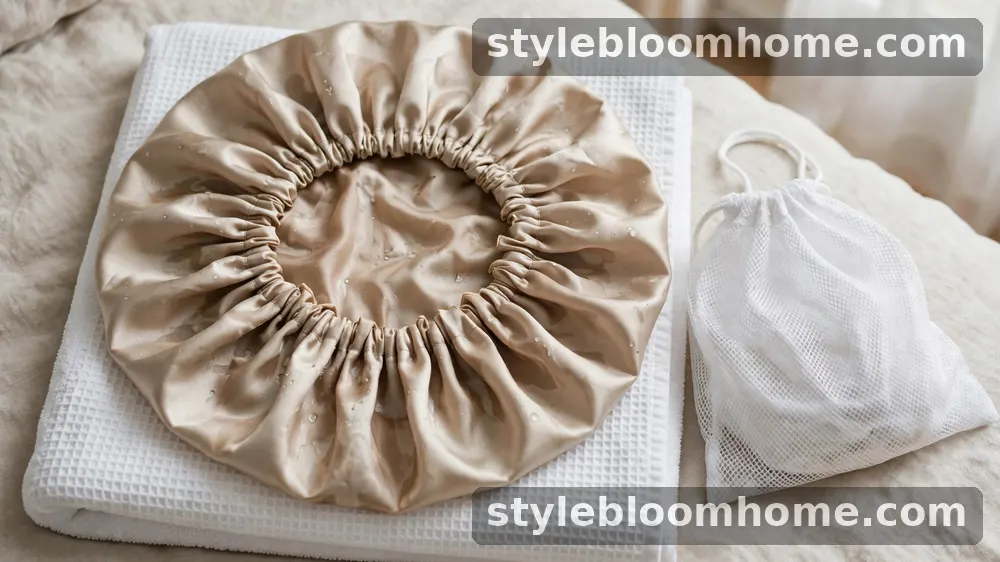
Wash frequency is a judgement, not a rule. A bonnet worn nightly against products and scalp sweat needs washing weekly. Wash it when it smells of product or feels slick with oil. Use a mesh bag in the machine, and let it dry fully before wearing it again.
What to use instead of a satin bonnet
The alternatives divide into three honest groups. A satin or silk pillowcase is the closest substitute: it gives the glide without anything on the head, and it is the right answer for hot sleepers, fringe wearers, and anyone who will not keep a bonnet on. A satin-lined cap or scarf does the same enclosing job with a different shape.
What does not substitute is cotton with good intentions. A cotton bandana, a cotton scarf, or a cotton pillowcase grips and drinks moisture whatever shape it takes, and the shape is not the mechanism — the smooth surface is. Buy the bonnet for patterned or long hair, the pillowcase for straight, fine, or fringe-ruled hair.
Skip it if: honest objections answered
Skip the bonnet if you sleep hot and have already tried one that left your scalp sweating — a satin pillowcase gives most of the benefit with none of the seal. If you cannot tolerate anything on your head at night, a pillowcase costs no sleep.
Skip a specific bonnet if the listing will not state its fibre, if it has no returns window usable from Germany, or if it is one-size and your hair volume is far from average. Skip any bonnet that promises hair growth or repair. Skip the cheapest listing with no reviews and no reachable seller. Search Amazon.de for budget satin bonnets
First night and first month: what to expect
The first night, expect strangeness. The bonnet feels unusual for a few minutes, the band is noticeable, and the hair feels contained in a way it never is. Judge night one on one question: did it stay on?
The first week answers the questions that matter: does the scalp stay comfortable, do the roots grease faster, does the fringe survive, does the curl pattern hold to the second day. If the scalp sweats or the roots grease, loosen the fit and give it three more nights. After a month, the bonnet either belongs in the routine or it does not. Search Amazon.de for satin sleep bonnets
Frequently asked questions
- Is a satin bonnet good for your hair?
- Yes, for one specific reason: it reduces friction while you sleep. The smooth satin surface lets hair glide instead of catching on cotton, which means fewer tangles, less breakage at the ends, and better-kept moisture and curl definition over weeks. The benefit is protection from rubbing, night after night, and it is largest for curly, coily, long, or easily tangled hair.
- Which is better, a satin bonnet or a silk bonnet?
- Silk is the better fibre and satin is the cheaper weave, so the honest answer depends on the budget. A polyester satin bonnet glides well, costs €20 to €30 in Germany, and tolerates machine washing. A mulberry silk bonnet breathes better, needs gentle cold washing, and costs €25 to €87 on verified German-facing pages. Buy satin to test the habit or to keep the spend low; buy silk if you sleep hot or your hair runs dry.
- Is it OK to wear a bonnet as a white person?
- Yes. Bonnets have deep roots in Black hair care, where they protect curls, coils, braids, and protective styles, and wearing one to protect your own hair is widely accepted. Wear it for its purpose — overnight hair protection — and not as a costume, a joke, or a fashion statement that mocks the people who kept the practice alive.
- Is silk or satin better for 4C hair?
- Either beats cotton by a wide margin, and the difference between them is smaller than the difference between a bonnet and no bonnet. Satin protects at a lower price and tolerates machine washing; silk breathes better at several times the price. For 4C hair, size and construction decide: the roomiest cap that stays on, a double layer, and a tie closure. The Sari Curls 42 cm size and the Kitsch oversized pocket are the verified options sized for this hair.
- How do you wash a satin bonnet?
- Hand wash cold with mild detergent and air dry flat, and you will never go wrong. The manufacturer's guidance for the verified picks allows a gentle machine cycle at 30 to 40 degrees in a mesh bag, followed by air drying. Never iron satin, never use bleach, and never use fabric softener — all three damage the fabric.
- Can a satin bonnet damage your hair or cause hair loss?
- A correctly fitted bonnet does not damage hair or cause hair loss; it prevents the friction damage that thins ends over time. A band worn too tight, night after night, can stress the hairline and leave dents, and that is a fit problem, not a bonnet problem. Wear the band at the hairline, snug without pressure, above the ears, and loosen it if it leaves a red mark in the morning.
- Can a satin bonnet help with hair growth?
- No, not directly. A bonnet protects the hair you have from friction damage, so hair keeps more of its length instead of breaking at the ends — which can look like faster growth over months, because less length is lost. It does not stimulate the scalp, change the growth cycle, or grow new hair, and any listing that promises growth is overstating.
- Does a satin bonnet make hair greasy?
- It can, for some scalps. A band that seals the hairline traps heat and sweat, and sweat plus trapped oil greases the roots faster — the Galaxus tester found exactly this, with forehead spots to match. The fix is a looser fit, the band at the hairline rather than low on the forehead, and a week of trying before judging.
- Is satin breathable, or will I sweat under a bonnet?
- Polyester satin breathes less than silk and less than cotton. Most wearers find it fine, but hot sleepers can find a sealed bonnet sweaty — again, the Galaxus tester reported scalp sweating under her bonnet in winter. If you sleep hot, start loose, and judge by the third or fourth night rather than the first.
- Should you sleep in a satin bonnet every night?
- Yes, if it stays comfortable. The benefit is cumulative — less friction every night, not one dramatic night — so nightly wear is how it pays. If the scalp sweats, the roots grease, or the band aches, wearing it every night is the wrong answer for your head, and every-other-night or a pillowcase instead is the better routine.
- Is a satin bonnet better than a satin pillowcase?
- For most hair, yes, because a bonnet encloses all the hair while a pillowcase protects only the hair touching it. The pillowcase wins for hot scalps, fringe wearers, and anyone who will not keep anything on their head, and the two together — as in the Sari Curls bundle at €37.50 — cover both failure modes.
- How much should a satin bonnet cost in Germany?
- On prices verified live on 31 October 2026: €20.23 to €28.90 for the Sari Curls bonnets, €27.95 for the Kitsch bonnets, and €37.50 for the Sari Curls bundle with a pillowcase. Below that range sits a simpler construction, a thinner single layer, or an unverified claim. Check the live listing before buying.
- Do satin bonnets work for straight hair?
- Yes, more narrowly than for curly hair. The wins are fewer tangles at the nape, a blowout that survives the night, and less end damage from rubbing. The risk is fit: a tight cap flattens the roots, and flattened roots show immediately on straight hair. Size for volume, set the band at the hairline, and use a tie closure so the tension is yours to set.
- Can you put a satin bonnet on wet hair?
- Not soaking wet. Hair is weakest when wet, and sealing it inside a bonnet keeps it wet for hours, leaving it limp and more breakage-prone. Let hair dry to damp — roughly eighty percent dry, no longer dripping — then gather loosely and cover.
- What can I use instead of a satin bonnet?
- A satin or silk pillowcase is the closest substitute, giving the glide without anything on the head. A satin-lined cap or beanie suits short hair and cold bedrooms, a satin scarf tied as a wrap suits long hair, and a pineapple gather with a satin scrunchie on a satin pillowcase is the lightest-touch option.
The bottom line
Germany's satin-bonnet shelf is thin: one retailer editorial, shop collections, and marketplace listings, with no independent guide ranking anything. The Kitsch oversized bonnet at €27.95 is the simplest verified buy: double-layer satin, ties you can adjust, a 4.7-star record from 312 reviews. The Sari Curls bonnet at €28.90 is the thoughtful one: three sizes, an honestly stated polyester satin fibre, and a German shop that shows its stock.
Buy the size your hair volume needs, set the band at the hairline and give it a month. If the scalp stays comfortable and the mornings get easier, the bonnet has earned its place for €28. If the scalp sweats or the roots grease after a week of loose wear, the pillowcase is the honest fallback, and no guide should talk you out of listening to your own head. Search Amazon.de for bestselling satin bonnets