Home Organizing & Cleaning Statistics: 22 Sourced Numbers That Explain Your Home
Every figure on this page comes from a named study or survey we opened and checked — government time diaries, peer-reviewed journals, national surveys. No recycled listicle numbers, and the famous ones that do not hold up are called out at the bottom.
- Housework is a second shift: 87% of women do household activities on an average day, averaging 2.7 hours on the days they do them (BLS, 2024).
- Cleaning alone takes about six hours a week for the average American — seven for parents (ACI, 2018).
- Clutter is measurable: women who described their homes as cluttered showed a stress-hormone pattern linked to poorer health (UCLA, 2010).
- Overflow is now normal: a record 12.6% of U.S. households rent a storage unit (Self Storage Association, 2025).
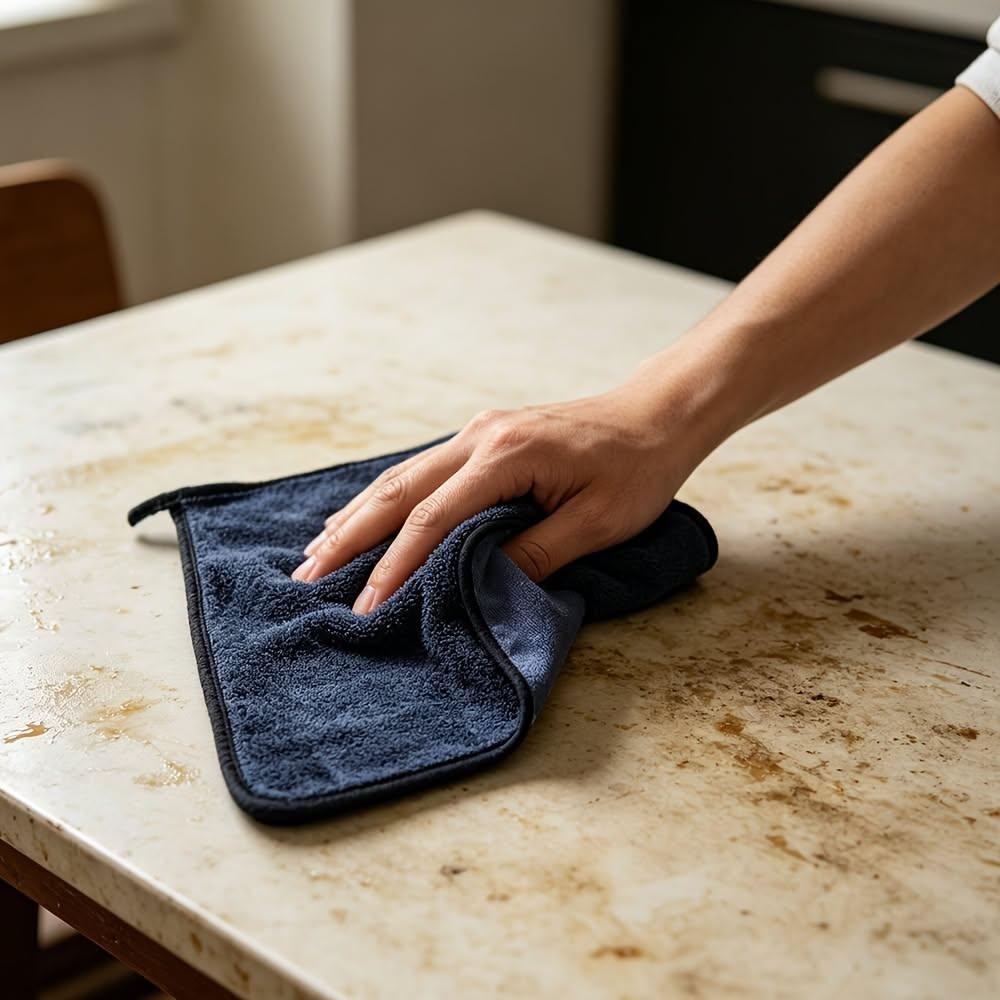
The numbers behind the mess: what the research actually says about time, clutter and calm.
Short answer first: running a home takes about two hours of work a day, cleaning alone eats roughly six hours a week, and the clutter sitting in the corner is measurably tied to stress — and every one of those claims on this page links to the study or survey it came from.
Most statistics pages in this corner of the internet recycle the same twenty numbers from each other, and some of those numbers were never real. So we built this one differently. Every figure below was opened and checked at its original source today — the U.S. Bureau of Labor Statistics, the Census Bureau, the American Cleaning Institute, NSF International, peer-reviewed journals — and the famous figures that failed that check are named honestly at the bottom of the page. If you write about homes for a living, you are welcome to cite anything here; the source and year sit right next to each number so your readers can check us.
The key numbers, all in one table
Here is the whole page on one screen: 22 figures covering time, cleaning, clutter, stress, storage and germs — each with what it measures and exactly where it comes from.
| Figure | What it measures | Source |
|---|---|---|
| 80% | of people did household activities on an average day | BLS American Time Use Survey, 2024 |
| 2.7 hrs | women average on days they do household activities (men: 2.3 hrs) | BLS ATUS, 2024 |
| 48.5% vs 24.9% | women vs men who did housework on an average day | BLS ATUS, 2024 |
| 71.6% vs 54.2% | women vs men who did food prep and cleanup on an average day | BLS ATUS, 2024 |
| ~6 hrs/week | average time Americans spend cleaning their homes | ACI National Cleaning Survey, 2018 |
| ~7 hrs/week | average cleaning time for parents | ACI, 2018 |
| 28% | clean for more than seven hours every week | ACI, 2018 |
| 52% | say cleaning the bathroom is their most-dreaded task | ACI, 2018 |
| 80% | of Americans plan to spring clean every year | ACI National Cleaning Survey, 2024 |
| 45% | say spring cleaning takes three or more days | ACI, 2024 |
| 57% | name decluttering and organizing as their top spring-clean motivation | ACI National Cleaning Survey, 2026 |
| 72% | feel more relaxed in a clean, organized home than after a massage | ACI, 2026 |
| Flatter cortisol | women who described home as cluttered/unfinished had flatter daily stress-hormone slopes | Saxbe & Repetti, Personality and Social Psychology Bulletin, 2010 |
| Competing signals | objects in view compete for, and suppress, each other in the visual cortex | McMains & Kastner, Journal of Neuroscience (Princeton), 2011 |
| 73% | feel overwhelmed when their home is messy | Talker Research survey, 2024 |
| 48% | say how organized their home is affects their mental health | Talker Research, 2024 |
| 25 items | average number of things out of place in a home at any moment | Talker Research, 2024 |
| 46% | call the garage the hardest area of the home to keep organized | Talker Research, 2024 |
| 12.6% | of U.S. households rented a self-storage unit in 2024 — a record high | Self Storage Association Demand Study, 2025 |
| 2,146 sq ft | median size of a new single-family home completed in 2024 | U.S. Census Bureau, 2024 |
| 75%+ | of dish sponges and rags tested positive for coliform bacteria | NSF International Household Germ Study, 2011 |
| 45% / 32% | of kitchen sinks / countertops tested positive for coliform | NSF International, 2011 |
Read the table with one caution we will repeat all the way down: a survey is what people say they do, and a time diary is what they recorded doing. The strongest numbers below — the Bureau of Labor Statistics ones — come from diaries. The survey numbers are still useful, but they describe feelings and habits, not stopwatch truth.
How much time does housework actually take?
About two hours a day across the whole household — and on an average day, 87 percent of women and 74 percent of men do at least some of it (Bureau of Labor Statistics, American Time Use Survey, 2024).
The federal time-use survey is the gold standard here because it does not ask people to estimate. Interviewers walk roughly 7,700 respondents through the previous day, minute by minute. In 2024, 80 percent of people did household activities — housework, cooking, lawn care, household management — on an average day, spending about two hours on them. On the days they did these activities, women averaged 2.7 hours and men 2.3 hours.
The sharper gap hides inside plain housework itself. On an average day, 48.5 percent of women did housework — interior cleaning, laundry — compared with 24.9 percent of men. Food preparation and cleanup shows the same shape: 71.6 percent of women did it on an average day, against 54.2 percent of men. If you are the one who always seems to be wiping, folding and putting away, the federal diary data says you are not imagining the imbalance — and it is exactly why a weekly cleaning schedule that splits the work by day, instead of by whoever notices first, matters so much.
One more honest detail from the same survey: more people do housework on weekend days (41 percent) than on weekdays (36 percent). The Saturday marathon is real, it is measurable, and it is the pattern our cleaning schedule for working moms is designed to break — 75 minutes spread across the week instead of a weekend lost to catching up.
How much of that time is cleaning itself?
Roughly six hours a week for the average American — and about seven if you are a parent (American Cleaning Institute, National Cleaning Survey, 2018).
The ACI survey, run by Wakefield Research with 1,000 nationally representative adults, found 28 percent of people cleaning more than seven hours a week and only 10 percent getting away with under an hour. A third of respondents worried they were not cleaning enough, and nearly another third were unsure they were cleaning correctly — which tells you the six hours is not buying peace of mind.
The most-dreaded task, by a wide margin, is the bathroom: 52 percent named it, ahead of the kitchen (23 percent) and dusting (21 percent). That ranking is why our bathroom cleaning hacks lead with the habits that make the bathroom faster — a daily squeegee and a weekly ten-minute pass beat a monthly deep scrub you dread for three weeks first. And for the hours themselves, technique is the only honest lever: the two-cloth method in our microfiber cleaning guide exists because the ACI numbers say most of us cannot add hours — we can only make the ones we have count.
What does clutter do to your brain and body?
The research answer is uncomfortable and specific: in the best-known study, women who described their homes as cluttered or unfinished showed a flatter daily pattern of cortisol — the stress hormone — a profile researchers link to worse health outcomes.
That study is Saxbe and Repetti (2010), published in the peer-reviewed Personality and Social Psychology Bulletin. Sixty dual-income spouses gave self-guided tours of their homes; the researchers scored the language for clutter and unfinished-project words versus restful words, then tracked mood and cortisol over three weekdays. Women with higher "stressful home" scores had flatter cortisol slopes and a depressed mood that rose as the day went on. Women who described restorative homes showed the healthy pattern instead. Two honest limits: the study is correlational — it cannot prove clutter caused the hormone pattern — and the cortisol result appeared in wives, not husbands.
The mechanism has its own evidence. At Princeton, neuroscientists Stephanie McMains and Sabine Kastner showed in the Journal of Neuroscience (2011) that when several objects sit in your visual field at once, they compete for representation in the visual cortex and actively suppress each other. Your brain pays a filtering tax for everything left out on the counter. It is the scientific version of what every woman who has cleared a kitchen surface already knows: the room feels quieter because, neurologically, it is.
None of this means you need a perfect home. It means the background level of visible, unfinished stuff is worth lowering — which is precisely what a seasonal declutter checklist does four times a year, one room at a time, without a single dramatic purge.
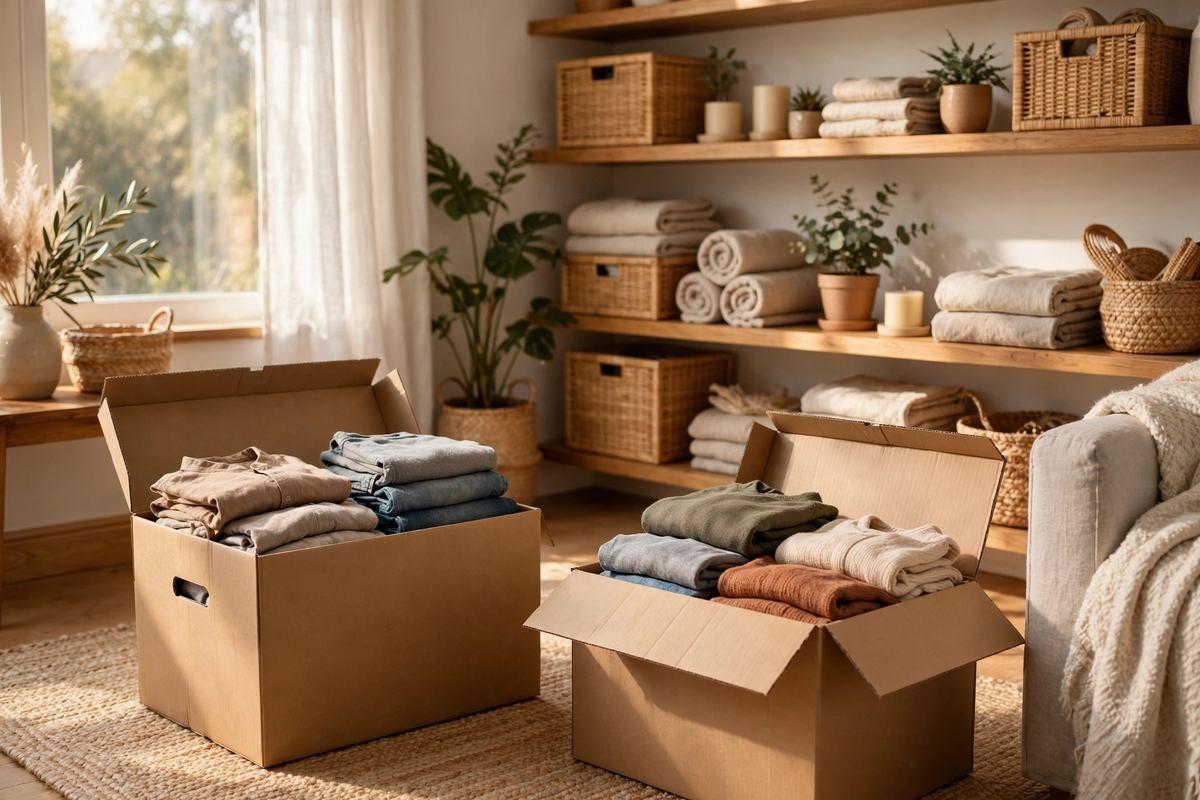
The research points the same way your shoulders do: less visible, unfinished stuff means a calmer nervous system.
How cluttered do we actually feel?
Overwhelmed, mostly: 73 percent of homeowners say they feel overwhelmed when their home is messy, and 48 percent say how organized their home is directly affects their mental health (Talker Research, 2024).
That survey — 2,000 U.S. homeowners, all with garages — found the average home has about 25 things out of place at any given moment, and half of owners are actively putting off finding a home for them. Forty percent admitted they are afraid to face their clutter at all. The garage was named the hardest area to keep organized (46 percent), ahead of closets (24 percent) and drawers (20 percent); 37 percent said their garage currently "looks like a nightmare." Read those numbers the kind way: if your entryway has a pile and your closet has a chair-drobe, you are not behind. You are the statistical average, and the fix is a system, not a personality change — start with the entryway reset and the closet organization weekend, the two zones the survey says pile up first.
The hopeful figure sits in the same poll: 80 percent of homeowners said they feel more motivated when their home is clutter-free. Motivation follows order at least as often as order follows motivation — one cleared surface is frequently enough to start the next.
The overflow problem: smaller new homes, record storage rentals
Here is the squeeze in two numbers: the median new single-family home completed in 2024 was 2,146 square feet (U.S. Census Bureau) — near a 15-year low — while a record 12.6 percent of U.S. households rented a self-storage unit (Self Storage Association, 2025 Demand Study).
That storage figure is about 16.7 million households paying monthly rent for things that do not fit at home, up from 11.1 percent of households just two years earlier. Storage is not a moral failing; it is a math problem — households keep acquiring at the old rate while floor space stays flat or shrinks. But it does mean the cheapest square footage in America is the space you free up inside your own walls. Our small apartment organizing ideas and shoe storage ideas for small spaces are written for exactly this math: vertical space, dead corners, and the discipline of a home for every category before a single new bin gets bought.
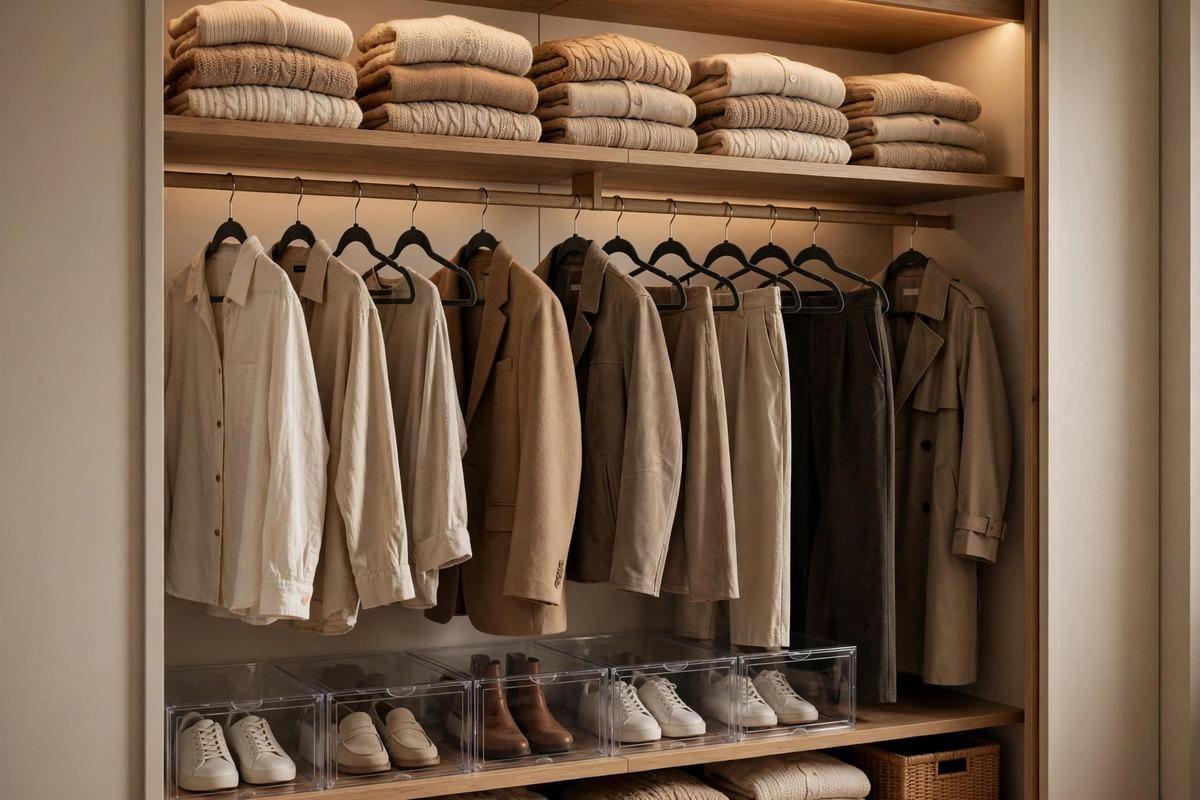
Closets were named the second-hardest area to keep organized in the 2024 Talker survey — zones beat bins.
The germ numbers nobody expects
The germiest room in the house is not the bathroom — it is the kitchen, and the germiest item is the tool you clean with: more than 75 percent of dish sponges and rags carried coliform bacteria in NSF International testing (2011).
NSF microbiologists had 22 families swab 30 everyday items and tested for yeast, mold and coliform — a bacteria family that includes Salmonella and E. coli. Coliform turned up on 45 percent of kitchen sinks, 32 percent of countertops and 18 percent of cutting boards, while the bathroom's worst offender, toothbrush holders, hit 27 percent. Small study, big lesson: the surfaces that touch food deserve the most frequent cleaning, and the sponge itself needs sanitizing or replacing on a rhythm — one more reason the caddy system in our under-sink organization guide keeps a clean-cloth rotation instead of one heroic, ancient sponge.
Spring cleaning: the annual reset, in numbers
Spring cleaning is close to universal — 80 percent of Americans plan to do it every year (ACI, 2024) — and for 45 percent of them, it takes three or more days to finish.
The motivation data explains the ritual: in the ACI 2026 survey, 57 percent named a desire to declutter and organize as their top reason — ahead of the fresh-start feeling (47 percent). And the payoff people report is not really about dirt: 72 percent said they feel more relaxed in a clean and organized home than they do after a massage. Fall is catching up, too — 89 percent told the ACI in 2024 that fall cleaning deserves the same status as spring cleaning. Our advice follows the data: treat the big reset as a twice-a-year declutter using the room-by-room deep cleaning checklist, and let the weekly schedule carry the ordinary weeks in between.
What these numbers mean for a real home
If time is your problem: the diary data says housework is roughly two hours a day of somebody's life, every day. You do not need more effort — you need the work divided on paper and anchored to days, which is the entire design of the system for keeping a house clean with a full-time job. Twenty minutes of anchors beats six hours of Saturday.
If stress is your problem: the cortisol and attention research both point at visible, unfinished stuff — not at dust. Lower the background: clear the surfaces you see from the sofa and the bed, finish or box the half-done projects, and give the 25 out-of-place things a home. Calm is a surfaces problem before it is a deep-cleaning problem.
If space is your problem: you are living the national math — homes are not growing, storage rentals are at a record high, and the overflow lands in garages, closets and drawers first. Work the zones in that order, use vertical space ruthlessly (the small-kitchen pantry system is the template), and remember that one in eight households is paying rent on overflow. Every shelf you free at home is the cheapest rent cut there is.
And if you want the paper version of the systems behind this page, our free printable cleaning checklist turns the weekly schedule into a one-page fridge sheet — free, no catch, and it is the same checklist our most-read cleaning guide runs on.
Statistics we left out on purpose
An honest reference page is defined by what it refuses to print. These famous numbers appear on hundreds of organizing sites — including some that rank above this one — and none of them survived a trip to the original source:
"The average home has 300,000 items." This traces to a 2014 Los Angeles Times article quoting a professional organizer. There is no study behind it and no method for what counts as one item (is a box of paper clips one item, or fifty?). It is a memorable line, not a statistic.
"Decluttering eliminates 40 percent of housework." Attributed for decades to a "Soap and Detergent Association study" that nobody can produce — no date, no sample, no document. The direction is plausible; the number is folklore.
"You will spend a year of your life looking for lost things." Retold through newspapers and organizer associations with the figure mutating as it travels (3,680 hours here, 55 minutes a day there, $2.7 billion in replacements somewhere else). Each version cites the previous article, never a study. When a number's only source is another list of numbers, it does not belong on this page.
Why does this matter to you? Because advice built on invented numbers bends toward panic — buy more bins, rent more space, feel worse. The verified figures above tell a calmer story: the load is real, it is shared unequally, it is measurable, and small systems move it. That is the story worth organizing your home around.
Sources
Every figure on this page, at its original home:
- U.S. Bureau of Labor Statistics — American Time Use Survey, 2024 Results (household activities, housework and food-prep figures).
- American Cleaning Institute — 2018 National Cleaning Survey (six hours a week; parents seven; dreaded tasks) and National Cleaning Week survey archive; 2024 spring-cleaning figures as reported by CMM Online; 2026 survey via Business Wire.
- Saxbe, D. E. & Repetti, R. — "No Place Like Home: Home Tours Correlate With Daily Patterns of Mood and Cortisol", Personality and Social Psychology Bulletin, 2010.
- McMains, S. & Kastner, S. — "Interactions of Top-Down and Bottom-Up Mechanisms in Human Visual Cortex", Journal of Neuroscience, 2011 (Princeton Neuroscience Institute).
- Talker Research — 2024 homeowner clutter survey (2,000 U.S. homeowners with garages), as reported by iHeart, April 2024.
- Self Storage Association — 2025 Demand Study (2024 household penetration, 12.6 percent).
- U.S. Census Bureau — Characteristics of New Housing (2024 median completed single-family home, 2,146 sq ft).
- NSF International — 2011 Household Germ Study (sponges, sinks, countertops).
Frequently asked questions
- How much time does the average person spend cleaning each week?
- About six hours a week, according to the American Cleaning Institute 2018 National Cleaning Survey of 1,000 U.S. adults. Parents averaged closer to seven hours, and 28 percent of everyone surveyed cleaned for more than seven hours a week.
- How much housework do women do compared with men?
- On an average day in 2024, 48.5 percent of women did housework, compared with 24.9 percent of men (U.S. Bureau of Labor Statistics, American Time Use Survey). On the days they did household activities, women averaged 2.7 hours and men 2.3 hours.
- Does clutter really affect stress, or is that just a saying?
- There is real evidence, with honest limits. In a 2010 peer-reviewed study, women who described their homes as cluttered or unfinished showed a flatter daily cortisol pattern — a stress profile linked to worse health — and Princeton research shows visual clutter competes for the brain attention. The cortisol study is correlational, so it shows a link, not proof of cause.
- Is it true the average home has 300,000 items?
- Nobody has ever verified that number. It traces back to a 2014 newspaper quote from a professional organizer, with no study and no counting method behind it. We left it off the statistics table on this page, along with every other figure we could not open and check at its original source.
- What percentage of U.S. households rent a storage unit?
- 12.6 percent — about 16.7 million households in 2024, a record high in the Self Storage Association 2025 Demand Study. In other words, roughly one in eight households now pays to store things outside the home.
- What is the germiest item in most homes?
- The dish sponge or dish rag. In NSF International 2011 Household Germ Study, more than 75 percent of sponges and rags tested positive for coliform bacteria, and the kitchen — not the bathroom — held most of the top germ hot spots.
- How long does spring cleaning take most people?
- Longer than a weekend morning. In the American Cleaning Institute 2024 survey, 80 percent of Americans planned to spring clean, and 45 percent of them said it takes three or more days to finish.
- Where do the statistics on this page come from?
- Every figure comes from a named source we opened and checked: the U.S. Bureau of Labor Statistics, the U.S. Census Bureau, the American Cleaning Institute, NSF International, the Self Storage Association, and peer-reviewed journals. Each number carries its source and year next to it, and the full source list sits at the bottom of this page.