
Cube Storage Organizer: Measure the Opening First, Then Buy the Frame and Bins That Fit
Buy the frame first, measure the opening, and only then buy the bins. The 13-inch vs 11-inch opening decides every bin you will ever own, and the wall you measured decides the frame.
By the end, you will know which frame size fits your wall, which opening size your bins must match, how the four frame families compare on load and build, the bin mix that looks like furniture, and the anchoring rule no renter should skip.
As an Amazon Associate, StyleBloom earns from qualifying purchases. This guide contains affiliate links — it costs you nothing extra and keeps our content free.
The rival guides for this query all describe the same furniture and stop short of the same decision. They list frames without making the opening measurement the first step, they compare Kallax with ClosetMaid without stating that their inserts are not interchangeable, and they praise tall units without settling the renter's anchoring dilemma. This page closes all three gaps: the opening-fit protocol first, the frame comparison with its weaknesses stated, and the anchoring answer for renters who cannot drill.
It sits beside the room guides, not inside them. The closet organization guide holds the wardrobe system, the linen closet guide holds the folding method, and the shoe storage guide holds the footwear detail. This page holds the cube decision only. Measure the wall first if you read nothing else — the wall decides the size, and the size decides everything after it.
Buy the frame first, measure the opening, and only then buy the bins. That single sentence prevents the most common and most expensive mistake in cube storage, which is buying beautiful 13-inch fabric bins for an 11-inch cube, or buying a 9-cube frame for a wall that only fits six. A cube storage organizer is not one product. It is a system of three decisions made in order: the frame size and orientation, the opening size that decides every bin you will ever buy, and the mix of open and closed cubes that keeps the unit looking like furniture instead of a warehouse shelf. Get the order right and a 9-cube organizer holds a small apartment together. Get it backwards and you own a wall of almost-fitting boxes. This guide makes the three decisions in order, compares the frames honestly, and gives you the room-by-room plan and the bin system that the rival guides leave out.
Size First: 4, 6, 8, 9, or 12 Cubes, and Which Wall They Fit
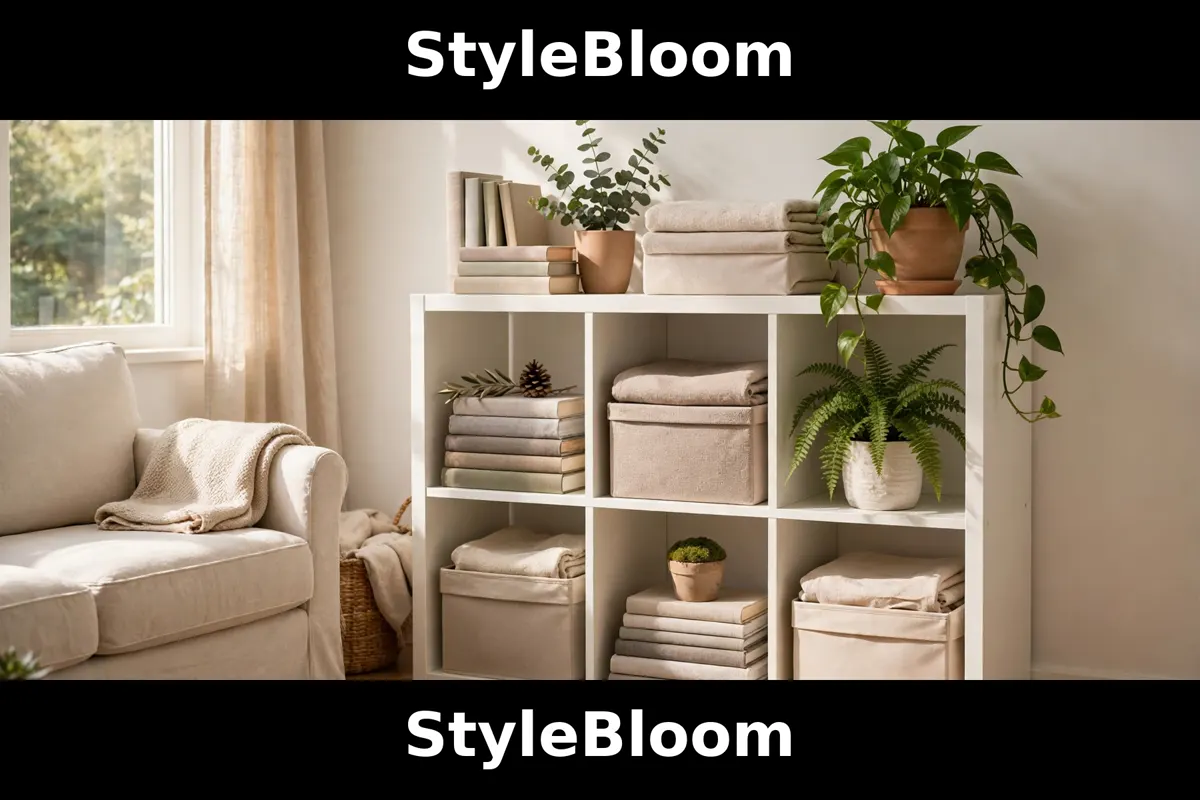
Start with the wall, not the catalogue. Measure the available run of wall, floor to ceiling, and the depth the room can spare, and write the three numbers down before you look at a single listing. A 9-cube organizer is the default recommendation in this guide because it is the size that fits the most rooms: tall enough to use vertical space, narrow enough for a single wall run, and divisible into zones for more than one kind of stuff. An 8-cube unit in its common form stands 30 inches wide by 60 inches tall and 15 inches deep, which is a substantial piece of furniture that needs a wall run longer than 65 inches once you allow for skirting and access. A 4-cube unit suits a single purpose — a bedside stack, a closet interior, a child's low shelf — and a 12-cube unit suits a shared apartment, a large living wall, or a room that needs the organizer to act as a divider. The wrong size is not a small error. A unit that is one cube too wide blocks a door swing, a walkway, or a radiator, and a unit that is one cube too small fills up in the first month and teaches you to pile things on top of it, which defeats the entire purchase.
Orientation is the second half of the size decision, and it changes both the look and the safety of the unit. Standing vertical, four cubes wide and two tall, or three wide and three tall, the organizer uses the wall and leaves the floor clear, which is what a small room needs most. Laid horizontal, two cubes high and four or five wide, the same unit becomes a low console, a television stand, or a room divider that defines zones in an open plan without blocking light. The horizontal form is also the renter's friend, for reasons the anchoring section explains: a low, wide unit is far harder to tip than a tall one. Decide orientation before you buy, because the assembly, the anchoring, and the bin mix all follow from it, and because a unit assembled vertical and then laid down needs its back panel and fixings reconsidered. Measure twice, buy once, and let the wall decide the size.
Depth deserves its own paragraph, because it is the dimension shoppers forget. Most wood cube frames run about 15 inches deep, which swallows books, folded clothes, board games, and storage bins with room to spare, and which also means the unit projects 15 inches into a room that may only have 24 inches of walkway to give. Shallower units and fabric cube systems run closer to 11 or 12 inches deep, which suits closets and children's rooms but leaves standard books and record sleeves proud of the front edge. Check the depth against the deepest thing you intend to store, and against the walkway beside it. A cube that fits the wall but blocks the path is a daily annoyance, and daily annoyances are what get furniture listed for resale within the year.
The Opening-Fit Rule: 13 Inches Is Not Universal
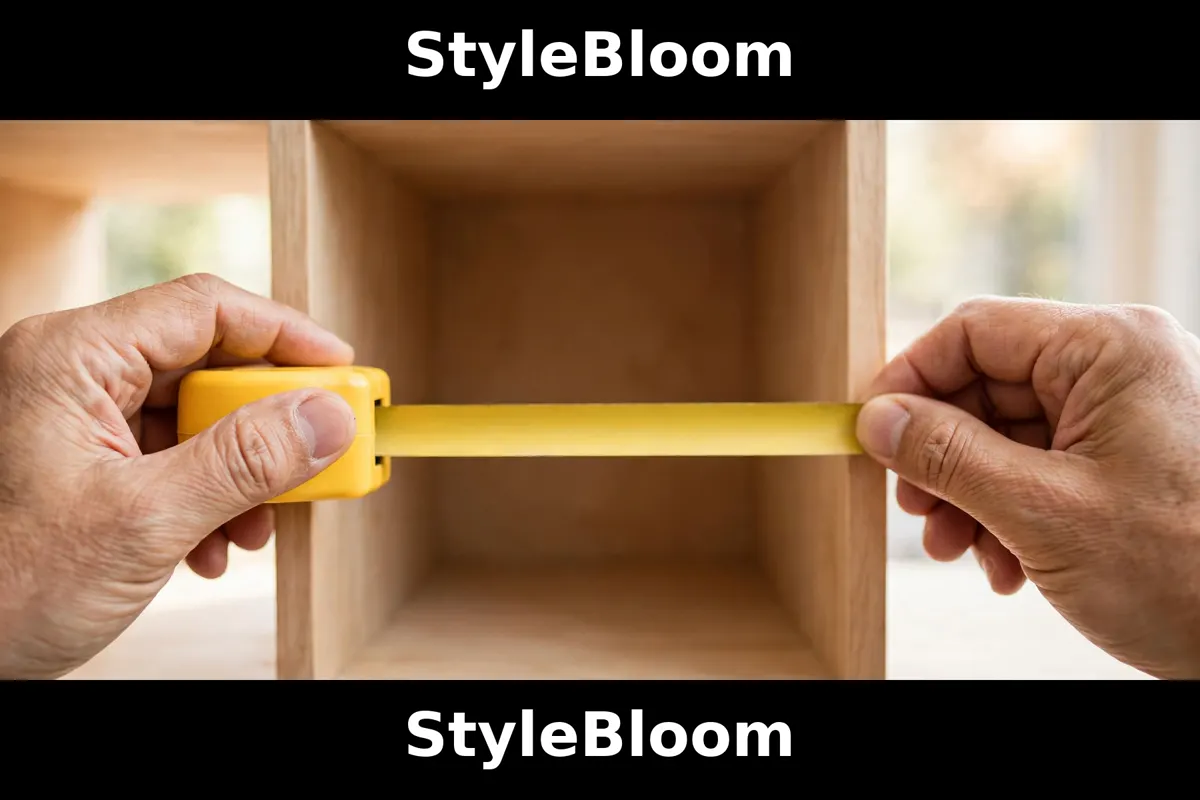
Every cube has an opening, and the opening decides the bins. The two sizes that dominate the market are about 13 inches square, found on IKEA Kallax and Better Homes and Gardens class wood frames, and about 11 inches, found on ClosetMaid Cubeicals and on many marketplace 9-cube kits. The difference is two inches, and it is the difference between bins that slide in and bins that do not. Third-party bins marketed as universal 13-inch bins are a lottery: they fit the 13-inch frames they were sized for and jam, bow, or refuse the 11-inch frames entirely. Drawers and inserts are worse, because they are sized to one brand's openings and are not swappable between brands. The finishes rarely sit happily side by side either, so mixing a Kallax frame with Cubeicals inserts looks wrong even where it physically fits.
The rule, stated as a protocol, is this. Buy the frame. Assemble it. Measure the opening yourself, width, height, and depth, with a tape measure, in inches, and write the numbers on the same paper as the wall measurements. Only then order bins, and order them to the measured opening minus a finger's width of clearance, so they slide in and out without catching. Order one bin first and test it before ordering the set, because a set of nine wrong bins is nine times the return postage and the argument. If you already own bins, reverse the protocol: measure the bins, then buy the frame whose openings match them, and check the depth as well, because a bin that fits the face but sticks out the back defeats the point. This paragraph is the most valuable one in the guide, and it costs nothing to follow.
Depth matters inside the opening too. A Kallax-class opening runs about 15 inches deep, which takes a 13-inch bin plus clearance and leaves the front flush. A Cubeicals opening runs about 11.75 inches deep, which takes its own fabric drawers and nothing longer. A marketplace kit advertising 11-inch openings may run only 11 or 12 inches deep, which means even correctly sized bins sit proud or the back panel bows. When a listing does not state the opening dimensions, treat that as information: the seller is selling the silhouette, not the specification, and the specification is what you live with. Ask, or buy elsewhere. The table in the frame comparison section gives the opening figures to plan around, and the bin section gives the pairing for each one.
The Frames, Compared Honestly: Kallax, Better Homes, ClosetMaid, and the Kits
Four kinds of frame cover nearly every listing a shopper will meet, and they are not interchangeable. The comparison below grades each on the facts that decide the purchase: opening size, stated load, build, best use, and the weakness that the marketing omits. Read the weakness column first. It is where the purchase is actually decided.
| Frame | Opening | Stated load | Best use | Weakness |
|---|---|---|---|---|
| IKEA Kallax | About 13 in square, about 15 in deep | 13 kg per shelf, stated by IKEA | Living room, room divider, structural piece | Needs an IKEA trip or delivery; inserts add cost |
| Better Homes and Gardens 9-cube | About 13 in square | Light to medium loads; heavy cubes flex | Apartment living room, Kallax alternative | Particleboard; older flat-edged generation chips at corners |
| ClosetMaid Cubeicals | About 10.5 to 11.25 in | Light loads; fabric-drawer class | Nursery, wardrobe interior, craft room | Not a living-room structural piece; own bins only |
| Marketplace 9-cube kits | Often about 11 in; varies | Varies; check the listing | Budget first buy; dorm rooms | Openings and depth inconsistent; measure first |
| Mainstays / Target house brands | About 13 in on bookcase lines | Light to medium loads | Budget bookcase use | Thinner panels; back panel quality varies |
IKEA Kallax is the reference piece, and the comparison exists because everything else is measured against it. It is the heavier, more structural unit, with uniform panels, a large first-party range of inserts, doors, drawers, and legs, and a stated shelf load of 13 kilograms per shelf across the range, which is generous for folded clothes, board games, baskets of toys, and a decent run of paperbacks. It doubles as a room divider and a television stand, and it is the unit the apartment-living forums recommend when someone asks for cube storage without qualification. Its costs are real: the trip or the delivery, the assembly time, and the inserts, which turn a bare frame into a finished piece at a price that surprises first-time buyers. Budget for the inserts in the same purchase, or the frame will stand half-dressed for months.
Better Homes and Gardens is the Kallax alternative for shoppers without an IKEA nearby, and the honest summary from the largest review synthesis available is that it is the same furniture with a different sticker and a delivery path that does not require a showroom trip. The current generation carries an upgraded back panel and rounded front edges, which matter, because the older flat-edged generation chipped at the front corners within the first year of normal use in owner reports. It is particleboard, and particleboard has two enemies: water and overload. A 9-cube frame in this line serves an apartment living room well at light to medium loads. Loaded past 30 pounds per cube with heavy books or vinyl, with a poorly nailed back panel, it flexes over time. That is not a defect in the product. It is the physics of the material, and the buyer's job is to respect it.
ClosetMaid Cubeicals is a different animal and must not be bought as a cheaper Kallax. It is a lighter, laminated-board system designed around its own fabric drawers, stackable and rearrangeable, excellent inside a wardrobe, in a nursery, or in a craft room, and unconvincing as a standalone living-room piece carrying real weight. Its openings run about 10.5 to 11.25 inches, its depth about 11.75 inches, and its bins are its own. Buy it where its lightness is a virtue: children's rooms, closet interiors, and any place where the unit will be reconfigured often. Do not buy it to hold a vinyl collection. Marketplace kits and house brands fill the budget tier, and their quality varies by listing rather than by brand, which is why the opening-fit protocol matters most here. A kit that does not state its opening dimensions, its panel thickness, or its load figure is asking you to gamble, and the stake is the return postage plus the afternoon of assembly.
Search by frame type and finish, and compare current listings before buying, since availability and bundles change. The links below search the exact frame types on Amazon, so you can check the opening dimensions in the listing, read recent reviews for the generation being sold, and confirm the back-panel and edge details before the box arrives. Check three things on every listing: the stated opening width, height, and depth; whether the generation pictured has the rounded front edges; and whether wall-anchoring hardware is included, because the anchoring section explains why that hardware is not optional on a tall unit.
9-cube storage organizer, 13-inch openings · Better Homes and Gardens 9-cube organizer · ClosetMaid 9-cube organizer · Mainstays 9-cube bookcase · Kallax-style shelf unit
Bins and Inserts: Fabric, Woven, Doors, and the Two-Thirds Rule
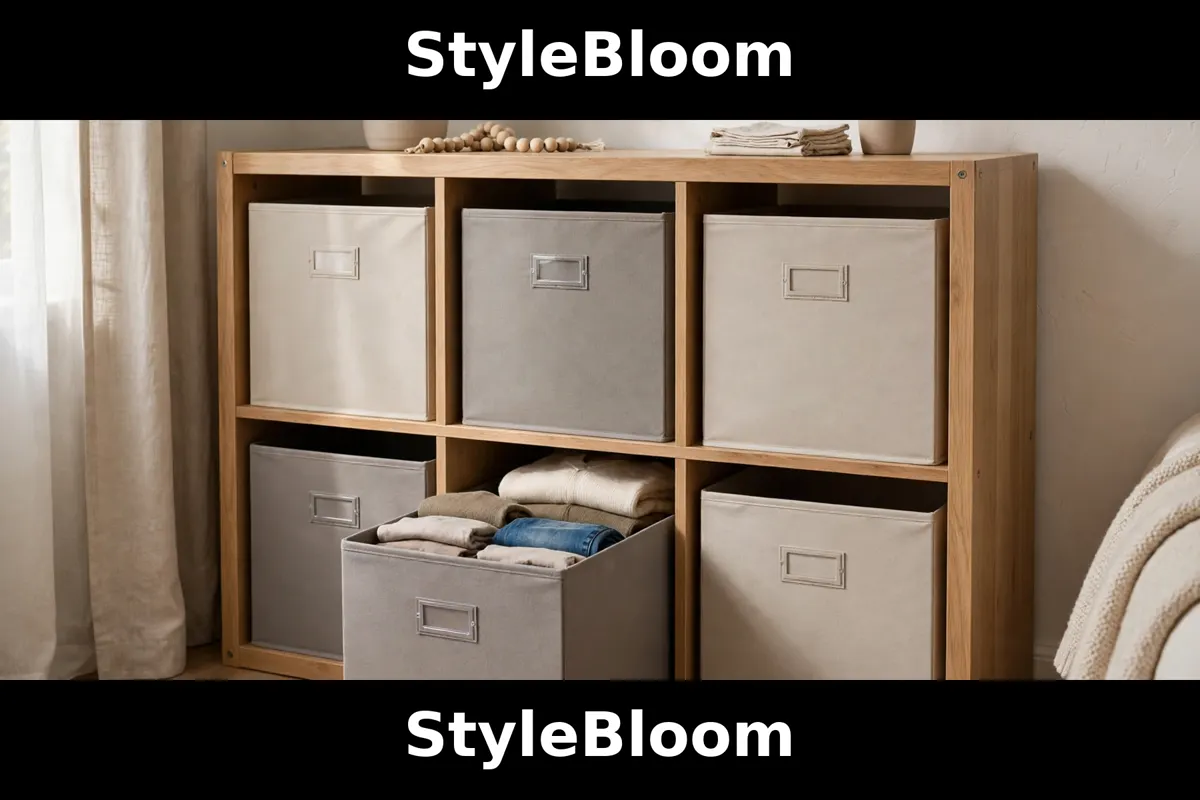
Bins are where a cube unit becomes furniture, and they are also where the money quietly doubles. The honest ratio, from the comparison guides that have watched the most rooms, is about two-thirds open and one-third closed: six open cubes showing books, plants, and beautiful objects, and three closed cubes hiding chargers, paperwork, and everything that makes a room look busy. More closed than that and the unit reads as a wall of boxes. Less closed than that and the clutter shows, which defeats the purpose of buying storage in the first place. Put the closed cubes at the bottom and the ends, where hands and eyes go least, and keep the open cubes at eye level, where the unit earns its keep as furniture.
Fabric bins are the default, and their limits are stated by their makers: a well-made double-layer fabric bin with a board bottom holds around 11 pounds, carries well with dual handles, and folds flat for a move, which is a genuine virtue for renters. Their weakness is the cardboard stiffening in cheaper bins, which collapses under heavy items, and the fabric itself, which tears when dragged loaded across a floor. Buy fabric bins for clothes, toys, linens, and light household goods, never for books by the dozen or for tools. Woven and seagrass baskets suit the visible cubes, where texture does the decorating, but they are harder to clean and their sizes vary, so measure each one rather than trusting the set. Doors and drawer inserts turn individual cubes into closed storage without bins at all, and they are worth the cost on the two or three cubes that hold the least photogenic things in the house. Lids suit the top row and the garage overflow, where dust is the enemy, and windowed lids suit the cubes you open weekly, because seeing the contents is the difference between using the system and forgetting it.
Labels are not decoration. They are the addressing system, and a cube without a label is a box you will open three times to find one thing. Label the closed cubes by category and owner where the household shares the unit: linens, cables, board games, winter accessories, each with a name the whole household uses. Use the same label style across the unit, one line, large enough to read from the doorway, and keep a short master list inside the least-used cube for the first month, until the system is memory. Rotate seasonally: winter accessories move to a high cube in summer, swim and holiday gear moves down in June, and anything unopened for a full year leaves the unit entirely. A cube system that never rotates becomes an archive, and an archive is just clutter with a frame around it.
Search bins by the measured opening, not by the marketing size. The links below search the exact bin types on Amazon: 13-inch bins for Kallax-class openings, 11-inch bins for Cubeicals-class openings, and the drawer inserts that fit each. Order one, test the fit, then order the set. That sentence has now appeared twice in this guide, because it is the sentence that saves the most money.
13-inch fabric cube bins · 11-inch fabric cube bins · Cube storage drawer inserts · Woven cube baskets · Cube storage label clips
Room by Room: Living Room, Bedroom, Kids, Office, and Entry
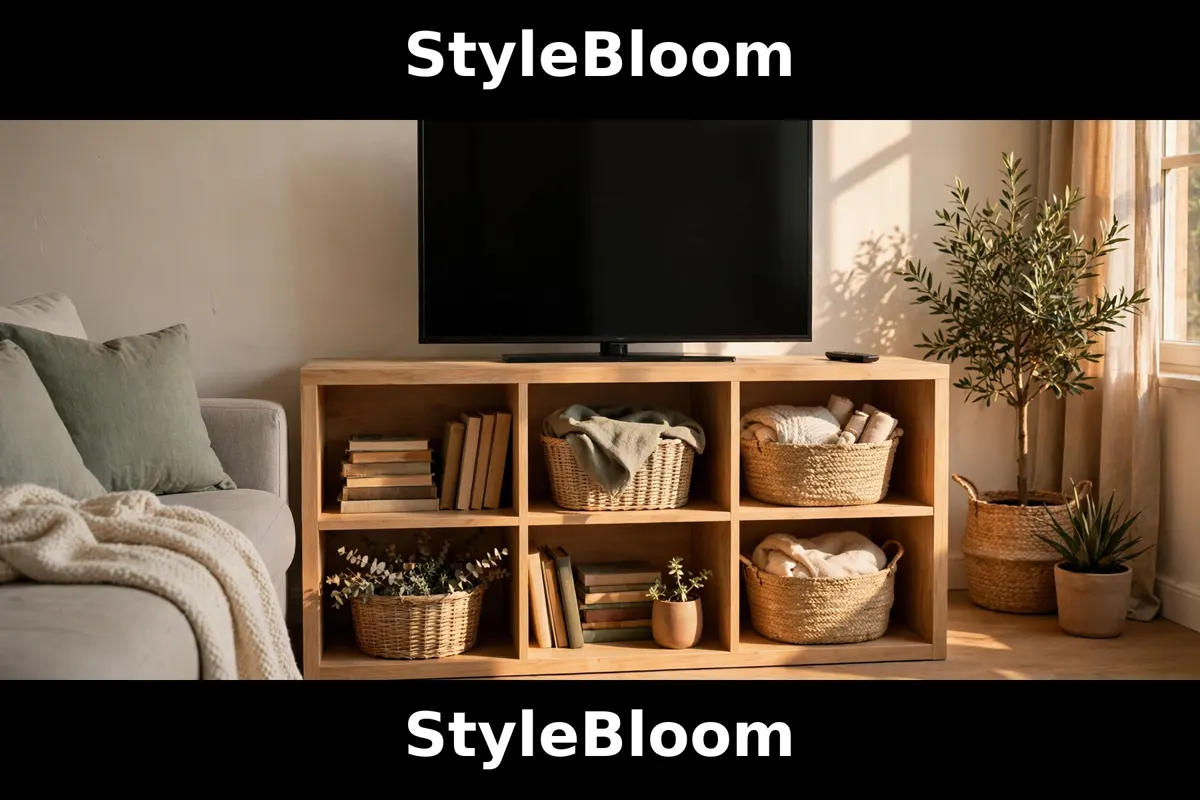
The living room is the cube unit's natural home, and the plan is simple: the unit stands where a bookcase would stand, the television sits on it or above it where the depth allows, and the zones run by use. Books and records go low, where their weight is safest and the load is nearest the floor. The remote, the chargers, and the controllers go in one closed cube with a cable pass, so the surfaces stay clear. Plants and framed photographs go at eye level in open cubes, where they do the decorating. The mistake in living rooms is loading the top row with books: weight high up raises the centre of gravity, which matters for tipping, and books are the heaviest ordinary household object. Keep the top row light, keep the heavy cubes low, and the unit will be both beautiful and safe.
In the bedroom, the cube unit replaces the chest of drawers for folded clothes, and it does the job better where closet space is short, because every cube is visible at a glance. Folded clothes go in fabric bins by category, one bin per category, with the daily-wear bin at hand height and the seasonal bin at the top. The closet interior is where a Cubeicals unit earns its keep: stacked inside the wardrobe, it turns dead vertical space into shelves for shoes, bags, and folded knitwear, and the fabric drawers keep dust off. Our closet organization guide holds the full wardrobe system, and our small bedroom storage guide holds the rest of the small-room plan; this page holds the cube decision only. In the linen closet, cubes hold towels and bedding by set, and our linen closet guide gives the folding method. The through-line is the same: one category per cube, labelled, rotated seasonally.
Children's rooms are the second home of cube storage, and the rules change. Keep the unit low and horizontal, or anchor a vertical unit without exception, because children climb, and a climbing child plus a tall unanchored unit is the accident the anchoring hardware exists to prevent. Put the child's own bins at the child's height, labelled with pictures for pre-readers, and keep small parts, heavy books, and anything breakable in the adult-height cubes. Toy rotation works through cubes better than through any other furniture: one cube of toys out, the rest stored, swapped weekly, so the room feels new without a single new purchase. In the home office, cubes hold files upright in the lower rows, stationery and tech in one closed cube, and the printer on top only where the frame's load and depth allow it; printers vibrate, and vibration plus particleboard plus an unanchored frame is a slow walk toward the edge. In the entry, a low horizontal unit with one cube per person, a bin for shoes below, and hooks above is the whole mudroom for an apartment without one, and our shoe storage guide holds the footwear detail.
Assembly and Anchoring: The Step Nobody Skips, and the Renter's Answer
Assembly is straightforward and unforgiving in equal measure, and the quality of the assembly decides the life of the unit. Work on a soft surface so the panels do not scratch, sort the hardware before starting, and drive every dowel and cam fully home, because a joint left loose at assembly is a joint that works loose under load. The back panel is structural, not decorative: nail or screw it fully, on every fixing point, square to the frame, because the back panel is what stops the unit racking sideways, and the review synthesis is explicit that heavy cubes plus a poorly nailed back panel produce flex over time. Check the frame for square by measuring the diagonals before the back goes on; equal diagonals mean square, and a frame assembled out of square will never sit right and will always look slightly wrong. Tighten everything again after a week of use, because particleboard settles and fixings loosen as it does.
Anchoring is not optional on a tall unit. Every comparison guide that has looked at this furniture says the same thing, and it says it without qualification: anchor the unit to the wall. A tall cube organizer is top-heavy by design, and a child climbing it, an adult pulling a heavy bin from the top row, or an earthquake in the regions that have them can tip it. The anchor hardware that ships with the frame goes into a stud where possible, with the correct wall fixings where a stud is not available, and the strap or bracket stays tight. Check the anchor yearly, and check it after every move. This is the one instruction in the guide that is stated as an absolute, because the failure mode is not a scratched panel. It is a piece of furniture falling on a person.
Renters face a genuine dilemma, because the no-drill promise that runs through our renter guides meets a piece of furniture that demands a screw. The honest answer has three parts, and the reader should take them in order. First, ask the landlord: many landlords permit a single small anchor hole per tall unit, filled on departure, and a written yes costs nothing. Second, if drilling is truly forbidden, choose the low horizontal configuration, two cubes high, loaded heavy at the bottom, which is far harder to tip and which the physics of the thing supports. Third, never substitute adhesive strips or furniture straps that are not rated for the load; they fail slowly and silently, which is worse than failing loudly. A renter who cannot anchor and cannot go low should buy a shorter unit, or a different kind of storage, rather than a tall unit standing free. That advice costs a sale, and it is the right advice.
Moving a cube unit is the last assembly rule, and it is simple: empty it completely first. Moving a loaded unit risks structural damage to the joints, the back panel, and the fixings, and the damage shows up months later as a lean. Remove the bins, remove the contents, lay the unit down with help, and move it empty. Re-tighten the fixings and re-check the anchor after the move. A unit that has been moved loaded and then re-anchored without checking is the unit that leans, and a leaning unit is a unit telling you its joints have given up.
The System That Keeps It Working: Zones, Labels, and One In, One Out
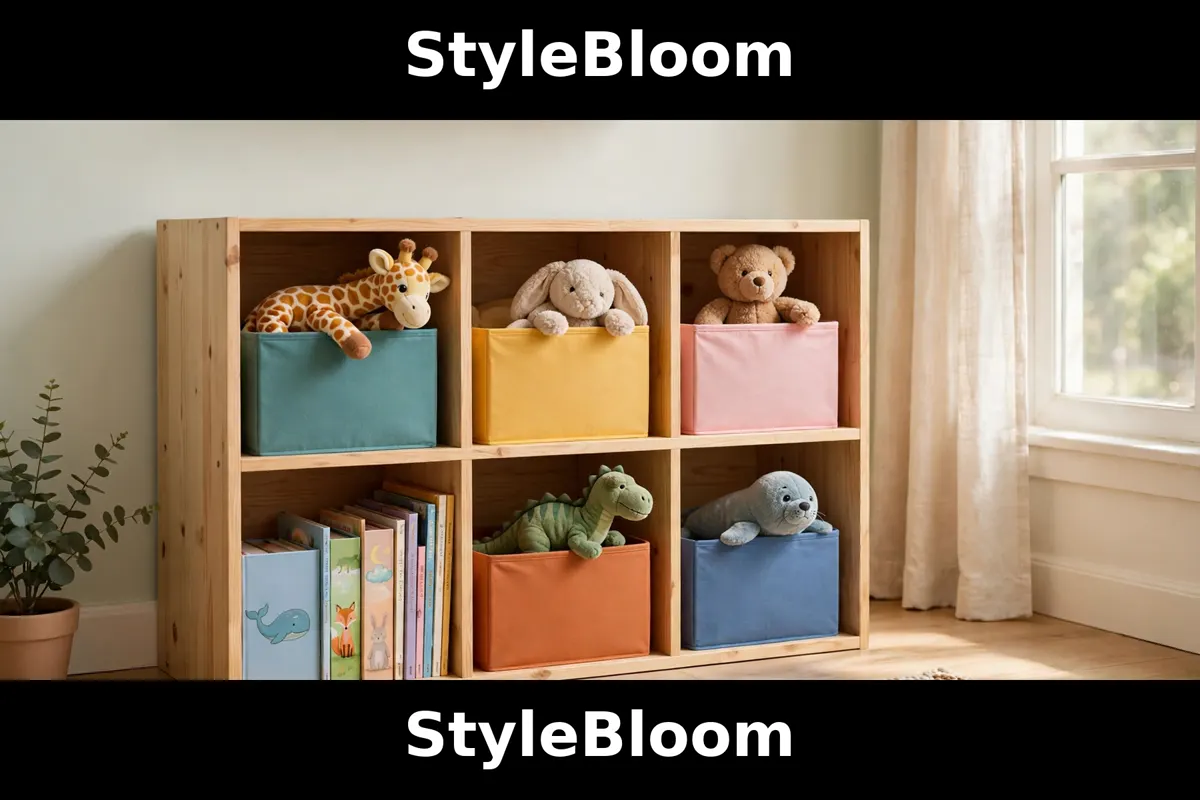
A cube unit without a system fills up in six weeks and stays full. The system that prevents that has three parts, and none of them requires buying anything. First, zones: assign each cube a single category and a single owner where the household shares the unit, and write the assignment down. Zones beat piles because a pile has no address and a zone does, and the address is what lets every member of the household put things back without asking. Second, labels: one line per closed cube, same style across the unit, readable from the doorway, using the household's own words for the categories. Third, rotation: seasonal contents move up and down the unit twice a year, and anything unopened for a full year leaves the unit, because a cube that has not been opened in a year is not storage. It is a museum with a door.
One in, one out is the rule that holds the system together over years. Every new object that enters a cube displaces one object that leaves the house, donated, recycled, or thrown away, and the rule applies to books, toys, clothes, and craft supplies without exception. It sounds strict, and it is the only rule that has ever kept a finite number of cubes sufficient for a household whose possessions grow by default. Pair it with a monthly five-minute reset: one evening a month, open every cube, return the strays to their zones, and pull out anything that has drifted. Five minutes a month is the entire maintenance cost of the system, and skipping it for a year is how a tidy unit becomes a wall of mystery boxes. The reset is also the moment to check the fixings, the anchor, and the back panel, which keeps the maintenance of the furniture inside the maintenance of the system, where it will actually happen.
Children learn the system faster than adults, because the system is visible and the rules are physical: one cube, one kind of thing, picture labels for pre-readers, and the weekly toy rotation that makes old toys new. Adults fail at the system in one predictable way, which is the aspirational cube: the cube holding the craft supplies for a hobby not yet started, the language books for a language not yet studied, the camping gear for a trip not yet planned. Aspirational cubes are how storage becomes guilt with a frame. Give the aspiration a deadline: if the hobby has not started in six months, the cube empties and the supplies leave. The unit holds the life being lived, not the life being imagined, and that distinction is what keeps it working.
Seven Mistakes That Waste the Purchase
First, buying the bins before the frame, and discovering the openings do not match. Second, buying for the wall you wish you had rather than the wall you measured, and blocking a door, a walkway, or a radiator. Third, loading the top row with books and the heavy cubes high, which raises the centre of gravity and invites the tip the anchor exists to prevent. Fourth, skipping the wall anchor on a tall unit, which is the one mistake in this guide that can hurt someone; furniture anti-tip anchor straps are the search term if the frame's own hardware is missing. Fifth, overloading past the stated load, past 30 pounds per cube on particleboard frames, and past the maker's limit on fabric bins, then blaming the furniture for the physics. Sixth, getting the unit wet: particleboard swells and never recovers, so keep cube units out of bathrooms and away from plant watering and window condensation. Seventh, moving the unit loaded, which damages joints that fail months later as a lean. Every one of these mistakes is common, every one is avoidable, and every one is cheaper to avoid than to repeat.
The cube organizer is the most-copied piece of furniture on earth for a reason: it is the cheapest way to turn a wall into storage that looks deliberate. The copies differ in exactly the places this guide has measured: opening size, panel quality, back-panel strength, and the honesty of the load figures. Buy the frame first, measure the opening, anchor the tall ones, keep two-thirds open and one-third closed, and run the five-minute monthly reset. That is the whole discipline, and it is enough. The wall you measured is the wall you furnish, the cubes you labelled are the cubes you use, and the room stays the room you meant it to be.
What to try first: Measure the wall run and the depth, buy the frame that fits it, and measure the openings before ordering a single bin. Good looks like: one test bin sliding in with a finger's width of clearance, heavy cubes low, and the anchor tight. If it fails: re-measure the opening, check the frame for square, or swap the bin size — never force a bin that does not fit. Learn next: Closet Organization Ideas — the wardrobe system the cubes slot into.
Frequently asked questions
- What size cube storage organizer should I buy?
- Measure the wall run, the height, and the depth first. A 9-cube unit is the default for most rooms. A 4-cube suits one purpose or a closet interior, an 8-cube needs a wall run longer than 65 inches, and a 12-cube suits a large wall or a shared apartment. Let the wall decide.
- Do 13-inch bins fit all cube organizers?
- No. Kallax-class and Better Homes and Gardens frames run about 13 inches square, while ClosetMaid Cubeicals and many marketplace kits run about 11 inches. Bins sized for one do not fit the other. Measure the opening after assembly, then order bins to the measured size.
- Should I buy the bins before the frame?
- Never. Buy the frame, assemble it, measure the opening yourself, and only then order bins. Order one bin first and test the fit before ordering the set. A set of nine wrong bins is nine times the return postage.
- Is the IKEA Kallax better than the Better Homes and Gardens cube organizer?
- Kallax is the heavier, more structural reference piece with a stated 13 kg per shelf and a large insert range. Better Homes and Gardens is a close alternative without the IKEA trip, in particleboard, with the current rounded-edge generation the one to buy. Both need the same opening-fit and anchoring discipline.
- Do cube organizers need to be anchored to the wall?
- Tall units must be anchored, without exception. A tall cube organizer is top-heavy, and climbing, heavy top-row bins, or a tremor can tip it. Anchor into a stud where possible with the correct fixings, and check the anchor yearly and after every move.
- Can renters use a cube organizer without drilling?
- Ask the landlord first; many permit one small anchor hole, filled on departure. If drilling is truly forbidden, choose the low horizontal configuration, two cubes high and loaded heavy at the bottom. Never substitute unrated adhesive strips, and never stand a tall unit free.
- How much weight can a cube shelf hold?
- IKEA states 13 kg per shelf across the Kallax range. Particleboard frames flex when cubes are loaded past about 30 pounds with a poorly nailed back panel. Fabric bins hold around 11 pounds where their makers state a limit. Check the listing for the frame you buy and respect the lowest limit in the chain.
- What is the difference between ClosetMaid Cubeicals and Kallax?
- Cubeicals is a lighter laminated-board system with 10.5 to 11.25 inch openings, designed around its own fabric drawers, best in nurseries and wardrobe interiors. Kallax is heavier and structural, with 13 inch openings, suited to living rooms and room division. Their inserts are not interchangeable.
- How should I arrange open and closed cubes?
- About two-thirds open and one-third closed. Put closed cubes at the bottom and the ends, open cubes at eye level, books and heavy things low, and light objects on the top row. The ratio keeps the unit looking like furniture instead of a warehouse shelf.
- Can I use a cube organizer as a TV stand?
- Yes, laid horizontal, where the depth and load allow it. Check the frame's depth against the television's stand, keep the weight low and centred, and anchor the unit. A vibrating printer or a heavy television on an unanchored tall frame is a slow walk toward the edge.
- Are fabric cube bins durable?
- Well-made double-layer fabric bins with board bottoms hold around 11 pounds and fold flat for moves. Cheaper bins with cardboard stiffening collapse under heavy items, and fabric tears when dragged loaded. Buy fabric bins for clothes, toys, and linens, never for books by the dozen or tools.
- How do I keep a cube organizer tidy long term?
- Zones, labels, and one in, one out. One category per cube, one line on each label, a seasonal rotation twice a year, and a five-minute monthly reset to return strays and check the fixings. Anything unopened for a full year leaves the unit.
- Can cube storage hold vinyl records?
- Only in frames rated for the weight, loaded low, with the opening depth checked against the sleeves. Records are among the heaviest ordinary household objects, and 30-plus pounds per cube on a particleboard frame with a weak back panel is exactly the combination that flexes. Kallax-class frames with their stated shelf load are the safer bet.
- What is the best cube organizer for a small apartment?
- A 9-cube frame in the 13-inch class, stood vertical against the measured wall, with the two-thirds open and one-third closed mix, anchored to the wall. For renters who cannot drill, the same frame laid horizontal, two cubes high and loaded heavy at the bottom, is the no-drill answer.
- Why does my cube organizer lean?
- Usually one of three causes: the frame was assembled out of square, the back panel was poorly fixed, or the unit was moved loaded and the joints gave up. Check the diagonals, refix the back panel on every fixing point, empty the unit before moving it, and re-tighten the fixings after a week of use.