Do You Need a Bonnet If You Have a Satin Pillowcase?
The honest answer depends on your hair type. Here is the decision framework — when the pillowcase alone is enough, and when you really need both.
- Straight, fine, or short hair: a satin pillowcase alone is usually enough.
- Curly, coily, long, or braided hair — plus restless sleepers: you need both. The pillowcase only protects hair that stays on the pillow.
- A bonnet is primary protection; a satin pillowcase is the backup layer for the nights the bonnet migrates.
- Both together typically cost under $50 — the cheapest high-impact upgrade in hair care.
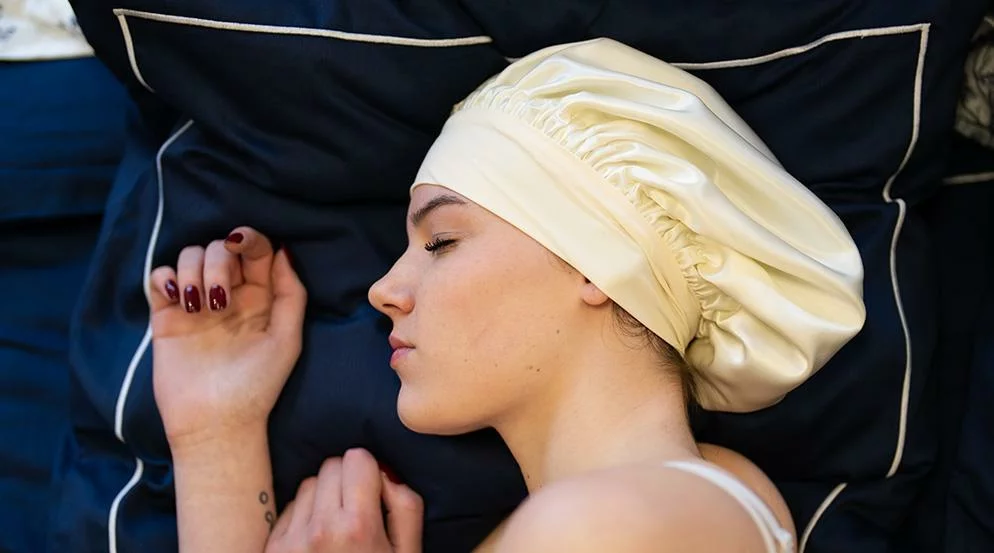
Bonnet vs. pillowcase is not either-or — for many hair types, the answer is both
No — a satin pillowcase alone is enough if your hair is straight, fine, or short. But if your hair is curly, coily, long, braided, or you toss and turn at night, you need both: a pillowcase only protects the hair that stays on the pillow, while a bonnet wraps and protects all of it. Here is exactly how to decide for your hair.
What each one actually does
They look like competitors, but they do different jobs:
| Satin bonnet | Satin pillowcase | |
|---|---|---|
| What it protects | All of your hair — it wraps everything | Only the hair touching the pillow |
| Style preservation | Excellent — keeps pineapples, twists, and braids intact | Minimal — hair still moves and separates |
| Friction reduction | High (hair never touches cotton) | High, but only on contact areas |
| Skin benefit | None directly | Yes — smoother, less absorbent surface for skin |
| Effort | Put it on each night | Zero — it is just your pillow |
| Typical cost | $10–$25 | $15–$40 (pair) |
Prices are typical ranges — check current prices, as they vary by brand and sales.
The decision framework: which do YOU need?
Find your hair type below — this is the part no one else spells out:
Straight or fine hair → pillowcase alone is enough. Your hair lies flat, stays on the pillow, and does not tangle easily. A satin pillowcase gives you nearly all the friction protection you need, plus the skin benefits. A bonnet is optional comfort, not a necessity.
Short hair (above the chin) → pillowcase alone is enough. There is simply not enough hair to tangle, mat, or migrate off the pillow. Save your money.
Wavy hair (2A–2C) → pillowcase first, bonnet optional. Start with the pillowcase. If you wake up with flattened waves or frizz at the crown, add a loose bonnet or a pineapple with a scrunchie.
Curly or coily hair (3A–4C) → you need both. This is the clearest "both" case. Curls move off the pillow as you sleep, leaving them rubbing on cotton for hours. A bonnet keeps curl clumps together so wash-day definition survives the night — something a pillowcase alone cannot do. The pillowcase is your backup for the nights the bonnet slips. Our guide to the best satin bonnets for curly hair covers exactly what to buy.
Long hair (past the shoulders) → you need both. Long hair drapes off the pillow no matter how you arrange it. A bonnet contains the length; the pillowcase protects what escapes. If your bonnet keeps slipping, our 9 fixes that actually work will sort it.
Braids, locs, or protective styles → you need both. Braids are heavy and snag-prone. A bonnet keeps them contained and off rough surfaces; a satin pillowcase underneath catches anything that escapes and reduces edge friction. Size up your bonnet — protective styles need jumbo cuts.
Restless sleepers → you need both, regardless of hair type. If you flip, sprawl, or end up sideways, your hair spends half the night off the pillow entirely. The bonnet is the only protection that travels with you.
Cost comparison: bonnet vs. pillowcase vs. both
Here is the part that surprises people — this is one of the cheapest upgrades in all of hair care:
| Option | Typical cost | Best for |
|---|---|---|
| Satin bonnet only | $10–$25 | Curly/long hair on a tight budget |
| Satin pillowcase only | $15–$40 (pair) | Straight, fine, or short hair |
| Both (recommended for most) | Under $50 total | Curly, long, braided hair; restless sleepers |
| Silk pillowcase upgrade | $40–$90+ (pair) | Luxury/longevity buy, hot sleepers |
Typical price ranges — check current prices before buying, as they vary by brand, material, and sales. One note on materials: "satin" describes a weave, not a fiber. Most affordable bonnets and pillowcases are polyester satin, which genuinely protects hair. Mulberry silk costs more and lasts longer, but for pure frizz-and-breakage prevention, good satin does the job.
How to use them together (the gold standard routine)
If you landed in a "both" category, here is the routine: pineapple or loosely gather your hair, put the bonnet on with the band just behind your hairline, and sleep on the satin pillowcase. The bonnet does the heavy lifting; the pillowcase is insurance. On nights you are too tired for the bonnet — and those nights will happen — the pillowcase alone still beats cotton by a mile. That is the real value of the combo: your worst night is still protected.
Wash the bonnet every one to two weeks (hand wash, cool water, air dry) and the pillowcases weekly with your sheets. Product buildup on satin transfers back to hair, so clean satin matters as much as satin itself. Our full satin bonnet night routine walks through the whole evening sequence step by step.
The verdict
A satin pillowcase is the best zero-effort upgrade you can make — it protects your skin too, and it works while you do nothing. But it has one blind spot: it cannot follow your hair. If your hair is curly, long, braided, or you move in your sleep, a bonnet closes that gap for the price of two coffees. Get the pillowcase first if you must choose; get both if your hair gives you any reason to.
Frequently asked questions
- Do you need a bonnet if you have a satin pillowcase?
- Not always. A satin pillowcase alone is enough for straight, fine, or short hair. But curly, coily, long, or braided hair — and restless sleepers — usually need both, because a pillowcase only protects the hair that stays on the pillow, while a bonnet protects all of it.
- Is a satin pillowcase as good as a bonnet?
- They do different jobs. A satin pillowcase reduces friction wherever your head touches the pillow; a bonnet wraps all of your hair and keeps it contained, which also preserves styles like twist-outs and pineapple updos. For maximum protection they are complementary, not interchangeable.
- Can I wear a bonnet and use a satin pillowcase together?
- Yes — this is the gold standard for curly and long hair. The bonnet is your primary protection and the pillowcase is your backup: on nights the bonnet migrates or you take it off, the satin pillowcase still prevents cotton-pillow friction and frizz.
- Which is better for curly hair: bonnet or satin pillowcase?
- A bonnet wins for curly hair. Curls move off the pillow as you sleep, leaving them unprotected on a pillowcase-only setup, and a bonnet also keeps curl clumps together so wash-day definition lasts longer. A satin pillowcase is an excellent backup layer underneath.
- Do satin pillowcases help with acne or skin?
- Satin and silk pillowcases are smoother and less absorbent than cotton, so they pull less moisture from skin and create less friction — many people find they help with sleep lines and irritation. They are not an acne treatment, but they are a gentler surface to sleep on.
- How much does a satin bonnet vs satin pillowcase cost?
- A good satin bonnet typically costs $10 to $25; satin pillowcases typically run $15 to $40 for a pair, with silk versions higher. Buying both is usually under $50 total — check current prices, as they vary by brand and sales.