
Best Hair Growth Serum: What Actually Regrows Hair, What Supports the Scalp, and What to Buy First
No cosmetic serum is approved to regrow hair. Minoxidil is the only proven regrowth treatment, rosemary oil is the strongest cosmetic alternative, and everything else is promising, plausible, or marketing. This guide grades them all the same way.
By the end, you will know which of the three serum jobs you are buying, what the evidence says about every major active, how to apply a serum so it reaches the scalp, what timelines are honest, and the exact symptoms that end self-treatment and start a clinician visit.
As an Amazon Associate, StyleBloom earns from qualifying purchases. This guide contains affiliate links — it costs you nothing extra and keeps our content free.
The two strongest rival guides for this query both stop halfway. One separates cosmetic claims from treatment claims and grades evidence lightly, but never gives the reader a cause-first test, so shedding readers and pattern-loss readers get the same list. The other mixes strand, volumising, and hydration serums into a single growth list, which is the exact category error that wastes the most money in this market. This page closes both gaps: a cause test first, an evidence grade on every pick, and a stop rule that says plainly when shopping ends and a clinician begins.
It sits beside the routine guides, not inside them. The rosemary water routine holds the rinse, the hair growth shampoo guide holds the wash, and the best satin bonnet guide holds the night. This page holds the serum decision only. Read the three jobs first if you read nothing else — naming the job settles half the market before a single bottle is opened.
A hair growth serum cannot do what its name promises most shoppers. No cosmetic scalp serum is approved by the FDA to regrow hair, and no bottle of peptides, caffeine, or plant extracts has beaten minoxidil in a large independent trial. Minoxidil is the only topical treatment with that approval and that evidence, and it is the benchmark every other product must be measured against. A cosmetic serum can still earn its place: it can support the scalp, calm the environment hair grows in, add visible thickness, and carry the routine that keeps minoxidil working. This guide separates the three jobs a serum can do, grades the evidence behind each kind of product, and tells you which first move fits the hair loss you actually have, whether that is pattern thinning, diffuse shedding, breakage, or a scalp problem wearing a hair-loss disguise. If you read nothing else, read the cause test and the evidence grades. Everything else is choosing well inside a category you already understand.
The Three Serum Jobs: Regrowth, Scalp Support, and Strand Cosmetics
Every product sold as a hair growth serum is doing one of three jobs, and the confusion in this market comes from all three sharing one shelf label. The first job is regrowth treatment. Only minoxidil does it. It is a drug, sold over the counter in 2% and 5% strengths, approved for female pattern hair loss and male pattern hair loss, and recommended most often by the American Academy of Dermatology for women with pattern thinning. It works by prolonging the growth phase of the hair cycle and enlarging miniaturised follicles, and its gains reverse when use stops. Nothing else in this guide belongs in this category, and any cosmetic serum marketed as if it does is borrowing minoxidil's evidence without having earned it.
The second job is scalp support. These are cosmetic leave-in serums applied to the scalp, not the hair lengths, carrying actives with small, early, or company-linked studies: rosemary oil, caffeine, peptides such as GHK-Cu and biotinoyl tripeptide-1, Redensyl, Procapil, Capixyl, and saw palmetto. They aim at the scalp environment — circulation, inflammation, the anchoring of the follicle — and their honest claim is support, not regrowth. The strongest of them, rosemary essential oil, matched 2% minoxidil on hair count in one 2015 randomised trial with less scalp itching, which is a real result with real limits: one trial, one comparison strength, and an oil, not the rosemary water that has no regrowth trials at all. The rest are promising rather than proven, and the difference between those two words is the whole buying decision.
The third job is strand cosmetics. Thickening serums, volumising serums, and strand serums coat or plump the hair shaft so hair looks denser immediately, without changing anything at the follicle. They are not a lesser purchase; for breakage-driven thinness and for anyone who wants visible fullness this week, they are the honest first buy. The error is buying a strand cosmetic while expecting follicle regrowth, then declaring after three months that serums do not work. The serum worked. It was hired for the wrong job. Name the job before you shop, and half the market falls away on its own.
The strongest rival guide in this field, WeHasHealthier's October 2026 roundup, gets halfway to this separation with a cosmetic-versus-treatment distinction and a five-point methodology that puts finished-product evidence first. It stops short in two places this guide does not: it never gives the reader a cause-first test, so a shedding reader and a pattern-loss reader receive the same list, and it grades evidence only lightly, noting small or company-linked studies without grading every pick the same way. The second rival, The Glossy Locks' August 2026 list, mixes strand, volumising, and hydration serums into a single growth list, which is exactly the category error this section exists to prevent. Both guides are useful. Neither is complete. The table below is the whole field on one page, graded the same way for every row.
The Cause-First Test: Pattern, Shedding, Breakage, or Scalp
Four different problems all present as thinner hair, and each points to a different first move. Answer these four questions in order, and buy only after the fourth.
First, where is the thinning? Pattern hair loss thins in a pattern: a widening part and diffuse thinning over the crown in women, a receding hairline and crown thinning in men, with the back and sides largely spared. It progresses slowly, over years, and it runs in families. If that description fits, your first move belongs in the regrowth category, because pattern loss is a follicle problem and only the regrowth treatment addresses follicles directly. A cosmetic scalp serum can support the routine, but it cannot substitute for it, and starting with cosmetics alone while pattern loss advances is the most expensive delay in this market.
Second, when did it start? Diffuse shedding that began two to four months after an illness, a major stress, surgery, childbirth, a crash diet, or a new medication, with hair coming out all over the head rather than in a pattern, is usually telogen effluvium: a large share of follicles pushed into the resting phase at once. It is frightening and usually temporary, and the first move is not a serum at all. It is identifying and removing the trigger, eating and sleeping adequately, and waiting out the cycle, which runs two to three months for the resting phase alone. A gentle scalp serum can support the scalp while you wait. A regrowth drug is not the first answer to a temporary trigger, and any product promising to stop shedding in days is selling to panic.
Third, is the hair breaking or falling? Run your fingers down a shed hair. A shed hair has a tiny bulb at the root end. A broken hair has no bulb and often a frayed or split tip, and the short pieces collect on shoulders and in the shower drain rather than on the pillow. Breakage means the shaft is weak, and the first move is strand care: less heat, less tension, gentler detangling, a satin bonnet at night, and a strand or thickening serum that protects the lengths. Buying a scalp serum for breakage is buying the wrong address entirely, and it is the single most common misbuy in the reviews of every serum on this page.
Fourth, what does the scalp say? Itching, burning, pain, flaking that builds into plaques, scaling, redness, or tenderness point to a scalp condition — seborrhoeic dermatitis, psoriasis, contact irritation, or infection — and the first move is a clinician, not a shopping cart. No serum in this guide treats a scalp disease, and layering actives onto an inflamed scalp makes the inflammation worse. The stop rule in the safety section lists the exact symptoms that end self-treatment. Respect it the way you would respect a warning light: it is not advice to be negotiated with.
Most readers will recognise themselves in one paragraph and feel the relief of a shorter list. Some will recognise two. Pattern thinning plus breakage is common after forty, and shedding on top of pattern loss is common after illness. In that case, treat the follicle problem first and the strand problem second, because strands cannot be saved on a scalp that is not being treated, while a treated scalp still grows hair that breakage then snaps. Order matters, and this guide keeps that order in every section that follows.
The Evidence Hierarchy: What Is Proven, Promising, and Merely Plausible
Evidence is not a feeling, and in this market it is not a star rating either. This guide grades every active on the same ladder, and the ladder has four rungs. Proven means large randomised trials against placebo or an active comparator, replicated or reviewed, with regulatory approval behind the claim. Promising means small trials, early reviews, or consistent pilot data that point one way but have not been replicated at scale. Plausible means a mechanism that makes sense and laboratory or animal data, without finished-product human trials. Marketing means language that sounds like science — exosome, stem cell, nano-delivery — attached to a finished formula with no published trial of that formula at all.
Minoxidil stands alone on the proven rung. The trial most often cited enrolled 381 women over 48 weeks and found 5% minoxidil superior to placebo for female pattern hair loss, and the 2% and 5% strengths are the approved options for that condition. The trade-offs are as well documented as the benefit: irritation and itching for some users, an early shedding increase in weeks four to six as resting hairs are pushed out, the need for ongoing use, and reversal of gains when use stops. It is avoided in pregnancy and breastfeeding on dermatology advice. None of that makes it a bad product. It makes it a drug, with a drug's honesty about costs, and that honesty is precisely why it anchors this guide.
Rosemary essential oil sits at the top of the promising rung, and it is the only cosmetic active with a head-to-head trial against minoxidil. The 2015 Skinmed randomised trial compared rosemary oil with 2% minoxidil over six months and found comparable hair counts, with less scalp itching in the rosemary group. Read that sentence twice, because the market quotes half of it. The comparison was against the 2% strength, not the 5%. The preparation was rosemary essential oil, diluted and massaged in, not rosemary water, which has no regrowth trials and must never be sold on this study's authority. One trial is not a verdict, but it is more than any other cosmetic active in this guide can show, and rosemary oil earns its place as the first cosmetic to try for readers who cannot or will not use minoxidil.
Caffeine, peptides, Redensyl, Procapil, Capixyl, and saw palmetto share the middle of the promising rung with different weaknesses. Caffeine has laboratory evidence of countering the follicle-shrinking signal and small human studies, but no large trial of a finished caffeine serum against minoxidil. Peptides such as GHK-Cu, biotinoyl tripeptide-1, and myristoyl pentapeptide-17 have small studies and strong mechanistic stories, often in formulas that also contain caffeine, which makes it impossible to credit one ingredient. Redensyl, Procapil, and Capixyl were the subject of a 2025 International Journal of Trichology review that called them promising while asking for more large-scale studies, and the underlying work is small and often company-linked. Saw palmetto has modest evidence as an oral supplement and weaker evidence as a topical, and it carries a specific caution in pregnancy and breastfeeding. None of these is a fraud. All of them are unfinished science, and the price of a bottle should reflect that.
On the plausible rung sit niacinamide and panthenol, which support the scalp barrier and hair moisture without any regrowth claim, and biotin, which helps hair mainly when the body is deficient — uncommon in a well-fed adult, and not a reason to pay a premium. Marketing language deserves its own warning. Products advertising exosomes or stem cells for hair growth are using words from regenerative medicine to describe cosmetic formulas with no published trials of the finished product. Report that language for what it is when you see it, and do not pay for it. One more claim to refuse: a single-source assertion that a peptide's small molecular weight lets it penetrate the scalp, sometimes quoted with a Dalton figure. A single source is not a consensus, and absorption through skin depends on far more than molecular weight. This guide does not assert it.
The Picks, Graded: What to Buy for Each Job
Every row below carries the same four facts: the job it does, who it fits, the evidence grade, and the honest limitation. Buy by the grade, not by the bottle. Prices are deliberately absent from this guide, because prices move and a guide that prints them goes stale; search for the type, compare current listings, and judge value by cost per month of use, not by bottle size, since a serum used daily for months is a subscription whether the seller calls it one or not.
| Pick | Job | Best for | Evidence grade | Limitation |
|---|---|---|---|---|
| Minoxidil 5% foam, women | Regrowth treatment | Pattern thinning, crown and part | Proven — 48-week RCT, 381 women | Ongoing use; early shedding; irritation possible |
| Minoxidil 5% foam, men | Regrowth treatment | Pattern thinning, hairline and crown | Proven — large RCTs, reviewed | Ongoing use; gains reverse if stopped |
| Rosemary essential oil serum | Scalp support | Readers avoiding minoxidil; mild thinning | Promising — one RCT vs 2% minoxidil | Oil, not water; one trial; dilute and patch test |
| Peptide scalp serum | Scalp support | Early thinning; routine builders | Promising — small, often combined formulas | Cannot credit one peptide; premium pricing |
| Caffeine scalp serum | Scalp support | Fine hair; morning routines | Promising — lab + small human data | No large trial vs minoxidil |
| Redensyl / Procapil / Capixyl serum | Scalp support | Readers wanting the newest actives | Promising — review asks for larger studies | Small, often company-linked studies |
| Saw palmetto scalp serum | Scalp support | Men with pattern thinning | Promising, weaker topically | Avoid in pregnancy and breastfeeding |
| Thickening / volumising serum | Strand cosmetic | Breakage; visible fullness now | Plausible for appearance | Changes looks, not follicles |
| Fragrance-free scalp serum | Scalp support | Sensitive or reactive scalps | Plausible — tolerability first | Milder actives; slower visible change |
Start with the row that matches your cause test, and buy only that row first. A reader with pattern thinning starts with minoxidil, and adds rosemary oil or a peptide serum only after the treatment routine is settled and tolerated. A reader with shedding after illness starts with trigger removal and a gentle scalp serum, not with a drug. A reader with breakage starts with a strand serum and a bonnet, and spends the saved money on heat protection and gentler detangling rather than on a second scalp product. The most common regret in this category is buying three serums at once and never learning which one did anything. One product, eight to twelve weeks, one judgment. Then decide.
Search by type, not by the first brand an advertisement shows you. The links below search the exact product type on Amazon, so you can compare current listings, read recent reviews, and check the ingredient list before buying. Check three things on every listing: that the active you want is actually in the ingredient list and not merely in the product name, that the strength matches the trial strength where one exists, and that the seller is the brand or an authorised retailer rather than a reseller with old stock. A serum is a dated chemical; old stock is degraded stock.
Minoxidil 5% foam for women · Minoxidil 5% foam for men · Rosemary oil hair serum · Peptide scalp serum · Caffeine scalp serum · Redensyl hair serum · Saw palmetto hair serum · Hair thickening serum · Fragrance-free scalp serum
How to Choose by Hair Type, Pattern, and Life Stage

Straight and wavy hair shows thinning earliest at the part, because the hair lies flat and the scalp shows through. For this hair, a lightweight liquid serum that dries without residue matters more than richness; heavy oils flatten the style and discourage daily use, and a serum that is not used daily is a serum that does not work. Apply to the scalp in sections, keep product off the lengths, and choose a foam or light liquid over an oil unless the scalp is dry. Curly and coily hair hides early thinning well and shows breakage badly, because shrinkage and volume mask the scalp while the curl pattern reveals every snapped strand. For curls and coils, the serum must reach the scalp through density, which means sectioning properly and massaging with fingertips rather than hoping a spray lands where it should. An oil-based serum suits coily hair better, since the scalp and lengths both need the moisture, and the wash-day routine in our curly hair wash-day routine is the right frame for layering it.
Fine hair needs the lightest touch in the whole guide. Fine strands snap under tension, go limp under oil, and show scalp through every gap, which tempts their owners into the heaviest products. Resist that. A fine-haired reader should choose a foam or a water-light peptide serum, apply the smallest effective amount, and put the real money into breakage prevention: a wide-tooth comb, no tight styles, heat kept low, and a satin bonnet at night from our best satin bonnet guide. Thick hair has the opposite problem: product never reaches the scalp. Section into at least six parts, apply directly to each part line, and massage each section before moving on. If the serum sits on top of the hair, the follicles never meet it, and the review that says it did nothing is describing an application failure, not a product failure.
Color-treated and damaged hair adds a constraint, not a different serum. Bleach and colour lift the cuticle, which makes the shaft catch, tangle, and snap, and makes the scalp more reactive. Choose fragrance-free formulas, patch test behind the ear for two days before full use, and keep strong actives off freshly coloured scalps for at least a week. The keratin question comes up constantly, and the honest answer is that keratin treatments address the shaft, not the follicle; our keratin guide holds that discussion, and this guide does not repeat it. Men and women differ mainly in pattern and in the strength of evidence behind each option: men have the largest minoxidil trial base and the clearest pattern presentation, while women have the 381-woman trial behind the 5% foam and the additional consideration that hormonal shifts, pregnancy, and breastfeeding change which products are appropriate at all. Teenagers with thinning hair should see a clinician first; no serum in this guide is a first move for a teenager. Readers over sixty should weigh the same evidence with one extra question, which is whether the thinning is new and sudden, because new sudden loss at any age is a medical symptom before it is a shopping decision.
Sensitive scalps deserve their own paragraph, because they are the readers most harmed by enthusiastic marketing. If your scalp reacts to fragrance, essential oils, or alcohol-based formulas, start with a fragrance-free serum, use half the recommended amount for the first week, and introduce one product at a time with at least a week between introductions. A reaction that appears after adding three products at once teaches you nothing except that one of them disagrees with you. Rosemary oil, for all its evidence, is an essential oil, and essential oils are a common irritant; dilute it as directed, never apply it undiluted, and stop if itching or redness appears. The serum that suits your scalp is the one you can use every day for months without thinking about it. Comfort is not a luxury feature here. It is the adherence mechanism, and adherence is the treatment.
How to Apply: Sections, Massage, Frequency, and Layering
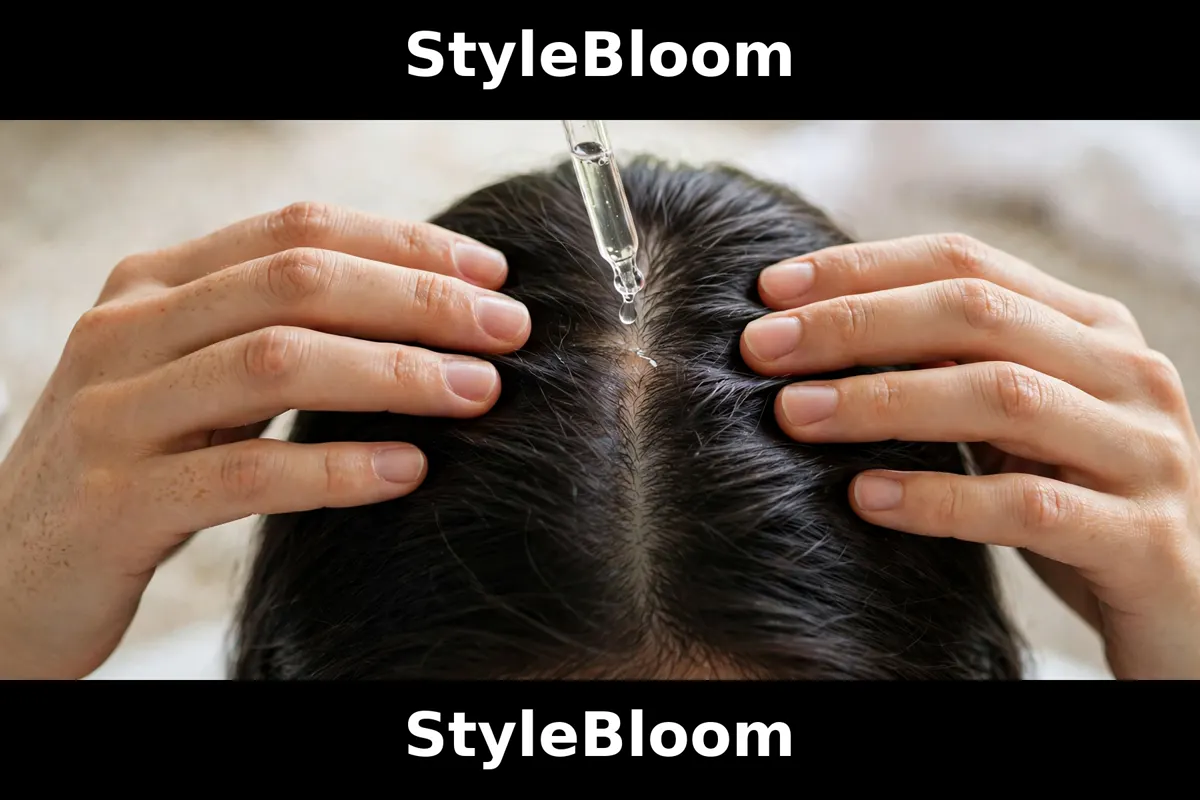
Application is where most serum routines fail, quietly, without the user ever knowing. The method that the dermatology sources describe is specific: apply to a clean, dry or slightly damp scalp, in sections, directly onto the skin, then massage for one to two minutes with fingertips, never nails. Part the hair down the middle, apply a line of product along the part, then make two more parts on each side and repeat, so the whole thinning area is covered. Massage with the pads of the fingers in small circles, which distributes the product and increases blood flow to the scalp, and which the rosemary oil trial used as part of its protocol. Do not rake the product through the lengths. The scalp is the address. The lengths are a different delivery route entirely, and product wasted on lengths is product the follicles never receive.
Frequency follows the label, and the label follows the trial. Minoxidil is typically twice daily, though some regimens use once daily for the 5% foam; follow the packaging for the product you bought and the clinician's advice where you have it, because under-dosing a drug to save money produces the worst of both worlds, cost without effect. Cosmetic serums are typically once daily, often at night, when the scalp is undisturbed and the product has hours to sit. Consistency beats intensity in every study this guide relies on: a moderate product used every day outperforms a strong product used twice a week, and the readers who see results are the readers who built the application into an existing habit, after brushing teeth or before the bonnet goes on, rather than relying on willpower at a random hour.
Layering is the question every reader with an existing routine asks, and the order is simple once stated. Wash first, with the shampoo that fits your scalp, and our hair growth shampoo guide holds that choice for readers who want it. Apply the scalp serum to the scalp next, on its own, and let it absorb before anything else touches the scalp. Peptide serum goes first where two scalp products are used, because it is the lightest and absorbs fastest, and rosemary oil goes after it, because oil seals. Rosemary water, where you use it, is a rinse and a refresher for the hair and scalp between washes, and it is not a substitute for the oil in the trial; our rosemary water routine explains its real role. Leave-in conditioner and styling products go on the lengths only, after the scalp serum has had its minutes. The bonnet goes on last, at night, protecting both the hair and the pillow from the products beneath it. One scalp active at a time for the first month. Add the second only when the first is tolerated and habitual, and never add two new actives in the same week.
A scalp massage tool earns its mention here because it solves a real problem: fingertips tire, nails scratch, and short massages become shorter. A soft silicone scalp massager used for the same one to two minutes distributes product evenly and makes the ritual pleasant enough to repeat, which is the entire point. It does not grow hair by itself, and any tool claiming otherwise is selling the massage as a treatment. Silicone scalp massager · Glass dropper bottles for diluting oils The dropper bottles matter for one specific reader: anyone diluting rosemary essential oil at home, who needs a clean, labelled, dark-glass bottle and a carrier oil, and who must never apply the essential oil undiluted. Dilution is not optional. It is the safety rule that makes the trial's result usable at home.
What to Expect: Honest Timelines, Shedding, and the Months Rule

Hair grows slowly, and every honest timeline in this guide is measured in months, not days. The hair cycle sets the pace: the growth phase lasts two to seven years, the transition phase two to three weeks, and the resting phase two to three months, which means a follicle that starts growing today produces visible length only after weeks of invisible work. A dermatologist source puts early signs at eight to twelve weeks and meaningful change at three to six months, and that is the right frame for every product in this guide. Anyone promising visible regrowth in two weeks is promising something the biology cannot deliver, and the correct response to that promise is to close the listing.
Shedding deserves its own explanation, because it frightens the exact readers who are doing everything right. Minoxidil commonly causes an early increase in shedding in weeks four to six, as resting hairs are pushed out to make room for new growth, and a brief increase can be a positive sign. The rule is duration and pattern: shedding that settles within a few weeks and is followed by new fine hairs along the part is expected. Shedding that persists beyond a few weeks, worsens steadily, arrives in patches, or comes with pain, scaling, or other symptoms is not expected, and it ends self-treatment and starts a clinician visit. Brand timelines that report shedding easing in weeks two to six and baby hairs in weeks four to eight come from brand pages with small samples, and this guide reports them only as what brands report, never as promises. Your hair does not read the brand's timeline. It follows its own cycle, and judging a product at week three is judging a marathon at the first mile marker.
Photograph the part, not the mirror. Take one photograph of the part line and crown in the same light, same angle, once a month, and compare month one with month four. Mirrors lie daily and tell the truth monthly. Density is judged by how much scalp shows through the part, not by how the hair feels in the hand, because hands feel the lengths and the part shows the follicles. Keep the routine unchanged for the full trial period before judging, because changing products every three weeks restarts the clock each time and produces a drawer of half-used bottles and no information. If after four to six months of correct, daily use there is no change at all in the photographs, that is information too: the product is not working for you, and the next step is a clinician, not a more expensive serum. Money spent past that point is hope taxed at retail price.
Safety and the Stop Rule: Pregnancy, Irritation, and When to See a Clinician
Most serums in this guide are gentle, and most problems come from using a gentle product the wrong way or using the wrong product for a medical problem. Patch test every new serum behind the ear or on the inner forearm for two days before full scalp use, and stop immediately if itching, redness, swelling, or burning appears. Do not push through irritation in the hope the scalp adapts; adaptation is not a feature of an irritated scalp, and continued use turns a mild reaction into a lasting one. Keep serums off broken skin, and keep essential oils diluted and away from the eyes. Wash hands after application, and keep minoxidil away from the face and neck, where it can encourage unwanted hair growth, and away from children and pets, for whom it is not intended.
Pregnancy and breastfeeding change the rules. Minoxidil is avoided in pregnancy and breastfeeding on dermatology advice. Saw palmetto may be unsafe in pregnancy and breastfeeding according to the National Institutes of Health, and the topical evidence is thin enough that avoidance is the sensible default. Redensyl, Procapil, and Capixyl have no studies in pregnancy, which is itself the reason to avoid them until a clinician advises otherwise. Rosemary oil in the diluted topical amounts used for hair is generally regarded as low risk, but pregnancy is a conversation with a clinician, not a decision for a shopping guide, and this guide will not settle it. If you are pregnant, breastfeeding, or planning either, take the ingredient list to your clinician and let them decide. That sentence is not a disclaimer for form's sake. It is the correct procedure.
The stop rule is the most important paragraph in this guide, and it is short. Stop self-treatment and see a clinician if the hair loss is sudden or patchy, if the scalp is painful, scaly, or inflamed, if shedding comes with fatigue, weight change, fever, or other symptoms, if a bald patch appears, or if shedding persists beyond a few weeks without easing. Sudden and patchy loss can signal conditions that need diagnosis, from alopecia areata to thyroid disease to the after-effects of illness, and no serum, however well reviewed, diagnoses anything. A clinician can order the blood work, examine the scalp under magnification, and tell you whether the cause is hormonal, nutritional, medical, or mechanical. That visit costs less than three months of the wrong serum, and it is the only purchase in this whole field that comes with a diagnosis attached.
One final honesty note on the medical side. This guide is information, not medical advice, and it does not replace a clinician. The claims about trials, approvals, and cautions are drawn from published studies, dermatology guidance, and the product categories as regulators define them, and they are stated with the limits attached. Where the evidence is thin, this guide says so. Where a product is a cosmetic, this guide calls it a cosmetic. That discipline is what makes the recommendations trustworthy, and it is the standard every future update to this page will be held to.
Seven Mistakes That Waste the Serum
First, buying for the wrong job: a strand serum for follicle loss, a scalp serum for breakage, a cosmetic for a medical problem. Second, buying three serums at once and never learning which one worked. Third, applying to the lengths instead of the scalp, so the follicles never meet the product. Fourth, judging at week three, before the hair cycle has had time to answer. Fifth, rubbing the scalp with nails or a rough towel, which damages the cuticle and the scalp the serum is meant to help. Sixth, mixing undiluted essential oil, or mixing two new actives in the same week, and blaming the wrong bottle for the reaction. Seventh, stopping minoxidil once the hair improves, which reverses the gains, or continuing a cosmetic for six months past the point where the photographs show no change. Every one of these mistakes is common, every one is avoidable, and every one is cheaper to avoid than to repeat.
The market rewards the opposite of this advice. It rewards the newest bottle, the loudest claim, and the shortest timeline, and it punishes patience, which is the only thing that actually grows hair. This guide has tried to be the counterweight: one cause test, one evidence ladder, one product at a time, photographs once a month, and a clinician when the stop rule says so. That is not an exciting routine. It is the routine that works, and it is the routine the evidence supports. Buy the row that matches your cause, apply it to the scalp every day, photograph the part monthly, and let the hair cycle do the rest.
What to try first: Take the cause test, buy the single row that matches it, and apply it to the scalp in sections every day. Good looks like: no irritation after week one, a settled routine by week two, and a part-line photograph each month. If it fails: check the application reached the scalp, check the cause test again, or see a clinician — never buy a second serum to cover for the first. Learn next: The Rosemary Water Hair Growth Routine — the rinse that supports the serum routine.
Frequently asked questions
- Do hair growth serums actually regrow hair?
- Cosmetic serums do not regrow hair. They support the scalp and can improve thickness and appearance. Only minoxidil, a drug, is approved to regrow hair, with large trials behind it. Any cosmetic claiming regrowth is borrowing minoxidil's evidence.
- Is minoxidil better than rosemary oil?
- On the evidence, minoxidil has the larger trial base and regulatory approval. Rosemary oil matched 2% minoxidil on hair count in one 2015 trial with less itching, which makes it the strongest cosmetic alternative, not an equal. The oil was studied, not rosemary water.
- How long does a hair growth serum take to work?
- Months, not days. Early signs at eight to twelve weeks and meaningful change at three to six months is the dermatology frame. Judge with monthly photographs of the part line, and do not judge before four months of daily, correct use.
- Why am I shedding more after starting minoxidil?
- An early shedding increase in weeks four to six is common as resting hairs are pushed out for new growth, and a brief increase can be positive. Shedding that persists beyond a few weeks, worsens, or comes with pain or scaling ends self-treatment and starts a clinician visit.
- Can I use a hair growth serum while pregnant?
- Minoxidil is avoided in pregnancy and breastfeeding. Saw palmetto may be unsafe, and Redensyl, Procapil, and Capixyl have no pregnancy studies. Take the ingredient list to your clinician and let them decide; this guide does not settle it.
- What is the difference between rosemary oil and rosemary water?
- Rosemary oil is the concentrated essential oil studied in the 2015 trial against minoxidil, used diluted and massaged into the scalp. Rosemary water is a dilute rinse with no regrowth trials. Never buy rosemary water on the oil study's authority.
- Should I use minoxidil 2% or 5%?
- The 5% strength has the strongest trial evidence, including the 48-week trial in 381 women for female pattern hair loss. The 2% strength is an option where irritation is a concern. Follow the packaging and your clinician's advice for the product you buy.
- Can I layer a peptide serum with rosemary oil?
- Yes, in that order: peptide serum first, let it absorb, then diluted rosemary oil. Introduce one product at a time with at least a week between them, and never add two new actives in the same week, so a reaction can be traced to its cause.
- Do hair growth serums work for men and women?
- Yes, with different patterns. Men have the largest minoxidil trial base and the clearest pattern presentation. Women have the 381-woman trial behind the 5% foam, plus hormonal and pregnancy considerations that change which products fit. Teenagers should see a clinician first.
- What if my hair is breaking, not falling?
- Breakage has no root bulb and frayed tips, and it needs strand care, not scalp treatment: less heat and tension, gentler detangling, a satin bonnet, and a thickening or strand serum. Buying a scalp serum for breakage is the most common misbuy in this category.
- Can a serum fix a flaky or painful scalp?
- No. Itching, pain, scaling, or inflammation point to a scalp condition that needs a clinician, not a shopping cart. Layering actives onto an inflamed scalp makes it worse. The stop rule in the safety section lists the exact symptoms that end self-treatment.
- How do I apply serum to a thick or curly head of hair?
- Section into at least six parts, apply directly along each part line onto the skin, and massage each section with fingertips for one to two minutes total. Sprays that land on top of dense hair never reach the follicles, and the review that says it did nothing is usually describing that failure.
- Is it safe to mix my own rosemary oil serum at home?
- Only diluted, in a clean dark-glass dropper bottle with a carrier oil, and never undiluted on the scalp. Patch test for two days first. Essential oils are common irritants, and undiluted application is the safety rule that must not be skipped.
- When should I stop a serum and see a doctor?
- Stop and see a clinician for sudden or patchy loss, scalp pain, scaling or inflammation, shedding with fatigue, weight change, or fever, a new bald patch, or shedding that persists beyond a few weeks. Sudden loss is a medical symptom before it is a shopping decision.
- Do I have to keep using minoxidil forever?
- Gains from minoxidil reverse when use stops, so ongoing use is part of the treatment, not a failure of it. That is the honest cost of the only proven topical option, and it belongs in the decision before the first bottle, not as a surprise after it.