
Last updated: 29 October 2026
Keratin hair care works by adding keratin — the protein your hair is largely made of — back onto the hair surface, where it smooths frizz, adds shine, and makes hair easier to manage. The confusion starts because "keratin" covers very different things: a salon treatment that lasts for months, an at-home kit that lasts for weeks, and a daily shampoo that smooths a little with every wash. This guide separates those three, matches each to hair types, and covers the aftercare that decides whether results last or fade fast. It stays on keratin only — for washing routines, satin bonnets, and growth routines, see our other hair guides.
As of October 2026, Semrush shows this exact keratin topic drawing about 18,100 searches a month in the United States, with a keyword difficulty of 19 — the strongest opportunity in its hair-care set. The top pages explain keratin in general but leave the practical gaps this guide attacks: treatment versus daily product, what keratin does by hair type (especially curly and natural hair), salon versus at-home honestly compared, aftercare rules that actually preserve results, and the mistakes that waste a treatment. No product here is presented as tested by us; the picks are Amazon search links so you can compare current listings yourself.
Start with daily keratin products if you want gentle smoothing with no commitment. Book a salon treatment if you want months of frizz control and are willing to follow the aftercare. Use an at-home kit only for mild smoothing and maintenance between salon visits. Whatever you choose, wash gently, use sulfate-free shampoo after a treatment, protect hair from high heat, and never repeat a strong treatment just because the last one faded — fading is normal, and overloading hair with keratin makes it stiff, not smoother.
Disclosure: As an Amazon Associate, StyleBloom earns from qualifying purchases made through links on this page, at no extra cost to you. Links below are Amazon search links so you can compare current options; no product here is presented as tested by us.
Keratin is a structural protein, and hair is largely made of it. Healthy hair has a smooth outer layer that lies flat and reflects light, which is why healthy hair looks shiny. Damage — from heat, color, bleach, brushing, and weather — roughens that outer layer, so hair looks dull, feels rough, and tangles more easily. Keratin hair care adds keratin back onto that roughened surface, filling the gaps temporarily so the surface feels smoother and behaves better. That is the whole mechanism, and it explains both the benefits and the limits: coating improves the surface, but it does not rebuild the hair's internal structure, and it washes out over time.
What keratin is not matters as much. It is not a permanent straightener: new growth comes in with your natural texture, and treated hair gradually returns toward its natural behavior as the coating fades. It is not a repair for severely damaged hair: a coat of keratin can make damaged-looking hair feel smoother and break less during styling, but hair that is gummy when wet, snapping, or severely split still needs trimming and gentle care, not another chemical process. And it is not one product: a shampoo that lists keratin near the end of its ingredients and a salon treatment that heat-seals a keratin formula are different in strength, duration, and commitment, and buying one while expecting the other is the most common keratin disappointment.
Hydrolyzed keratin deserves a plain explanation, because the word appears on many labels. Hydrolyzed means the keratin protein has been broken into smaller pieces, which lets it coat and penetrate the outer hair surface more easily than large, whole proteins would. When you read a label, look for keratin or hydrolyzed keratin in the ingredient list itself, not just on the front of the bottle: a product can use the word keratin in its name while containing very little of it. The ingredient list, and where keratin sits in it, tells you more than the marketing on the front.
Signs your hair may need keratin. Hair that stays frizzy no matter how you condition it, snaps easily when brushed wet, feels rough or straw-like along the lengths, or loses its smoothness days after a wash is often asking for protein support rather than more moisture. If your hair is soft, elastic, and holds its shape well, it probably does not need extra keratin — adding it anyway is how stiffness starts. When in doubt, try one keratin wash product first and judge by how the hair feels after drying, not by how it feels in the shower.
Can you add keratin naturally? Your body makes keratin itself from the protein you eat, and no food or rinse puts ready-made keratin back into the hair shaft — products work by coating and filling the outside of damaged strands. What you can do naturally is protect the keratin you already have: handle wet hair gently, limit very hot styling, and avoid bleaching and harsh treatments on top of each other. Think of diet and gentle care as maintenance, and keratin products as repair for damage that has already happened.
| Option | What it does | How long it lasts | Best for | Formaldehyde risk | Heat needed | Watch out for |
|---|---|---|---|---|---|---|
| Salon keratin treatment | Coats and heat-seals keratin for strong smoothing | Weeks to months | Strong frizz control, easier styling | Some formulas release fumes when heated — check the formula and the room's ventilation | Yes — heat-sealing is part of the process | Cost, aftercare rules, fumes in some formulas |
| At-home keratin kit | Gentler coating applied at home | Weeks | Mild smoothing, maintenance | Varies by formula — check the label before buying | Usually needs heat styling to seal; follow the kit's instructions | Uneven application, shorter results |
| Keratin shampoo and conditioner | Small keratin deposit each wash | Until the next wash | Gentle daily smoothing | No treatment-level fumes | No | Buildup if overused with heavy masks |
| Keratin mask or deep treatment | Concentrated smoothing and moisture | Days to a couple of weeks | Weekly boost, dry or rough hair | No treatment-level fumes | No — warmth can boost it but is not required | Weighing down fine hair |
| Keratin leave-in or serum | Light surface smoothing and shine | Until the next wash | Frizz touch-ups, heat styling | No treatment-level fumes | No — pairs with heat styling | Greasy look if over-applied |
Note the split rivals blur: the last three rows are keratin-infused daily products. They smooth and add shine, but they do not change hair texture the way a salon treatment or a kit does.
The rule behind this table is simple: intensity should match the goal. If the goal is surviving humidity with less frizz for months, only a treatment delivers that, and daily products will disappoint. If the goal is slightly smoother hair with no commitment, daily products deliver it, and a treatment is overkill. Most keratin regret comes from mismatching intensity to goal in one direction or the other, so name the goal before choosing the product.
Salon keratin treatments are the strongest option. A stylist applies a keratin formula in sections, then uses heat — usually a flat iron at a controlled temperature — to seal the coating onto the hair. The appointment takes a few hours including washing and drying, and the results are the most dramatic: frizz reduced, styling faster, hair smoother for weeks to months. The trade is cost, time, and aftercare: most formulas ask you to avoid washing for a specified waiting period, to avoid tying hair tightly or tucking it behind ears while the treatment sets, and to use sulfate-free shampoo afterward. Some salon formulas produce noticeable fumes during the heat step, so ventilation and the salon's own safety practices matter; ask about the formula and the salon's ventilation before booking if fumes concern you.
At-home keratin kits are gentler versions of the same idea: apply, wait, heat-style, and enjoy milder smoothing for weeks rather than months. They suit maintenance between salon visits and people who want to try keratin without salon cost or commitment. Their limits are honest: home application is harder to make even, especially at the back of the head, and home heat tools do not always reach the consistent temperatures a salon uses. Follow the kit's own instructions exactly — timing, heat, and washing rules vary by formula — and do not stack two kits back to back hoping for salon results, because that overloads hair without delivering salon strength.
Daily keratin products — shampoos, conditioners, masks, leave-ins, and serums — are the lowest-commitment tier. They deposit small amounts of keratin with regular use, improving smoothness gradually, and they stop working when you stop using them, which makes them easy to test. Their risk is buildup: layering a keratin shampoo, a keratin mask, and a keratin leave-in every day can coat fine or low-porosity hair until it feels stiff and dull rather than smooth. Rotate: use keratin products for most washes and a plain moisturizing wash in between, and watch how your hair responds rather than following a fixed schedule.
Keratin vs hair botox: what is the difference? Despite the name, hair botox contains no botulinum toxin — it is a deep-conditioning filler treatment that coats and plumps the hair fiber to smooth frizz and add shine, usually without the heat-sealing step of a salon keratin treatment. Keratin treatments aim for longer-lasting smoothing by coating and heat-sealing keratin onto the hair, while hair botox leans toward softness and shine that fades sooner. If your main complaint is dullness and roughness, botox-style care may be enough; if it is persistent frizz and waves you want relaxed, keratin is the stronger smoothing route.
Brazilian keratin, in one paragraph. Brazilian keratin is a salon straightening treatment that uses a keratin formula plus high heat to relax waves and frizz for months. It is the strongest smoothing option in this guide — and the one where the formaldehyde question matters most, since some formulas use formaldehyde or ingredients that release it when heated. If you are considering one, ask the salon directly what is in the formula and how the room is ventilated, and apply the same aftercare in this guide: gentle washing, no harsh clarifying shampoos, and heat protection on the days you do style.
Straight hair usually needs the least keratin help, and the goal is usually frizz control and shine rather than texture change. A keratin shampoo and conditioner, plus an occasional mask, is often enough; a full salon treatment on straight hair is worth it mainly when humidity frizz or rough texture is the real problem. Wavy hair sits in the middle: keratin can define waves by reducing frizz without removing the wave, provided the treatment is not a strong straightening formula applied with high heat. If you love your waves, say so before any salon treatment, because the same formula applied differently can either enhance waves or erase them.
Curly and coily hair need the most careful keratin decisions, because the stakes are higher: the wrong intensity can loosen curl pattern in ways that take months to grow out. Gentle keratin products — shampoos, masks, leave-ins — reduce frizz and add manageability while keeping curl structure, and they are the safe starting point. A salon treatment on curly or coily hair should be a deliberate choice with a stylist experienced in your hair type, with the desired outcome stated plainly: frizz reduction with curl kept, or smoothing with some loosening accepted. Never accept a treatment whose expected effect on curl pattern was not discussed first. This guide is deliberately distinct from our natural-hair product roundup, which covers product choices for natural hair broadly; here the question is keratin specifically, and the answer depends on how much texture change you actually want.
Fine or thin hair is easily weighed down, so keratin needs a light hand: smaller amounts, focused on mid-lengths and ends rather than roots, and lighter products — shampoos and leave-ins — favored over heavy masks. If fine hair feels flat or coated after keratin, the product was too heavy or too frequent, not necessarily wrong in itself. Color-treated hair and keratin usually coexist well, but order matters: color first, treatment second, with a gap between them, because treatments can shift color slightly, especially reds and vivid shades. Bleached hair needs extra caution: it is more porous, absorbs more formula, and is more easily overloaded, so a strand test and a stylist's judgment matter more than any product claim. Sensitive scalps should patch-test new products, keep strong treatments off the scalp where possible, and treat irritation as a stop signal, not a side effect to push through.
Order matters because each step prepares the next. Start with a gentle wash — sulfate-free if you are maintaining a treatment — and work shampoo through the scalp and lengths without scrubbing roughly. Follow with conditioner on mid-lengths and ends, not roots, and rinse thoroughly; conditioner on roots weighs hair down and can make keratin coatings feel greasy. Once a week, or as your hair needs it, replace conditioner with a keratin mask: apply to damp hair, leave for the time the product specifies, and rinse fully. A mask left on too long does not work better; it coats more heavily, and heavy coating is what makes hair feel stiff.
After washing, apply a leave-in or serum sparingly to damp hair, focusing on ends and frizz-prone areas, then style as usual with heat protection if you use heat tools. It depends on your hair type how much leave-in is right: fine hair needs a pea-sized amount, thick or coily hair needs more, and the right amount is the smallest amount that smooths frizz without leaving residue you can feel. Finish with a light oil only on the ends if they still look dry; oil over a keratin coating can seal in smoothness, but oil over an already-coated head can look greasy fast. The routine is deliberately simple: wash gently, condition the lengths, mask weekly, leave-in sparingly, and let the keratin do its quiet work between washes.

Aftercare decides whether a treatment lasts for months or fades in weeks, and the rules are mostly about not stripping the coating. First, follow the waiting period your formula specifies before washing — different formulas specify different waits, and the formula's own instructions outrank any general advice. During that wait, avoid tying hair tightly, tucking it behind ears, or using clips that crease it, because creases set into treated hair while the coating settles. Sleep on a smooth pillowcase and keep hair loose for the first nights if you can.
After the first wash, switch to sulfate-free shampoo and keep washing gentle and less frequent than before: fewer washes mean less stripping, and lukewarm water is kinder to the coating than hot water. Condition every wash, protect hair from high heat with a heat protectant, and avoid harsh clarifying shampoos unless buildup genuinely demands one — clarifying shampoos strip keratin coatings faster than any other routine choice. Swimming deserves a note: chlorinated and salt water both wear coatings down, so wet hair with clean water before swimming, rinse immediately after, and condition afterward. These habits are not dramatic, but they are the difference between a treatment that fades in a month and one that lasts three.
Day zero is treatment day: keep hair loose, with no tight ties, clips, or tucking behind the ears, while the coating settles. Days one to three are the waiting period your formula specifies: no washing, a smooth pillowcase, and hair loose at night. The first wash should be gentle and lukewarm with a sulfate-free shampoo, followed by conditioner every wash. Across the first two weeks, wash less often than before, use a heat protectant before styling, and avoid clarifying shampoo, which strips coatings faster than any other routine choice. If you swim, wet hair with clean water first, rinse immediately after, and condition afterward.
The most expensive mistake is washing too soon or too harshly after a treatment. A clarifying shampoo in the first weeks, daily hot washes, or scrubbing roughly can strip a coating that cost hours and money in days. The second mistake is overloading: stacking a salon treatment, an at-home kit, a keratin mask, and a keratin leave-in in the same month coats hair until it feels stiff, straw-like, and dull — the opposite of smooth. Keratin has a dose response: enough smooths, too much stiffens, and more is not better once hair already feels smooth.
The third mistake is skipping the strand test and the curl-pattern conversation on curly or coily hair, then discovering the treatment loosened texture you wanted to keep. The fourth is treating keratin as a substitute for trimming: split ends do not heal under a coating, they just look smoother until the coating fades, and then the splits are still there, longer. The fifth is ignoring fumes and irritation during a salon treatment: discomfort is information, and a reputable salon will adjust ventilation, timing, or formula rather than asking you to endure it. The sixth is buying on the front of the bottle: a product that shouts keratin but lists it last among ingredients delivers little keratin, and no routine can fix a product that was mostly marketing.
Too much keratin: protein overload. Keratin is a protein, and hair can get too much of it. The warning signs are stiffness, a straw-like feeling, and snapping when the hair is brushed — the opposite of the softness you wanted. It usually happens when a treatment, a keratin shampoo, a mask, and a leave-in are all layered every wash without a break. If your hair turns stiff, rotate in plain moisturizing washes and skip keratin products until softness returns; the stiffness is a signal to pause, not to add another treatment on top.
Keratin is just a salon upsell. Daily keratin products are inexpensive and genuinely smooth hair, so the category is not only a salon story. Salon treatments are the expensive tier, and they are worth it only when months of frizz control is the goal; for gentle smoothing, daily products do the job for far less.
Keratin will ruin my curls. Gentle keratin products will not, and they often improve curl definition by reducing frizz. Strong straightening treatments can loosen curl pattern, which is why the treatment's intensity and your desired outcome must be discussed before booking — not discovered afterward.
Keratin treatments are full of harsh chemicals. Formulas vary widely, and some salon treatments do produce fumes during the heat step. Ask the salon about its formula and ventilation, choose gentler options if fumes concern you, and remember that daily keratin shampoos and masks are a different, far gentler category than salon treatments.
My hair felt worse after keratin. Stiff, coated, or straw-like hair after keratin usually means overload: too strong a treatment, too many keratin products layered, or a formula too heavy for fine hair. Pause keratin, switch to moisture-focused care, and let hair recover before deciding whether keratin itself or the dose was the problem.
Keratin is only for straight hair goals. No — frizz control, manageability, and shine are goals for every texture, and gentle keratin products serve all of them. Straightening is one possible outcome of strong treatments, not the definition of keratin care.
Side effects, honestly. The commonly reported downsides are dryness or stiffness from overuse, scalp irritation when strong products sit on the scalp, and fumes during salon treatments that use formaldehyde-based formulas. Breakage after a treatment usually traces back to overlapping chemical services or too-frequent treatments rather than a single gentle product. Treat irritation as a stop signal: rinse, pause the product, and ask a stylist or a clinician before trying a stronger formula.
Does keratin help hair grow? Keratin does not make hair grow faster or longer — growth happens at the root, and no coating changes that rate. What keratin can do is reduce breakage, so the length you grow is more likely to survive to the ends instead of snapping off. If your hair seems stuck at one length, breakage is often the real culprit, and keratin care plus gentle handling may help you keep length — but it is length retention, not faster growth, and any product promising new growth is promising something keratin cannot do.
Skip a salon keratin treatment if your hair is severely damaged, gummy when wet, or snapping — it needs trimming and gentle care first, not another chemical process. Skip it if you are happy with your curl pattern and unwilling to risk any loosening, because even a careful treatment can shift texture. Skip it if your scalp is irritated, broken, or highly sensitive, and skip it if you cannot follow the aftercare — frequent swimmers, daily hot-washers, and clarifying-shampoo devotees will strip a treatment fast and waste the money. In all of these cases, daily keratin products are the safer way to get some smoothing without the commitment.
Also skip a treatment right before a major color change, because the order matters and the two processes interact; do the color first, wait, then treat. And skip at-home kits if you cannot apply evenly to the back of your head or cannot follow heat and timing instructions precisely — an uneven home treatment looks worse than no treatment, and a second kit stacked on the first overloads hair. When in doubt, start with daily products, watch how your hair responds for a month, and let that response — not a product claim — decide whether a treatment is your next step.
If you are pregnant, or unsure about fumes, ask the salon which formula it uses and whether it releases formaldehyde when heated, and ask a professional you trust before booking. Formaldehyde fumes are the main safety question with traditional salon formulas, and ventilation plus the exact formula matter more than the brand name. If the salon cannot answer, or you have a sensitive scalp or a history of reactions, daily keratin products are the lower-commitment way to test smoothing without a treatment.
Change one thing at your next wash: swap your usual conditioner for a keratin conditioner on mid-lengths and ends only, rinse thoroughly, and style as usual. Do not add a mask, a serum, and a leave-in on the same day — one change tells you what keratin does for your hair, while five changes tell you nothing. Note how your hair feels when dry: smoother and easier to comb means keratin suits you; coated, flat, or stiff means the product was too heavy or your hair does not need it yet.
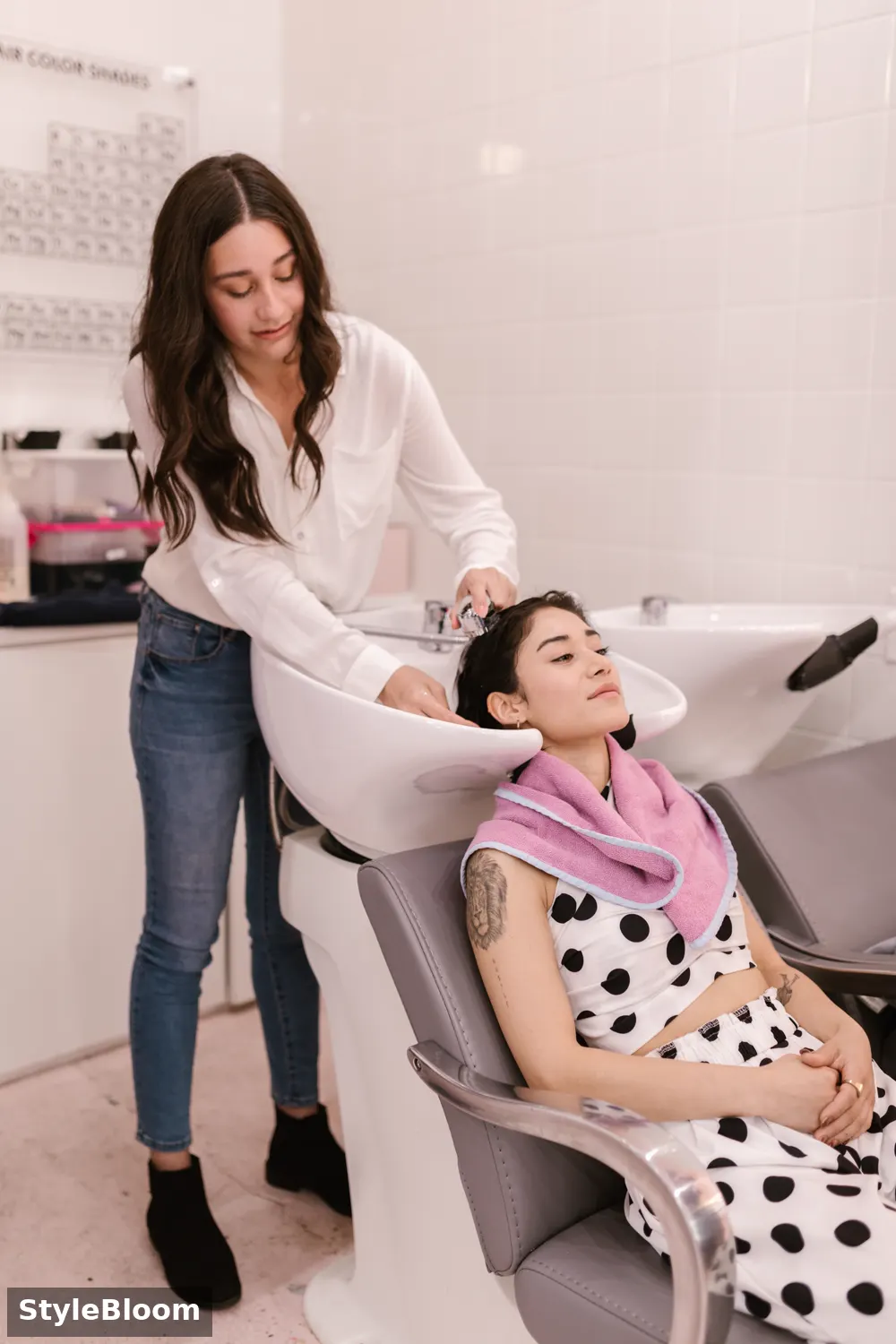
Repeat that single change for three washes before judging. Hair responds to a new product over days, not minutes, and one wash can mislead in either direction: a first wash can feel unusually smooth from the novelty of the formula, or unusually coated before you learn the right amount. Three washes with the same amount, on the same hair, give you a real answer — and that answer, not a review or a ranking, is what your routine should be built on.
Maintenance is mostly protection: wash less often, wash gently, condition every time, and keep heat moderate. A keratin mask once a week or every other week refreshes smoothness without overloading, and a leave-in on frizz-prone days handles touch-ups between washes. Watch for the two signs that maintenance needs adjusting: stiffness means too much keratin is building up, so rotate in a plain moisturizing wash; returning frizz means the coating is fading, so a mask or a treatment decision is due. Neither sign is a failure — both are normal stages of a coating's life, and adjusting to them is the routine.
Trimming belongs in maintenance too. Keratin smooths the look of ends, but it does not heal splits, and splits travel upward if left alone. A small trim every couple of months keeps ends honest and lets the coating work on healthy length rather than masking damage. Protective styling helps as well: loose braids, low buns, and silk or satin coverings at night reduce friction and breakage, which matters more after a treatment, because treated hair that breaks loses its coating along with its length. Maintenance is unglamorous and it works, which is why it is most of this guide's advice in one paragraph.
Removing keratin: it fades, it is not stripped. There is no quick way to remove a keratin coating — it wears off gradually with washing over weeks. Clarifying shampoos speed the fading but can leave hair dry, so use them sparingly if you are trying to fade a treatment. Chemical services such as color or bleach change the coating too, so tell your stylist about a recent treatment before booking one. If a treatment result bothers you, patience plus gentle washing beats any harsh attempt to strip it out.
Heat and keratin have a two-sided relationship: controlled heat seals a treatment in, but repeated high heat wears the coating out. The rule that resolves the tension is simple: use the lowest heat setting that achieves the style, and use a heat protectant every single time. A flat iron or curling tool on its highest setting does not make a treatment last longer; it stresses the coating and the hair beneath it, and the damage shows up as returning frizz that no amount of serum fixes. One slow, even pass at moderate heat beats three fast passes at maximum heat, because repeated passes stack damage while adding little smoothness.
Never apply high heat to wet or damp hair that is meant to be heat-styled dry, because water inside the hair shaft turns to steam and blisters the outer layer — the same layer your keratin coating is trying to protect. Dry hair fully on a gentle setting first, then style. Between full styling sessions, refresh with a low-heat pass or a no-heat method — braiding damp hair for waves, or wrapping it smoothly overnight — rather than re-ironing daily. Each skipped high-heat day is a day the coating survives longer, and over weeks that adds up to visibly longer-lasting results. If your hair starts smelling scorched, feeling rough after styling, or snapping at the ends, the heat is too high or too frequent, and the fix is lower heat and fewer passes, not a stronger keratin product.
These are Amazon search links so you can compare current listings yourself. Each pick carries a best-for label, and none is presented as tested by us.
If the budget is tight, start with a keratin shampoo and a weekly mask before any kit or salon treatment. They cost less than a treatment, need no waiting period, and show within a month whether your hair likes keratin at all.
| What happens | Likely cause | Fix |
|---|---|---|
| Hair feels stiff or straw-like | Keratin overload; too many keratin products | Pause keratin; switch to moisture-focused care |
| Frizz returns within weeks | Harsh washing; clarifying shampoo; heat damage | Sulfate-free shampoo; wash less often; heat protectant |
| Curl pattern loosened unexpectedly | Treatment too strong for the goal | Let it grow out; use gentle products meanwhile |
| Color shifted after treatment | Treatment over fresh color; no gap | Color first, wait, then treat next time |
| Scalp irritation after treatment | Sensitivity; product on scalp | Stop treatment; keep products off scalp; seek advice if persistent |
| Ends still split after treatment | Splits do not heal under coating | Trim ends; maintain with masks and gentle care |
This guide started with the top-ranking keratin pages, read inside rather than skimmed from headlines, and it attacks the gaps those pages leave: treatment versus daily product stated plainly, keratin by hair type including curly and coily hair, salon versus at-home compared without favoring either, aftercare rules that preserve results, and the overload mistake named directly. Search demand figures come from Semrush data as of October 2026. No product in the picks section was lab-tested for this guide, and no pick is presented as tested; the picks are search links so you can compare current listings yourself. Where guides disagreed — most sharply on whether keratin is for straightening or for smoothing — this guide treats smoothing as the definition and straightening as one possible outcome, and says why. This guide is general information, not medical or professional advice, and persistent scalp problems or severe hair damage deserve professional attention.
Keratin comes in more forms than treatments and shampoos, and each suits a different moment. Keratin oils are light finishing products: a few drops smooth flyaways and add shine without a wash, and they pair well with argan-type oils for dry ends — but they do not repair damage the way a treatment does. Keratin creams are thicker leave-in products for mid-lengths and ends, useful when hair feels rough after drying. Keratin sprays are the lightest option, best for quick frizz touch-ups and as a heat-protecting step before styling. Ampoules are small, concentrated single-use doses used as an intensive boost between regular washes, usually massaged through damp hair and left in. Serums, covered in the comparison above, sit between oils and creams for shine and surface smoothing. A few products use plant-derived keratin, which is marketed as a gentler alternative — it works the same way, as a surface coating, and the choice comes down to how your hair responds, not the source on the label.
Keratin or collagen? Collagen appears alongside keratin in some hair products, and the two are often confused. Keratin is the protein hair is actually made of, so keratin products aim to patch and coat the hair fiber itself. Collagen in hair care is a supporting ingredient that adds moisture and a feeling of fullness but does not rebuild the fiber the way keratin aims to. If your problem is damage and breakage, keratin is the more direct match; if it is dryness and limpness, a collagen-containing conditioner may be enough on its own.
Keratin care is worth it when the intensity matches the goal: daily products for gentle smoothing, at-home kits for mild smoothing and maintenance, salon treatments for months of frizz control. Start gentle, watch how your hair responds over three washes, protect any treatment with sulfate-free washing and moderate heat, and never stack keratin on keratin hoping for more — enough smooths, too much stiffens. Hair that is severely damaged needs trimming and gentle care before any treatment, and curly or coily hair deserves a deliberate conversation about texture before any strong treatment. Done that way, keratin is a quiet, reliable part of a routine, not a gamble.

Keratin hair care uses products or treatments containing keratin, the protein hair is largely made of, to coat the hair surface, reduce frizz, and make hair look smoother and easier to manage. It improves the surface temporarily; it does not rebuild hair's internal structure or make results permanent.
A keratin treatment is a salon or at-home process that coats and heat-seals keratin onto the hair for weeks of smoothness, while keratin shampoo is a daily product that deposits a small amount of keratin with each wash for gentler, shorter-lived smoothing. Treatments are commitments; shampoos are experiments you can stop any time.
A salon keratin treatment usually lasts for weeks to a few months, depending on the formula, your hair type, and how you wash and care for it afterward. Gentle washing and sulfate-free shampoo help results last longer, while harsh washing, clarifying shampoo, and frequent swimming shorten them.
Yes, but the goal matters: keratin can reduce frizz and add smoothness to curly and natural hair without fully straightening it, if the treatment and heat are kept gentle. Strong straightening treatments can loosen curl pattern, so choose the intensity deliberately and discuss the expected effect on curls before any salon treatment.
Keratin care is often used on color-treated hair, but timing matters: treatments can shift color slightly, so color first and treatment second is the usual order, with a gap between them. Ask your stylist about your specific color and formula, especially for reds and vivid shades.
Salon treatments are typically repeated every few months as results fade, not every few weeks, while daily keratin shampoos and masks can be used as part of a regular wash routine. Repeating strong treatments too often can overload hair and make it feel stiff, which is worse than letting a treatment fade naturally.
Salon keratin uses stronger formulas, professional application, and heat tools for longer-lasting results, while at-home kits are gentler, easier, and shorter-lived. At-home products suit maintenance and mild smoothing; dramatic smoothing belongs in a salon, where application is even and heat is controlled.
Keratin cannot truly repair broken hair structure, but it can coat damaged areas, reduce breakage during styling, and make damaged-looking hair feel smoother while it grows out. Severely damaged hair still needs trimming and gentle care, and no coating substitutes for removing split ends.
No, keratin treatments are not permanent. They relax and smooth hair for weeks to months, then fade as hair grows and is washed. New growth comes in with your natural texture, which is why treatments need repeating to maintain the effect — and why the grow-out is gradual rather than a harsh line.
Follow your treatment's own instructions, but the common cautions are: avoid washing for the waiting period the formula specifies, avoid tucking hair behind ears or tying it tightly while it sets, and use sulfate-free shampoo afterward to protect the coating. Clarifying shampoos and daily hot washes are the fastest ways to strip results.
Yes, with a light hand: fine hair is easily weighed down, so use smaller amounts, focus on mid-lengths and ends rather than roots, and favor lighter keratin shampoos and leave-ins over heavy masks. If fine hair feels flat or coated, the product was too heavy or too frequent.
Look for keratin or hydrolyzed keratin on the ingredient list, plus moisturizing ingredients that balance it, and check whether the product is sulfate-free if you are maintaining a treatment. A product that only says keratin on the front but not in the ingredients is marketing, not keratin care.
It depends on the product and your sensitivity: daily keratin shampoos are usually gentle, while strong salon treatments can irritate sensitive scalps. Patch-test new products, keep strong treatments off the scalp where possible, and ask the salon about sensitivity before booking. Persistent irritation deserves professional advice.
Wash less often and gently, use sulfate-free shampoo, condition every wash, protect hair from high heat, and use a keratin mask occasionally. Maintenance is mostly about not stripping the coating faster than necessary — and trimming ends so the coating works on healthy length.
Hair that feels stiff, straw-like, or coated after treatment, scalp irritation, or curl pattern loss you did not want are signs to step back. Switch to gentler keratin products or pause treatments and let hair recover with moisture-focused care before deciding whether keratin or the dose was the problem.