Best Silk Bonnet in Australia (2026): 6 Styles That Stay On, With Prices Verified in Australia
Australia has one recent silk-bonnet guide, and its prices are already two months old. Six styles, AUD prices checked live on 31 October 2026, and the label checks that separate real silk from satin.
By the end, you will know what a silk bonnet can and cannot do, how to tell real silk from satin, and what it should cost in Australia.
- Silk is a fibre; satin is a weave. A "silk bonnet" that never states fibre content has not proven it is silk. Check the fibre line, not the title.
- AUD prices checked live on 31 October 2026: the two fully specified DaisySilk bonnets are $80.84 and $117.59 AUD, and the Blissy Classic shows $130.00 on its Australian storefront, with a currency catch explained in its section.
- Fit beats brand: size for hair volume, a wide band, and an adjustable closure matter more than any label. Where a page stays silent, this guide says so.
- A bonnet reduces breakage from friction. It does not make hair grow, and no bonnet repairs split ends.
As an Amazon Associate I earn from qualifying purchases.
Last updated: 31 October 2026. Prices were checked that day and can change; the Amazon.com.au links are search links — always check price, fibre content, and seller before buying.
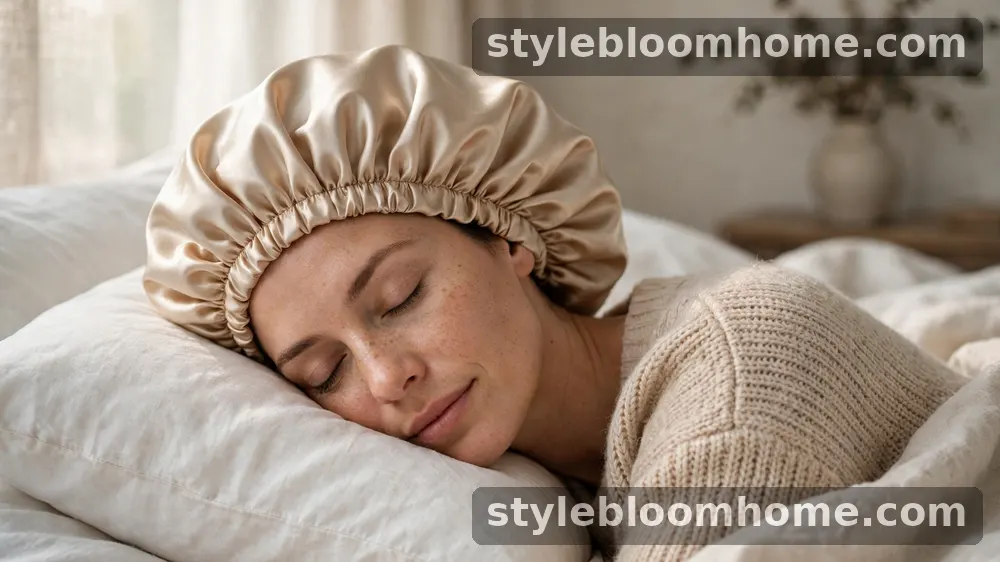
Illustration: a woman in a champagne silk bonnet, resting on a white pillow.
What a silk bonnet actually does for your hair
A silk bonnet does one job, quietly. While you sleep, hair rubs against the pillowcase. Cotton grips: it catches the cuticle, pulls at tangles, and drinks the moisture hair spent the day holding. Silk lets hair glide instead — less friction, night after night, and hair that keeps its shape, moisture, and ends in better condition.
That is the whole mechanism. A bonnet does not feed hair, add protein, repair split ends, or grow new hair. It protects the hair you have from the most boring damage there is: rubbing. One Australian silk specialist puts it plainly: a bonnet does not directly cause hair growth, but it helps reduce breakage caused by friction and dryness.
Silk earns its place for two reasons beyond smoothness. As a natural protein fibre it breathes, and it absorbs far less moisture than cotton, so leave-in products and natural oils stay on the hair. A polyester satin bonnet gives the smooth glide at a lower price, and for many people that is enough. Silk adds breathability and moisture behaviour that satin, a weave rather than a fibre, cannot promise.
One honest limit before the picks. A bonnet protects hair while you sleep and does nothing for the other sixteen hours. Heat styling, harsh brushing, and chemical treatments do more damage in minutes than a pillowcase does in a night, and no bonnet undoes them.
The best silk bonnets in Australia at a glance
Three bonnets with AUD prices verified live on 31 October 2026, and three Australian ranges with verified specifications whose prices must be checked on the individual listing.
| Style | Best for | Fabric, verified | Price, verified |
|---|---|---|---|
| DaisySilk sleep cap | Fully specified buy at a fair price | 100% mulberry silk, 22 momme, 6A | $80.84 AUD, DaisySilk (AU) |
| DaisySilk long bonnet | Long hair, braids, extensions | 22-momme mulberry silk charmeuse, no grade stated | $117.59 AUD, DaisySilk (AU) |
| Blissy Classic Bronze | Fully specified label, premium | 100% 22-momme 6A mulberry silk | $130.00 as shown, Blissy (AU) — currency check needed |
| Silk Bonnet World range | Australian specialist, dedicated bonnet range | 100% mulberry silk (homepage) | Check the listing — not verified 31 Oct 2026 |
| Sleep Dreams Silkett | Stay-put wide band | 22-momme mulberry silk | Check the listing — not verified 31 Oct 2026 |
| Slipintosoft collection | Lighter 19-momme weight | 19-momme 100% mulberry silk | Check the listing — not verified 31 Oct 2026 |
How we chose these picks
We did not test these bonnets at home, and this guide does not pretend otherwise. On 31 October 2026 we opened the retailer pages and read fibre content, momme weight, grade, size, closure, care, price, shipping, and returns. Where a page stated a fact, this guide repeats it with the source named. Where a page stayed silent, this guide says so rather than guessing.
The search behind this guide started with the questions people actually ask: where to buy, what a bonnet does, whether it helps, what to use instead, satin against silk, curly-hair benefits, wet hair, and hair fall. The Australian evidence is the strongest local tail of the six country files behind this series: shoppers search Kmart, Chemist Warehouse, Priceline, Mecca, David Jones, Myer, Peter Alexander, Country Road, Spotlight, Sportsgirl, and Target Australia by name. Those names shape the where-to-buy section, but they do not prove what any of those shops stocks: every retailer claim here was checked live, and the gaps are reported as gaps.
We excluded snippet-only prices — a snippet is not a shop page — and marketplace listings calling a product "silk" without stating fibre content. We also excluded the one recent Australian guide's prices: a roundup checked on 4 September 2026 is two months stale for a 31 October guide. This guide answers more questions, verifies fresher prices, and says plainly where it could verify nothing.
There is exactly one recent Australian buying guide — a magazine roundup, not a specialist test — and the older local editorial is a 2019 single-product article, not a buying guide. The field is beatable on freshness, depth, and honesty.
The 6 best silk bonnet styles for Australia
Six styles from Australian-facing storefronts. Three carry AUD prices verified live on 31 October 2026; three carry verified specifications with prices left to the listing.
1. Best fully specified buy: DaisySilk sleep cap — $80.84 AUD
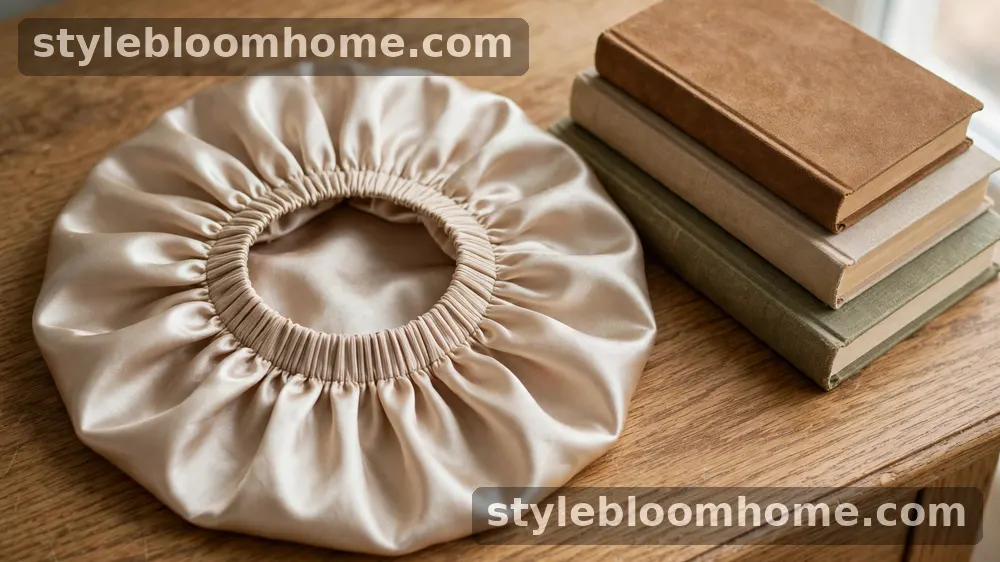
Best for: anyone who wants the full specification — fibre, weight, grade, certification — at a fair Australian price. Verified live on 31 October 2026: the DaisySilk Australia storefront lists the silk hair bonnet for sleeping at $80.84 AUD, in stock, one size, in five colours. The page states the fabric as 100% pure mulberry silk, 22 momme, 6A grade, with OEKO-TEX Standard 100 Annex 6 certification and certificate numbers published. Shipping is free over $80 AUD, delivery runs 3 to 10 business days, and returns are accepted within 60 days. Why it earns the top spot: fibre, weight, grade, certification, price, shipping, and returns all on one page, at the lowest verified price for a fully specified bonnet. Watch out for: one size only — very long or high-volume hair needs the long bonnet below. Search Amazon.com.au for silk bonnets.
2. Best for long hair, braids, and extensions: DaisySilk long bonnet — $117.59 AUD
Best for: long hair, braids, locs, and extensions that a standard cap flattens or fails to contain. Verified live on 31 October 2026: the DaisySilk Australia storefront lists the mulberry silk bonnet for hair at $117.59 AUD, in stock, one size, in five colours. The page describes it as a long silk sleep cap in 22-momme mulberry silk, made from 100% pure silk charmeuse. The same OEKO-TEX Annex 6 certification, free shipping over $80 AUD, delivery, and returns terms apply. The honest limit, stated plainly: this page states no grade. Do not assume the two bonnets share a grade because they share a brand. Why it earns its place: the verified long shape, for hair the standard cap cannot hold. Watch out for: the highest verified AUD price here, and wasted fabric on short or fine hair. Buy it for length, not as a default. Search Amazon.com.au for mulberry silk bonnets.
3. Best fully specified premium label: Blissy Classic Bronze — $130.00 as shown, currency check needed
Best for: anyone who wants every claim — fibre, weight, grade, size, certification — readable on one page before paying, and is willing to pay the premium for it. Verified live on 31 October 2026: the Blissy Australia storefront lists the Bronze Classic bonnet at $130.00 with free shipping, in Regular size. The page states the specification in full: 100% 22-momme 6A grade mulberry silk, Oeko-Tex certified, machine washable in a mesh laundry bag, with a 60-day returns window. The Classic comes in Standard at 8 by 10 inches and Large at 9 by 11 inches, and the page names Cascade for extra-long hair and Junior styles for children. The honest limit, stated plainly — read this before paying: the storefront displays the price as "$130.00" with no currency code, while the page's metadata records 130.00 USD. This guide therefore does not state the price as A$130.00. Confirm the currency actually charged at checkout: if it is US dollars, the Australian-dollar cost is higher than $130. Why it earns its place: the most completely specified bonnet here, with sizes in inches and care stated plainly. Watch out for: the currency question above, and the page's own review score for this colour: 3.5 out of 5 from 12 reviews. Search Amazon.com.au for silk sleep caps.
4. Best Australian specialist: Silk Bonnet World range — check the listing
Best for: shoppers who want an Australian silk specialist with a dedicated bonnet range, rather than a general store that happens to stock one. Verified live on 31 October 2026: the Silk Bonnet World Australia homepage describes an Australian specialist in 100% mulberry silk bonnets, with long bonnets for braids and dreadlocks, single-layer turbans, and double-layer caps for fuller hair. It states free standard shipping over A$50, metro delivery typically 5 to 10 business days after dispatch, and a Brisbane, Queensland base. The honest limit, stated plainly: no momme weight and no bonnet price could be verified on the homepage on 31 October 2026, and this guide does not repeat prices quoted in a September roundup. Check the individual listing before buying. Why it earns its place: the only dedicated Australian bonnet specialist here, with the range shapes that match the hair types in this guide. Watch out for: the homepage is a shopfront, not a specification sheet. Judge the bonnet, not the brand story. Search Amazon.com.au for tie-closure silk bonnets.
5. Best stay-put band: Sleep Dreams Silkett — check the listing
Best for: sleepers whose bonnet keeps slipping off, and anyone who wants an Australian retailer with a named silk range. Verified live on 31 October 2026: the Sleep Dreams collection page states that its silk bonnets use 22-momme mulberry silk with a wide, stay-put band, and describes the Silkett silk bonnets as made from 100% mulberry silk, with a satin Satinett range alongside as the budget option. The honest limit, stated plainly: no product-level price and no grade could be verified on the collection page on 31 October 2026. Why it earns its place: the wide stay-put band targets the commonest complaint about bonnets, and the page keeps silk and satin visibly separate. Watch out for: the satin range sits on the same page — open the Silkett listing and read its fibre content. Search Amazon.com.au for silk bonnets for long hair.
6. Best lighter weight: Slipintosoft 19-momme collection — check the listing
Best for: anyone who finds 22-momme silk too heavy or too warm, and shoppers who want tie, bow, and lace styles in real silk. Verified live on 31 October 2026: the Slipintosoft Australia collection page states its silk sleep caps are crafted from 100% mulberry silk, many styles in 19-momme for a lightweight feel, including classic bonnets, long caps, bow turbans, and lace-trimmed styles. The page advises checking each product description for its exact specification — advice this guide endorses. The honest limit, stated plainly: no product-level price could be verified on the collection page on 31 October 2026, and no grade is stated there. Why it earns its place: 19 momme is the lightest verified weight here, and in a hot climate a lighter bonnet is a bonnet that gets worn. Watch out for: lighter silk is less dense — if durability matters more than lightness, the 22-momme options above are the denser buy. Search Amazon.com.au for 22-momme silk bonnets.
Where to buy a silk bonnet in Australia
Start with the specialists above: DaisySilk and Blissy sell direct with stated prices, shipping, and returns; Silk Bonnet World, Sleep Dreams, and Slipintosoft are Australian-facing ranges with dedicated bonnet collections. For marketplace buying, use the Amazon.com.au search links in this guide, and check price, fibre content, and seller on Amazon.com.au before buying — a marketplace listing can carry the word "silk" in its title while stating polyester in its material line, and the title is not the label. Search Amazon.com.au for silk bonnets in Australia.
Now the honest gap. Australian shoppers search Kmart, Chemist Warehouse, Priceline, Mecca, David Jones, Myer, Peter Alexander, Country Road, Spotlight, Sportsgirl, and Target Australia for silk bonnets. On 31 October 2026, no silk bonnet listing with a readable fibre specification and an AUD price could be verified live at Kmart, Chemist Warehouse, Priceline, or Mecca. That does not mean those shops never stock one — stock changes — but this guide will not send you to a shop for a product it could not verify there. Shop those names with the label checks in the next section in hand, and call the store before travelling: "silk bonnet near me" is a common Australian search, and it usually means someone wants to walk out with one today.
One trap to name plainly. Kitsch is the best-known bonnet name at Australian beauty retailers, and Kitsch bonnets are satin — a weave, usually over synthetic fibre — not silk. A Kitsch bonnet is not a silk bonnet, and no guide should let the brand name do the fibre's job. The same caution applies to any "silky" bonnet: "silky" describes how a fabric feels, not what it is. Read the fibre line.
Delivery and returns, Australia-wide. The verified terms are: DaisySilk, free shipping over $80 AUD, 3 to 10 business days, 60-day returns; Blissy, free shipping as shown, 60-day returns for eligible purchases; Silk Bonnet World, free standard shipping over A$50, metro delivery typically 5 to 10 business days after dispatch. Regional delivery takes longer everywhere — check the estimate for your postcode at checkout. Outside a metro area, the returns window matters more than shipping speed.
How to read a silk label: momme, grade, and the claims to check
Three words do most of the work on a silk label, and most listings use at least one of them loosely. Here is what each one actually means, and what to do when it is missing.
Momme measures fabric weight: higher momme means denser fabric; lower momme feels lighter. The bonnets here span 19 momme (Slipintosoft) to 22 momme (DaisySilk, Blissy, Sleep Dreams). There is no mandatory momme weight for a bonnet. A 19-momme bonnet is not worse — it is lighter, and in Australian heat that can be the better buy. What matters is that the weight is stated at all: a listing that never states momme has not told you how dense its silk is.
Grade is separate from momme. Mulberry silk is graded by fibre length and uniformity, and 6A is the top grade brands cite. DaisySilk's sleep cap and Blissy's Classic both state 6A; the other pages checked do not state a grade. Grade is a seller claim, not an independent certificate, and a grade without a stated fibre content is still an unproven bonnet. Treat grade as supporting evidence, never as a substitute for the fibre line.
Charmeuse is a weave — silk woven with a shiny face and a dull back — not a fibre. DaisySilk's long bonnet is 100% pure silk charmeuse: the fibre is silk, the weave is charmeuse. "Satin" works the same way: a weave that can be silk, polyester, or rayon. That is why "satin bonnet" tells you nothing about fibre, and why the fibre line settles the silk question.
Certification is about safety, not silk content. OEKO-TEX Standard 100 certifies that a textile has been tested for harmful substances; it does not certify that a fabric is silk. DaisySilk cites Annex 6, with certificate numbers on the page; Blissy's page states Oeko-Tex certification without an annex. A certification is worth having, but it never proves the fibre. The checks, in order: fibre content first, then momme, then grade, then certification.
Red flags. "Silk-like", "silky", "silk-touch", and "satin silk" are not silk. A listing that says "silk" in the title and "polyester" in the material line is a polyester bonnet. A listing with no material line is unproven. A price far below every verified price here — under $20 AUD for claimed 22-momme silk — should prompt a label check, not excitement: the verified floor for real silk in this guide is $80.84 AUD.
Straight hair: does a silk bonnet help?
Yes, with a smaller and more specific payoff than curly hair gets. Straight hair does not need a bonnet to hold a curl pattern, so the benefit is friction and moisture: less rubbing against the pillowcase means fewer tangles, less frizz at the ends, and blow-dries and styled hair that stay smoother for longer. The payoff is most visible on long straight hair, which tangles more, and fine straight hair, which breaks more easily.
The honest limit: a bonnet will not add volume or replace a heat protectant. If straight hair wakes up flat, that is gravity and the weight of the hair — not the bonnet. What a bonnet does is keep the ends smoother and the morning brush-through shorter.
Wavy hair: keeping the wave without the frizz
Wavy hair sits between the two clear cases. It frizzes like curly hair and flattens like straight hair, and a bonnet helps the first problem while doing little for the second. The wave survives better inside a roomy bonnet. A gathered cap with a wide band works; a tight cap that compresses the wave does not. Put the hair up loosely inside the bonnet — the pineapple method, a loose high gather — with the silk doing the friction work the pillowcase would otherwise do.
A bonnet on freshly washed, fully dry wavy hair preserves the wave best. On second- or third-day hair it keeps the wave from frizzing further, but it will not restore a wave that has already dropped — that needs water and a refresh, not a cap.
Curly, coily, and protective styles
This is where a bonnet earns its keep most clearly. Curls, coils, braids, locs, twists, and extensions all suffer the same overnight damage — friction, moisture loss, flattening — and a bonnet addresses all three at once. The long shape matters most here: waist-length hair, braids, and locs need length, not just width.
For coily and 4C hair, the advice is the same, with one extra point: silk or satin is a genuine question, not a settled one. Both reduce friction against cotton; silk adds breathability, satin adds a lower price. Either is far better than bare cotton. What matters most is fit — a gentle band that does not press the edges, and room enough that the hair is not compressed — and consistency: a bonnet worn nightly protects; one worn occasionally does not.
For protective styles, two practical points. First, the bonnet goes over the style, not instead of it: braids and twists still need their own care, and a bonnet protects the style's edges and ends overnight. Second, extensions need room and a smooth surface — the DaisySilk long bonnet and the Silk Bonnet World long shape are the verified long options in this guide, and Blissy's Cascade is named for the same purpose. Check the length before buying: a bonnet that ends halfway down a braid is a bonnet doing half a job. Search Amazon.com.au for silk bonnets for curly hair.
Fine or thin hair: the flat-roots problem
Fine and thin hair gets the friction benefit and a real drawback: a bonnet can flatten roots. The fix is fit, not abandonment. A tight bonnet presses hair flat; a roomy one lets it sit loosely. Put fine hair up loosely and choose a wide, soft band over a narrow elastic: wide, soft, and adjustable beats narrow and fixed.
Thinning hair deserves a plain word. A bonnet does not cause hair loss, and it does not treat it. It reduces the mechanical breakage that makes thinning hair look thinner. Shedding from the root is a medical question, not a bonnet question.
Silk bonnets for men
Men with long hair, curls, braids, locs, or thinning hair get exactly the same benefit: less friction, less breakage, better-preserved styles. There is nothing gendered about a silk cap. The buying advice is identical — fibre first, size for volume, wide band, adjustable closure — with one practical note: most bonnets are one size and marketed to women, so men with larger heads should check the stated width and stretch, and prefer a tie or adjustable closure. No stretch figure was verified for the Australian bonnets here, which is itself a reason to prefer adjustable closures when the size is unstated.
A hard-hat note, because the Australian research includes it: a silk bonnet under a hard hat is a comfort question, not a safety question. A bonnet does not replace a hard-hat liner and must never interfere with how the hard hat sits. If site rules require a specific liner, follow them. A thin silk cap under a compliant liner is a personal-comfort choice, not protective equipment.
Silk bonnets for children
Children's hair benefits from the same friction reduction — Blissy's page names Junior and Junior Bow styles made for kids. The safety rules are stricter: a bonnet must fit without a tight band, must not have long ties or cords that could wrap around the neck, and must never be worn by a baby or toddler who cannot remove it. For older children, a junior size with a soft elastic band is the right shape; an adult one-size cap is not a children's bonnet. If a child will not keep one on, a silk pillowcase is the safer fallback. Never put a bonnet on a sleeping baby.
Wet hair: should you put a bonnet on damp hair?
No — not wet, and ideally not damp. Silk weakens when wet, damp hair inside a closed cap stays damp for hours, and a warm, damp scalp invites irritation. The rule is simple: hair goes into the bonnet dry. Dry it first — air-dry or diffuse on low heat — then put the bonnet on. A light refresh mist is fine; soaking hair is not. If it drips or feels cool and heavy, it is too wet.
Ears, pressure, and hot sleepers
Two complaints dominate bonnet reviews, and both are fit problems. The first is ears: a band that sits on the ears presses them all night. The fix is a wide band that sits above or behind the ears, and room enough that the cap is not hauling itself forward. If the band presses your ears after ten minutes awake, adjust it or exchange it. The second is forehead pressure: a narrow elastic leaves a mark and a headache. Wide bands spread the hold, and tie closures let you set the tension yourself.
Hot sleepers get a genuine advantage from silk in Australia. Silk breathes better than polyester satin, which traps heat — that matters in Brisbane and Perth summers and Townsville humidity. A 19-momme bonnet is lighter and cooler than a 22-momme one. For hot nights: a loose fit, hair gathered loosely, frequent washing. If the bonnet still feels too warm, the fallback is a silk pillowcase — same smooth surface, no enclosure, no heat trap.
Make your own from a silk pillowcase?
Yes, you can sew a bonnet from a silk pillowcase: a circle of silk, a casing, and soft elastic or a tie. The result protects hair exactly as a bought bonnet does, because the protection comes from the silk surface, not the brand. What a home-sewn bonnet usually lacks is the refined fit — band tension, interior volume, closure — and silk is unforgiving to sew: it slips, frays, and shows every uneven seam. Use a real silk pillowcase, not satin, and finish the edges, because a fraying seam against hair is worse than no bonnet at all.
The cost check matters. A genuine silk pillowcase costs as much as a budget silk bonnet, so sewing your own saves money only if you already own the silk. The one case where DIY clearly wins is fit: if no bought bonnet fits, a made-to-measure cap solves the problem no shop can.
Silk vs satin: which one should you buy in Australia?
Silk is a fibre. Satin is a weave. That single sentence settles most of the confusion, because listings work hard to blur it. A silk bonnet is made from silk fibre, usually mulberry silk. A satin bonnet uses a satin weave, usually over polyester or rayon — but it can also be woven from silk, in which case the listing should say so. "Satin" alone tells you how fabric shines, not what it is made of.
The practical comparison, honestly stated. Silk is smoother, more breathable, absorbs less moisture, and lasts longer — a well-made silk bonnet survives years of careful washing, while polyester satin pills and roughens. Satin is much cheaper and gives most of the glide. For many buyers satin is the right first bonnet: it answers "will I actually wear one every night?" cheaply, and if the answer is yes, silk is the upgrade. For nightly wearers, silk is the better long-term buy: a satin bonnet replaced twice a year closes the price gap faster than people expect.
When satin is the right buy: tight budgets, first-time buyers testing the habit, children who will lose it, and travel where loss is likely. When silk is the right buy: nightly wearers, curly and coily hair, sensitive scalps, and long-term buyers. Kitsch, the best-known satin name in Australia, makes the satin case well — but it is the satin case, and this guide will not let it stand in for the silk one. Search Amazon.com.au for satin bonnets.
How to choose: size, band, lining, and closure
Size first. Most bonnets here are one size, which means the stated width, height, and stretch are the whole sizing story — and most Australian listings state none of them. Where dimensions are stated, use them: width against head circumference, height against gathered hair length. Where nothing is stated, prefer a tie or adjustable closure. Long hair needs length; high-volume hair needs interior room.
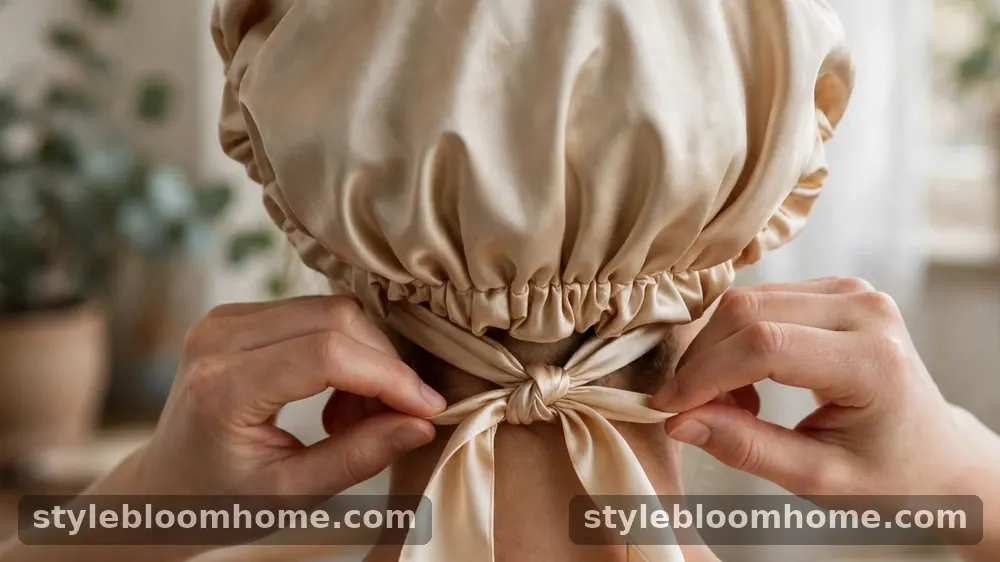
Band second. The band does all the holding and causes all the complaints. Wide beats narrow: it spreads pressure, stays put without tension, and does not mark the forehead. Soft beats stiff. Adjustable beats fixed: a tie or drawstring lets you set the tension for your head, and lets one bonnet fit hair up or down.
Lining third. A double-layer bonnet has silk on both sides, so silk sits against the hair whichever way the fabric folds. A single-layer bonnet with a polyester lining has silk outside and synthetic against the hair — paying silk prices for a polyester surface. Check for "double-layer" or "silk-lined"; if the listing does not state the lining, ask before buying.
Closure fourth. Elastic is simplest: pull on, sleep. Tie is most adjustable: set the tension, tie the bow, and the bonnet stays where you put it. Drawstring sits between the two. Button-adjustable, as on the SilkLuxe knot-front in the Sweden guide, is the most precise. The right closure is the one you will actually use every night — an adjustable bonnet left in a drawer because tying it feels like effort is a worse buy than an elastic cap worn nightly. Search Amazon.com.au for tie-closure silk bonnets.
How to wear it so it stays on
The commonest complaint is that bonnets come off overnight, and the commonest cause is putting the hair in wrong. Gather dry hair loosely at the crown and lower the bonnet over it. Set the band to feel secure without tension: a finger should slip under it, and the bonnet should not move when you shake your head gently.
Side sleepers need extra care: the bonnet shifts toward the pillow, so a tie closure or wide band earns its keep. Give it a week, adjust nightly, and judge it on night seven, not night one. Search Amazon.com.au for adjustable silk bonnets.
How to wash a silk bonnet
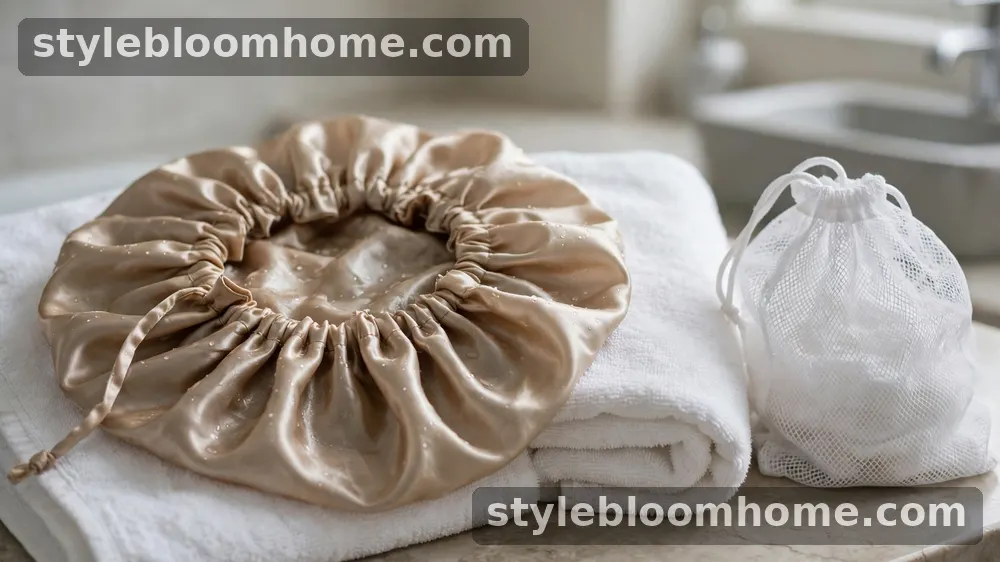
Silk is strong dry and fragile wet, and washing is where most bonnets die. Hand wash in cold water with a mild silk detergent, or machine wash cold on a delicate cycle inside a mesh laundry bag. No bleach, no fabric softener, no wringing, no direct sunlight, no hot dryer. Roll gently in a towel, then air-dry flat. DaisySilk's care advice matches this exactly, and Blissy's page states the same machine-wash method.
How often? As often as a pillowcase: weekly, more often in summer, or whenever build-up dulls the silk. Keep a second bonnet if you can: one in use, one in the wash.
What to use instead of a silk bonnet
A bonnet is not the only way to get a smooth surface around hair overnight. A silk pillowcase gives the same low-friction surface with no fit, no band, and no heat trap — the best fallback for children and hot sleepers. A satin pillowcase gives most of the glide at a lower price. A silk scarf, wrapped and tied, does the bonnet's job for long hair and braids — and one you already own costs nothing. A satin bonnet does the job at the lowest price, with the trade-offs already stated.
What does not work: a cotton pillowcase with a silk scarf on top, which slides off; a shower cap, which traps heat; a cotton beanie, which is friction with a friendly face. The test is the same as for a bonnet: smooth, breathable, low-friction — and will it stay in place all night? Search Amazon.com.au for silk pillowcases.
Skip it if: honest objections answered
Skip a bonnet if you will not wear it. A $117.59 bonnet in a drawer protects nothing, and a $15 satin cap worn nightly protects more than a silk cap worn never. The DaisySilk cap at $80.84 carries the same stated specification as bonnets costing half as much again — the difference is brand, not fibre.
Skip a bonnet if your scalp is irritated or recovering from treatment — ask a clinician first. Skip it on wet-hair nights. Skip it if it disturbs a bed partner and no compromise is available — a silk pillowcase is the household-peace alternative. And skip the idea that a bonnet is a treatment: it does not grow hair, repair ends, or cure a scalp condition.
First night and first month: what to expect
Night one feels strange, and that is normal — it usually passes by night three. The first visible change is the morning brush-through: fewer tangles, less frizz. By the end of the first week the fit is tuned; by the end of the first month the change is in the ends: fewer split ends forming, less breakage, better moisture between washes. A bonnet is a small habit with a slow, compounding return.
Frequently asked questions
- Is a silk bonnet good for hair?
- Yes, for the specific job it does: reducing friction between hair and pillowcase overnight — fewer tangles, less frizz, less breakage, better moisture retention. It does not grow hair, repair split ends, or treat scalp conditions.
- What does a silk bonnet do?
- It puts a smooth, low-friction silk surface around the hair while you sleep, so the hair glides instead of catching on cotton, reducing tangling, frizz, breakage, and moisture loss night after night. It does nothing during the day, and it does not undo heat or chemical damage.
- Which is better, a silk or satin bonnet?
- Silk is the better long-term buy: smoother, more breathable, better moisture behaviour, more durable. Satin is the better first buy: much cheaper, most of the glide, the right way to find out whether you will wear one nightly. Already a nightly wearer? Buy silk. Never worn one? Start with satin and upgrade when the habit sticks.
- How expensive is a real silk bonnet in Australia?
- On 31 October 2026, the verified AUD prices were $80.84 for the DaisySilk sleep cap and $117.59 for the DaisySilk long bonnet, both 22-momme mulberry silk, and $130.00 as displayed on Blissy's Australian storefront — the page's metadata records USD, so confirm the charged currency at checkout. Anything far below $80 for claimed 22-momme silk deserves a label check.
- Where can I buy a silk bonnet in Australia?
- Direct from Australian-facing storefronts — DaisySilk, Blissy, Silk Bonnet World, Sleep Dreams, and Slipintosoft — or through the Amazon.com.au search links here, checking price, fibre content, and seller first. No silk bonnet listing with a readable fibre specification and AUD price could be verified at Kmart, Chemist Warehouse, Priceline, or Mecca on 31 October 2026, so shop those names with the label checks in this guide and call ahead before travelling.
- What is momme, and what does 22 momme mean?
- Momme measures silk fabric weight: higher momme means denser fabric. A 22-momme bonnet uses more silk per area than a 19-momme one, and feels denser and more durable; a 19-momme bonnet feels lighter and cooler. There is no mandatory momme weight for a bonnet. Grade is separate: 6A is the top grade brands cite, and it describes fibre quality, not weight. A listing that states neither has told you nothing comparable.
- Does a silk bonnet help straight hair?
- Yes, modestly. Straight hair gets less tangling, smoother ends, and styles that last longer overnight. It does not gain volume or hold a shape gravity wants to flatten. The benefit is clearest on long and fine straight hair, which tangles and breaks most easily.
- Should I sleep with a silk bonnet every night?
- Yes, if you want the benefit: protection is cumulative. Nightly wear is safe for healthy hair and scalp, provided the hair goes in dry and the band does not press. If your scalp is irritated or broken, skip the bonnet until the skin recovers, and ask a clinician if unsure.
- How do I keep a silk bonnet on all night?
- Gather dry hair loosely at the crown, lower the bonnet over the gather, and set the band to feel secure without tension — a finger should slip under the band. A wide band and a tie or adjustable closure hold better than a narrow fixed elastic. Side sleepers should favour a tie closure. Give the fit a week of nightly adjustment before judging it.
- Can I wear a silk bonnet on wet or damp hair?
- No. Hair should go into a bonnet dry. Wet hair inside a closed cap stays damp for hours, silk weakens when wet, and a warm damp enclosed scalp invites irritation. Dry the hair first, then put the bonnet on. A light refresh mist is fine; soaking hair is not.
- Does a silk bonnet make hair greasy?
- It should not. Silk absorbs less moisture and oil than cotton, so natural oils and leave-in products stay on the hair rather than moving into the pillowcase — which can feel like extra oil for the first few nights if you use heavy products. If hair feels greasy, use less leave-in product, not a different bonnet. Persistent greasiness is a product or scalp question, not a bonnet question.
- Can a silk bonnet cause hair loss?
- A bonnet does not cause hair loss from the root. What it can do, if the band is too tight, is press on the hairline and snap hairs at the edge through tension — which looks like thinning at the hairline but is breakage, not shedding. A wide, soft, loose band prevents it. Shedding from the root is a medical question, and no bonnet treats or causes it.
- How do I wash a silk bonnet?
- Hand wash in cold water with a mild silk-safe detergent, or machine wash cold on a delicate cycle inside a mesh laundry bag. No bleach, no fabric softener, no wringing, no direct sunlight, no hot dryer. Roll gently in a towel, then air-dry flat. Wash weekly, more often in summer.
- Can children wear a silk bonnet?
- Older children who can put on and take off their own bonnet can wear a junior size with a soft elastic band — Blissy's page names Junior styles made for kids. Never put a bonnet on a baby or toddler who cannot remove it, avoid long ties or cords on children's bonnets, and use a silk pillowcase as the safer fallback for young children. An adult one-size cap is not a children's bonnet.
- Is it okay to wear a bonnet as a white person?
- Yes. A bonnet is a hair-protection tool, and protecting your hair is not restricted by background. Bonnets have deep roots in Black hair care, where they have protected curls, coils, braids, and locs for generations, and that history deserves respect: wear one for its function, do not mock or caricature it, and know that some shoppers choose Black-owned businesses to honour those roots. No rule bars anyone from protecting their hair.
The bottom line
Australia finally has a recent silk-bonnet guide, and this one beats it where it matters: prices checked today, specifications read from the pages that state them, and gaps reported as gaps. The DaisySilk sleep cap at $80.84 AUD is the clearest verified buy. The DaisySilk long bonnet at $117.59 AUD is the verified shape for long hair and protective styles. The Blissy Classic is the premium alternative, with a currency question to settle at checkout. The three Australian ranges carry verified specifications and unverified prices, and this guide says so instead of filling the gap with September figures. Buy the bonnet whose listing states 100% mulberry silk, size it for your hair volume, choose a wide soft band, and wear it nightly with dry hair. The payoff is slow and compounding — and it starts on the first morning without the brush-through battle.