
Makeup Brush Cleaner (USA): Wash Weekly, Dry Upside Down, Then Decide on a Machine
A weekly wash with gentle shampoo, a silicone mat, and flat or upside-down drying beats every machine. A spinner earns its place only by making the habit happen.
By the end, you will know how often each brush type needs washing, what to clean with and what to avoid, how to dry without shedding, whether a spinner is worth it, and when to replace a brush.
As an Amazon Associate, StyleBloom earns from qualifying purchases. This guide contains affiliate links — it costs you nothing extra and keeps our content free.
The best Christmas gift for mom is the one she'd never buy for herself. Every Christmas morning has the same moment: she opens a gift, pauses, and says "oh, I've been wanting this." That gift is almost never the expensive one — it's the cozy thing, the pretty thing, the small daily upgrade that says someone was paying attention.
This guide has 16 picks from Amazon, organized by the kind of mom you're shopping for: the cozy homebody, the self-care devotee, and the mom who keeps a beautiful home. Every pick comes from our October 2026 demand research (Amazon's own Best Sellers, Most Wished For, and Movers & Shakers), with an honest drawback listed for each — because no gift is perfect for everyone. Amazon prices move constantly, so I don't quote exact numbers; hit Check Price on any pick for the live price.
Shopping for a mom spending Christmas in Australia? Skip the winter picks — our Australian summer Christmas edition rebuilds this guide for beach weather: heat-proof picks, order-by dates for interstate mums, and the gifts that melt, wilt or miss the day.
The verdict, up front

The best makeup brush cleaner for most people is not a machine at all: it is a weekly wash with a gentle shampoo, lukewarm water, and a silicone mat, followed by drying the brush flat or upside down. That routine costs almost nothing, works on every brush you own, and solves the real problem, which is buildup of foundation, oil, and skin residue near the base of the bristles. An electric spinner earns its place only after that habit exists, because what it buys you is speed: a brush washed and spin-dried in minutes instead of air-dried overnight.
That verdict changes in three situations, and those three situations are the whole point of this guide. If you wear makeup daily and own a dozen brushes, hand-washing the whole set every week is a chore that keeps getting postponed, and a spinner is what turns a postponed chore into a five-minute routine. If you are a makeup artist, or you use brushes on anyone else's skin, a spinner plus a spray for between-client touch-ups is the honest professional setup, because brushes used on someone else's skin need washing immediately. And if your brushes are mostly small, delicate eye brushes or expensive natural-hair brushes, a spinner may be the wrong buy entirely, because those brushes need the gentle hand-wash more than they need speed.
I am not going to pretend I tested every cleaner on the market on my own brushes. What I did is read the listings, the dermatology guidance, and the brush-care guides the way a careful buyer should: checking what each type claims, where those claims break down, and what actually ruins brushes. Get the wash, the soap, and the drying right, and almost any well-reviewed cleaner in the right type will serve you. Get any one of them wrong, and the most expensive machine in the world will still leave you with a shedding brush.
Comparison: the types at a glance
There are seven types worth knowing, and every makeup brush cleaner you will meet is one of them. The table below compares them on the things that decide whether you will still be happy with the purchase in three months: how it cleans, what it does badly, and who it suits.
| Type | How it cleans | Biggest weakness | Best for |
|---|---|---|---|
| Electric spinner | Motor spins brush in soapy water, then spin-dries | Collar fit; cannot clean sponges; needs bowl cleaning | Daily wearers, large collections |
| Spinner + dryer machine | Spinner plus a drying cycle in the same device | Costs more; drying still needs an air finish for dense brushes | People who need a brush back the same hour |
| Silicone mat or pad | Textured surface you swirl the brush over by hand | Still hand work; no drying help | Everyone, especially beginners and budgets |
| Cleaning glove | Textured glove worn while washing | One more thing to wash and dry | People who wash many brushes at once |
| Liquid cleanser | Brush shampoo or solution, used with a mat or by hand | Runs out; must be rinsed fully | Deep washes, natural-hair brushes |
| Spray spot cleaner | Quick-drying spray wiped over bristles | Does not deep-clean; residue if overused | Between colors, travel, between clients |
| DIY soap wash | Baby shampoo or gentle dish soap, palm or mat | No gadget help; easy to use water that is too hot | Anyone starting out, any budget |
Two patterns in that table are worth sitting with. First, every powered type trades money for time, and every manual type trades time for control. A spinner saves you twenty minutes and gives up the fine control of your own fingers on a delicate brush. Second, no type replaces the other two jobs: washing, and drying. A spinner that washes brilliantly still leaves a dense brush damp at the base, and a spray that dries instantly still leaves deep buildup untouched. Buy the type that fixes the job you actually skip, not the type with the loudest listing.
It depends, then, on three answers you already know: how many brushes you own, whether you wear makeup daily, and whether your brushes are mostly sturdy synthetics or delicate natural hair.
Head to head, the trade is residue and rinsing. A dedicated cleanser is made to rinse out of bristles and usually needs the least second rinsing; a solid bar needs a full rinse or it leaves a film; baby shampoo rinses easily and is the gentlest on natural hair; dish soap cuts foundation fastest and is the hardest to rinse fully, which is why residue ends up on skin when the rinse is rushed. No rival tested these side by side, so treat that ranking as the honest reading of their methods, not a measurement — and judge any cleaner by the rinse water, which runs clear when the brush is actually clean.
How often, honestly
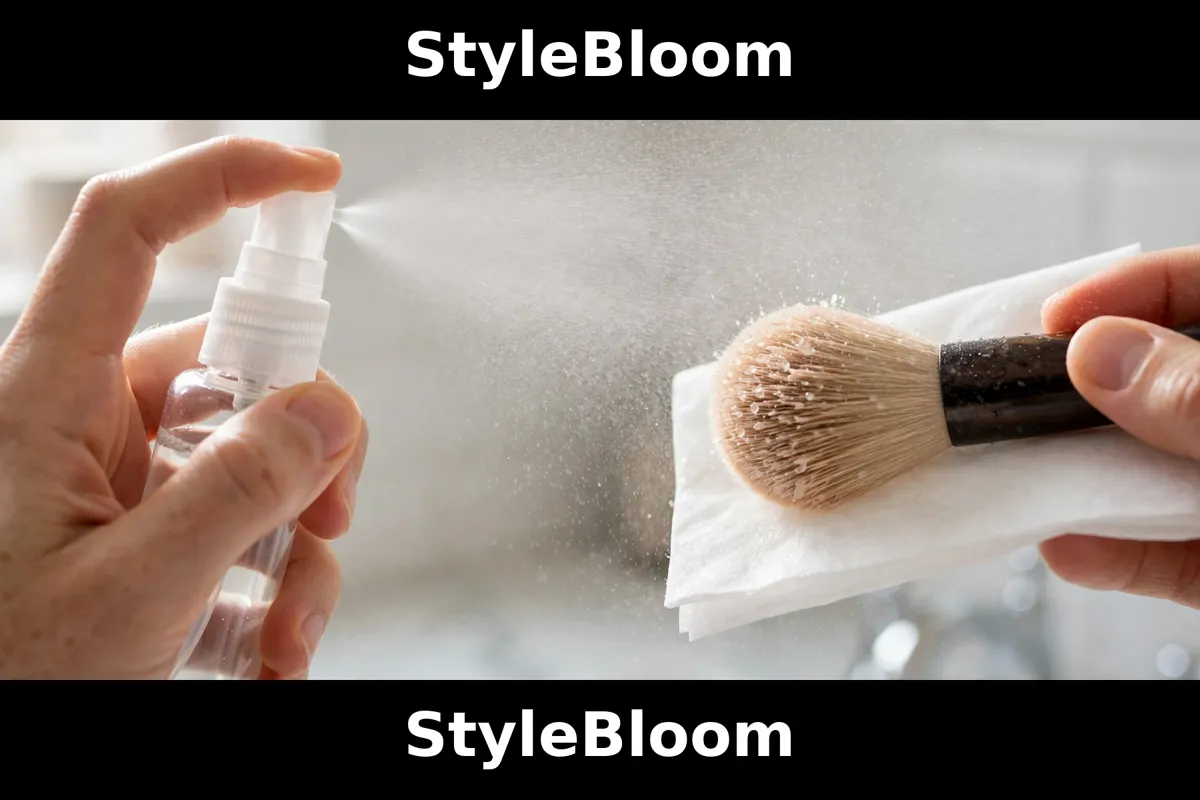
Most guides give one number for every brush, and that number is wrong for half your collection. How often depends on what the brush touches. Brushes used with creams or liquids, foundation, concealer, and cream blush, carry skin oil and bacteria, and they should be washed about once a week. Powder, bronzer, and blush brushes can go two to four weeks, because dry product builds up more slowly. Eye brushes sit in the middle at about every two weeks, with a wipe between colors so shades do not muddy each other.
The American Academy of Dermatology puts the general rule at every 7 to 10 days, washing more often when you apply liquid or cream products or when the bristles look dirty. That matches the weekly rhythm here; the longer intervals above are for powder and eye brushes, not for foundation brushes.
There are four situations that override any schedule. If you use a brush on someone else's skin, wash it immediately, before it touches another face. If you have been sick or had a skin infection, deep-clean everything before you use it again, so you do not reintroduce the problem to your own skin. If you have had an allergic response, residue from the irritant may still be on your brushes, so wash them before you blame the product. And if a brush smells, streaks, or feels stiff, it is overdue no matter what the calendar says.
A quick spritz with a cleaning spray does not reset the clock. It keeps colors from getting muddy in between washes, it dries in a minute, and it keeps the ferrule dry, which is genuinely useful. But it does not remove the deep buildup near the base of the bristles, and a brush that has only ever been sprayed is a brush that has never really been washed. Treat the spray as a bridge between washes, not as the wash itself.
The honest reason most people under-wash is not ignorance but friction: a full hand-wash of a dozen brushes takes real time, and drying takes overnight. That is exactly where a spinner earns its money, not by cleaning better than your hands, but by making the weekly wash short enough that it actually happens. A cleaning routine you skip is worse than a slightly imperfect routine you keep.
Brush types change the answer
Natural hair and synthetic fiber are not the same tool, and they do not tolerate the same cleaning. Natural hair, usually goat, squirrel, or pony, holds powder beautifully and is more fragile: it dries out under harsh detergents, it hates hot water, and it sheds faster when spun hard or soaked. Synthetic fiber, usually taklon or nylon, is tougher, dries faster, and tolerates spinning well, which is why most spinners are designed around it. If your collection mixes both, clean them differently: hand-wash the natural-hair brushes gently, spin the synthetics.
Density matters as much as fiber. A dense kabuki or foundation brush holds product deep near the base, takes longest to rinse clean, and takes longest to dry. A fluffy powder brush rinses fast and dries fast. A small eye brush holds little product but is delicate, and its collar fit in a spinner is the whole question: if it wobbles, hand-wash it. Test any new cleaner on your cheapest brush first, not on the expensive one you would hate to ruin.
| Natural hair | Synthetic fiber | |
|---|---|---|
| Water | Lukewarm only; never hot | Lukewarm; tolerates warmth better |
| Soap | Baby shampoo or gentle cleanser | Baby shampoo, gentle dish soap, or cleanser |
| Spinner | Low speed, short cycles, or hand-wash | Spins well, including dense heads |
| Drying | Flat or hanging; longest dry time | Flat or hanging; dries faster |
Sponges are the exception that proves the rule. A beauty sponge absorbs liquid makeup deep inside, so it cannot be spin-cleaned at all. It needs soaking, squeezing, and repeated rinsing until the water runs clear, followed by full air-drying, and it needs washing more often than your brushes because it stays damp inside longer. If your routine leans on sponges, budget for replacement as well as cleaning: a sponge that tears, stays stained, or smells after washing is done.
What to clean with, and what to avoid
You do not need an expensive branded cleanser to wash brushes well. A gentle shampoo, baby shampoo is the usual recommendation, or a drop of mild dish soap, dissolved in lukewarm water, cleans most brushes completely. Dedicated brush shampoos are fine, and some rinse out more easily than dish soap, but they are a convenience, not a requirement. What matters is gentleness and full rinsing: soap left in the bristles ends up on your skin.
Three things to avoid. First, hot water: it weakens the glue that holds bristles in the ferrule, and it dries out natural hair. Lukewarm is the rule, every time. Second, soaking the whole brush head: water that reaches the ferrule dissolves glue and loosens bristles, so rinse only the bristle tips and keep the handle and ferrule as dry as you can. Third, harsh detergents, undiluted alcohol, and acetone-based removers, which strip natural hair and can crack handles. Olive oil is sometimes suggested for dissolving stubborn makeup, and it can help on a synthetic brush, but it must be washed out fully with soap afterward, or it leaves a film that attracts more buildup.
Dish soap is the contested one. Ulta, Brown Beauty Barber School, and Into The Gloss allow a drop of Dawn for synthetic brushes; Byrdie’s experts warn against dish soap as a harsh cleanser that can strip brushes, and the professional guide Makeup to Go rejects household substitutes outright. The honest split: a drop of gentle dish soap is acceptable on sturdy synthetics, baby shampoo is the gentler default, and natural-hair brushes should stay with baby shampoo or a dedicated cleanser. Household all-purpose cleaners are formulated for surfaces, not bristles, and micellar water is a makeup remover, not a brush wash — neither replaces soap and water.
Antibacterial and sanitizing labels deserve a straight answer. A soap that says antibacterial has not been shown, in any measurement you can check, to make your brushes meaningfully safer than a gentle soap and a full rinse. Washing removes buildup; it does not sterilize the brush, and no consumer product turns a dirty brush into a sterile one. The hygiene gain comes from washing often and drying fully, not from a stronger bottle.
One distinction helps: washing cleans and sanitises in the everyday sense, but disinfecting is a separate claim with contact times — the professional guide Makeup to Go notes most disinfecting liquids need around 10 minutes of contact to disinfect, and that not every cleaner disinfects. For home use, a full wash and a full dry is the standard; leave disinfectant claims to labels you can check.
The deep-clean routine, step by step
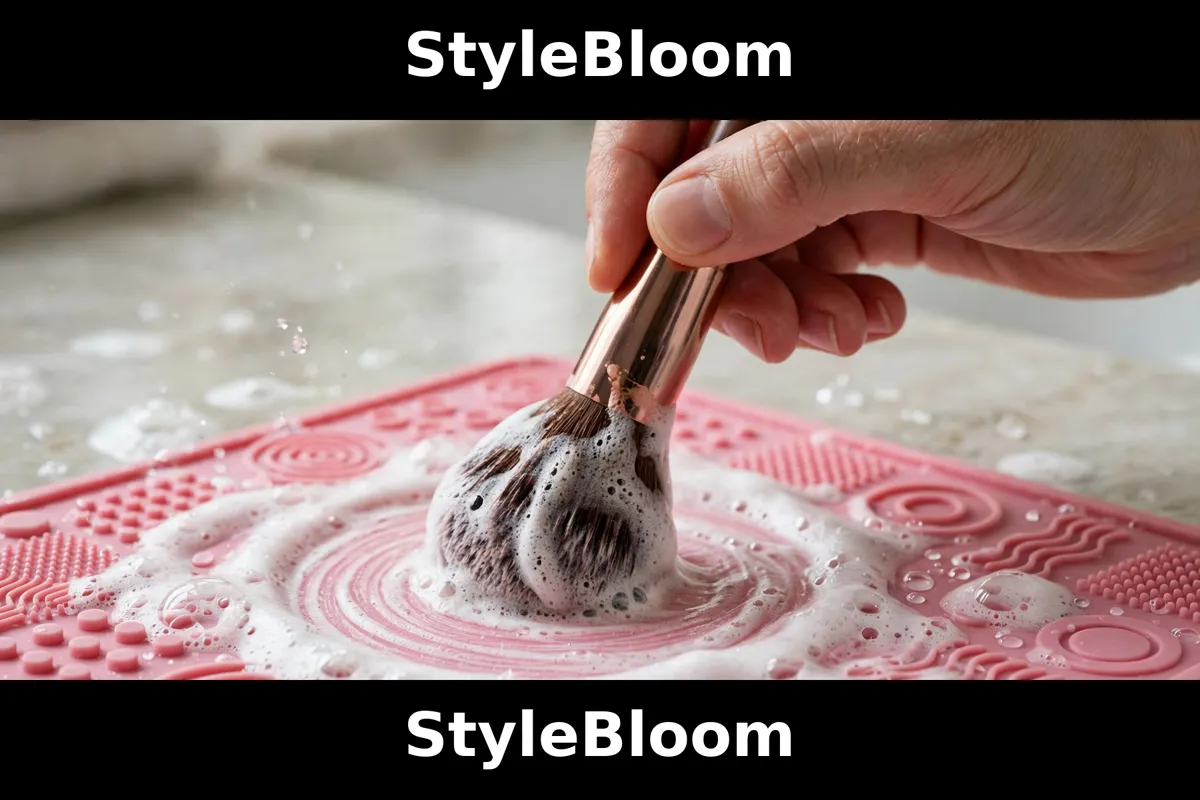
Here is the routine that works for every brush, with or without a gadget. Rinse just the bristle tips under lukewarm running water, holding the brush with the bristles pointing down so water runs away from the ferrule, not into it. Put a small amount of gentle soap in your palm, on a silicone mat, or in a bowl, and swirl the brush through it, working the lather gently into the bristles. For a stubborn foundation brush, let the lather sit for a minute before you rinse.
Rinse under lukewarm water, gently massaging the bristles, until the water runs clear. Repeat the lather and rinse if the water is still cloudy, because cloudy rinse water means product is still in the brush. Squeeze the bristles gently from the ferrule toward the tips with a clean towel, never wringing or twisting, which breaks bristles and misshapes the head. Reshape the head with two fingers: pinch a pointed head back to its point, flatten a flat one, smooth stray hairs back into place.
With a spinner, the routine compresses but does not change: fit the brush into a snug collar, dip it in a bowl of soapy water, spin at a low speed, lift and spin-dry, then rinse and repeat if the water is cloudy. Clean the bowl after every session, because a dirty bowl re-deposits yesterday's foundation on today's brush. With a spray, the routine is different in kind: spritz, wipe over a clean towel or pad, and let it dry for a minute. That is a touch-up, and it earns its place between deep washes, not instead of them.
Drying is where brushes are won or lost
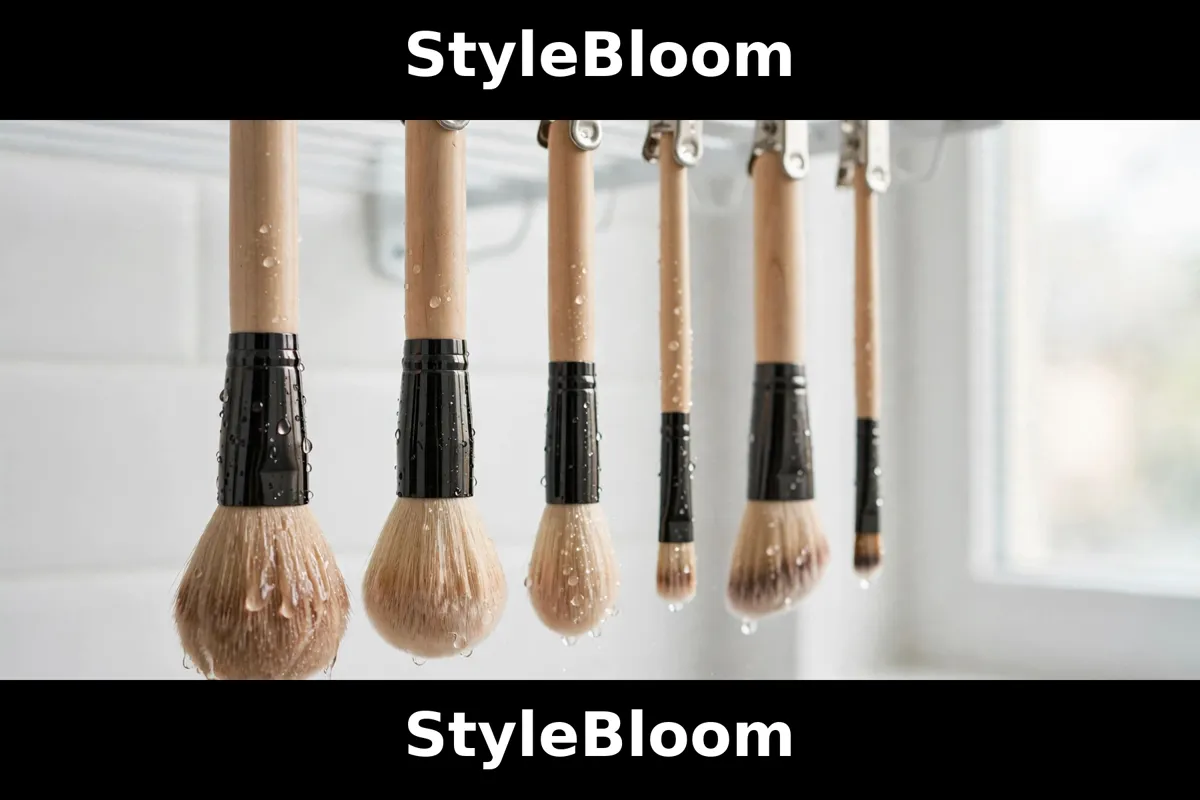
Drying is the step most people get wrong, and it is the step that kills brushes. Standing a wet brush upright in a cup is the most common mistake: gravity pulls water down the bristles, into the ferrule, and straight to the glue, and then the brush starts shedding and you blame the brand. There are three good ways to dry a brush. Lay it flat with the head hanging past the edge of a counter, so air reaches it from every side and nothing squashes it out of shape. Rest it on a slope with the head lower than the handle. Or hang it upside down from a rack or an elastic strap, which is the fastest way, because it keeps water running away from the ferrule the whole time.
Reshape the head before you walk away, because a damp brush keeps whatever shape it dries in. If a brush already dried splayed out, wet it again and dry it inside a brush guard, a mesh sleeve that pulls the head back into shape over a couple of washes. Leave the brush alone until it is dry all the way through: bristles can feel dry at the tips while the base is still wet, and putting a brush in a closed case then is how mildew starts. Never dry brushes near direct heat or a radiator, which dries the outside fast while the base stays damp and can crack handles.
Spin-drying helps, but it does not finish the job. A spin-dried brush is usually usable within minutes, yet a dense kabuki can still be damp at the base, so give it a short air finish even after spinning. The test is simple: squeeze the base gently. If it feels cool or damp, it is not dry. A brush that is dry at the tips and damp at the base is a brush that is still wet where it matters.
Drying time has an upper end worth knowing: a dermatologist quoted by TODAY put larger brushes at up to 36 hours to dry fully, and Simple Green’s guide gives at least 24 hours. Judge dryness by the base of the bristles, not the tips, and give dense brushes the extra night.
Electric spinners, honestly
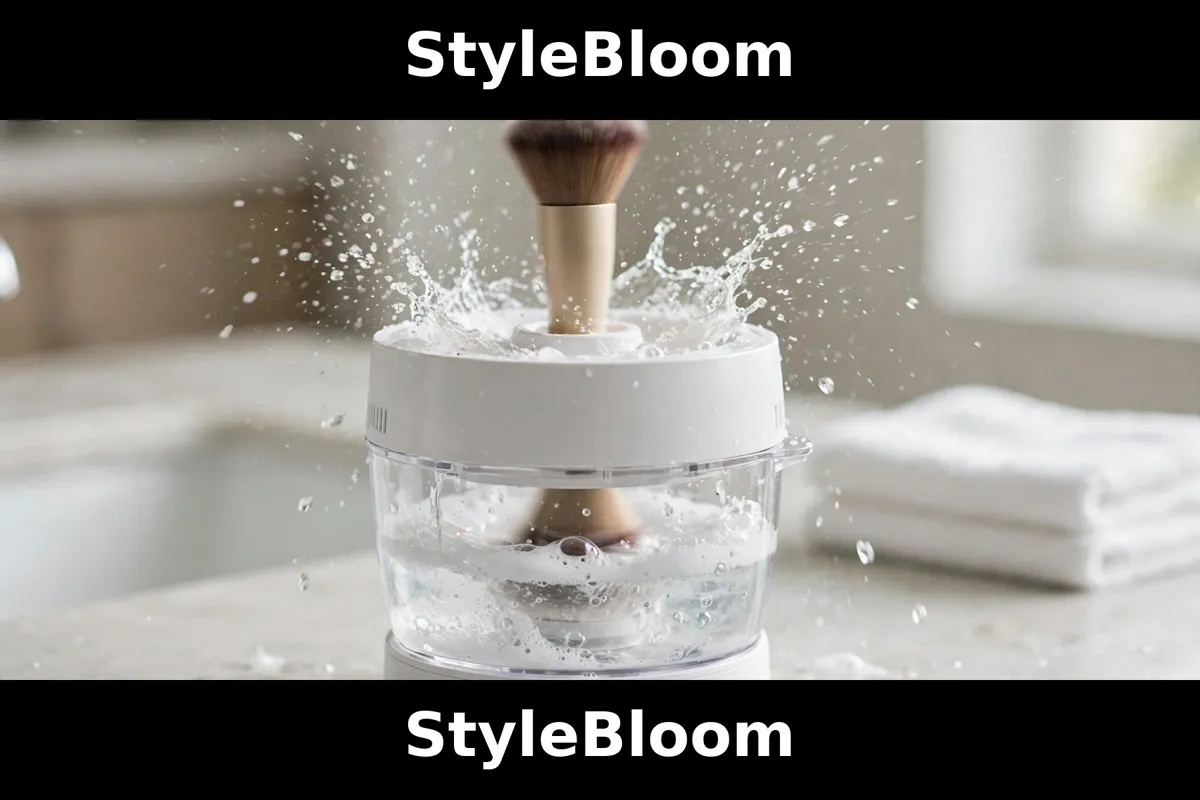
Electric spinners work, and the reason they work is simple: rotation loosens product from bristles faster than fingers do, and centrifugal force throws water out during drying. A brush that takes ten minutes by hand and hours to air-dry takes about a minute in a spinner and is usable almost immediately. For a daily wearer with a dozen brushes, that is the difference between washing weekly and washing never.
The honest limits matter more than the marketing. First, collar fit: a spinner is only as good as its collars, and a brush that wobbles, slips, or fits loosely will clean unevenly and can splay. Check that your most-used brushes, especially the smallest eye brushes and the largest powder brushes, fit the included collars before you buy. Second, the bowl: it must be cleaned after every session, or it becomes the dirtiest thing in the routine. Third, power: battery models need charging, and a dead spinner on wash day is a postponed wash. Fourth, delicacy: high speed on a fragile natural-hair brush is a shedding risk, so use low speeds and short cycles, and hand-wash anything you would hate to lose.
Spinner-plus-dryer machines add a drying cycle to the same device, and they are worth the extra money only if you genuinely need a brush back the same hour, for example between clients or before an event. For everyone else, a plain spinner plus a flat drying surface does the same job for less. UV lights, sanitizing modes, and speed-memory functions are extras, not reasons to buy: they do not replace washing, and their claims are marketing, not measurements. Judge a spinner by fit, gentleness, bowl cleaning, and battery, in that order.
Power deserves its own check, because it decides whether the spinner gets used. USB-rechargeable models are the most convenient for most buyers: they charge from a phone charger, they travel well, and they have no batteries to buy. Battery models are cheaper up front and die at the worst moment, usually on wash day, and plug-in models are the most powerful but tie you to an outlet near water, which deserves care. Check the stated charging method and whether the bowl is large enough for your biggest powder brush: a bowl that fits a foundation brush but not a powder brush is a bowl you will resent. A travel case matters more than it sounds, because a spinner with a loose bowl and loose collars becomes a jumble in a bag, and collars lost in transit are collars you cannot replace easily.
Who should buy which type
The daily wearer with a dozen brushes should buy a spinner and a mat. The spinner does the weekly wash fast, the mat handles the brushes too delicate to spin, and the spray handles between-color touch-ups. The budget buyer should buy a mat and a bottle of baby shampoo, and spend nothing else: that combination cleans every brush well, and the money saved buys better brushes.
The makeup artist, or anyone who uses brushes on someone else's skin, needs the full kit: a spinner for speed, a spray for between clients, and a strict rule that a brush used on one face is washed before it touches another. The sensitive or acne-prone wearer needs frequency more than force: a gentle shampoo, a weekly wash that actually happens, and full rinsing and drying, with a spinner only if it is what makes the habit stick.
The beginner with five brushes needs a mat, not a machine. Learn the hand-wash first, learn what clean rinse water looks like, learn how your brushes dry, and only then decide whether speed is worth paying for. The traveler needs a spray and a small mat, not a spinner: a spray dries in a minute, a mat packs flat, and a spinner needs a bowl, water, and power that a hotel bathroom may not offer conveniently. The sponge-heavy user needs soaking and replacement discipline, because no machine in this category cleans a sponge.
Two more groups deserve a word. In a shared household, where sisters or roommates borrow each other's brushes, the rule is simple and non-negotiable: a brush is washed before it touches another person's face, every time, with no exceptions for family. Borrowing is fine; sharing unwashed brushes is how irritation and breakouts travel between people who otherwise take care of their skin. In a salon or freelance kit, the same rule applies professionally, and the kit should carry a spray for between-client work plus a spinner for the end-of-day wash, with clean and dirty brushes kept in separate pouches so they never mix.
Objections, answered honestly
“I do not have time to wash brushes every week.” That is exactly the objection a spinner answers, and it is a fair one. A full hand-wash of a dozen brushes is a real chore. But the alternative is not a clean brush: it is a brush that streaks, smells, and puts old product and oil back on your skin. If time is the blocker, buy the spinner, and let speed make the habit possible.
“My brushes look clean, so they must be clean.” Powder brushes can look clean while the base still holds oil and residue, and foundation brushes hide buildup inside dense bristles. Rinse water tells the truth: if it runs cloudy, the brush was dirty, whatever it looked like. “Dish soap will ruin my brushes.” A drop of gentle dish soap, lukewarm water, and a full rinse will not ruin a synthetic brush, and it is gentler than the dried-on foundation it removes. Natural-hair brushes deserve baby shampoo instead, but the principle is the same: gentle soap, lukewarm water, rinse fully.
“A machine will replace washing.” No machine replaces the routine. A spinner is a faster way to wash, not a way to skip washing, and a spray is a touch-up, not a wash. The brush still needs soap, water, rinsing, and drying, in some order, every time.
Skip it if…
Skip an electric spinner if your collection is mostly small eye brushes or expensive natural-hair brushes that you hand-wash anyway, because the machine will sit unused. Skip a spinner-plus-dryer if you never need a brush back the same hour, because overnight air-drying is free. Skip a UV sanitizer as a first purchase, because it does not wash anything. Skip any cleaner that promises to kill a percentage of bacteria or to sterilize your brushes, because those percentages are marketing, not measurements you can verify.
Skip the deep wash itself never. The only brushes that do not need washing are the ones you do not use. A brush that has sat unused for months still deserves a wash before it touches your face, because dust and old residue do not improve with age.
First win: the first week with a new routine
Start with one wash, not a system. Pick your three most-used brushes, the foundation brush, the powder brush, and one eye brush, and wash them tonight with baby shampoo, lukewarm water, and your palm or a mat. Rinse until the water runs clear, reshape the heads, and lay them flat with the heads past the edge of the counter. Tomorrow morning, notice two things: how the foundation goes on smoother, and how the eye brush stops muddying colors.
In the same week, add the spray to your daily routine: a spritz and a wipe between colors, so your eye brushes stop carrying yesterday's shade into today's look. By the end of the week, wash the rest of the collection the same way, and put the weekly wash on the same day you already do laundry or change your sheets, so it rides on a habit that already exists. The first win is not a perfect collection. It is three clean brushes and a routine you did not skip.
After the win: maintenance and replacement signs
Maintenance is unglamorous and it is the whole game. Clean the mat or glove after every session, clean the spinner bowl after every session, and wipe the handles, which are what you touch most and what most people forget. Wipe the ferrule too, with a damp cloth, keeping cleanser off the handle finish — the professional guide Makeup to Go wipes handles with disinfectant and warns to test it on one handle first, because strong disinfectants damaged a test handle. Store dry brushes upright in a holder so bristles keep their shape, never loose in a drawer where they bend. Keep a brush guard on any brush that dried splayed, and give it two washes to come back.
Replace a brush when it sheds after washing, when the ferrule wobbles, when bristles stay splayed after reshaping, when a smell survives two proper washes and a full dry, or when the handle cracks. A brush that has lost its shape will not apply makeup evenly no matter how clean it is. Replacement is not failure: it is the end of a tool’s life, and it is cheaper than the skin trouble a dying brush can cause.
Cleaners expire the way cosmetics do: check the bottle for its period-after-opening mark and replace a cleanser that smells off or has changed consistency. No rival guide gives a tested shelf life for brush cleaners, so there is no number worth quoting here — the mark on the bottle is the rule.
Once a month, give the whole collection a slightly deeper pass: wash every brush even if its schedule is not due, wash the mat and the glove themselves, wipe down the drying rack, and check every ferrule for wobble. Wash the brush guards too, because a guard that holds yesterday's residue against damp bristles undoes the drying it is supposed to protect. Store dry brushes upright in a holder, not loose in a drawer where bristles bend, and keep sponges in a breathable pouch rather than a sealed bag, so any remaining dampness can escape instead of turning into mildew.
Travelling changes the drying, not the washing. A spray and a small mat pack flat and dry in minutes; a spinner needs a bowl, water, and power a hotel bathroom may not offer conveniently. Dry brushes flat on a towel with air on all sides, never sealed in a bag while damp — Ogee’s storage warning is blunt for a reason: sealed bags trap moisture and bacteria. For long storage, keep brushes upright, out of direct sunlight, with brush guards on shaped heads.
Where to buy in the US
Buy the type first and the brand second. Start with an Amazon search for the type you decided on, compare several listings on the same three things, collar fit for your brushes, bowl cleaning, and gentleness, and read the listing's stated contents before you buy: collars included, battery or plug-in, bowl size, and whether a drying rack is included or sold separately. Do not trust a listing that promises a bacteria-kill percentage, a universal fit for every brush ever made, or a drying time without saying for which brush.
The search links below open Amazon searches for each type, so you can compare types side by side. Every link is a search link, not a recommendation of one specific listing, and every link carries the StyleBloom affiliate tag, which supports this guide at no extra cost to you.
- Electric makeup brush cleaner (search)
- Makeup brush cleaner and dryer machine (search)
- Silicone makeup brush cleaning mat (search)
- Makeup brush cleaning pad (search)
- Makeup brush cleaner spray (search)
- Makeup brush cleaner liquid (search)
- Makeup brush cleaning glove (search)
- Makeup brush dryer rack, upside down (search)
- Makeup brush cleaning soap and shampoo (search)
- Automatic makeup brush cleaner machine (search)
- Makeup sponge cleaner (search)
Search noise: stores, brands, and forums
Searches for a store name, a brush cleaner at a big retailer, or a cleaner near you, are shopping trips, not buying advice. A store brand is judged by the same three things as any online cleaner: fit, gentleness, and bowl or mat cleaning. Call ahead before a trip, because a store listing is not a promise that your store stocks the type you need, and take your most-used brush with you if you want to check collar fit in person.
Brand-name searches need the same skepticism as any other. A brand that dominates search results may dominate because it advertises heavily, not because it cleans better, and several of the loudest pages in this category are single-brand blogs dressed as guides. Judge a brand by the same checks as any listing: collars included, stated contents, and whether its claims are measurements or adjectives. Forum advice, including long threads about homemade mixes, is useful for routines and warnings, but treat any recipe involving strong solvents, undiluted alcohol, or boiling water as a brush-killer until proven otherwise.
Final verdict
Wash weekly, dry upside down or flat, and let a machine earn its place by saving time, not by promising miracles. For most people, a gentle shampoo, a silicone mat, and a flat drying surface are the whole system, and they cost almost nothing. Add a spinner when the weekly wash keeps getting postponed, add a spray for between-color touch-ups, and skip the sanitizer until the washing habit itself is solid.
A clean brush is a small thing, and that is exactly why it deserves a real routine: the dirty brush is the one that streaks your foundation, muddies your eyeshadow, and puts last week's oil back on today's skin. Wash it, dry it properly, and let a smooth application be the review that matters.
What to try first: Wash your three most-used brushes tonight with baby shampoo, lukewarm water, and a mat, rinse until the water runs clear, and lay them flat with the heads past the edge of the counter. Good looks like: rinse water running clear, heads holding their shape, and no smell by morning. If it fails: re-wash, dry longer, or replace the brush. Learn next: How to Remove Press-On Nails — the removal routine for the nails behind the brushes.
Frequently asked questions
- How often should I clean my makeup brushes?
- Brushes used with liquids or creams, like foundation and concealer, should be washed about once a week. Powder, bronzer, and blush brushes can usually go two to four weeks. Eye brushes deserve a wash about every two weeks, because the eye area is more prone to irritation and infection. A quick spray between washes keeps colors from muddying each other, but it does not replace a real wash.
- Can I use dish soap to clean makeup brushes?
- Yes, a drop of gentle dish soap works for most brushes, and baby shampoo is the gentlest common option. Use lukewarm water, never hot, because hot water weakens the glue that holds bristles in place. Rinse only the bristle tips, keep water out of the ferrule, and rinse until the water runs clear. Harsh detergents and undiluted alcohol dry out natural hair brushes faster than synthetic ones.
- Do electric makeup brush cleaners actually work?
- Yes, for what they are designed to do. A spinner washes a brush in a bowl of soapy water and then spin-dries it, so a brush that would take hours to air-dry is usable in minutes. What a spinner does not do is replace judgment: it will not fix a brush that is already shedding, it cannot clean a sponge, and it cannot make a dirty bowl clean. Treat speed claims on listings as marketing, not measurements, and judge a spinner by collar fit, bowl cleaning, and how gently it treats delicate brushes.
- How do I dry makeup brushes so they do not shed?
- Never stand a wet brush upright in a cup. Gravity pulls water down into the ferrule, where it loosens the glue, and that is how shedding starts. Lay the brush flat with the head hanging past the edge of a counter, rest it on a slope with the head lower than the handle, or hang it upside down from a rack. Reshape the head before you walk away, because a damp brush keeps whatever shape it dries in, and do not put it in a closed case until it is dry all the way through.
- Can I clean makeup brushes with just a spray?
- A spray is a spot cleaner, not a wash. It is good between colors, between clients, and on days when a full wash will not happen, because it dries fast and keeps the ferrule dry. It does not remove the deep buildup of foundation, oil, and skin residue that lives near the base of the bristles. If your brush still feels stiff, smells, or streaks after a spray, it is overdue for a wash.
- Are makeup brush cleaner machines safe for natural hair brushes?
- They can be, if you use them gently. Natural hair is more fragile than synthetic fiber: use a low spin speed, a gentle cleanser, and short cycles, and skip the spinner for a brush that is already shedding or has a loose ferrule. Dense synthetic kabuki brushes tolerate spinning well. When in doubt, hand-wash the expensive natural-hair brushes and spin the workhorse synthetics.
- Why do my brushes still smell after washing?
- A smell that survives a wash usually means the brush was stored damp, the base of the bristles never got clean, or the brush was put away in a closed case before it dried. Wash again, rinse until the water runs clear, and dry it upside down or flat with air on all sides. If the smell survives two proper washes and a full dry, the residue has likely settled into the ferrule, and replacement is the honest answer.
- Can I put makeup brushes in the washing machine?
- No. A washing machine soaks the ferrule, batters the bristle heads, and bends handles, and it will shorten the life of almost any brush. The only thing a machine wash reliably delivers is a misshapen brush. Hand-washing takes minutes per brush and is the method every brush maker and dermatologist guide recommends.
- How do I clean a beauty sponge differently from a brush?
- A sponge is not a brush, and a spinner cannot clean it. Sponges absorb liquid makeup deep inside, so they need soaking, squeezing, and repeated rinsing until the water runs clear, followed by full air-drying. Because a sponge stays damp inside longer than a brush, it is more prone to bacteria and yeast buildup, so wash it more often than your brushes and replace it as soon as it tears, stays stained, or smells after washing.
- What is the best makeup brush cleaner for sensitive or acne-prone skin?
- The best cleaner for reactive skin is a gentle, fragrance-free wash done often, not a stronger product. Wash liquid brushes weekly, use a mild shampoo rather than a harsh detergent, rinse fully so no soap residue sits against your skin, and dry brushes completely before use. A spinner helps here only because it makes the weekly wash fast enough that it actually happens.
- Do I need a separate cleaner for eye brushes?
- You do not need a separate product, but eye brushes do need their own schedule. Wash them about every two weeks, wipe them between colors so shades do not muddy, and never share eye brushes without washing first. If you develop a very red eye, eye drainage, or eye pain after applying makeup, stop using the brush and call a doctor rather than trying a stronger cleaner.
- How long do makeup brushes take to dry?
- It depends on the brush and the method. A spin-dried brush is usually usable within minutes, though the dense base may still be damp. An air-dried brush needs overnight, sometimes longer for a dense kabuki. Bristles can feel dry at the tips while the base is still wet, so judge dryness by the base, not the tips, and never store a brush in a closed case while the base is damp.
- Can an electric spinner damage small eye brushes?
- Yes, if the collar does not fit or the speed is too high. Small, delicate eye brushes need a snug collar, a low speed, and a short cycle, and some are simply too small or too delicate to spin safely. If a brush wobbles in its collar, slips out, or comes out splayed, hand-wash it instead. A spinner is a time-saver for face brushes, not a requirement for every brush you own.
- Can I use micellar water to clean my makeup brushes?
- Micellar water is a makeup remover, not a brush wash. It lifts makeup off skin, but no rival guide teaches it as a brush-cleaning method, and it does not rinse bristles clean the way soap and water do. Use it to remove makeup from your face, then wash the brush with gentle shampoo, lukewarm water, and a full rinse. If a brush still feels stiff or smells after micellar water alone, it has not been washed.
- When should I replace a makeup brush instead of cleaning it?
- Replace a brush when it sheds after washing, when the ferrule is loose or wobbling, when bristles stay splayed after reshaping and drying, when a smell survives two proper washes, or when the handle is cracked. A brush that has lost its shape will not apply makeup evenly no matter how clean it is, and a loose ferrule will only get worse.