Kojic Acid Body Sprays Compared: Melaxin vs Medicube
Two Korean kojic acid body sprays keep appearing in every feed for the same four problems — dark underarms, dark knees and elbows, strawberry legs, and back acne marks. They share a name, a headline ingredient and a viral video format. They are not the same formula. This is the honest side-by-side: what each one actually is, which problems each one suits, and the one thing the videos never mention.
- Dr.Melaxin Peel Shot leans brightening — kojic acid and turmeric with niacinamide — and suits dark underarms, knees, elbows and other friction-darkened patches.
- medicube Body Peel Shot leans texture — a BHA, LHA and PHA acid blend with hydrating support — and suits rough, bumpy skin: KP, strawberry legs, clogged back and shoulders.
- Both are rinse-off sprays used two to three times a week, and both are fragranced. Neither is a face product, and neither changes skin tone in days — tone is a six-to-eight-week story.
- The honest rule of this guide: we have not tested either spray ourselves. This is a research comparison built from the brands' own listings, retailer directions and patterns across hundreds of buyer reviews — not a hands-on review dressed up as one.
Tell us your actual problem and the answer is probably already clear: dark patches point one way, bumps point the other. The situation-by-situation section below settles it in about a minute — and the pilling section explains why the famous grey rolls in the videos are not quite what they look like.
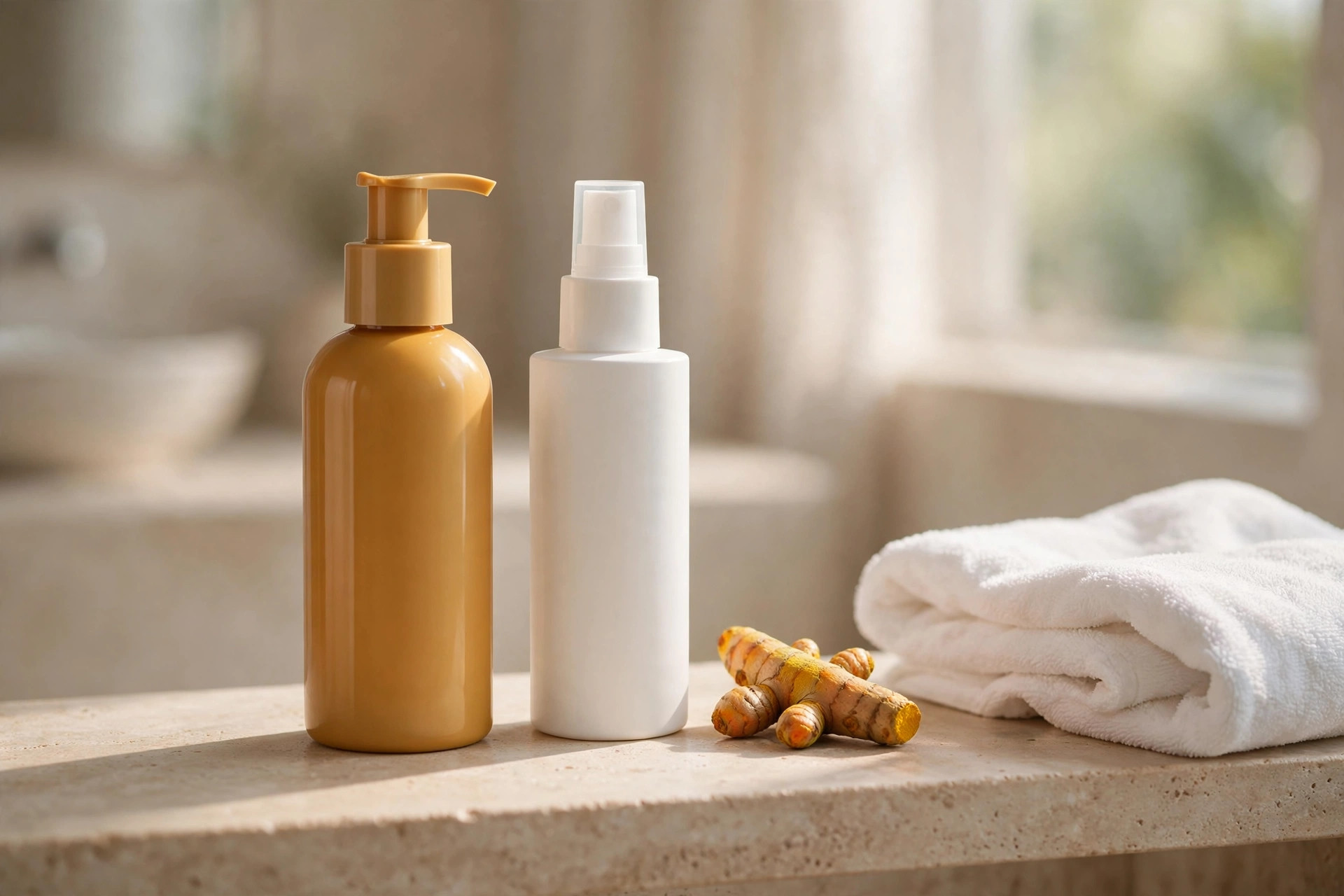
Same shelf, same headline ingredient, two different formulas — the Melaxin and medicube kojic acid body sprays, compared honestly
If you have watched any body-care videos this autumn, you have seen the ritual. Someone sprays a clear mist over a knee or an underarm, rubs in little circles, and — satisfyingly, suspiciously — grey rolls of what is presented as dead skin peel away. Two bottles star in most of those videos: the Dr.Melaxin Peel Shot and the medicube Body Peel Shot. Both are Korean, both are built on kojic acid and turmeric, both sit at the very top of Amazon's body scrub and treatment best-sellers, and buyers keep asking the obvious question nobody has answered head-on: which one do I actually buy?
The reason the question goes unanswered is that the two brands mostly get covered by their own stores, by retailer listings, or by roundup pages that copy the same spec sheet twice. Meanwhile the situations buyers care about are very specific — a bride-to-be with dark underarms and a sleeveless dress, a teacher whose KP bumps show in short sleeves, a gym-goer with marks across a back she cannot reach. A spec sheet does not help any of them. A comparison organised by problem might.
So that is how this page is built. We read both brands' official listings and retailer directions, compared the two formulas ingredient-role by ingredient-role, and read across the buyer reviews — including the unhappy ones, because the disagreements in a review section are usually the most useful data on the page. One ground rule, stated plainly: we have not personally tested either spray, so nothing here pretends to be a hands-on verdict. Where a claim comes from a brand, we say so. Where buyers disagree, we say that too.
As an Amazon Associate, StyleBloom earns from qualifying purchases. This guide contains affiliate links — it costs you nothing extra and keeps our content free.
Last updated: 21 October 2026
The two sprays at a glance
Short answer: Melaxin is a 200ml brightening-leaning spray with niacinamide; medicube is a larger 280ml texture-leaning spray with a three-acid blend and hydrators. Both are rinse-off and used two to three times a week.
The whole comparison in one table — every row is expanded in the sections that follow:
| Dr.Melaxin Peel Shot | medicube Body Peel Shot | |
|---|---|---|
| Full name | Dr.Melaxin Peel Shot Exfoliating Kojic Acid Turmeric Spray | medicube Body Peel Shot with Kojic Acid and Turmeric |
| Size | 200ml (6.76 fl oz) | 280ml (9.46 fl oz) |
| Acid system | AHA + PHA (gentler, surface-focused) | BHA + LHA + PHA (adds pore-focused BHA) |
| Supporting actives | Niacinamide, turmeric, keratin care | Turmeric, hyaluronic acid, ceramides |
| How you use it | Spray on dry skin, massage until it rolls, rinse off | Spray on dry skin, massage until it rolls, rinse off |
| Best for | Dark underarms, knees, elbows — brightening first | KP bumps, strawberry legs, rough texture first |
| Where it sells | Amazon, Ulta, Nordstrom Rack, brand store | Amazon, brand store, K-beauty retailers |
1. Dr.Melaxin Peel Shot — the brightening specialist
Best for: friction-darkened skin — the underarms that look shadowy in photos, the knees and elbows that read as "dirty" even straight out of the shower — where tone, not texture, is the complaint.
Dr.Melaxin is the smaller, more decorated brand of the two: a Korean skincare house whose Peel Shot line became its calling card, and whose kojic acid spray now also sits on Ulta's shelves — a meaningful step up from the TikTok-only brands it competes with. The spray is a 200ml bottle built around the pairing the whole category is named for: kojic acid, the long-established brightening ingredient that works on the enzyme behind surface pigment, and turmeric, the traditional brightening botanical that gives the line its golden identity. Around those two, the formula adds niacinamide — the ingredient dermatologists reach for when the problem is uneven tone and post-blemish marks — plus AHA and PHA exfoliating acids and a "keratin care" angle aimed at the build-up that makes dark areas look dull as well as dark.
One brand claim deserves a flag rather than a repeat: the retailer listing highlights "99% pure kojic acid." That describes the purity grade of the ingredient, not a 99% concentration in the bottle — no body spray could be 99% kojic acid and stay on your skin. It is marketing grammar, and reading it correctly is the difference between an informed buy and a disappointed one.
The honest pros. The brightening focus is real in the formula, not just the advertising: kojic acid plus niacinamide is a sensible, complementary pair for pigment, and the milder AHA/PHA system makes it the calmer of the two sprays for repeat use on the same patches. Buyer reviews on its Amazon listing — one of the most-reviewed products in this category, with roughly 4,700 ratings averaging 4.3 stars when we checked — praise the brightening effect most consistently, with underarms and dark spots named again and again. It is also the easier bottle to find in person, thanks to the Ulta and Nordstrom Rack listings.
The honest cons. That same review section contains the disagreements, and they cluster in three places. Dead-skin removal: some buyers find the peeling dramatic, others find it barely works — a split that makes sense once you understand the pilling effect (next sections). Scent: the fragrance — described by one two-week tester as light citrus with a herbal hint — is genuinely divisive, and at least one careful reviewer warned it can bother sensitive skin. And value: at 200ml, full-body users go through it faster than the medicube bottle, and a vocal minority of reviewers call it poor value for exactly that reason. Brightening, when it comes, is also slow — the most trustworthy independent test we found scored it 7.5 out of 10 and called the brightening gentle and gradual, not dramatic.
Who it genuinely suits: the bride-to-be working backwards from a sleeveless dress; anyone whose underarms, knees, elbows or inner thighs have darkened from friction, shaving and time; the post-summer buyer trying to even out patchy legs. Who should skip: anyone whose main problem is bumps rather than darkness (that is medicube's ground), anyone fragrance-sensitive, and anyone expecting a change inside a fortnight — this is a six-week product wearing a six-second video.
2. medicube Body Peel Shot — the texture specialist
Best for: rough, bumpy body skin — keratosis pilaris on the upper arms, strawberry legs, clogged shoulders and back — where smoothing the surface matters more than lightening it.
Medicube is the giant in this comparison: the brand our medicube buyer's guide calls the moment's defining K-beauty name, with a body line that has topped the sales charts all autumn. Its kojic acid entry, the Body Peel Shot, is a 280ml bottle — forty percent more product than the Melaxin — built on the same kojic acid and turmeric headline pairing, but the supporting cast tells a different story. Where Melaxin reaches for niacinamide, medicube reaches for acids: BHA (salicylic acid, the one exfoliant that works inside the pore, which is why it is the KP and body-acne ingredient), LHA (a gentler BHA relative that works at the surface), and PHA (the mildest of the family). Underneath the acids sit hyaluronic acid and ceramides — hydration and barrier support, included because a stronger acid system needs them.
Medicube also sells two siblings that confuse buyers, so let us separate them here: the Hypochlorous Acid Body Peel Shot is a different, soothing-leaning formula in the same line, and the Red Body Peeling Shot is the AHA/BHA sibling aimed squarely at body acne. If you are reading reviews, make sure they are about the kojic acid bottle — the three get mixed up constantly, including in roundup articles.
The honest pros. For texture problems, this is simply the better-matched formula: BHA is the ingredient KP plugs and clogged pores actually respond to, and the hydrating support actives mean the stronger system does not have to mean drier skin. The bigger bottle matters for legs-and-arms users, who cover far more area than an underarm buyer. And because the same brand's kojic acid and turmeric soap anchors its best-selling Body Care Set, the spray slots into an existing routine more neatly for the many buyers who already own it.
The honest cons. Three acids is a stronger system, and stronger is not free: buyers with reactive skin are the ones most likely to find this the itchier of the two, and the brand's own Red sibling collects the spray-nozzle and irritation complaints that sometimes get blamed on this bottle. The formula is also the more complicated story to tell — buyers who just want "the brightening one" can end up with the texture one and judge it by the wrong measure. And as with Melaxin, tone changes stay slow: the acids speed up surface renewal, but pigment still plays by its own calendar.
Who it genuinely suits: the teacher whose upper-arm bumps show in every short-sleeved top; the gym-goer with clogged, marked shoulders and a back she cannot reach (the spray format earns its keep here); anyone whose legs look dotted no matter how much moisturiser they use. Who should skip: anyone whose only issue is dark patches with smooth skin (Melaxin's niacinamide pairing is the better tool), and anyone who already owns the Body Care Set and would mostly be duplicating its soap — more on that in the situations below.
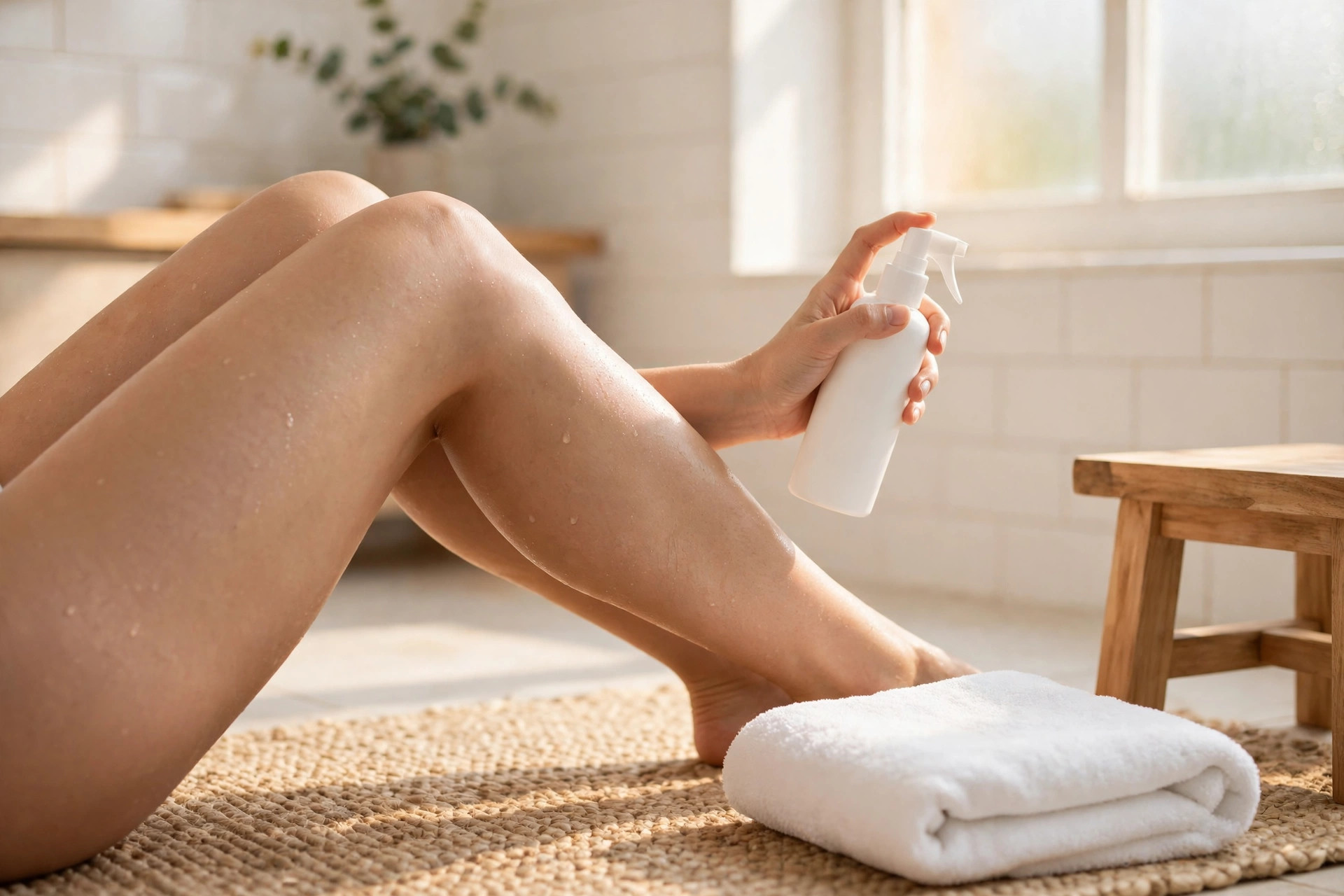
The pilling question: is that really your dead skin?
Short answer: partly. The grey rolls are a mixture of the product's own film-forming ingredient balled up by friction and the loosened dead skin it lifts — so the effect is real exfoliation wearing a theatrical costume.
This is the section the viral videos would never publish, and it matters because buyers judge these sprays by it. Both formulas are what the industry calls gommage-style peels: they contain an ingredient that forms a film on skin, and when you massage, that film rolls into soft grey pills. Dead surface skin genuinely comes away in the process — your skin does feel smoother, and that part is not fake. But a careful independent reviewer of the Melaxin spray pointed out what the close-ups hide: a share of those satisfying rolls is the product itself, which is why the "results" look identical on every skin type in every video.
Why tell you this in a guide that links to both products? Because it changes how you should buy. Do not choose the spray that produces the most dramatic rolls in a ten-second clip; choose by formula and by your problem — brightening actives for dark patches, BHA for bumps. And do not panic if your own first use produces modest pilling: less theatre often just means less build-up, not a broken bottle.
Which one matches your situation?
Short answer: dark patches go to Melaxin, bumps go to medicube, backs go to whichever spray reaches — and if you already own the medicube body set, the answer is probably neither.
Dark underarms before an event. Melaxin. The niacinamide pairing is aimed at exactly this pigment, and underarm brightening is the praise its reviewers repeat most. Start six or more weeks out; no spray on earth safely rushes this, and the week of the event is for moisturiser, not acids. (Doing the full pre-event routine? Our press-on nails guide is the other half of that getting-ready checklist.)
KP bumps and strawberry legs. Medicube, by a nose. The keratin plugs behind both problems live inside the follicle, and BHA is the acid that works there. Melaxin still fades the dark dots those bumps leave behind, so if darkness bothers you more than texture, the order flips — but for the bumps themselves, medicube's system is built for the job.
Back acne and clogged shoulders. Medicube again — the spray format solves the reach problem, and BHA is the body-acne ingredient. If breakouts are active and angry rather than marks and clogging, look at the brand's Red sibling instead, and treat the kojic bottle as the follow-up for the marks left behind.
Dark knees and elbows that look "dirty." Either, with Melaxin first if the skin is smooth and medicube first if it is also rough and thick. Knees and elbows darken from friction and pressure — leaning on desks, kneeling on floors — so whichever you choose, the unglamorous partner habit is moisturising daily; acid twice a week cannot outrun dry, thickened skin.
Post-shaving darkening around the bikini line. Either spray, used gently and never on freshly shaved skin — wait a full day or two after hair removal, every time. The darkening here is mostly irritation pigment, so anything that adds irritation works against you; a calm, boring, consistent routine beats an aggressive one.
Sensitive or fragrance-wary skin. Neither is fragrance-free, and both collect a minority of irritation reports — Melaxin's scent draws the stronger opinions. Patch-test behind the knee, start weekly, and keep a plain niacinamide body lotion in mind as the fallback: slower, duller, and frequently the one that actually gets used for six straight weeks.
You already own the medicube Body Care Set. Skip both, honestly. The set's soap is already a kojic acid and turmeric product, so the Peel Shot duplicates the brightening step rather than adding to it. The exception is reach: if your problem area is your back, the spray format is a genuine upgrade in usability — that is a reason. A second kojic product for the same underarms is not.
How to use either spray (the routine that makes or breaks it)
Short answer: dry skin, spray, massage until it rolls, rinse, moisturise — two to three times a week, and never on the same day as shaving.
Step one: start dry. Both sprays are designed for clean, completely dry skin — most retailers print exactly that. On wet skin the film will not form properly and you will conclude the product "doesn't work," when really the stage was wrong.
Step two: spray and massage. Mist the area generously, then massage in small circles with dry hands. The film starts rolling within seconds; keep going gently for about half a minute per area. Gently is the operative word — you are rolling a film, not scrubbing a pan.
Step three: rinse properly. Both are rinse-off products, a point a surprising number of unhappy reviewers missed. Rinse with lukewarm water until no residue remains; leaving turmeric-tinted film on skin or towelling it onto light fabrics is how the rare staining complaints happen.
Step four: moisturise and protect. Follow with a plain, generous body moisturiser — exfoliated skin drinks it in, and moisturised KP and knees look better than exfoliated-but-dry ones. Using acids on sun-exposed legs or arms also makes daytime sunscreen a real obligation, not a nicety. If acids are new to you entirely, our skincare routine for beginners covers the patch-test-and-patience basics, and the glass skin routine shows where a treatment step like this sits in a bigger routine.
Who should skip both
Short answer: anyone with broken, eczema-flared or freshly shaved skin; anyone who needs a result inside two weeks; and anyone pregnant who spots retinol on a retailer's ingredient list for the Melaxin spray — check your bottle and ask a doctor.
Some honesty that sells nothing: if the dark patch on your neck or underarms is thickened and velvety rather than flat and shadowy, that pattern can occasionally be a sign of something medical (the medical name is acanthosis nigricans), and the right purchase is a doctor's appointment, not a spray. If your "strawberry legs" come with pain, swelling or spreading redness, same answer. And if your real frustration is that your body skin is simply dry and neglected, a month of boring moisturiser will outperform either bottle — exfoliating dry skin without moisturising it is how people end up rougher than they started.
Red flags: what not to buy instead
Short answer: skip any spray promising dramatically lighter skin in days, any listing with no ingredient list, and any "instant whitening" language — the honest end of this category never talks like that.
This category's success has pulled in a crowd of white-label imitators, and the search results are full of them. Walk away from listings that promise instant or dramatic lightening (pigment biology does not work at video speed), from sprays sold under five different brand names with identical packaging (a sign nobody stands behind the formula), and from any product whose sellers cannot show you a full ingredient list — with acids and brighteners, the list is the product. Also be wary of the reverse trap: assuming the most expensive bottle must be strongest. In this comparison the two honest, verifiable options are both mass-market Korean brands with real retail distribution; that distribution — Ulta shelves, best-seller lists, thousands of checkable reviews — is worth more than any claim printed on a label.
How we compared these two (the honest version)
Short answer: we compared the brands' official listings and retailer directions, read the patterns across hundreds of buyer reviews including the negative ones, and weighted the few independent long-form tests we could find. We did not test either product on our own skin.
Specifically: formula roles were taken from medicube's and Dr.Melaxin's own product pages and cross-checked against retailer listings (Ulta and StyleKorean among them). Review patterns — what buyers praise, where they disagree — come from the Amazon listings' reviewer summaries and review bodies for both products. Two independent blog tests of the Melaxin spray (a two-week test and a longer critical review) informed the pilling and scent discussion; both are the kind of source we trust more than a spec sheet, and we have flagged their verdicts as theirs wherever they appear. Demand context — best-seller placement, growth figures for the Melaxin line — comes from tracked shopping data, and any growth number you see quoted for these products anywhere should be read as an estimate, ours included. What we will not do is what too many pages in this niche do: claim "we tested it" over a stock photo. When we do get hands on both bottles, this page will be updated and the byline will say so. Until then, this is a map, not a diary — and if you are shopping for someone else rather than yourself, our Christmas gift guide covers the safer beauty gifts to give.
Frequently asked questions
- Which is better, the Melaxin Peel Shot or the medicube Body Peel Shot?
- Neither wins for everyone — they split by problem. Melaxin leans brightening, with niacinamide alongside kojic acid and turmeric, so it suits dark underarms, knees and elbows. Medicube leans texture, with a BHA, LHA and PHA acid trio plus hydrating ingredients, so it suits rough, bumpy skin like KP and strawberry legs. If your main complaint is dark patches, start with Melaxin; if it is bumps and roughness, start with medicube.
- Does a kojic acid spray really help dark underarms?
- It can help the look of them, slowly. Most dark underarms are pigment left behind by friction, shaving and irritation, and kojic acid is a well-known brightening ingredient that works on surface pigment over weeks, not days. Expect texture to feel smoother within the first couple of weeks and tone to shift gradually over six weeks or more of steady use. One caution: velvety, thickened dark patches can occasionally signal a health issue — if yours look like that, see a doctor instead of shopping.
- Is the grey stuff that rolls off really my dead skin?
- Only partly — and this is the thing the viral videos never say. These sprays use a film-forming ingredient that balls up as you rub, so the rolls are a mix of the product itself and the dead skin it has loosened. The rubbing is still doing real exfoliating work; just don't judge the product by how much grey lint it produces. A spray that makes less mess is not necessarily a weaker spray.
- How often should I use a kojic acid body spray?
- Two to three times a week is the rhythm the retailers themselves print on these products, and it is the right starting point. Spray onto clean, dry skin, massage gently until it starts to roll, rinse thoroughly, then moisturise. More often is not faster — daily acid use on knees, elbows and underarms is how people end up with the irritation that fills the one-star reviews. If your skin stays calm for a few weeks, keep the same rhythm; consistency beats intensity here.
- Can I use these body sprays on my face?
- No — keep them on the body. Both sprays are formulated and fragranced for body skin, which is thicker and less reactive than facial skin, and the spray-and-rub format is too rough for a face. Melaxin sells a separate face ampoule in the same line, and medicube's face products are a different range entirely. Your face deserves products made for it.
- Will a kojic acid spray help strawberry legs and KP bumps?
- Yes, this is one of the best-matched uses. Strawberry legs and keratosis pilaris are both about keratin plugging the hair follicles, and exfoliating acids dissolve those plugs while kojic acid works on the dark dots left behind. Medicube's BHA-containing formula has a slight edge on the plugs themselves, because BHA works inside the pore; Melaxin still helps the dark marks. Either way, moisturising afterwards is half the result — dry KP always looks worse.
- Can I use it right after shaving or waxing?
- No. Freshly shaved or waxed skin is temporarily damaged skin, and putting an acid spray on it the same day is the fastest route to stinging and a fresh round of dark marks. Wait at least 24 to 48 hours after hair removal, and never apply either spray to broken, cut or actively irritated skin. Patch-test a small area first if the skin there is new to acids.
- I already own the medicube Body Care Set. Do I need the Peel Shot too?
- Usually, no. The set's soap is already built on kojic acid and turmeric, so the Peel Shot would be doubling up on the same brightening job rather than adding a new one. The Peel Shot makes sense if you want the spray format for hard-to-reach areas like your back, or if bumps and texture — not tone — are your main issue. Otherwise, finish the set first and let your skin tell you what is still missing.
- How long before I see a real difference?
- Skin feels smoother almost immediately — that part is just exfoliation, and both sprays genuinely deliver it. Tone is the slow part: dark knees, elbows and underarms typically need six to eight weeks of two-to-three-times-weekly use before the change is obvious in photos. Any product promising dramatically lighter skin in days is selling you the pilling effect, not a pigment result. Take a photo in the same light on day one; it is the only honest way to judge.
- Are these sprays okay for sensitive skin?
- Cautiously, and with lower expectations of comfort. Both formulas are fragranced, and buyer reviews for both include a minority who report itching or stinging — Melaxin's scent in particular divides people. If your skin is reactive, patch-test behind the knee for a few days, start once a week, and moisturise generously. If brightening is your goal and acids keep upsetting your skin, a gentle niacinamide body lotion used daily is the boring option that often wins.