
How to Wrap Hair in a Towel Without Frizz or Breakage: Every Method, the Timing Ladder, and the Fabric Choice
Three methods, one rule: absorb, never rub. The twist turban, the plop, and the press-and-scrunch, with the timing ladder and the fabric choice for your hair.
By the end, you will know which method fits your hair, how long to leave the wrap on, which fabric to buy and what size, why overnight wrapping is the wrong default, and the seven mistakes that undo the wrap.
As an Amazon Associate, StyleBloom earns from qualifying purchases. This guide contains affiliate links — it costs you nothing extra and keeps our content free.
Every rival guide for this query teaches one method well and fudges the other two. The turban guides never mention the plop. The plop guides never teach the twist. The timing figures disagree by a factor of six, and overnight wrapping is allowed by two guides and forbidden by two more. A reader following any single one ends up with the wrong method for their hair, the wrong time, or a damp scalp at 3 a.m. This page settles each disagreement by naming who says what, then gives the method, the timing ladder, and the fabric choice for your hair.
It sits beside the wash-day and overnight guides, not inside them. The curly hair wash-day routine holds the full wash day; the best satin bonnet guide holds overnight protection. This page holds the wrap only. Read the method choice first if you read nothing else — thirty seconds picking turban, plop, or press settles everything that follows.
Wrap wet hair to absorb water, never to rub it dry. Flip your head forward, set the towel at the nape of your neck, twist it loosely, flip it back, and take it off while your hair is still damp — most hair needs 10 to 20 minutes. That short answer hides three real decisions: which of the three methods fits your hair, whether microfiber or cotton does the job better, and how long your hair type can stay wrapped before the wrap starts working against you. Every rival guide teaches one method well and fudges the other two, and they disagree openly about overnight wrapping and about how long is too long. This guide settles each disagreement by naming who says what, then gives you the method, the timing ladder, and the fabric choice for your hair.
Which Method First: Turban, Plop, or Press

There are three ways to wrap wet hair, and they are not interchangeable. The twist turban is the everyday hands-free wrap: hair gathered, towel twisted, secured on top of the head. The plop piles curls onto the top of the head inside flat fabric so they dry in their natural shape. The press-and-scrunch skips the wrap entirely: sections of hair are cupped in the towel and squeezed upward, which suits short hair, fine hair, and anyone whose curls fall apart inside a twist. If your hair is straight or wavy and you want your hands free while you do skincare, use the turban. If your hair is curly or coily and definition matters, plop. If your hair is short, fine, or easily flattened, press and scrunch, because a turban presses short styles flat against the head and a twist pulls fine hair tighter than it can take.
The shape of the towel decides which methods are even available. A turban-style wrap with a button or elastic loop is cut for the twist; it cannot plop, because there is no flat fabric to pile curls onto. A large flat towel can do all three: plop, twist, or press. A cotton T-shirt can plop and press but cannot hold a twist. If you own one towel, own a large flat microfiber towel, roughly 39 by 27 inches, which is the largest flat size in the most careful size survey of this market, and it leaves room to lay long hair out instead of folding it back on itself. Buy the shape for the method you will actually use, not the shape in the advertisement.
Method 1: The Twist Turban, Step by Step
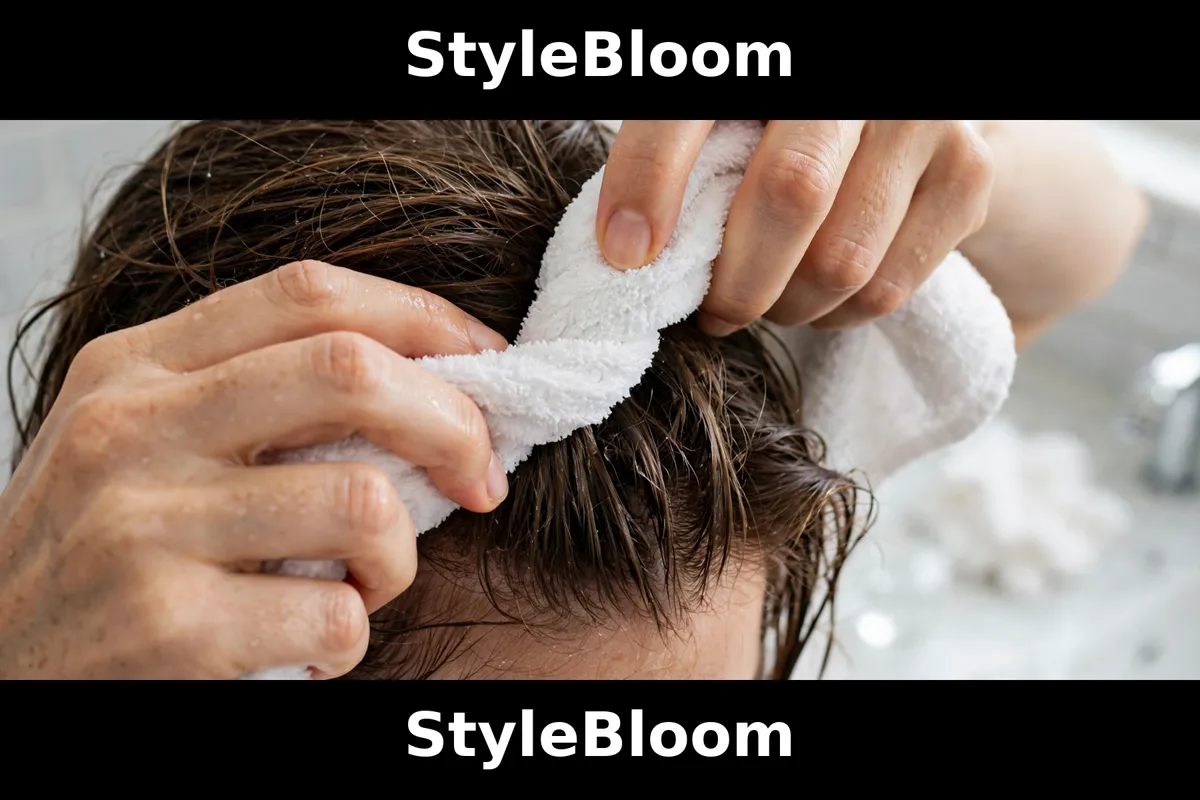
Start with your hands, not the towel. Standing in the shower or over the basin, cup sections of hair and squeeze water downward and out, working from the ends upward, until the hair stops dripping. Blot once with the towel you will wrap with: press it against sections from roots to ends, never rubbing back and forth. If your hair is straight or wavy, detangle now with a wide-tooth comb and a little detangler, because combing after the wrap sets the tangles harder. If your hair is curly or coily, do not comb now at all; detangling happened in the shower, and re-combing before the wrap pulls the curl clumps apart. That split is the one real disagreement about preparation: the step-by-step guides written for straight hair all say detangle first, while the curl guides never re-comb after styling products go in.
Bend forward so all your hair hangs in front of your face, and guide every strand forward with your hands so none stays caught on your neck. Set the centre of the towel at the nape of your neck, with equal length on either side and the edge aligned with your hairline. If you are using a button wrap, the wide buttoned end sits at the nape and the slim looped end hangs over your forehead. Gather the hair inside the towel at the front hairline, then twist the towel and hair together starting at the centre of the hairline, working toward the ends, in one direction only. Twist loosely. The test is two fingers: you should be able to fit two fingers between the wrap and your head. Stand upright and flip the twisted length back over your head so it rests on top, then secure it: hook the elastic loop over the button, tuck the end under the towel at the nape, or pin it with a clip. The wrap should feel snug and hands-free, never tight.
Leave it for the time your hair type needs — the ladder is in the timing section below — then unwrap by flipping forward again and lifting the fabric away without rubbing. If the towel is soaked through and your hair is still dripping, swap to a second dry towel rather than leaving a saturated one on: a wet towel stops absorbing and just holds dampness against your scalp. Your hair should come out damp, not dry. Damp is the point where leave-in products and styling products do their work; bone-dry hair coming out of a wrap has usually been wrapped too long.
Method 2: The Plop, for Curls and Coils
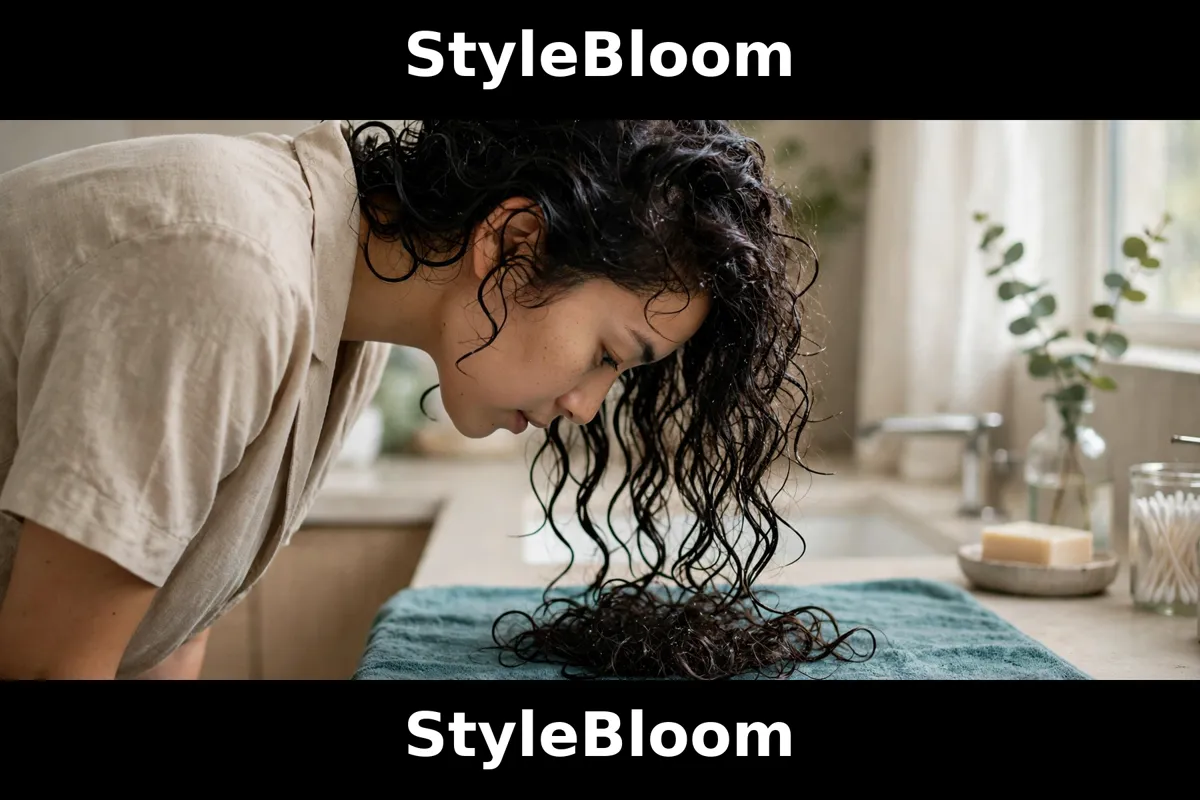
Plopping is not a turban. You never twist the hair. While still in the shower, scrunch the excess water out with cupped hands, ends upward, until the dripping stops. Apply your leave-in conditioner and any curl cream or gel now, before the fabric goes on, because the plop sets the curls with the products already in them; putting products on after unwrapping means disturbing the shape you just set. Lay a large flat towel — or a long-sleeved cotton T-shirt, sleeves toward you — flat on a counter or a closed toilet lid. Bend forward at the waist and lower your curls onto the middle of the fabric so they pile naturally on the crown of your head.
Bring the back of the fabric up over your nape, then tie the T-shirt sleeves, or the towel's ends, behind your head, snug but not tight. The fabric should hold the pile in place without pressing it flat. Leave it for 10 to 20 minutes, then lift the fabric away without rubbing and either air-dry or diffuse on low heat. Take the plop off while the curls are still damp, because your leave-in and styler need water left in the hair to work with. On thick coils, expect damp hair at unwrap no matter what: one towel takes off the drip and no more, and judging by how the hair looks will mislead you, because coily hair shrinks as it dries. Judge by how damp it feels.
Plopping works on wavy, curly, and coily hair, including type 4A to 4C, once the hair is long enough to pile on top of the head. Below that length, skip the plop and press the towel around the hair one section at a time.
Method 3: Press and Scrunch, No Wrap at All
Some hair should never be wrapped. Short hair and pixie cuts have too little length to twist, and a turban flattens them against the head and kills the volume the cut was designed to hold. Fine hair splits and snaps under a tight twist more readily than thick hair, and a wrap holds fine hair under tension for the whole drying window. Damaged or color-treated hair has lifted cuticles that catch on every loop of terry cloth. For all three, the press-and-scrunch is the safer method, and it needs no special towel: a flat microfiber towel, a smooth cotton T-shirt, or even an old soft cotton towel will do, as long as the motion is a press and not a rub.
Work in sections. Cup a section of hair in the towel, squeeze gently, and lift toward the scalp, then move to the next section and repeat, working around the whole head. For wavy hair, short scrunches with the towel help the wave spring without roughing the cuticle. For straight or fine hair, work in panels from mid-shaft to ends, holding each press for about three seconds, and avoid rubbing at the crown, where friction shows up as flyaways. For short styles, grasp small sections and squeeze; for long thick hair, expect to use two towels, replacing the first once it saturates. The whole routine takes a few minutes, and the hair comes out damp and ready for products, with no tension, no twist, and no time sitting under fabric.
Twist vs Plop vs Press: The Honest Comparison
No rival guide compares the three methods head to head, so here is the comparison they all skip. The twist turban is fastest to put on and the only method that is truly hands-free: once secured, you can do skincare, makeup, and get dressed. Its weakness is tension and shape: it pulls at the hairline and stretches curls out of formation. The plop is the only method that preserves curl definition, because the curls dry piled in their natural shape, but it needs a flat surface, a flat towel, and ten to twenty minutes of not touching it, and it cannot be done with a turban towel. The press-and-scrunch is the gentlest and the quickest, and it works on every hair type, but it is not hands-free: your hands are busy for the whole routine, and it removes less water than a wrap left in place.
| Method | Best for | Time in fabric | Weakness |
|---|---|---|---|
| Twist turban | Straight, wavy, medium to long hair; hands-free mornings | 10–30 minutes by thickness | Tension at the hairline; stretches curls |
| Plop | Wavy, curly, coily hair where definition matters | 10–20 minutes | Needs flat towel; not hands-free to set up; cannot use a turban towel |
| Press and scrunch | Short, fine, damaged, or color-treated hair | Minutes, no wrap time | Not hands-free; removes less water per pass |
One rule covers all three: never rub. Rubbing is the motion every guide agrees on, and it is the only point of full agreement in this whole field. Wet hair has far lower resistance to abrasion than dry hair — that is the finding of a 1982 study in the Journal of the Society of Cosmetic Chemists, cited by the curl guides — and the American Academy of Dermatology's guidance is to wrap hair to absorb water rather than rub it, then let it air-dry. Rubbing lifts cuticles, creates frizz, and snaps the strands that are weakest when wet. Press, blot, squeeze, wrap: all fine. Rub, wring, scrub: never.
Microfiber vs Cotton: The Head-to-Head
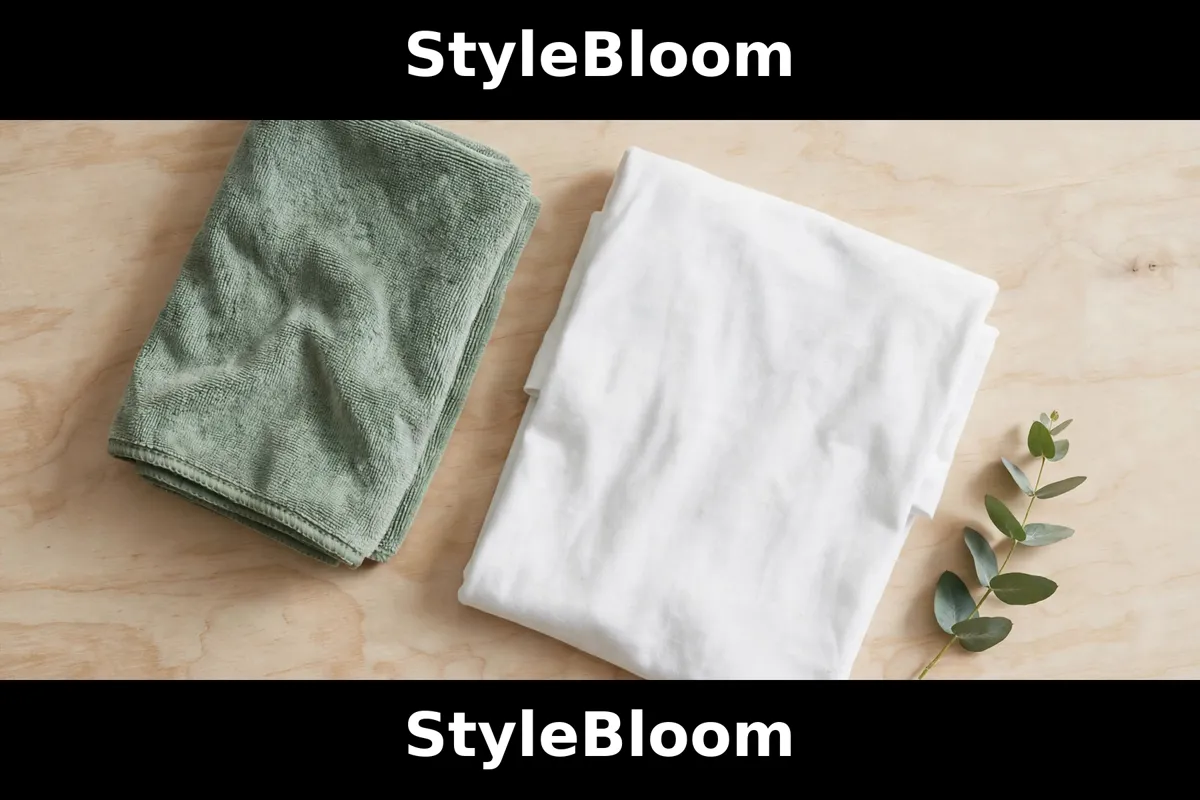
The fabric decision is about two physical properties: friction and absorbency. Friction lifts the hair cuticle and turns smooth strands into frizz. Absorbency decides how fast water leaves the hair, which decides how long the hair sits swollen and fragile. Microfiber is made of ultra-fine synthetic strands, densely packed, that pull water by capillary action with a smooth glide and very little scrubbing. Cotton is a natural cellulose fibre: terry cotton drinks a lot of water, but its loops are thick, and those loops catch on raised cuticles and drag if you wipe instead of press. The mechanism is agreed on by every careful guide in this field. The numbers are not: vendor pages claim microfiber absorbs seven times its weight, cuts drying time in half, or reduces friction by sixty or seventy percent, and none of those figures comes with a study, a method, or a named researcher. This guide uses no vendor percentage anywhere. The honest version is qualitative and it is enough: microfiber glides and pulls water fast with less rubbing; terry cotton grips and needs rubbing to do the same job.
| Question | Microfiber | Cotton |
|---|---|---|
| Best for | Curls and waves that frizz, fine hair that splits, reactive skin | Natural-fibre routines, plopping in a T-shirt, waffle weave |
| Friction | Low: smooth, dense fibres glide | Depends on weave: waffle and T-shirt knit low, plush terry high |
| Absorbency | Fast capillary pull, less pressure needed | High capacity, slower release, holds moisture longer |
| Wrap behaviour | Stays put, light, hands-free | Heavier when wet, can slip, can weigh curls down |
| Care | No fabric softener or dryer sheets; wash warm, tumble low, separate from lint | Strip cycle for buildup; wash hot or warm, extra rinse, dry fully |
| Downsides | Synthetic: microplastics in the wash; static in very dry climates | Terry loops snag; plush terry over-dries curls by soaking up too much |
Three practical rules follow. First, terry cloth belongs on the body, not the hair: the plush bath towel is the worst hair towel in the house, whatever the fabric, because its loops are built to grip. Second, cotton is not automatically bad for hair — a smooth cotton T-shirt or a waffle-weave towel is nearly as gentle as microfiber when the motion is a press and not a rub, and it is the cheapest plopping fabric there is. Third, technique beats fabric: a gentle press with a cotton T-shirt does less damage than a hard rub with a microfiber towel, every time. If you are avoiding plastics, or your climate is very dry and static is a problem, use waffle cotton for wraps and keep microfiber to quick blotting. If you dye your hair at home, use an older cotton towel on dye days, because microfiber can cling to dye residue. In very humid climates, start with microfiber for the first five minutes to pull the bulk of the water, then switch to a light cotton wrap so the ends do not over-dry while the roots stay damp.
How Long to Leave It On: The Timing Ladder
This is the most contested number in towel wrapping, and the guides disagree by a factor of six. The consensus position — stated by the most careful guides, and the one this guide recommends — is 10 to 20 minutes for most hair, taking the wrap off while the hair is still damp. Around that consensus sits a ladder by hair type, and beyond the ladder sit outliers that should be named rather than hidden: one guide says 30 to 60 minutes, one says "as long as you like," one says 5 to 15 minutes. The 30-to-60-minute figures come from older or thinner guides; the "as long as you like" figure comes from a linen retailer's blog. Neither is grounded in anything checkable, and both contradict the guides that actually measured anything. The ladder below uses only the figures the careful guides agree on.
| Hair | Wrap time | Why |
|---|---|---|
| Fine or thin | 5–10 minutes, microfiber, blot first | Least bulk to absorb moisture; most prone to snapping under tension |
| Medium, straight or wavy | 10–20 minutes | The consensus window; unwrap damp |
| Curly or wavy, plopping | 10–20 minutes, up to 30 for a plop | Curls set their shape while damp; longer risks flattening the clumps |
| Thick, coarse, or long | 20–30 minutes | Holds moisture longest; swap to a second towel if the first saturates |
| Treated, fragile, or color-treated | Shorter end of your band, loosely wrapped | Chemical processes reduce elasticity and roughen the cuticle |
Porosity adjusts the ladder by a few minutes, not by doubling it. High-porosity hair absorbs fast and loses moisture fast, so use the shorter end of your band to avoid over-drying. Low-porosity hair resists moisture, so use the longer end, but do not pass 20 minutes for fine hair or 30 for thick hair on porosity grounds alone. The sign you have gone too long is not the clock: it is hair that comes out feeling dry and brittle while still slightly damp, tangled, hard to brush, and frizzy at the roots. The sign you took it off too soon is hair that is still dripping. Between those two signs, the clock is only a reminder.
One fear can be retired. The idea that leaving hair wet and wrapped causes a kind of water damage called hygral fatigue has, in the words of the chemistry writer Michelle Wong, "not much convincing evidence" behind it: water going in and out of hair does not damage it by itself. What damages wet hair is mechanical: rubbing, tight twisting, and tension. The minutes matter far less than the motion. That does not make long wraps harmless — a wrap left on for hours keeps the scalp damp, and a damp scalp is a separate problem, covered in the overnight section — but it does mean a wrap left on for 25 minutes instead of 20 has not ruined your hair.
Sleeping in a Towel Wrap: The Verdict
The guides disagree openly about overnight wrapping, and this guide does not hide the split. Two guides say sleeping in a wrap is fine: one says you can "even sleep in it overnight if using a soft cotton hair towel," and another reports that some people keep a plop in overnight and wake up with good curls. Two guides say it is not: one calls it "absolutely not" and "one of the worst things you can do," and the other lists five compounding risks. The disagreement breaks along a line worth seeing: the guides that allow it are selling towels or reporting one customer's anecdote, while the guides that forbid it describe mechanisms — hours of tension on fragile wet strands, a warm damp scalp, friction cycles all night as the towel shifts, and a damp towel breeding mildew. On the evidence available, the default answer is no: do not sleep with wet hair wrapped in a towel.
The risks, as stated by the guides that warn against it, are five. Breakage: wet strands under continuous tension at the hairline, crown, and ends, with cotton fibres snagging individual strands and morning detangling demanding more force. Dryness and frizz: friction lifts cuticle edges, moisture retention along the shaft is compromised, and hair that dries unevenly inside a towel sets in a flattened shape. Scalp irritation: hours of damp warmth feed the Malassezia yeast that lives on every scalp, which the warning guides link to dandruff and follicle inflammation — stated here as those guides' claim, not as a medical finding, because none of them cites a dermatology source for it. Mildew: a damp towel bunched overnight breeds microbes that transfer back to the scalp. Friction: terry cloth snags strands with every micro-movement of sleep.
The safe alternative keeps the benefit without the wet wrap. Partially dry the hair before bed — until it is dry to the touch, not just less wet — then protect it dry: a loose braid, a satin pillowcase, or a satin bonnet. If the hair must be contained while still damp, the least-bad form is a loose microfiber wrap, never a tight turban, never a cotton terry towel, and never compressed under the head's weight. Sleeping with wet hair does not give you a cold: colds come from respiratory viruses, which incubate for one to three days, and a damp scalp causes skin irritation, not respiratory infection. That myth is the one point every guide in this field agrees is false.
Choosing the Size: Measure the Hair, Not the Brand
Towel size matters more than towel brand, and it is the buying decision no guide teaches properly. A wrap that is too small forces you to bunch and twist the hair tightly to make it fit, and tight twisting is the exact tension that causes breakage. A wrap that is too big is heavy when wet and slides off. The size survey that checked actual product pages found wraps from 10 by 24.5 inches to 40 by 24 inches — a fourfold difference in area — sold under near-identical names, including one brand selling a cotton and a microfiber version under the same name.
| Hair length | What fits | Measured examples |
|---|---|---|
| Short / pixie | Press and scrunch; no wrap needed, or the smallest turban | Turbie Twist 10 x 24.5 in |
| Shoulder length | Standard turban wrap, or a flat towel for plopping | Only Curls turban 25.6 x 11 in; Turbie Twist XL 10 x 29.9 in |
| Long or thick | Large flat towel; lay the length out, do not fold it back on itself | Curlsmith 39 x 27.5 in; Only Curls flat 37 x 23 in; Kitsch XL 40 x 24 in |
The fit test is simple and it is the same as the twist test: with the hair inside and the towel secured, you should be able to lay the hair across the towel with room to fold it over, and fit two fingers between the wrap and your head. If the hair has to be bunched or folded double to fit, the towel is too small. For travel or the gym, the turban shape wins on packing: it folds to almost nothing, while a 39-inch flat towel takes real space on a rail and in a bag. One towel per person is the wrong economy for long thick hair: buy two, so a saturated first towel can be swapped for a dry second one mid-routine.
Fine, Thick, Curly, Treated: The Splits
Fine hair is the most damage-prone in a wrap. Keep the time at the short end — 5 to 10 minutes in microfiber — wrap loosely, and prefer pressing to twisting. Fine hair also shows over-drying fastest: if it comes out of the wrap feeling papery while still damp at the roots, the wrap stayed on too long or the towel was terry. Thick and coarse hair is the opposite problem: it holds water so long that a single towel saturates before the hair is damp-dry, so plan on the 20-to-30-minute band and a second towel, and never judge dryness by how the hair looks, because thick hair looks dry on the outside while the inner layers are still wet. Judge by feel at the roots.
Curly and coily hair sets its shape while wet, which is why the plop exists and why the twist is its enemy: a twist stretches the clumps out of formation and a tight wrap flattens them before they can set. Plopping works on type 4A to 4C once the hair is long enough to pile; below that length, press section by section. Coily hair shrinks as it dries, so the unwrap decision is always by dampness, never by length. Treated, bleached, or color-treated hair needs the gentlest handling of all: chemical processes reduce elasticity and leave the cuticle rough, so towel friction does more damage per pass. Use microfiber, blot, detangle with a wide-tooth comb while the hair is damp and supported, and keep the wrap loose and short.
Washing, Care, and the Second-Towel Swap
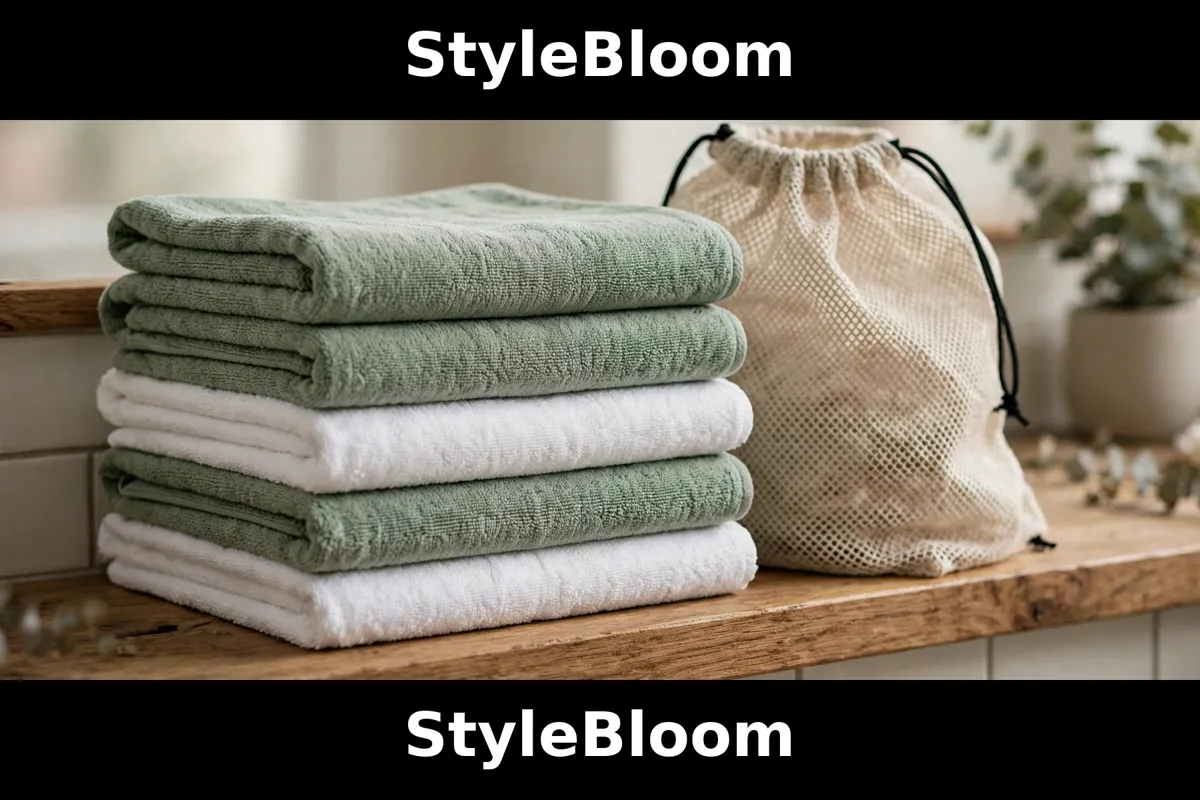
A hair towel is a tool that touches wet hair and then sits damp in a warm bathroom, so its care is part of the method, not an afterthought. Wash a hair towel every two to three uses — that is the figure two independent guides agree on — and always let it dry fully between uses, because a towel that stays damp breeds the mildew that transfers straight back to the scalp. Wash microfiber warm with a simple detergent, skip fabric softener and dryer sheets entirely, tumble dry low, and wash it separately from lint-heavy cotton, which coats the fine fibres and kills the glide. Wash cotton hot or warm with an extra rinse, and run a strip cycle every few months if detergent and minerals build up and the towel turns grabby. If a towel stops absorbing, wash it separately with vinegar or baking soda to clear the buildup; if it still smells musty after washing, looks stained, stays damp too long, or leaves lint, replace it. Hair wraps last roughly 12 to 24 months with proper care; body towels last longer, but a wrap that has gone slick or grabby is done whatever its age.
The second-towel swap is the technique nobody teaches and long hair needs. A saturated towel does not absorb; it holds water against the scalp and slows everything down. If the first towel is soaked through and the hair is still dripping, take it off, squeeze the hair once more with your hands, and put on a second dry towel for the remainder of the window. For thick or long hair, start with two towels laid out before the shower so the swap takes seconds. The same rule applies to the plop: if the fabric is sopping, the curls are sitting in water, not drying. Swap, don't wait.
After the Wrap: The Bonnet and Pillowcase Handoff
What happens after the unwrap decides whether the wrap's good work survives the night. Hair that comes out of the wrap damp and then goes straight onto a cotton pillowcase meets eight hours of the same friction the wrap just avoided. The handoff is simple: once the hair is damp-dry and products are in, protect it dry. A satin bonnet keeps curls contained without tension and without absorbing the moisture the hair still needs. A satin pillowcase does the same job for straight and wavy hair that will not stay in a bonnet. A loose braid limits strand movement without the elastic tension that breaks fine hair at the tie point. Avoid tight elastics at bedtime entirely. The bonnet is not a substitute for drying: hair that goes to bed meaningfully wet, bonnet or not, still spends hours damp against the scalp. Dry to the touch first, then protect.
Travel, the Gym, and the Small-Bathroom Version
The full routine needs a counter, a flat towel, and ten to twenty minutes of not touching anything. Travel and gym days need a shorter version. Pack the turban shape: it folds to almost nothing, secures itself, and works in a locker room with no counter space. At the gym, blot and press with the turban towel, twist loosely, and let it work while you change; take it off damp and let the hair air-dry on the way home rather than reaching for a shared dryer. In a small bathroom, skip the flat lay: the twist turban needs no surface at all, and the press-and-scrunch needs only the towel in your hands. A cotton T-shirt is the best travel hair towel ever made: it weighs nothing, it plops, it presses, and it costs nothing to replace.
Seven Mistakes That Undo the Wrap
Rubbing the hair dry. The single most damaging motion in hair care, and the one every guide agrees on. Rubbing lifts cuticles, creates frizz, and snaps wet strands. Press, blot, squeeze, wrap. Never rub, wring, or scrub.
Twisting too tightly. A twist that pulls at the hairline causes tension breakage and tension headaches, and it stretches curls out of shape. The two-finger test catches it every time: if you cannot fit two fingers under the wrap, loosen it.
Leaving the wrap on for hours. The consensus window is 10 to 20 minutes, 30 at the outside for thick hair. Beyond that the gains stop and the damp scalp problems start. Set a timer for the first week.
Using the bath towel. Plush terry loops grip raised cuticles and need rubbing to absorb. Keep terry on the body. If terry is all you have, press with it gently and briefly, and buy a microfiber towel or use a T-shirt next wash day.
Detangling curls after products. Combing curly or coily hair after styling products go in pulls the clumps apart and guarantees frizz. Detangle in the shower; after that, hands off until the plop comes off.
Putting the wrong product at the wrong step. Styler goes in before the plop so the curls set with it; leave-in goes on after blotting for straight and fine hair so it can penetrate. Reversing either order wastes the product and disturbs the shape.
Trusting the "for all hair types" claim. One guide claims its wrap is safe for extensions and braids, then teaches no method for either. No guide in this field teaches a wrap method for extensions or braids. If you wear them, use only the loosest wrap, never twist the lengths, and ask your stylist — this article will not invent a method nobody has published.
What to Buy: Size First, Brand Second
Buy by size and shape, not by brand name, because the same names sell different materials and the listing photos hide both. Measure first: short hair needs the smallest turban or nothing at all; shoulder-length hair needs a standard turban or a flat towel; long or thick hair needs the largest flat towel you can find, 39 by 27 inches or bigger. Check the material on the product page — microfiber should state its polyester and polyamide blend, and one best-selling brand sells a cotton version under a near-identical name, so confirm before ordering. Prefer a wrap with a button or elastic loop if you want hands-free mornings, and a flat towel if you plop. The search links below go to live Amazon search results so you can compare current listings yourself; no prices are printed here because they change, and every link carries the site's affiliate tag.
- microfiber hair towel wrap
- Turbie Twist microfiber hair towel
- Kitsch microfiber hair towel
- large flat microfiber hair towel
- bamboo hair towel wrap
- hair towel wrap with button
- satin bonnet for sleeping
- satin pillowcase
- wide-tooth comb
- leave-in conditioner for curly hair
- microfiber hair towel, 2-pack
The Bottom Line
The wrap is a water-removal tool, not a drying method, and it does its job in 10 to 20 minutes for most hair. Twist loosely for straight and wavy hair when you want your hands free. Plop for curls and coils when definition matters, with products in before the fabric goes on. Press and scrunch when the hair is short, fine, damaged, or color-treated. Use microfiber for speed and low friction, smooth cotton when you want a natural fibre, and never the terry bath towel. Take the wrap off damp, swap a saturated towel for a dry one, and hand the hair over to a bonnet or a satin pillowcase dry. Sleep in a towel wrap and you trade a few dry minutes in the morning for breakage, frizz, and a damp scalp; the guides that allow it are outnumbered by the guides that explain why, and the explanation wins.
What to try first: Pick the method by hair behaviour, wrap loosely enough for two fingers, and set a timer for your band. Good looks like: hair damp but not dripping, no pulling at the hairline, curls holding their shape. If it fails: shorten the time, loosen the twist, or swap to a dry towel — never rub harder. Learn next: The Curly Hair Wash-Day Routine — the full wash day behind the wrap.
Frequently asked questions
- How long should I leave my hair wrapped in a towel?
- Ten to 20 minutes for most hair, taking it off while the hair is still damp. Fine hair needs 5 to 10 minutes; thick, coarse, or long hair needs 20 to 30. The guides disagree beyond those bands — figures from 30 to 60 minutes and "as long as you like" come from thinner sources — so this guide uses only the band the careful guides agree on, adjusted by the thickness ladder in the timing section.
- Can I sleep with my hair wrapped in a towel?
- No, not with wet hair in a turban. The guides disagree: two tolerate overnight wrapping and two forbid it with five named risks — breakage, frizz, scalp irritation, mildew, and friction. The safe alternative is to dry the hair to the touch first, then protect it dry with a loose braid, a satin pillowcase, or a satin bonnet.
- Is a microfiber towel better than cotton for hair?
- For most hair, yes, because its ultra-fine fibres glide with less friction and pull water by capillary action without rubbing. Smooth cotton — a T-shirt or waffle weave — is nearly as gentle when the motion is a press, and it wins if you avoid plastics, fight static, or are dyeing your hair. Plush terry cotton is the worst option for hair under either name.
- What is plopping, and how is it different from wrapping?
- Plopping piles wet curls onto the top of the head inside flat fabric so they dry in their natural shape, with no twisting. Wrapping twists the hair inside a towel and flips it back. Plopping preserves curl definition; wrapping is hands-free. A turban-style towel cannot plop — you need a large flat towel or a T-shirt.
- Should I detangle before or after wrapping?
- Straight and wavy hair: detangle before wrapping, with a wide-tooth comb, because combing after sets the tangles harder. Curly and coily hair: detangle in the shower only, and never re-comb after styling products go in, because combing pulls the curl clumps apart.
- Do I put products in before or after the wrap?
- For the plop, put curl cream or gel in before the fabric goes on, so the curls set with the products in them. For straight and fine hair, apply leave-in conditioner after gently blotting, so it can penetrate the hair shaft. Reversing either order wastes the product and disturbs the shape.
- Can I use a regular bath towel on my hair?
- Only as a last resort, and only by pressing, never rubbing. Plush terry loops grip raised cuticles and need rubbing to absorb, which is the most damaging combination for wet hair. A cotton T-shirt is a better hair towel than a bath towel, and it costs nothing.
- How do I wrap short hair in a towel?
- Mostly, you don't wrap it. Press and scrunch sections with a flat towel, squeezing gently and lifting toward the scalp. A turban flattens short styles and kills volume. If you want a wrap, use the smallest turban and fold the towel in sections, tucking the ends at the nape instead of twisting.
- How do I wrap very thick or long hair?
- Use the largest flat towel you can find, 39 by 27 inches or bigger, lay the length out instead of folding it back on itself, allow 20 to 30 minutes, and keep a second dry towel ready to swap in when the first saturates. Judge dryness by how the roots feel, not by how the outside looks.
- Does wrapping your hair in a towel cause breakage?
- A gentle wrap does not; rubbing, tight twisting, and hours of tension do. Wet hair is far weaker against abrasion than dry hair, which is why the motion matters more than the minutes. The idea that water itself damages hair through "hygral fatigue" has, in one chemistry writer's assessment, not much convincing evidence behind it.
- What size hair towel do I need?
- Short hair: the smallest turban or none. Shoulder-length: a standard turban or flat towel. Long or thick hair: a large flat towel, 39 by 27 inches or bigger. The fit test is two fingers between the wrap and your head, with room to lay the hair across the towel without bunching it.
- How often should I wash my hair towel?
- Every two to three uses, and always let it dry fully between uses. Wash microfiber warm with simple detergent, no softener or dryer sheets, tumble dry low, and separately from lint-heavy cotton. Wash cotton hot or warm with an extra rinse, and strip it every few months if it turns grabby.
- When should I replace my hair towel?
- Every 12 to 24 months with proper care, or sooner if it smells musty after washing, looks stained, stays damp too long, stops absorbing after a strip wash, or leaves lint. A wrap that has gone slick or grabby is done whatever its age.
- Can I wrap hair extensions or braids in a towel?
- No published method exists. One guide claims its wrap suits extensions and braids, then teaches nothing for either. Until a stylist-published method appears, use only the loosest wrap, never twist the lengths, and ask your stylist rather than trusting a product claim.
- Does humidity change how long I leave the wrap on?
- Yes. Humid air slows evaporation, so water lingers in the hair longer and the wrap works more slowly. In very humid climates, start with microfiber for the first five minutes to pull the bulk of the water, then switch to a light cotton wrap so the ends do not over-dry while the roots stay damp.