
Decorating Ideas at Home on a Budget (2026)
The budget-first way to decorate: spending tiers, room-by-room plans, renter-safe moves, and DIY projects with honest time and tool lists — no exact prices, no guesswork, and nothing that needs a big spend to look finished.
By the end of this guide, you will have a budget tier, a plan for each room, a renter-safe option for every wall idea, and a short list of DIY projects matched to your time and tools — plus the questions answered that the top search results leave open.
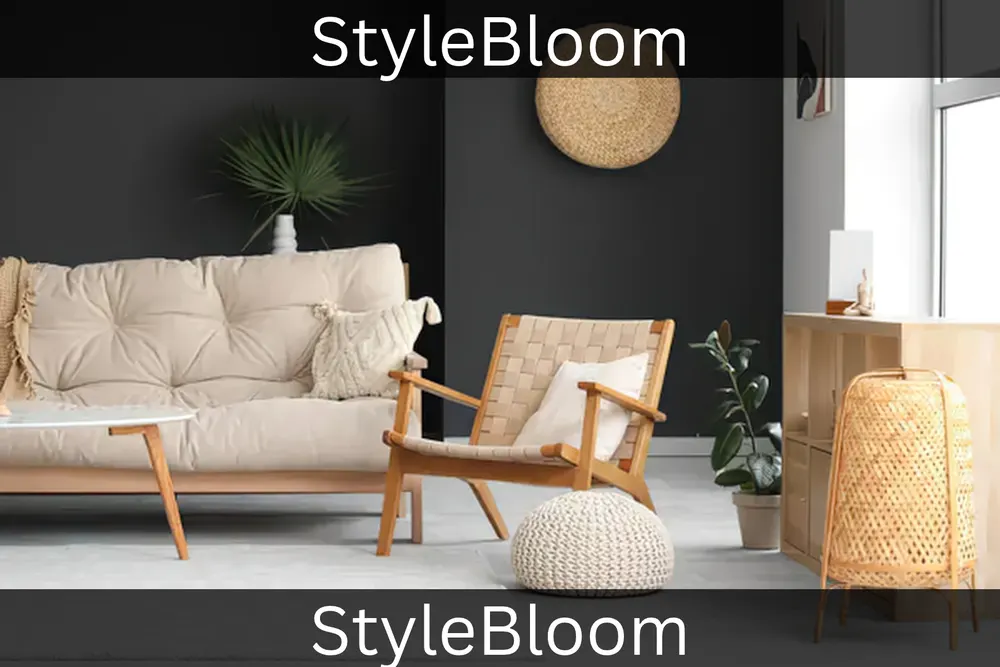
Cream sofa, woven armchair, plants, and natural textures against a dark wall — the budget refresh this guide teaches.
As an Amazon Associate, StyleBloom earns from qualifying purchases. This guide contains affiliate links — it costs you nothing extra and keeps our content free.
The best decorating ideas at home on a budget start with a number, not a shopping list. Decide what you can spend on the whole home first — not per item, not per room — and the decisions get easy: the free moves come first, the small buys fill real gaps, and the one slightly bigger purchase, if there is one, goes to the spot your eyes land on most. Most of the advice at the top of a Google search skips this entirely: the pages ranking for this topic are mostly whole-home photo lists, category pages, and community boards — useful for a spark, weak on what to do in which order.
I wrote this guide to answer the questions those pages leave open: how to decorate without spending money, what works in a small home, what a renter can do safely, how long a beginner DIY project really takes, and what is actually trending for 2026. Every section below is organized the way the money flows — free first, then cheap, then the one considered buy — and every project lists skill, time, and tools. Amazon prices move constantly, so I quote no exact prices; tiers are bands, not promises, and every product link is a live search link.
First win: Before you buy anything, do the free hour — remove one item from every surface, move one piece of furniture six inches, and open every curtain fully. Photograph the room before and after. Most rooms look better after the free hour than after a $50 order, and the photo shows you what is actually missing.
Start with a number, not a product
Every decorating mistake I have ever made started the same way: a single item I loved, bought without a total. A $30 vase is cheap; a $30 vase plus a $40 throw plus a $25 frame plus a $35 lamp is a $130 room with no plan. The fix is unglamorous and it works: set one total for the whole project, then divide it by room before you look at anything to buy. If the total is $25, that is a one-room refresh with free moves doing most of the work. If it is $50 to $150, that is a whole small home done carefully, or one room done properly. The tiers below are bands, not promises — prices move — but the shape of each holds: free moves first, cheap buys second, the one focal buy last, and only if the room still needs it.
| Budget tier | Free moves do | Cheap buys cover | The one focal buy |
|---|---|---|---|
| Under $25 | Declutter, rearrange, light, and regrouping what you own | One or two small things: pillow covers, a string of lights, a plant cutting in a jar you own | Skip it — the room does not need one yet |
| $25–$50 | Everything in the tier above | Textiles and wall interest: pillow covers, a throw, adhesive hooks, a small frame group | A lamp, a mirror, or one piece of wall art |
| $50–$150 | Everything in the tiers above | Two or three rooms' textiles, storage baskets, lighting layers | One statement piece: a large mirror, a rug, or a proper light |
The order matters more than the amounts. Buying the focal piece first is how rooms end up with a beautiful lamp and nothing to put beside it. Do the free hour, photograph the result, and only then write the shopping list as gaps, not wishes: "living room: one warm light source after 6 p.m." beats "nice lamp", because a gap tells you when to stop. One more rule: one room at a time, finished, before the next starts.
What we like about tiers: they turn "cheap" from a feeling into a plan, and they make stopping easy. Watch out: a tier caps the spend, it never justifies it — spending $24 of a $25 tier on things the free hour would have fixed is still $24 wasted.
Shop your home first
The most repeated advice in the search results for this topic is also the most skipped in practice: shop your home first. It appears in the AI Overview for the budget phrases and in the budget blogs, and then everyone scrolls past it to the shopping links. An hour of shopping your own home reliably beats an hour of shopping online, because you already own the expensive parts — furniture, frames, vases, books, textiles — and what they usually need is not replacement but regrouping. The method is simple: work one room at a time, take everything off one surface, clean it, and put back only what earns the space, in a group, with breathing room around it. A mantel with three objects and air between them reads as decorated; the same mantel with eleven objects reads as storage.
Regrouping is the skill. Books move from the shelf to a stack on the coffee table with a candle on top. The throw from the bedroom becomes the sofa's second layer. The plant from the dark hallway moves to the bright window, and the hallway gets the framed print that was leaning behind the sofa. None of this costs anything, and each move answers a real gap: a bare surface, a dark corner, a flat-looking sofa. The test is the after photo — does the room look better, and would a guest notice? If only you know it moved, put it back.
Decluttering deserves honesty too, because "declutter" is often used to mean "hide everything in a cupboard." The version that works: remove what is broken, what you have not used in a year, and what duplicates something better, and donate or bin it the same day. What remains gets a home — a basket, a tray, a shelf — because objects without homes return to surfaces within a week. Every surface needs an empty third, and the empty third is the decoration.
What we like: free, fast, and it reveals the real gaps before money enters the room. Watch out: shopping your home can become shuffling — moving the same five objects between rooms for a weekend. One pass per room, photograph, stop.
Where to find cheap decor that still looks good
Once the free moves are done, the gaps are specific, and specific gaps are cheap to fill. The top search results do not answer the sourcing question well — the closest page-one result is a retailer guide — so our companion guide, where to find cheap home decor, compares the main US sources store by store. This section stays short: the honest shape of each source, and the rule for using it without the result looking cheap.
| Source | Genuinely good for | Watch out for |
|---|---|---|
| Thrift and charity shops | Frames, vases, baskets, solid wood, books — the objects with patina that new cheap goods fake badly | Electricals and anything soft and stained; check for smell and wobble before you pay |
| Dollar and discount stores | Seasonal touches, candles, small plant pots, trays — the replaceable layer | Anything structural or load-bearing; thin finishes that scratch in a week |
| Online marketplaces (used) | Furniture and mirrors at a fraction of new prices | Delivery cost wiping out the saving; measure twice, and never buy a sofa unseen |
| Amazon search buys | The specific gap-fillers: adhesive hooks, pillow covers, string lights, storage baskets | Lookalike listings with invented reviews; check the live price and the return terms, not the badge |
| Your own home and swaps | Everything regrouped — free, and already proven to survive your house | Shuffling the same objects; one pass per room, then stop |
The rule that keeps cheap decor from looking cheap is material honesty: buy the real version of a cheap thing, not the fake version of an expensive thing. A plain ceramic vase, a solid wood frame, a woven basket, and a cotton throw look good at any price because they are what they claim to be. A plastic vase printed to look like marble and a "velvet" throw that pills in a month look cheap because the eye catches the imitation first. Same with plants: one healthy real plant beats three dusty fake ones, and a cutting in a jar beats both for zero dollars.
Timing is the other free discount. Seasonal decor is cheapest the week after the season, not the week before it — which is why the seasonal section below plans fall and Christmas as one buy, not two. Last habit: buy the boring version first. The plain frame, basket, and throw get used for years; the patterned statement version dates fast. Plain first, personality in the one or two objects that earn it.
Decorating ideas for the living room
The living room is where the budget-first method pays off fastest, because it is the room with the most furniture to rearrange and the most light to work with. Start with the layout, not the shopping: pull the seating six inches away from the walls if the room allows it — floating furniture reads as intentional — and angle one chair toward the sofa so the arrangement faces itself instead of the television. Then the light: a living room with one overhead light looks flat after dark no matter what you buy. Three light sources at three heights — a lamp, a string of warm lights or candles, and the overhead dimmed or off — is the single biggest visual upgrade in this guide, and two of the three can be free if you move lamps from other rooms first.
Then the textiles, the cheapest real change in the room: two pillow covers in one color family, a throw folded over one arm, and the rug pulled forward so the front legs of the seating sit on it. The most common living-room mistake is the floating rug: a rug in the middle of the floor with all furniture around it makes the room look smaller. Front legs on the rug, always. No rug? A large woven basket holding the throws grounds the seating for a fraction of the cost, and stores the clutter that was living on the sofa.
The wall is where small budgets usually go wrong, because a big blank wall invites one big purchase. Resist it. A group of three to five frames you already own — family photos, a postcard, a child's drawing in a proper frame — hung with their centers at eye level, roughly 57 inches from the floor to the center, reads as a collection; one large cheap canvas reads as a placeholder. If you own no frames worth hanging, a picture ledge with leaning art and books costs little and rearranges in a minute. And the coffee table gets a tray with three things — something to read, something to drink from, something alive or lit. Everything else lives in the basket.
What we like: layout and light are free, textiles are cheap, and the room is the one guests see. Watch out: the gallery wall that grows one frame a month never finishes — hang the group in one sitting, live with it a week, then adjust once.
Decorating ideas for the bedroom
The bedroom rewards a different order: bed first, everything else second. The bed is the focal point whether you plan it or not, so make it deliberate — bedding in one calm color family, pillows stacked rather than scattered, and a throw folded across the foot. Washing and ironing what you own, and folding the throw instead of tossing it, does most of the work. The upgrade worth buying, if any, is pillow covers in a texture — linen-look, cotton, waffle — because texture is what the eye reads as "finished" in a bedroom, and two covers cost less than one new set.
Light in the bedroom should be low and warm, and the bedside is where cheap decor earns its keep: one small lamp or a clip light, one book, one glass of water, nothing else. The nightstand is the surface most likely to become a charging station with a lamp on top, and it is the surface whose clearing changes the whole room's feeling at night. If the room has no headboard, a row of adhesive hooks holding a woven textile, or a large frame hung low behind the bed, gives the same anchored feeling without furniture — and both are renter-safe, covered properly in the renter section below.
Storage is decoration in a bedroom: a basket for the extra throw, a tray for the jewelry and hair ties, one hook on the door for tomorrow's clothes. The honest drawback is that bedrooms hide problems in drawers — open them during the free hour, or the surfaces refill within a week.
What we like: the bed does the heavy lifting, so the spend stays tiny. Watch out: scented everything — candles, diffusers, sprays — in a small bedroom overwhelms fast. One scent, low, and never beside the pillow.
Decorating ideas for the kitchen and bathroom
Kitchens and bathrooms punish decoration that ignores use. A showroom kitchen lasts until the first cooked meal, and a bathroom with towels nobody may use is a hotel, not a home. The budget approach for both rooms is the same: make the useful things beautiful, and hide only what is genuinely ugly. In the kitchen that means a wooden board leaning against the backsplash, a jar of wooden spoons, the good olive oil in a plain bottle by the stove, and one plant that tolerates steam. The fruit bowl earns its counter space; the gadget graveyard does not. If the backsplash is tired, peel-and-stick tiles are the honest budget fix — renter-safe in most cases — but cheap ones peel near steam, so buy the thicker kind and press the edges, or skip them and spend the money on the board and the plant.
In the bathroom, textiles are everything and hardware is the trap. Matching towels in one color, folded the same way, a small tray holding the soap and the one bottle you actually use, and a plant that likes humidity — a pothos cutting in a jar does this job for free. The trap is replacing hardware: new faucets and towel bars cost real money and, in a rental, need permission. The budget move is the shower curtain — a plain, full-length curtain in a calm color changes the whole room — and a small mirror hung where the morning light hits it. Keep one scent, three objects on the surfaces, and cleaning products under the sink.
What we like: both rooms improve most from editing, which is free. Watch out: water and steam kill cheap finishes — no paper art near the shower, no unsealed wood by the sink, and no adhesive hooks inside a wet shower unless they are rated for it.
Small home decorating ideas
Small homes do not need small ideas; they need honest measurements and furniture that does more than one job. The search results for small-home decorating are heavy on photo galleries and light on numbers, so here are the numbers that actually matter. Walkways need at least 30 inches clear to pass comfortably — 36 is better — and if your layout does not allow it, the furniture is too big, not the room too small. A sofa needs roughly 18 inches between its front edge and the coffee table for knees and mugs. A dining chair needs 24 inches of pull-out room behind it. Measure these three gaps before buying anything, because a beautiful chair that blocks the walkway will be hated within a week no matter how good it looked online.
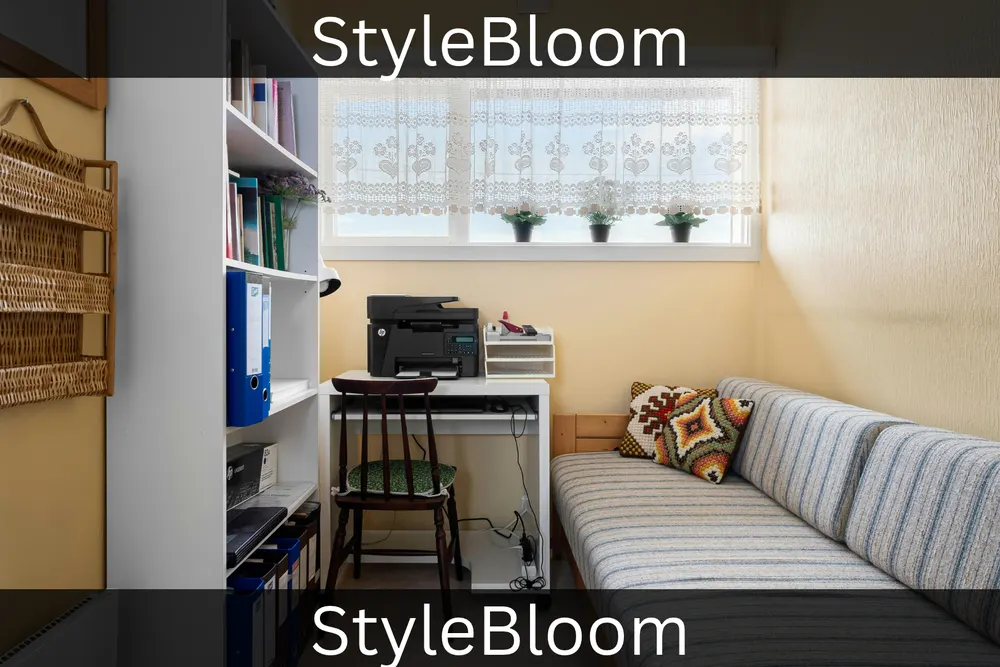
Vertical space is the small home's free square footage. The AI Overview for this topic says it, the galleries show it, and it is true: shelves and hooks that use the wall up to eye level and above turn dead air into storage, and storage off the floor is what makes a small room feel bigger. Go up in one place, not everywhere — one tall shelf wall or one hook rail per room. Walls covered edge to edge in storage read as a shop; one vertical move plus clear floor reads as a home. Baskets hide visual noise, open shelves display only what looks good grouped, and the top shelf holds the twice-a-year things, never the daily ones.
White walls do not automatically make a room feel big — a white room with dark, heavy furniture and one overhead light feels like a waiting room. What works is one continuous sightline: furniture low enough to see over, one wall color carried through, the window in one light layer, and the floor as visible as possible. Mirrors help only when they reflect a window or a lit corner. And every new object should do two jobs — the ottoman that stores throws, the tray that corrals and serves — or it should not come in.
What we like: measurements prevent the most expensive small-home mistake — furniture that does not fit. Watch out: the "small-space" label is marketing, not a measurement. Check dimensions against your gaps, every time.
Renter-safe decorating: no damage, no deposit risk
This is the gap the search results leave widest open. Across seven phrases, renter limits appear once as a peel-and-stick mention in an AI Overview and once in a social post — no top web result is framed around no-damage, lease, or landlord limits at all. Yet renters are the people with the most to gain from budget decorating, because they cannot renovate their way out of a dull room and they cannot afford to lose a deposit over a nail hole. The principle is simple: everything must be reversible in an afternoon, with no trace, and anything else needs written permission first. A landlord's friendly "sure, go ahead" on the phone is worth nothing at checkout; a one-line email granting permission is worth everything.
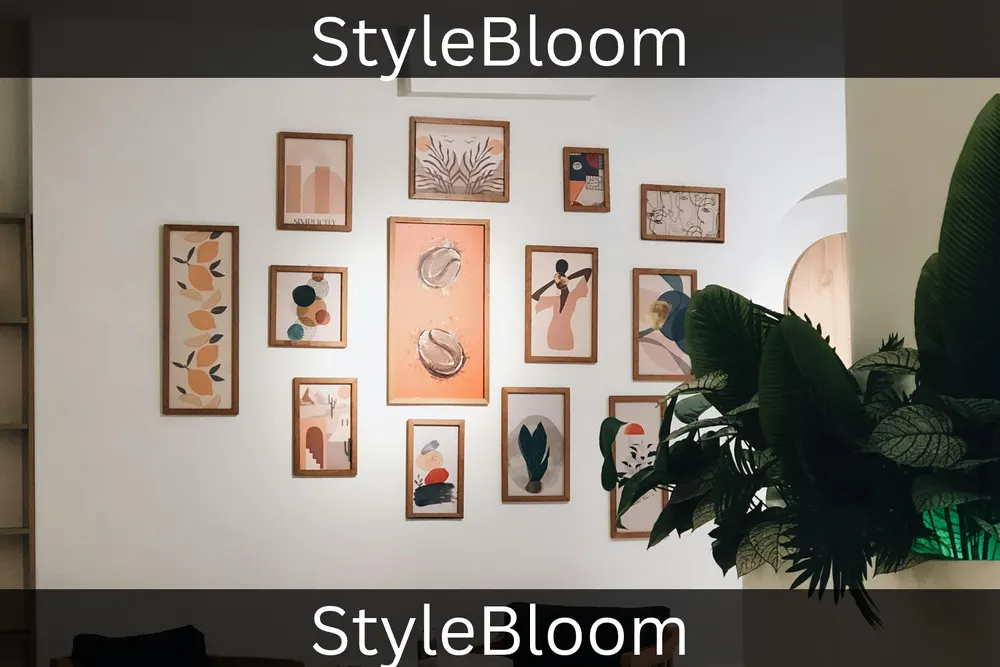
The no-damage toolkit, in order of usefulness: adhesive picture-hanging strips rated for the frame's actual weight — the rating holds only on a clean, dry, smooth wall, not textured paint or a steamy bathroom; adhesive hooks for textiles and light baskets; tension rods for curtains and under-sink screens; freestanding furniture — a leaning ladder shelf, a narrow console — doing the work of fitted; and removable peel-and-stick wallpaper on one accent wall, removed slowly with heat as the instructions say. Warning: cheap peel-and-stick wallpaper can lift freshly painted or poorly cured paint. Test a corner for two weeks before committing, and never apply it in a bathroom where steam fights the adhesive daily.
What to avoid matters as much: no nails, screws, or anchors without written permission — one anchor hole in tile can cost more than the shelf it held. No painting without written permission and a record of the original color, because "repaint it back" is the most common deposit dispute after cleaning. No adhesive on wallpaper, brick, or textured walls. No holes in doors — over-door hooks cost little and leave nothing. The checkout test: can I reverse this completely, in one afternoon, with a cloth and a hairdryer? If the answer involves filler, paint, or a phone call, get permission first or skip it.
What we like: everything here is reversible, and the most deliberate rooms look the most personal. Watch out: adhesive strips fail most in heat and humidity — the sunny wall and bathroom are where you test, not trust.
Cheap DIY decorating ideas, with honest time and tools
DIY advice usually tells you what to make and never how long it takes, what tools it needs, or what skill it assumes. The table below fixes that for seven projects that cost little and change a room. "Beginner" means no power tools; "confident beginner" means you can use a drill straight and will measure twice. Times are honest single-person times including drying and cleanup.
| Project | Skill | Honest time | Tools and materials |
|---|---|---|---|
| Gallery wall from frames you own | Beginner | 2–3 hours | Paper templates, painter's tape, level or phone level, adhesive strips or a hammer and nails if you own the walls |
| Painted terracotta pots + cuttings | Beginner | 1–2 hours plus drying | Terracotta pots, sample paint or leftover wall paint, brush, saucers, cuttings from a friend's plant |
| Book-stack side table styling | Beginner | 30 minutes | Books you own, a tray, one candle or small plant — no tools at all |
| Peel-and-stick accent wall, one wall | Confident beginner | 3–5 hours | Removable wallpaper, smoothing tool, craft knife, step stool, a second pair of hands for the first drop |
| Picture ledge shelf | Confident beginner | 1–2 hours | One timber ledge or a cut shelf board, brackets, drill, level, wall fixings right for your wall type |
| Framed textile or scarf art | Beginner | 45 minutes | A frame you own, a scarf or fabric remnant, scissors, tape — no sewing needed |
| Seasonal mantel or table arrangement | Beginner | 1 hour | Foraged branches, jars and vases you own, candles, one seasonal buy at most |

Three rules keep DIY cheap. First, finish one project before starting the next — half-finished DIY cost the materials and still looks unfinished. Second, measure and template before fixing anything: paper templates for a gallery wall, a pencil line for a shelf, a dry run on the floor. Third, borrow the tool when it costs more than the project, and never buy a specialist tool for one shelf unless you can name its next three jobs. Handmade looks handmade — a slightly uneven gallery wall is character; one frame two inches out is a mistake. Template, level, step back, then fix.
What we like: the projects above cost mostly time. Watch out: paint and adhesive need curing time no video shows — a "one-hour" project with overnight drying is a two-day project.
Seasonal decorating on a budget: fall now, Christmas next
It is October 31 as I write this, and not one top web result for this topic carries a seasonal plan, while the videos and social posts are full of fall, Halloween, Diwali, and Christmas. Treat fall and Christmas as one season with two acts, not two separate shops. One set of foundations — warm lights, evergreen branches, candles, one good throw, the tray and the basket — serves both, and the swap between acts is small: pumpkins and dried leaves out, evergreen and one string of lights in, the same vases and the same tray doing both jobs. Buying a separate full set for each season is how seasonal decorating eats a budget whole.

For fall, the free moves carry it: branches from a walk, dried leaves in a frame you own, pumpkins from the grocery store — cheaper and more real than the decor aisle. For Christmas, the one buy that earns its money is light: one warm string of lights used in three places — mantel, window, table — rather than one expensive feature. The tree gets the same treatment: one color family, homemade and inherited mixed deliberately. And every seasonal object needs eleven months of housing: one labeled box, and something leaves before something new enters.
What we like: one set of foundations, two acts, the free foraged layer doing the work. Watch out: buying the season twice at full price — fall, then Christmas — is the fastest way to spend a budget on things that live in a box.
The 3-5-7 rule and the 60/40 rule, explained plainly
The 3-5-7 rule is the most-asked question in this whole topic — it appears in the People Also Ask box for nearly every phrase — and it is also the simplest idea in decorating. It says that objects grouped in odd numbers, usually three, five, or seven, look more natural and interesting to the eye than even groupings, because the eye moves between them instead of pairing them off and stopping. Three frames, five objects on a mantel, seven stems in a vase: the group reads as a collection rather than a row. That is all it is — a rule of thumb, not a law. Two matching lamps flanking a sofa are correct too, because symmetry is its own arrangement. The mistake is treating the rule as a shopping list and buying a third object for a group that was fine with two.
The 60/40 rule, as Google's AI Overview presents it for this topic, is a balance guideline: roughly 60 percent of a room in one dominant note — usually the wall color and the largest furniture — and 40 percent in a supporting note, with small accents on top. In practice it means the big things stay calm and personality lives in the small, cheap, changeable layer — pillow covers, throw, art, plant. Test it in a photograph: squint, and the dominant color should cover most of what you see. If two colors fight at equal strength, move one to a smaller role. Both rules arrange what you already have and cost nothing — which is why they belong in a budget guide before any product does.
What is trending in home decor for 2026?
Honest answer first: there is no single verified list of 2026 decor trends, and percentages or rankings without a source are guesses. What the search results for this topic actually surface on October 31, 2026 is what people are seeing and clicking: The AI Overview for the head phrases names layered lighting, dimensional wall art, sculptural accents, and natural textures as the high-impact details, with the 60/40 balance rule and varying heights as the quick refresh moves. Houzz's October 2026-dated ideas page leads its list, HGTV's small-space and DIY pages are the freshest dedicated articles, and the budget blogs the overview cites — StoneGable, Bless'er House, Cozy DIY Home — are all organized around shop-your-home-first, low-cost DIY, textiles, lighting, and nature. The recurring picture is not a color or a product; it is a method: layered light, real textures, wall interest with dimension, and nature brought indoors, done cheaply.
The visible direction rewards exactly the moves in this guide — layered light, textured textiles, walls with depth, plants over new furniture. The trend to be careful of is the fully styled, fully bought room photographed once and never lived in: it costs a fortune, dates in a season, and teaches nothing. Buy the texture, not the trend; buy the light, not the look. If a trend needs you to replace something that still works, it is not worth your budget this year.
Mistakes that waste a small budget
Small budgets are wasted by small mistakes, repeated. First: buying the accessory before the arrangement — the throw before the sofa is placed, the art before the wall is measured. Arrangement is free and decides what fits. Second: the matching set. Sets look tidy in the store and flat at home; a room needs one thing that does not match to look collected rather than delivered. Third: scale blindness — the tiny rug, the art hung too high — fixed by measuring, never by spending more. Fourth: the sale purchase, bought because it was reduced, not because it filled a gap. A gap list written before shopping is the only defense.
The fifth mistake is decorating for the photograph instead of the Tuesday: the room perfect in one phone photo and unusable for breakfast — the tray that must be moved, the chair blocking the door — gets undecorated within a week, and the money is gone. The Tuesday test: does it survive a normal day, with the people and animals who live here, without being moved or worked around? If no, it is staging, and staging is for selling houses. And the objections have honest answers: too small is answered by measurements, a strict landlord by the renter section, no taste by the rules section — taste, at this budget, is procedure followed patiently.
The first week after you decorate
Decorating finishes a week later, when the room has survived real life. On day two, look at the room in morning light and after dark — the noon arrangement can look flat at 8 p.m., when you actually live in it. Adjust the lamps first. On day four, notice what migrated — keys, mail, charger, mug — and give each a home, or it colonizes the surface you cleared. At week's end, retake the after photo: if one corner collapsed into clutter, it needs storage, not scolding — add the basket, not the guilt.
One habit keeps the guide working: the ten-minute nightly reset — surfaces cleared, throws folded, one thing returned home. The other habit is the pause before the next buy: live with each room for two weeks before spending on the next. A home decorated one patient room at a time ends up more personal than one decorated in a weekend, because each room teaches the next something true about the people living in it.
Who this guide is for — and who should skip it
This guide is for you if you are decorating a home you already live in, on a small budget, and want the money to go where the eye goes — light, textiles, walls, free moves first. It is for renters who need everything reversible, small-home owners who need measurements before wishes, and beginners who want honest times and tool lists. It is written for the US reader, because the search evidence it stands on is a US view.
Skip it if you are renovating, need structural or electrical work, or are furnishing an empty home — those jobs need a different guide, a bigger budget, and usually a professional. Skip any DIY project your lease forbids, and any idea that fails the Tuesday test in your home. A guide is a menu, not a contract: choose deliberately, keep what survives the week, and let the rest go.
Frequently asked questions
- What is the 3-5-7 rule in decorating?
- The 3-5-7 rule is a rule of thumb: objects grouped in odd numbers — three, five, or seven — look more natural to the eye than even groupings, because the eye moves between them instead of pairing them off. Use odd groups for a relaxed feeling, pairs for calm. It never justifies buying an extra object to complete a group.
- How can I decorate my home without spending money?
- Do the free hour: remove one item from every surface, move one piece of furniture, open every curtain fully, and regroup what you own. Clean as you go, photograph before and after, and stop after one pass per room. Most rooms look better after the free hour than after a small order.
- What are some cheap ways to decorate my home on a low budget?
- Work in budget tiers: free moves first, then one or two cheap buys that fill real gaps — pillow covers, warm lights, adhesive hooks, a woven basket. Buy the real version of a cheap thing, not the fake version of an expensive one, and shop thrift stores for frames, vases, and baskets. Set one total before you shop, and write the list as gaps, not wishes.
- What is trending in home decor right now?
- What the late-October 2026 search results surface is a method more than a product: layered lighting, dimensional wall art, sculptural accents, and natural textures, with shop-your-home-first and low-cost DIY as the budget path. No verified ranked list exists — treat percentages without a source as guesses, and buy texture and light rather than a look.
- What are the 2026 home decor trends?
- The October 2026 results point to layered lighting, dimensional wall art, sculptural accents, natural textures, and budget-first methods — textiles, lighting, and nature over new furniture. Trends shift fast, so spend on the calm, changeable layer — textiles, light, plants — rather than a statement piece that dates.
- What are some easy DIY home decor ideas?
- The easiest honest projects are a gallery wall from frames you own, painted terracotta pots with cuttings, a book-stack side table, a framed textile, and a seasonal mantel arrangement — beginner level, 30 minutes to 3 hours, no power tools. Template the layout with paper before fixing anything, and finish one project before starting the next.
- What is the hottest craft for adults right now?
- No verified data names one hottest craft, and popularity shifts with the season. The current results point to DIY wall decor — arched mirrors, paper flower frames, rechargeable sconces — plus seasonal arrangements. Pick the craft you will actually finish, with materials you can reuse, rather than chasing a label.
- What is the best website for home decor ideas?
- No single best website exists; the source depends on the job. Galleries: HGTV, Houzz, House Beautiful. Budget methods: blogs such as StoneGable and Bless'er House. Raw ideas: Pinterest and Reddit, used for sparks and checked against the rules here. Start with the gap, then pick the source.
- How do I decorate a small home on a budget?
- Measure first: 30 inches clear for walkways, 18 inches between sofa and coffee table, 24 inches behind dining chairs. Use one vertical storage move per room, keep furniture low enough to see over, keep one wall color through the home, and make every new object do two jobs. Mirrors help only when they reflect a window or lit corner.
- How can renters decorate without losing their deposit?
- Use only fully reversible moves: adhesive strips rated for the frame's real weight on clean, smooth walls, adhesive hooks, tension rods, freestanding furniture, and removable wallpaper tested in a corner for two weeks. Get written permission for any nail, screw, anchor, or paint. Reverse everything in one afternoon — cloth and hairdryer, no filler or paint.
- How long does a beginner DIY decorating project take?
- Honest beginner times run from 30 minutes for a book-stack side table to 3 hours for a gallery wall, drying and cleanup included. A peel-and-stick accent wall takes a confident beginner 3 to 5 hours; a picture ledge 1 to 2 hours. A project with overnight drying is a two-day project, not a one-hour one.
- What is the 60/40 rule in decorating?
- As presented in Google's AI Overview for this topic, the 60/40 rule is a balance guideline: roughly 60 percent of a room in one dominant note — wall color and largest furniture — and 40 percent supporting, with small accents on top. It stops a room becoming a shouting match: keep the big things calm, put personality in the cheap, changeable layer.
- Where can I find cheap home decor that does not look cheap?
- Thrift shops for frames, vases, baskets, and solid wood; dollar stores for seasonal touches and trays; used marketplaces for furniture and mirrors, measured first; online search buys for gap-fillers — adhesive hooks, pillow covers, string lights, baskets. Buy plain, real materials first; let one or two objects carry the personality.
- How do I decorate for fall and Christmas on one small budget?
- Treat them as one season with two acts: one set of foundations — warm lights, evergreen branches, candles, one good throw, a tray and a basket — and a small swap between acts, with foraged branches and grocery-store pumpkins doing the fall work. Buy the week after the season, store in one labeled box, and let something leave before something new enters.
- What should I buy first if I only have $25?
- Buy nothing until the free hour is done and photographed. Then buy the one thing filling the biggest visible gap — usually pillow covers for the room you live in most, or warm lights if the room goes dark after 6 p.m. One gap, one buy, then live with it for two weeks.