Capsule Wardrobe for Beginners: 30 Pieces, Endless Outfits, Zero Morning Panic
A capsule wardrobe beginners guide for real life: 30 versatile pieces in your colours, the outfit-formula method, and the closet reset that makes getting dressed a two-minute decision.
- 30 versatile pieces in your colours is the sweet spot for a beginner capsule.
- The outfit-formula method (top + bottom + layer + shoes) removes morning decisions.
- Pick a tight colour palette first — everything matches when colours are limited.
- The first two weeks feel hard; push through before judging the system.
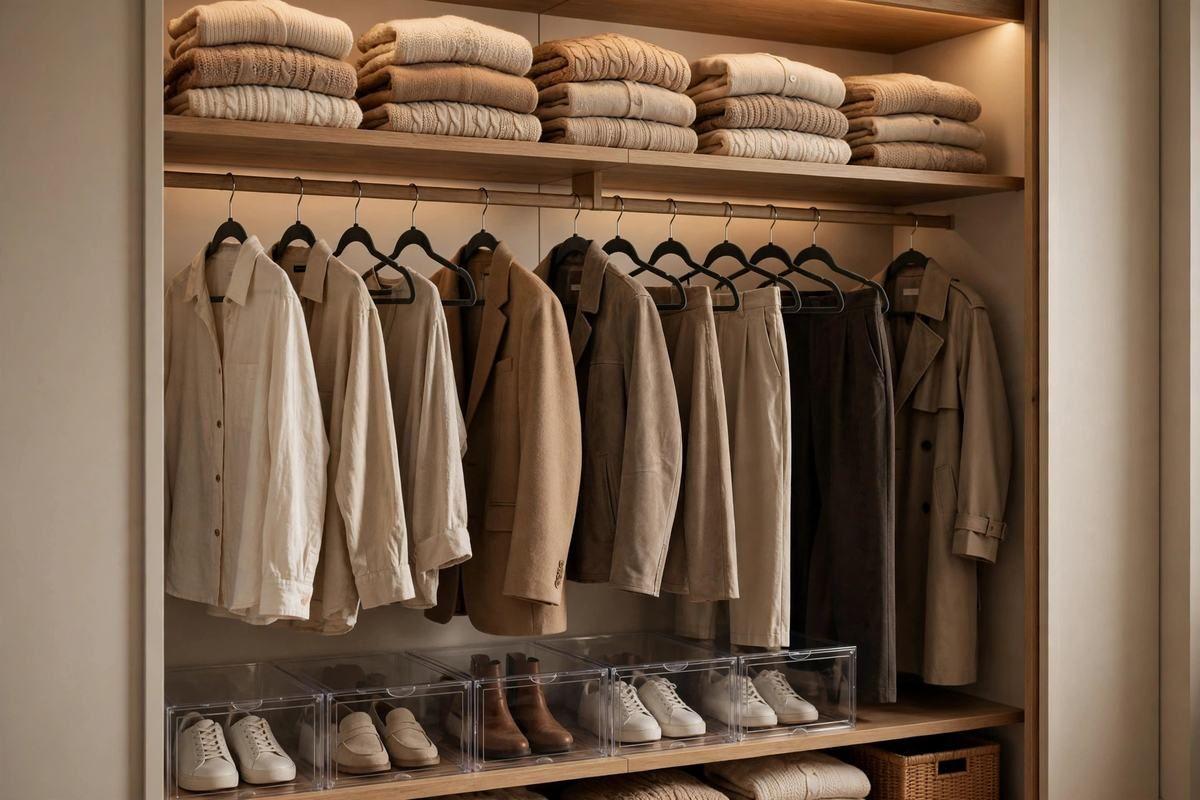
A neutral capsule wardrobe on slim matching hangers — every piece matches most pieces
Here is exactly how to build a capsule wardrobe for beginners: spend one weekend on a closet audit, keep 25–40 pieces that all match each other for the current season, and store everything else sealed away for 90 days before you donate a single thing. Those three steps — audit, match, store — are the whole method. No shopping trip required, no fashion background needed. It works because the constraint is the point: fewer pieces, and every piece earns its place.
How many pieces do I actually need?
The sweet spot for a beginner's seasonal wardrobe is 25–40 pieces — meaning a 3-month block of actual weather, not a full calendar year. Under 25 and your laundry schedule starts deciding your outfits for you; over 40 and the "everything matches everything" rule breaks down, and you are back to a regular crowded closet with extra steps. Do not count underwear, socks, workout-only gear, or sleepwear in the number — those live in their own drawer and do not complicate your decisions. For most women, 30 is the number that keeps two weeks of outfits on rotation with zero repeats. Winter capsules run slightly higher because coats and extra layers count as pieces too.
Should I declutter everything before I start?
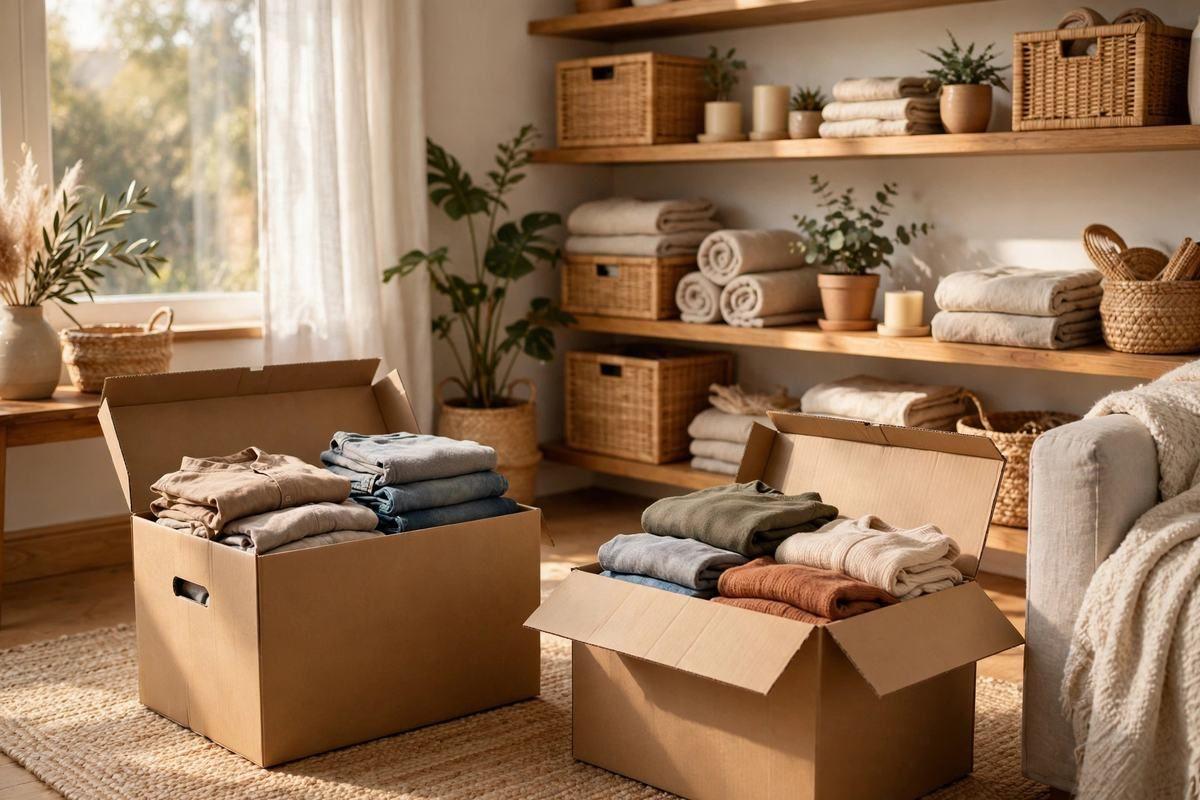
No — and this is the opinion that matters most in this whole guide. The famous "purge weekend" method, where you donate bags of clothes first and build a capsule from what survives, fails most beginners for a simple reason: guilt-purging leads to rebuying. You give away jeans just because they are old, then spend money replacing them two months later when the weather turns. The store-first method beats the purge-first method every time. Sort your closet into three piles — yes, maybe, no. The "no" pile is only things that are damaged, stained, or genuinely unwearable; those leave now. The "maybe" pile — everything you hesitate over — goes into a box, sealed, dated, and stored out of sight for one full season. If you never open it for 90 days, donate it unopened. That box is the difference between a confident closet and one you immediately regret.
What goes into a capsule wardrobe for beginners? A starter checklist
Build from categories, not individual items. These are the beginner capsule wardrobe essentials, in roughly the right balance: 7–8 tops (a mix of tees, blouses, and one or two knits), 4 bottoms (two pairs of jeans or trousers, one skirt, one wildcard), 3 layers (a blazer or jacket, a cardigan, one more layer for the season), 2 dresses or jumpsuits, 3 pairs of shoes (one flat, one elevated, one casual), plus a main bag and whatever outerwear the season demands. That lands you at about 30. Now bend it to your life. If you work from home four days a week, trade two of the office tops for elevated lounge sets you can answer the door in. If your job is client-facing five days a week, shift about a third of the pieces into a work zone — same neutrals, slightly more structure. If your closet is a reach-in under five feet wide, the good news is a 30-piece capsule on slim matching hangers takes up barely half of it. Fold the knits, hang everything else, and leave visible space: a capsule you can see is a capsule you will actually wear.
How do I choose colours so everything actually matches?
Pick two neutral basics you already own in bulk — black, navy, white, grey, beige, or denim — then add one or two accent colours you genuinely wear. That is the entire colour theory lesson. The matching test takes ten minutes: hold each top against every bottom in its zone. If a piece works with all of them, it earns its spot; if it only works with one, it is a liability, not a favourite. Patterns are allowed on one condition: the pattern must contain your neutrals. A floral with navy and white in it will behave. A neon-green-and-mustard print will not. And if 80% of what you wear is already black and grey, do not fight it — build the capsule around the palette you reach for, not the one you wish you reached for.
What mistakes do most beginners make?
Three, and all of them are avoidable. First: shopping before auditing. The "fresh start" shopping spree is how people end up with 30 brand-new wardrobe staples that do not suit their actual life. The rule is simple — at least 80% of your first capsule should come from clothes you already own. Buy only to fill genuine gaps (the third shoe, the missing layer) after the audit, never before. Second: copying someone else's list item-for-item. A capsule built for a freelancer with a car is useless for a commuter with a subway ride and a dress code. Take the category counts from this capsule wardrobe for beginners guide and fill them from your own week. Third: ignoring laundry and weather. A beautiful 30-piece capsule fails if you only wash clothes once a week and own nothing for the temperature outside. Count your real laundry rhythm: washing twice a week means 30 pieces gives you two comfortable weeks without repeats. If you stretch to weekly washes, keep the heavy-rotation core closer to 20 pieces and accept the repeats — the system still works, it is just smaller.
What will the first two weeks actually feel like?
Week one feels awkward. You will reach for a piece that is sitting in the maybe box at least once — that is normal, and it is exactly why the box is sealed rather than donated. Week two is when the outfit formulas kick in: every outfit becomes top + bottom + layer + shoe, pulled from pieces you already know match. Getting dressed drops to about two minutes. The real win shows up around week three, when you stop thinking about clothes at all — and that, not a minimalist wardrobe for its own sake, is why people stick with it. If after a month you keep missing one stored piece, it belongs in the capsule. If you miss nothing, donate the box unopened and start the next season lighter.
Frequently asked questions
- How many pieces should a capsule wardrobe have?
- For most beginners, 25–40 pieces per season works best. Underwear, workout-only gear, and sleepwear don't count. Around 30 is the sweet spot that covers two weeks of outfits without repeats.
- What if my job needs formal clothes?
- Zone the capsule: a work zone and a weekend zone that share the same neutrals. About a third of your pieces can skew structured for the office while the rest stays casual, and the shared palette keeps them interchangeable.
- Do I need to donate everything else?
- No. Seal the pieces you hesitate over in a dated box and store them for one full season. Anything you never reach for can be donated with confidence — and if you miss something, it belongs in the capsule.