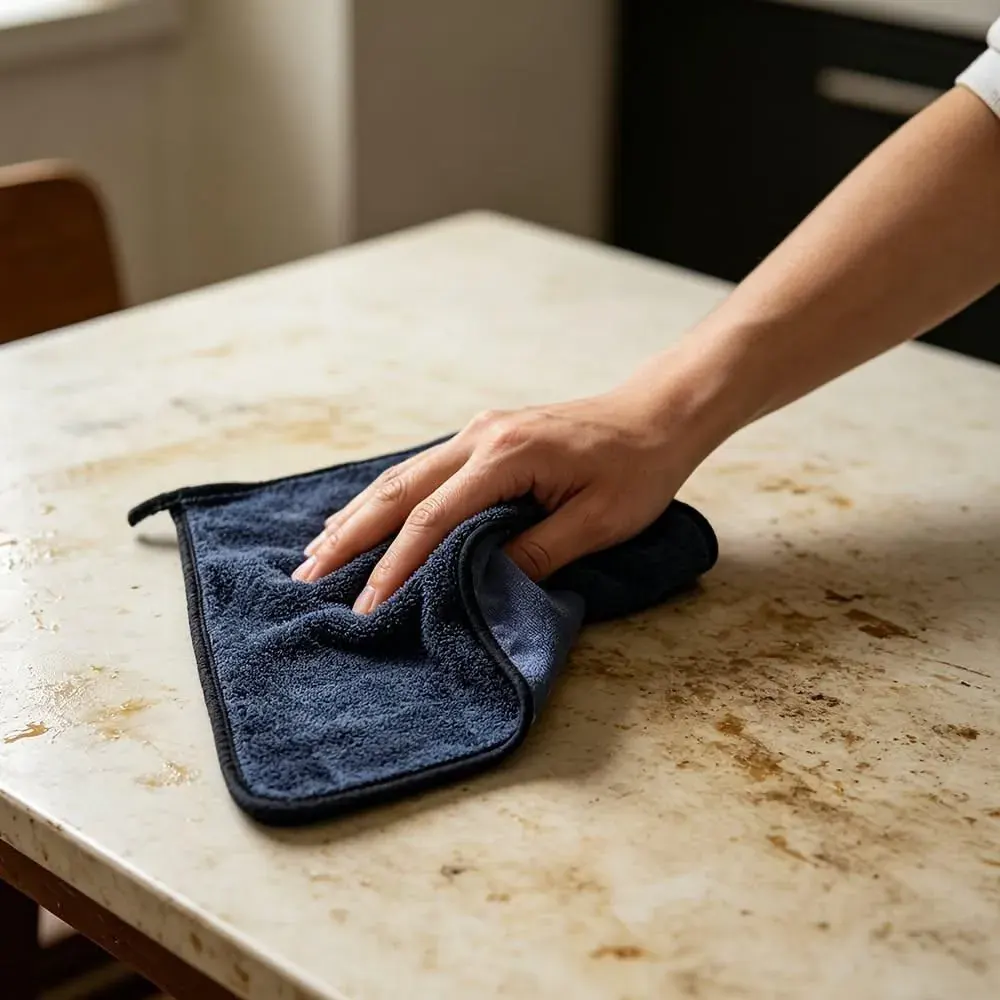
Shower Cleaning Hacks: The 20-Minute Deep Clean That Works
Shower cleaning hacks that work: the 20-minute deep clean for glass doors, grout, showerheads and drains, plus the 2-minute daily habit that keeps it clean.

By the end of this guide, you will be able to clean every bathroom zone with hacks that actually work — and know which hack fits that zone, and which to skip.
- Dwell time beats scrubbing: spray, wait 10 to 30 minutes, then wipe.
- Dish soap and vinegar handle glass and ceramic; baking soda paste handles grout.
- Never use vinegar on natural stone, and never mix bleach with vinegar or ammonia.
- A showerhead soak overnight fixes most weak or sideways spray.
- Two minutes a day — squeegee and ventilate — keeps the deep clean done.
The best bathroom cleaning hacks are the boring ones that prevent work, not the viral ones that promise miracles. If your bathroom is getting harder to clean instead of easier, it is almost never because you need a stronger product — it is because residue is building faster than you are removing it. The hacks that actually work all do one of three things: dissolve the right kind of buildup with the right chemistry, stop new buildup with a tiny daily habit, or replace scrubbing with soaking. Everything in this guide was chosen for that logic, zone by zone — shower and tub, toilet, tiles and grout, mirror and glass, sink and faucets, floor — and every one of them is honest about what it cannot do. I have thrown out the gimmicks (nobody is melting a toothbrush with boiling water here) and kept only the methods real people with real bathrooms can repeat every week.
As an Amazon Associate I earn from qualifying purchases. This guide contains affiliate links — it costs you nothing extra and keeps our content free. Read our affiliate disclosure.
Shower cleaning hacks that actually work come down to three things: the right cleaner for the surface in front of you, enough dwell time for it to do the work, and a 2-minute daily habit that stops buildup before it hardens. If your shower has hard-water spots on the glass, pink or black marks in the grout, and a showerhead that sprays sideways, you do not need a stronger chemical. You need a sequence. Start with the daily spray and squeegee habit, do one 20-minute deep clean with a dish-soap-and-vinegar mix or a baking soda paste, and treat the showerhead and drain separately. Most showers look dramatically better after that first deep clean, and stay that way with about two minutes a day. This guide covers glass doors, tile and grout, showerheads, drains, chrome fixtures, and the routines that keep each one clean, including what never to use on natural stone, and what to skip if you rent.
One safety rule before anything else: never mix bleach with vinegar, ammonia, or any acid cleaner. That combination makes toxic gas, and it is the single most dangerous mistake in bathroom cleaning. If you use bleach for mold, use it alone, with the fan on and the door open, and rinse thoroughly before any other product touches the same surface. Wear gloves for every method below, and ventilate the room. If you have asthma or strong chemical sensitivity, the vinegar, baking soda, and dish soap methods in this guide are the gentler path, and they handle most everyday buildup without bleach at all.
Shower cleaning at a glance: pick your method by surface
| Surface or problem | Best first method | Dwell time | Never use |
|---|---|---|---|
| Glass doors, hard-water spots | Dish soap + heated vinegar spray, then squeegee | 15–30 minutes | Abrasive pads on coated glass |
| Tile and grout lines | Baking soda paste + brush, then rinse | 10–15 minutes | Vinegar on natural stone tile |
| Showerhead, weak or sideways spray | Vinegar bag soak overnight | Overnight | Boiling vinegar on plastic parts |
| Drain smell or slow drain | Baking soda + vinegar flush, then hot water | 15 minutes | Chemical drain opener as a first step |
| Chrome fixtures, water spots | Microfiber cloth + a drop of dish soap | None | Steel wool or scouring powder |
| Natural stone (marble, travertine, slate) | pH-neutral stone cleaner only | Per label | Vinegar, lemon, citric acid, bleach |
| Plastic shower curtain or liner | Wash in the machine on gentle, or spray and wipe | 5 minutes | High heat drying |
If you only remember one row of that table, remember the last column. Almost every shower cleaning disaster — etched marble, cloudy glass coating, scratched chrome — comes from the right cleaner on the wrong surface, not from too little scrubbing. When in doubt about your tile, check one hidden corner first. A small test spot costs a minute and saves a surface you cannot un-etch.
Why showers get dirty so fast: soap scum, hard water, and mildew
A shower is the one place in the house where soap, hot water, skin oils, and minerals meet every single day. Soap scum is the white film left when soap reacts with the calcium and magnesium in hard water. It is not dirt in the usual sense, and plain water will not dissolve it once it dries. Hard-water spots are mineral deposits left behind when droplets evaporate on glass and chrome. Mildew and the pink film often seen in grout corners are microbes that love warm, damp, low-light places. Each one needs a different approach, which is why a single all-purpose spray underperforms: a degreaser handles scum, an acid handles minerals, and dwell time plus airflow handle microbes. Understanding which film you are looking at tells you which bottle to reach for, and it stops you scrubbing a mineral spot with a product built for grease.
The other reason showers feel impossible is that the dirt builds in layers. A thin scum film today becomes a sticky layer this week and a crusty one next month, and each layer protects the one under it. That is why the first deep clean matters more than any single product. Once the layers are gone, maintenance is easy, because you are cleaning one day of film instead of one month of it. If your shower has been neglected for a long time, expect the first clean to take the full 20 to 30 minutes in this guide, and expect the second clean, a week later, to take half that. By the third week, the daily habit below is usually enough, with a short weekly pass.
The 20-minute shower deep clean, step by step
Work top to bottom so dirty water runs onto surfaces you have not cleaned yet, and rinse as you go. You need dish soap, white vinegar, baking soda, a spray bottle, a dish brush or grout brush, a squeegee, microfiber cloths, and gloves. Optional but genuinely useful: an electric scrub brush for grout and corners, and a plastic scraper for thick buildup on glass.
- Clear and rinse (2 minutes). Remove bottles, razors, and bath toys. Rinse every wall and the floor with hot water. Hot water alone softens fresh scum and makes the cleaner work faster.
- Spray the glass and walls (2 minutes). Mix equal parts dish soap and heated white vinegar in a spray bottle and coat the glass doors, walls, and fixtures. The heat matters: warm vinegar cuts scum noticeably better than cold. Do not spray stone surfaces with this mix.
- Paste the grout (3 minutes). Mix baking soda with a little water into a thick paste and spread it along grout lines and any stained corners with a brush or an old toothbrush. On stubborn grout, add a few drops of hydrogen peroxide to the paste instead of more water.
- Let everything dwell (10 minutes). Walk away. Dwell time is the hack. The cleaners dissolve scum and minerals while you do something else, and scrubbing after dwell time takes a fraction of the effort.
- Scrub top to bottom (5 minutes). Start at the showerhead end and work down. Use the dish brush on walls, the grout brush on grout lines, and a non-scratch pad on the floor. A dish wand with a built-in soap reservoir is the tool most people actually keep using, because it lives in the shower and there is no bucket to fetch.
- Rinse and squeegee (3 minutes). Rinse everything with hot water, then squeegee the glass and walls. Squeegee the floor toward the drain. Dry the fixtures with a microfiber cloth so they do not spot as they dry.
That sequence is the whole deep clean. If one area still looks marked after rinsing, it is almost always mineral scale or old grout staining, not remaining soap. Repeat the dwell step on that area alone rather than scrubbing harder. Scrubbing harder on glass and chrome is how scratches happen, and scratches then hold dirt faster, which makes the next clean harder. Patience beats pressure on every shower surface.
The laziest effective trick in this guide: keep a spray bottle of diluted dish soap and vinegar in the shower See spray bottles on Amazon, and spray the walls while you are still in there, after you turn the water off. Rinse it off the next morning when you shower. You get a daily dwell clean for zero extra trips, and it is the single habit that keeps a deep-cleaned shower looking deep-cleaned.
How to clean shower glass doors without streaks
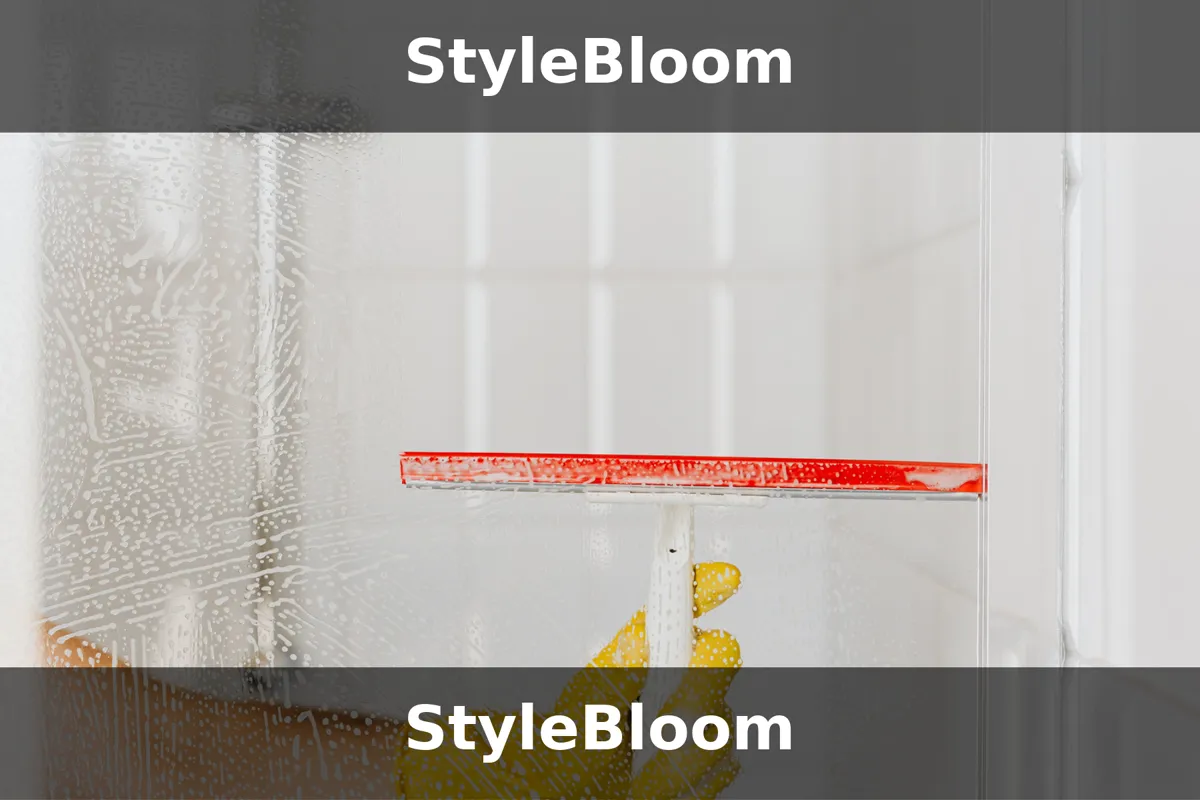
Glass doors show every spot because you look through them at eye level with light behind them. The method that works: spray the dish-soap-and-vinegar mix, let it dwell 15 to 30 minutes, scrub gently with a non-scratch sponge, rinse thoroughly, and squeegee dry. Streaks usually come from cleaner residue left behind, not from the glass itself, so the rinse matters as much as the cleaner. Rinse until the water sheets off instead of beading on soap film, then squeegee in overlapping vertical passes, and finish the edges and tracks with a microfiber cloth. If spots remain after that, they are mineral scale, and a paste of baking soda and water, rubbed gently and rinsed, usually lifts them. For heavy scale, a citric-acid solution or a dedicated limescale remover works, but keep both off natural stone trim and off the metal tracks if the label warns against it.
The tracks and seals deserve their own minute. The bottom track collects soap, hair, and water, and it is where mildew starts in many showers. Vacuum or wipe out loose debris, scrub the track with the baking soda paste and a brush, and rinse with a cup of hot water poured along the track. Wipe door seals and gaskets with a cloth, and leave the door ajar after showering so the track dries. A track that dries daily rarely grows anything. One more glass tip: a water-repellent treatment made for shower glass See shower glass water-repellent treatments on Amazon, reapplied every few months, makes droplets sheet off instead of drying into spots. It does not replace cleaning, but it stretches the time between deep cleans, and it makes the daily squeegee far more effective.
If your glass has a factory coating — many modern doors do — check the manufacturer's care sheet before using anything abrasive or strongly acidic. Coated glass can cloud permanently if scoured. When the coating is unknown, use the gentlest method that works: dish soap spray, dwell, soft cloth, squeegee. A dishwasher tablet dissolved in hot water is a popular online hack for glass doors, and it does cut grease, but tablets contain bleach and strong alkalis, so keep that solution off stone, off metal tracks, and off your skin, and rinse very thoroughly. It is an occasional deep-clean option, not a daily spray.
Tile and grout: the baking soda method that actually works
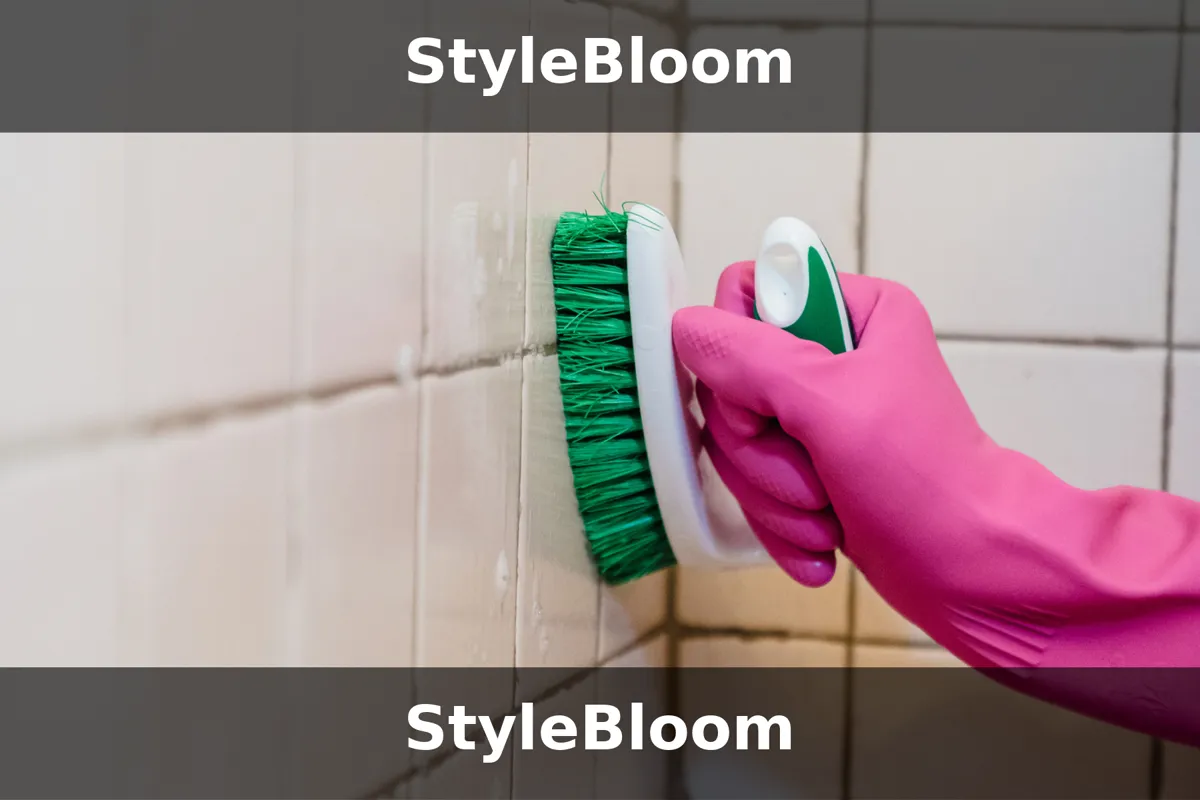
Grout is porous, so it absorbs dirty water and holds it. That is why grout looks stained long after the tile around it is clean, and why sealing matters once it is clean. For ceramic and porcelain tile, spread baking soda paste on the grout, dwell 10 to 15 minutes, scrub with a stiff grout brush, and rinse. For pink or dark discoloration that survives the paste, apply hydrogen peroxide (the standard 3% pharmacy kind) directly to the grout, dwell 10 minutes, scrub, and rinse. Peroxide is a mild oxidizer and handles microbial staining without the fumes of bleach. For the most stubborn grout, a steam cleaner is the tool that changes the job entirely: steam loosens embedded grime without chemicals, and it reaches into grout pores that brushes cannot. If you clean grout often, a steam cleaner or an electric scrub brush pays for itself in saved effort within a few cleans. See electric scrub brushes on Amazon
Do not use vinegar on natural stone tile. Marble, travertine, limestone, and slate are all acid-sensitive, and vinegar, lemon juice, and citric-acid cleaners etch them, leaving dull patches that no amount of polishing at home will fix. For stone showers, use a pH-neutral stone cleaner and a soft cloth, seal the grout and stone on the schedule the sealer label gives, and wipe up shampoo and conditioner spills promptly, because even mildly acidic hair products can mark unsealed stone over time. If you are unsure whether your tile is stone or ceramic, the test is simple: a drop of vinegar on a hidden corner. If it fizzes or the spot looks duller after rinsing and drying, treat the whole shower as stone. Sealed grout resists staining dramatically better than unsealed grout, so once your grout is clean and fully dry, apply grout sealer and let it cure before the next shower. That one job, done once or twice a year, is the difference between grout that stays clean and grout that re-stains in a month.
How to clean a showerhead: the vinegar bag method

A showerhead that sprays unevenly, sideways, or weakly is usually clogged with limescale inside the nozzles, not broken. The fix needs no tools. Fill a sturdy plastic bag with white vinegar until the showerhead is fully submerged, secure the bag with a rubber band or zip tie, and leave it overnight. In the morning, remove the bag, run the shower for a minute, and rub the nozzles with your fingers or a soft brush to clear loosened scale. For a fixed showerhead you cannot remove, the bag method works exactly the same. For a removable showerhead, you can soak it in a bowl of vinegar instead, which is tidier. If your showerhead has a filter See showerhead filters on Amazon, rinse or replace the filter while you are at it, following the manufacturer's instructions.
Two cautions. First, do not use boiling vinegar, and do not soak plastic showerheads in hot vinegar for hours; warm or room-temperature vinegar overnight is enough, and heat can warp plastic fittings. Second, if your showerhead has a special finish — brushed nickel, oil-rubbed bronze, matte black — check the care instructions before a long vinegar soak, because prolonged acid contact can dull some finishes. For delicate finishes, a shorter soak of one to two hours, or a diluted vinegar mix, is the safer choice. If scale remains after one soak, repeat the overnight soak rather than reaching for a stronger acid. Most showerheads come back to full spray after one or two soaks, and doing this every few months, or whenever you notice the spray pattern change, prevents the slow decline most people live with for years.
Drains, smells, and slow water: the safe flush
A slow or smelly shower drain is usually a mix of hair, soap scum, and biofilm in the trap. Start mechanically: remove the drain cover and pull out visible hair with a drain snake or a gloved hand. Then pour half a cup of baking soda down the drain, follow it with a cup of white vinegar, cover the drain for 15 minutes, and flush with a kettle of hot water. That combination loosens biofilm and neutralizes odor without harsh chemicals. Repeat once if the smell persists. What this will not do is clear a solid blockage deep in the pipes, and that is fine: if water still drains slowly after two flushes and a mechanical clean, the blockage is beyond the trap and a plumber or a proper drain snake is the honest next step, not a stronger chemical. Chemical drain openers can damage pipes and seals, they are dangerous if they splash, and they often fail on hair blockages anyway, which is why they are last resort, not first.
Prevention is a 30-second job. A drain hair catcher costs little See drain hair catchers on Amazon, sits in or over the drain, and stops the main ingredient of blockages before it enters the pipe. Empty it after each shower. If your drain gurgles or the smell returns within days, check whether the trap is drying out — a shower that is rarely used can lose its water seal, letting sewer odor up. Running the shower for a minute refills the trap. Persistent sewer smell in a frequently used shower is a plumbing issue, not a cleaning one, and it deserves a plumber rather than more cleaner.
Chrome, fixtures, and the little things: handles, shelves, and soap dishes
Chrome spots because minerals dry on it. The fix is boring and effective: after each shower, wipe fixtures with the microfiber cloth you already used on the glass. For existing spots, a cloth dampened with diluted vinegar, wiped on and rinsed off promptly, dissolves them. Do not leave vinegar sitting on fixtures, and do not use scouring powder or steel wool, which scratch chrome and leave it spotting worse. For brushed or matte finishes, use dish soap and water only, because acids and abrasives change the finish. Handles and knobs collect soap and hand oils; wipe them during the weekly clean, and check the base of the handle where water pools. Shower shelves and caddies grow film underneath bottles, so lift every bottle during the deep clean, wipe the shelf, and wipe the bottle bases. Soap dishes need the same treatment: the puddle under a bar of soap is a scum factory. A draining soap dish or a soap saver pad keeps the bar dry and the dish clean, and it makes the bar last longer too.
The daily 2-minute routine that replaces the monthly battle
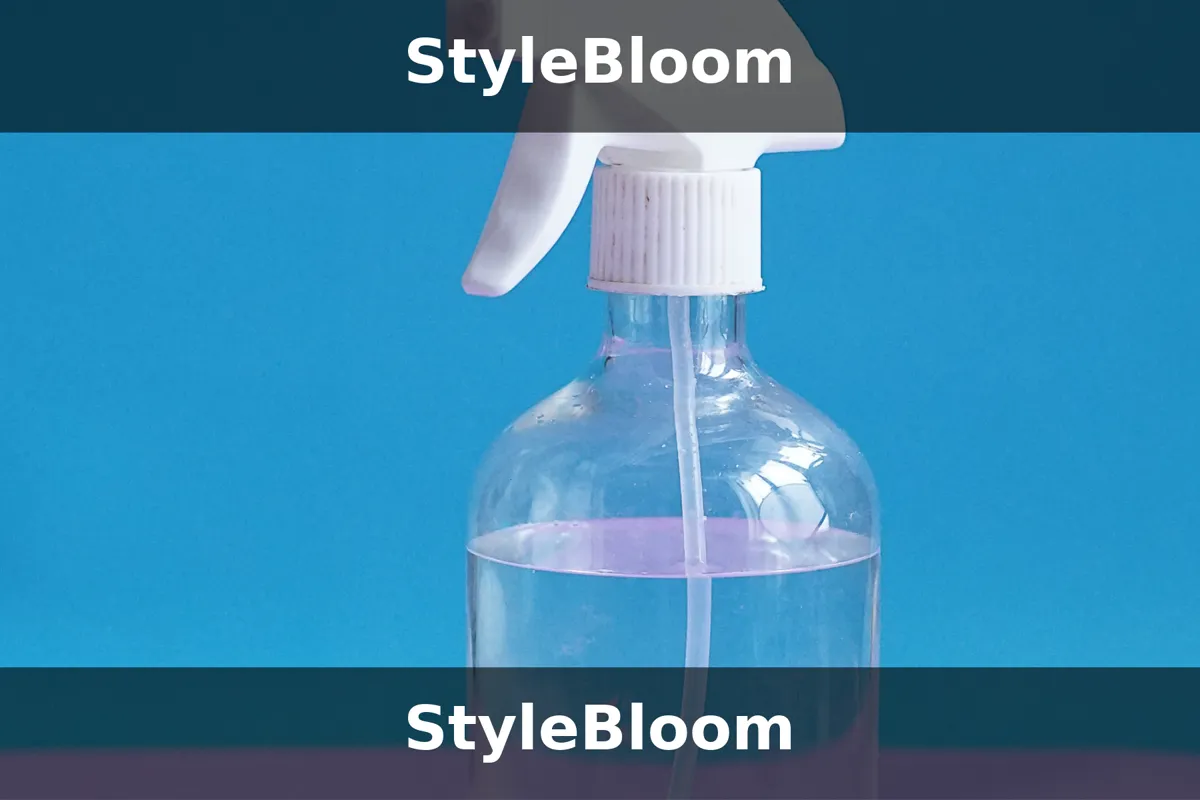
After your last shower of the day: squeegee the glass and walls, shake the shower curtain closed so it dries, leave the door or curtain partly open and the fan running for 20 minutes, and hang the bath mat to dry instead of leaving it on the wet floor. That is the whole routine, and it is worth more than any product. Ventilation is the underrated half of shower cleaning. Mildew needs constant dampness, and a fan plus an open door breaks that cycle. If your bathroom has no fan, a small window cracked open, or even the door left ajar with the hallway air moving, makes a real difference. In a humid climate, a compact dehumidifier or a moisture absorber in the bathroom helps the room dry between showers.
For households where nobody will squeegee, the fallback is the in-shower spray bottle from the tipbox above: spray the walls after showering, rinse the next morning. It is not as good as squeegeeing, but it is dramatically better than nothing, and it is the routine most likely to survive in a busy house, a shared bathroom, or a home where cleaning motivation is low. Pick the routine you will actually do. A perfect routine nobody follows cleans nothing. The same thinking applies to who cleans: if one person does all the bathroom cleaning, putting the spray and squeegee where that person already is — in the shower, not in a cupboard — removes the friction that kills habits.
Weekly and monthly shower cleaning schedule
| How often | What to do | Time |
|---|---|---|
| Daily | Squeegee glass and walls, ventilate 20 minutes, hang mat | 2 minutes |
| Every shower | Spray walls with diluted dish-soap-and-vinegar (optional, replaces squeegee) | 30 seconds |
| Weekly | Spray and dwell, scrub walls and floor, rinse, squeegee, wipe fixtures, clean shelf and soap dish | 10–15 minutes |
| Monthly | Full deep clean above, plus showerhead check, drain flush, track and seal clean | 20–30 minutes |
| Every 3–6 months | Showerhead vinegar soak, grout sealer check, water-repellent treatment on glass | Overnight soak + 15 minutes |
Adjust the schedule to your water. Hard-water homes need the monthly deep clean on time, because scale builds faster than scum. Soft-water homes can often stretch the deep clean to six weeks, because the main enemy is soap film, which the daily habit handles. Large households and homes with long hair in the shower need the drain check more often, not less. And if anyone in the home has hard-water-sensitive skin or eczema, the showerhead soak and a quick wipe of residue matter, because cleaner residue left on surfaces ends up on skin the next morning. Rinsing thoroughly is part of cleaning, not an optional extra.
Cleaning a shower when you rent: damage-free rules
Renters need the same clean shower without risking the deposit. The methods in this guide are renter-friendly as long as you follow three rules. First, use no abrasives and no strong acids on any surface you did not install, and test everything in a hidden corner. Second, do not remove or replace sealed parts: if the showerhead is fixed and the lease or landlord would object, use the bag method rather than unscrewing anything, and keep the original parts. Third, document the shower's condition when you move in, with dated photos of grout, seals, and glass, so pre-existing staining is not blamed on you later. A suction or over-door shower caddy beats drilling, a tension-rod curtain needs no holes, and a drain hair catcher prevents the blockage that causes the most common renter plumbing call. If mold is growing behind sealant or inside the wall, report it to the landlord rather than bleaching it repeatedly: recurring mold in the same spot is usually a leak or ventilation failure, and it is the landlord's repair, not your cleaning failure.
Common shower cleaning mistakes that make it worse
- Mixing bleach with vinegar or ammonia. Toxic gas. Never combine, and rinse thoroughly between different products.
- Scrubbing dry scale with a scouring pad. Scratches hold dirt and make the next clean harder. Dwell first, then wipe.
- Using vinegar on natural stone. Etching is permanent. Stone gets pH-neutral cleaner only.
- Leaving cleaner on fixtures to "work longer." Acids dull finishes. Dwell on glass and tile, not on chrome.
- Spraying and immediately wiping. Without dwell time you are just moving dirt around. Ten minutes of waiting beats ten minutes of scrubbing.
- Closing the curtain and door straight after showering. Trapped dampness grows mildew. Ventilate and leave things ajar.
- Pouring grease or chemical drain opener down a slow drain first. Mechanical removal and the baking soda flush come first.
- Forgetting the rinse. Cleaner residue streaks glass, spots chrome, and irritates skin. Rinse until water sheets clean.
When to skip a hack: red flags and what not to buy
Skip any hack that promises a self-cleaning shower, a spray that means you never scrub, or a single product for every surface. Showers have at least four different surfaces and three different soils, and one bottle cannot be right for all of them. Skip strongly acidic "miracle" descalers on any shower with stone, coated glass, or special finishes unless the label names your surface. Skip wire brushes, scouring sticks, and pumice on glass, chrome, acrylic, and fiberglass: pumice is legitimate on porcelain toilet bowls, and it is a scratch risk everywhere in a shower. Skip hiring-style "professional" tools for a standard home shower until the methods here have had two full cycles; most showers respond completely to dwell time plus a brush, and an expensive tool bought first usually gathers dust while the habit never forms. If a product's label has no ingredient list and no surface guidance, do not use it in your shower. Transparency is the cheapest quality signal there is.
On buying: you need a spray bottle, dish soap, white vinegar, baking soda, a dish brush or grout brush, a squeegee, and microfiber cloths. That kit handles this entire guide. The two upgrades worth paying for, in order, are an electric scrub brush if grout is your main problem, and a steam cleaner if you clean grout often or dislike chemicals. A dedicated shower spray is a convenience, not a necessity: the dish-soap-and-vinegar mix outperforms most of them on scum, at a fraction of the price. Buy the squeegee with a suction hook so it lives in the shower, because a squeegee in a cupboard is a squeegee unused.
Useful picks: See dish wand with a soap reservoir on Amazon · See squeegee with a suction hook on Amazon · See grout brush set on Amazon · See microfiber cloths on Amazon · See pH-neutral stone cleaner on Amazon
Who this guide is for, and who should do something different
This guide is for standard home showers: ceramic or porcelain tile, glass doors or a curtain, a fixed or handheld showerhead, and hard or soft municipal water. If your shower is natural stone, follow the stone rules throughout and skip every vinegar step. If your home runs on a septic system, the vinegar and baking soda methods are generally considered septic-safe in normal household amounts, but go easy on bleach and avoid chemical drain openers, and check your system's own guidance. If anyone in the home has asthma, eczema, or chemical sensitivity, prefer the vinegar, baking soda, and dish soap methods, ventilate well, and rinse twice. If your shower has an acrylic or fiberglass surround, use only soft cloths and non-abrasive cleaners, and never use acetone or paint thinner near it. And if your water comes from a private well with unusual mineral content, the scale in your shower may need a water softener at the source rather than stronger cleaning: if scale returns within days of a perfect clean, the water is the problem, not your technique.
Frequently asked questions
- How do I clean a shower without scrubbing?
- Use dwell time instead of force. Spray the dish-soap-and-vinegar mix, wait 15 to 30 minutes, and rinse. For grout, baking soda paste with a 10-minute dwell, then a light brush pass, does most of the work. A steam cleaner removes scrubbing almost entirely, but dwell time plus a daily spray is the no-cost version.
- What is the best homemade shower cleaner?
- Equal parts dish soap and heated white vinegar in a spray bottle, for glass and ceramic tile. Baking soda paste for grout. Neither is safe for natural stone, which needs a pH-neutral stone cleaner. Homemade beats most store sprays on soap scum and costs far less.
- Can I use Dawn and vinegar on my shower?
- Yes, on glass, ceramic, and porcelain, and on chrome if you rinse promptly. The classic mix is equal parts dish soap and vinegar, heated slightly. Keep it off natural stone, and never mix it with bleach. Rinse thoroughly so no soapy film remains.
- How do I get hard-water stains off shower glass?
- Dwell with the dish-soap-and-vinegar spray, scrub gently, rinse, and squeegee dry. Repeat the dwell on stubborn spots. For heavy scale, baking soda paste or a citric-acid solution helps. Prevent return with a daily squeegee and a water-repellent glass treatment.
- How do I clean shower grout that is black or pink?
- Baking soda paste first, then hydrogen peroxide on discoloration that survives. Dwell 10 minutes each time and scrub with a grout brush. Seal the grout once it is clean and dry so it does not re-stain. Persistent black growth behind sealant needs a professional look, not more bleach.
- How often should I clean my shower?
- Squeegee and ventilate daily, a 10 to 15 minute clean weekly, and a full deep clean monthly. Hard-water homes should not skip the monthly deep clean. The daily habit is what makes the weekly clean short.
- Is vinegar safe for all showers?
- No. Vinegar is safe for glass, ceramic, and porcelain, but it etches natural stone and can dull some special finishes. Keep it off marble, travertine, limestone, and slate, and limit soak time on delicate showerhead finishes. When unsure, test a hidden corner.
- How do I clean a showerhead without removing it?
- Bag method: fill a plastic bag with white vinegar, tie it over the showerhead so it is submerged, leave overnight, remove, run the water, and rub the nozzles. No tools, no removal, and it fixes most weak or uneven spray.
- Why does my shower drain smell?
- Usually biofilm and trapped hair in the drain trap. Remove visible hair, flush with baking soda and vinegar followed by hot water, and fit a hair catcher. A smell that returns in days, or a gurgling drain, can mean a dry trap or a plumbing issue rather than dirt.
- Can I use a dishwasher tablet to clean my shower?
- It cuts grease on glass, but tablets contain bleach and strong alkalis, so keep the solution off stone, metal tracks, and skin, and rinse very thoroughly. Treat it as an occasional deep-clean option, not a daily cleaner. The dish-soap-and-vinegar spray is safer for routine use.
- How do I clean a plastic shower curtain?
- Most plastic liners can go in the washing machine on a gentle cycle with warm water and a towel for agitation, then hang to dry. Never tumble-dry on high heat. Between washes, spray with diluted vinegar, wipe, and rinse. Replace a liner once mildew stains survive washing.
- What is the easiest shower cleaning routine for a busy or low-energy household?
- Keep a spray bottle in the shower. Spray the walls after showering, rinse the next morning, and squeegee when you remember. Add a 10-minute weekly clean and a monthly deep clean. The routine you will actually do beats the perfect routine you will not.
- How do I remove soap scum from shower doors?
- Soap scum dissolves in the dish-soap-and-vinegar spray with dwell time. Spray, wait 15 to 30 minutes, scrub lightly with a non-scratch sponge, rinse until water sheets clean, and squeegee dry. Scum that survives is usually mineral scale, which needs the baking soda paste step.
- Is baking soda safe on shower tile and grout?
- Yes, on ceramic and porcelain tile and on grout. Baking soda is mildly abrasive, so use a paste and a brush rather than dry powder and heavy pressure, and rinse fully. On natural stone, use a pH-neutral cleaner instead, because the issue is the grout sealer and stone surface, not the baking soda alone.
- Should I seal my shower grout?
- Yes, once it is clean and completely dry. Grout sealer fills the pores that absorb dirty water, so sealed grout stains far more slowly. Reapply on the schedule the sealer label gives, usually once or twice a year. Sealing dirty grout locks the stains in, so clean first.
The bottom line
Clean your shower in this order: one real deep clean with dwell time, a showerhead soak and drain flush the same day, then two minutes a day of squeegee and ventilation. Use dish soap and vinegar on glass and ceramic, baking soda paste on grout, and a pH-neutral cleaner on stone. Never mix bleach with acids, never scrub dry scale, and let dwell time do the heavy work. Do that, and the shower stops being the chore everyone dreads and becomes the room that stays clean with the least effort in the house.