
Best Curl Cream (2026): 14 Picks, Dated US Prices, Honest Answers
A curl cream's job is moisture, definition and soft hold — not miracles. This guide matches cream weight to your curl pattern and porosity, prices 14 US creams on 31 October 2026, and answers the straight-hair question honestly.
By the end, you will know what a curl cream can and cannot do, which weight suits your pattern and porosity, what 14 US creams cost on 31 October 2026, and how to apply cream so it defines instead of weighing down.
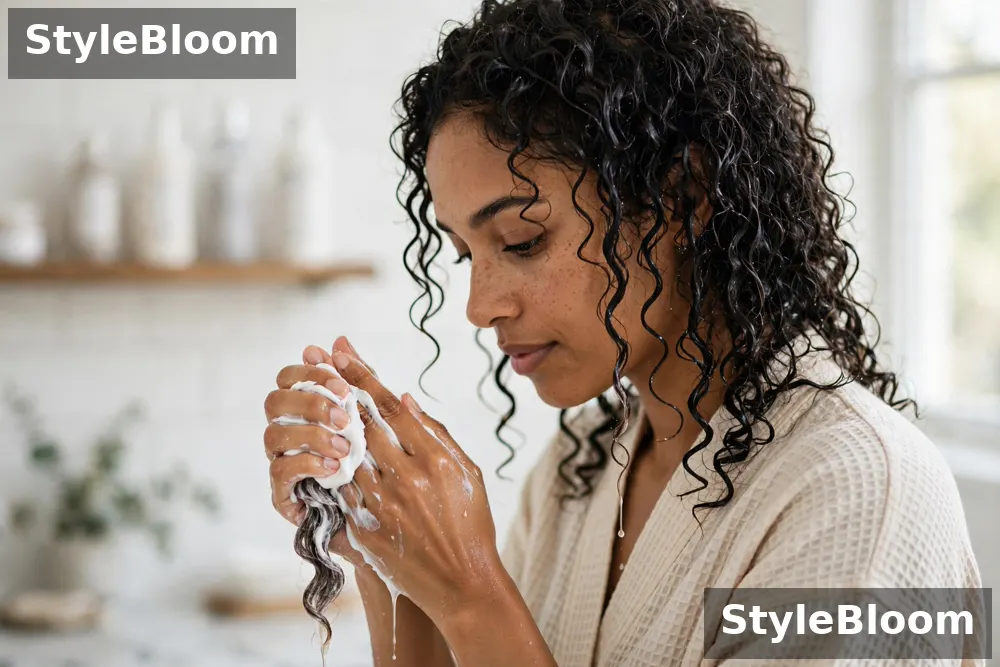
Illustration: cream worked through soaking-wet curls with praying hands — the application that decides whether a cream defines or weighs down.
As an Amazon Associate I earn from qualifying purchases. This guide contains affiliate links to Amazon search results, so you see live prices and stock before you buy. It costs you nothing extra, and it keeps StyleBloom free.
The direct answer: the best curl cream in the US is the one whose weight matches your hair — not the most expensive jar, and not the one with the most reviews. A curl cream moisturizes, encourages strands to clump into their natural pattern, and gives soft, touchable hold. It does not create curls where none exist, it does not replace gel when you need lasting hold in humidity, and it does not fix a routine that styles damp hair, brushes dry curls, or skips clarifying. Get the weight right, apply it to soaking wet hair, leave it alone until dry, and most creams in the table below will do their job. Get the weight wrong, and even the best-reviewed cream will leave fine hair limp or thick hair frizzy.
Prices in this guide were checked on 31 October 2026 at the US retailers named, and they will move — sales, sizes and stock change weekly, so check the listing before you buy. No product here was hands-on tested by StyleBloom, and this guide does not pretend otherwise: it is a research-based buying guide built from stylist guidance, current US listings, and the questions American buyers actually ask.
First win: Tonight, take one small section of wet hair after your shower, smooth a pea-sized amount of whatever cream you already own through it with praying hands, and leave it completely alone until it is dry. If that section looks more defined than the rest tomorrow, your problem was never the product — it was the application.
How we chose what counts
A curl cream guide is only as honest as its method, so here it is in full. First, US availability: every cream in the table is sold through a US retailer an American buyer can actually order from — no UK-only imports, no discontinued lines, no marketplace-only listings with a single third-party seller. Second, dated prices: each price carries the retailer it was seen at on 31 October 2026, Third, weight fit: each cream is placed by formula weight — light lotion, medium cream, rich cream or butter — Fourth, honest limits: where a product is a hybrid (a custard that behaves like a gel, a bond treatment that is not really a curl cream), the guide says so in the open rather than forcing it into a tidy category.
What this guide did not do matters just as much. Nobody at StyleBloom applied all fourteen creams to their own hair and compared the results, so there are no "we tested" claims and no ranked scores pretending to be measurements. Ingredient lists are discussed only at the level stylists actually use to predict performance — humectants like glycerin and aloe for moisture retention, emollients like shea butter, argan oil and coconut oil for smoothness and shine, proteins like hydrolyzed silk or keratin for breakage-prone strands, and film-forming polymers like polyquaternium for definition without crunch — and no ingredient is presented as a proven regrowth or repair agent, because none of them is.
What a curl cream actually does
Curl cream has one clear job, and understanding it prevents most bad purchases. It moisturizes the hair shaft, smooths the cuticle so strands clump into curls instead of separating into frizz, and gives soft, touchable hold — definition you can run your fingers through, not a set that crackles. If you want structure that survives a humid commute, that is gel's job. If you want volume and air, that is mousse's job. Cream sits between them, and it is the right tool exactly when softness matters more than structure.
On the hair itself, cream works by coating each strand with a thin layer of moisturizers and light hold agents while the hair is wet, so that as it dries, strands stay grouped in their natural clumps. The hold is deliberately light — enough to help the pattern set, never enough to freeze it. Anyone who has used a cream and found their curls soft but gone by lunchtime has not bought a bad cream; they have discovered the category's ceiling, and the fix is a gel layered on top, covered in the layering section below.
What cream does not do is equally specific. It does not change your curl pattern, tighten loose waves into ringlets, or create curls on straight hair — the next section takes that question head-on, because it is the most-searched curl cream question in the US and the most mis-sold. It does not repair damage in any structural sense; a cream can make damaged hair look and feel better for a day, which is genuinely useful, but it cannot rebuild the internal bonds that bleaching or heat broke —
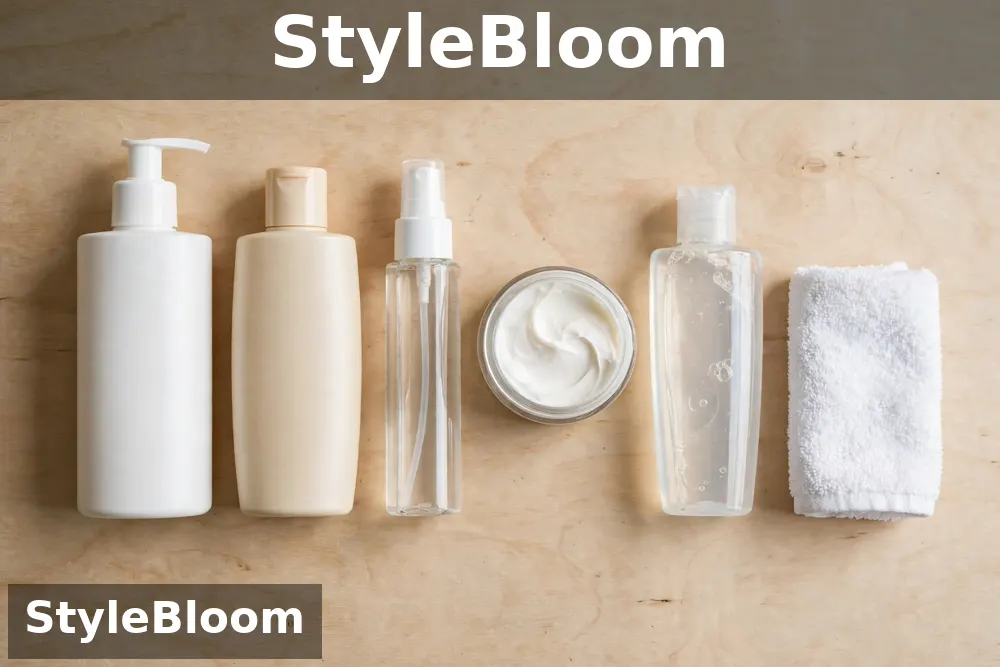
Will curl cream make straight hair curly?
No. Curl cream cannot make straight hair curly, and any product page or video that implies otherwise is selling a hope, not a result. The reason is physical, not a matter of finding a stronger formula: whether hair grows straight, wavy, curly or coily is decided by the shape of the follicle it grows from. A cream coats the strand that already exists — it can define, moisturize and hold a bend that is already there, but it cannot reshape the follicle, and it cannot rewrite the strand's structure from the outside. Every curl guide that answers this question directly lands in the same place, and the honest ones say it in the first paragraph rather than burying it below a buy button.
That "no" comes with a useful "but". If your hair is straight with a slight natural wave or bend — the hair that goes a little wavy at the ends on humid days, or holds a bend overnight after a braid — curl cream can enhance that existing texture into a soft, beachy wave, add body and movement to fine, limp hair, and smooth frizz and flyaways while adding shine. What it will never do, on truly straight hair, is produce ringlets, spirals or lasting curls on its own. Expecting that is how buyers end up calling a perfectly good cream "useless" when the mismatch was in the expectation, not the jar.
If real curls from straight hair are the goal, the honest route is a styling method plus the cream as a finisher, not the cream alone. Heat tools — a curling iron or wand — temporarily reshape the strand with heat; applying a small amount of cream afterwards reduces frizz and helps the set hold. Heat-free methods — rollers, hot rollers, braids or twists left in while the hair dries — create the shape mechanically, and cream helps it set and stay smooth. A light lotion, used sparingly, is the only sensible experiment — and if even that weighs you down, the product category simply is not for your hair, which is a fine answer to arrive at for the price of one small jar rather than a shelf of them.
Cream vs gel vs leave-in vs mousse
Four products sit side by side on the shelf, and most curl confusion starts here. The table below separates them by job, hold, and order of use — the three facts that decide a routine. Read it once and the rest of the guide gets simpler, because every later recommendation is just this table applied to a specific head of hair.
| Product | Main job | Hold | Best for | When to use |
|---|---|---|---|---|
| Leave-in conditioner | Moisture, slip, detangling | None to light | Dry or damaged curls; the base of every layered routine | After rinsing, on soaking-wet hair, before other products |
| Curl cream | Softness, definition, light hold | Light to medium | Dry, frizzy, thick or coily curls | On wet or damp hair, after leave-in |
| Gel (including curl jelly) | Hold, frizz control, longer-lasting definition | Medium to strong | Curls needing definition, humidity protection and longevity | Last step on damp hair |
| Mousse / foam | Volume, light hold | Light to medium | Fine or wavy curls needing body | On damp hair, before or instead of gel |
The order in the last column is not a suggestion — it is the physics of the routine. Water-based products go first, creams second, hold last, and oil only at the very end, in a few drops, once the hair is dry. The two standard layering methods follow directly: LCG — leave-in, cream, gel — suits fine curls, low-porosity hair and humid days, because it prioritizes definition over deep sealing; LOC — leave-in, oil, cream — suits thick, high-porosity or very dry curls, because it prioritizes sealing moisture in.
Whether cream can replace gel or mousse depends entirely on the goal, and stylists answer it the same way: for soft, natural curls with movement, cream alone is completely sufficient, and adding gel would only stiffen a result you already like. For hold that lasts through a humid day, a long commute or a workout, cream alone will fade — layer a curl defining gel on top while the cream is still wet, and you get cream's softness with gel's structure, which many curl stylists consider the gold standard combination.
Choose by pattern, porosity and weight
Two things decide which cream suits you: your curl pattern and your porosity. Pattern is the shape — loose waves (2A to 2C), springy curls (3A to 3C), and tight coils (4A to 4C). Porosity is how easily your hair absorbs and loses moisture, and it matters more than pattern when you are choosing product weight. Two people with the same curl pattern can need completely different creams if one has low porosity and the other has high porosity, and the table below is built on that fact rather than on pattern alone.
| Your hair | Cream weight | Why | Start here |
|---|---|---|---|
| Waves 2A–2C, fine or low porosity | Light lotion | Anything heavier flattens the wave by midday | OUAI Curl Crème; Living Proof Curl Definer |
| Waves 2A–2C, thick or high porosity | Light to medium cream | Needs more moisture than fine waves, still little weight tolerance | Bumble and bumble Curl Light Defining Cream; Rizos Curls |
| Curls 3A–3C, low porosity | Light to medium cream, thin layers | Product sits on the surface; warmth helps it in | Rizos Curls; Briogeo Curl Charisma |
| Curls 3A–3C, medium porosity | Medium cream | The most forgiving combination; most standard creams work | Rizos Curls; Not Your Mother's Curl Talk |
| Curls 3A–3C, high porosity | Medium to rich cream | Absorbs fast, loses moisture fast; needs substance | Moroccanoil Curl Defining Cream; Mielle Avocado & Tamanu |
| Coils 4A–4C | Rich cream or butter | Needs the heaviest moisture and stretch; light creams vanish | PATTERN Styling Cream; TPH Twist & Set; Cantu Activator |
Low porosity hair has a tightly closed cuticle. Water beads on it, it takes a long time to get fully wet, and products tend to sit on top rather than sink in. If your hair often feels coated, or a rich cream leaves it limp and greasy, low porosity is the likely reason. High porosity hair absorbs water fast and loses it just as fast. It dries quickly, frizzes easily, and drinks up heavy creams without looking weighed down. It often comes from colouring, heat damage, or simply genetics. The fix is richer leave-ins and creams, sealing with a light oil on the ends, and a stronger gel to hold moisture in. Medium porosity sits between the two and is the most forgiving: most standard curl products work, and the routine in this guide fits as written.
A word about the famous float test, where you drop a strand in a glass of water. Treat it as a hint, not a diagnosis. Better signs: how long your hair takes to get soaking wet in the shower, how long it takes to dry, and whether products vanish into it or sit on the surface. The rule of thumb holds at every pattern: fine or low-density hair wants light layers; thick or high-density hair wants more product, worked through in sections, so the underneath layers are not missed.
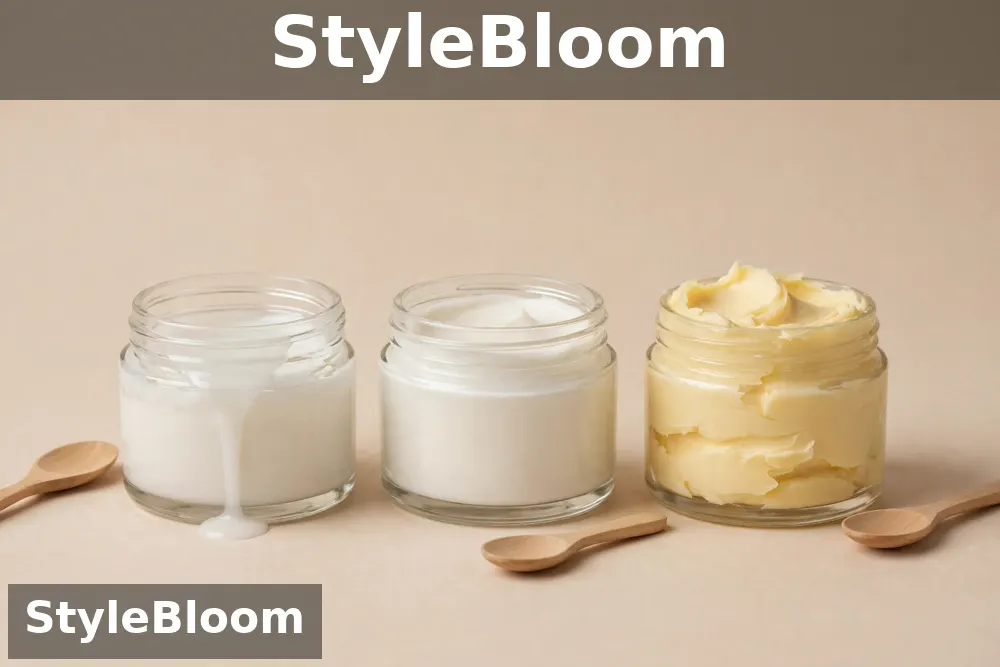
Comparison table: 14 creams, dated US prices
Every price below was checked on 31 October 2026 at the US retailer named. "Weight" is the formula's feel on the hair, which matters more than any marketing word on the jar. Amazon links in this guide go to search results for the named product, so you can compare current options and prices yourself; the table itself carries no links, so the prices stay readable at a glance. To compare the wider shelf beyond these fourteen, start from a curl cream search and filter by the weight your pattern and porosity ask for.
| Product | Price checked 31 Oct 2026 | Weight | Best for | Honest limit |
|---|---|---|---|---|
| Rizos Curls Curl Defining Cream, 10 oz | $18.40 at rizoscurls.com; $22.99 at Target; $24 via Parade/Amazon | Medium | Most curl types; best overall versatility | Price varies a lot by retailer — check before buying |
| Not Your Mother's Curl Talk Defining Cream | From $5.50 at CVS; 6 oz fragrance-free $8.79 at Target | Light–medium | Beginners; budget routines; 3A–3C | May not hold dense type 4 coils or heavy humidity alone |
| Cantu Shea Butter Moisturizing Curl Activator Cream, 12 oz | $4.99 at Target (was $5.99); $4.97 at Walmart | Rich | Type 3–4 curls and coils on a budget | Too heavy for fine waves; can build up without clarifying |
| Moroccanoil Curl Defining Cream, 8.5 oz | $36.00 at US retailers; 2.53 oz travel size $16.00 at Sephora | Medium–rich | Thick, dry or high-porosity curls | Premium price; argan scent is strong for some |
| OUAI Curl Crème | $30.00 via Parade/Amazon | Light | Fine curls that flatten under weight | Too light for thick or coily hair on its own |
| Mielle Avocado & Tamanu Anti-Frizz Curl Perfector | $14.00 via Parade/Amazon | Rich | Coily hair; frizz in humidity | Avocado oil richness overwhelms fine hair |
| TPH by Taraji Twist & Set Moisture Rich Twisting Cream | $13.00 via Parade/Amazon | Rich | Thick curly hair; twist-outs | Twisting-cream texture; not a wash-and-go lotion |
| Kinky-Curly Curling Custard | $23.00 at Target | Medium (custard/gel hybrid) | Frizz control; humid climates | Behaves more like a gel; can feel coated if over-applied |
| Briogeo Curl Charisma Leave-In Defining Cream | $12.00 via Parade/Amazon | Light–medium | Hydration; elasticity; dry curls | Leave-in hybrid — pair with gel for real hold |
| Mizani True Textures Curl Define Pudding | $26.00 via Parade/Amazon | Medium (pudding) | Wash-and-go routines; one-product mornings | Pudding texture suits some patterns and confuses others |
| Olaplex No. 6 Bond Smoother | $22.00 via Parade/Amazon | Light–medium | Damaged, bleached or heat-stressed curls | A bond treatment, not a curl cream — use with cream, not instead of it |
| Bumble and bumble Curl Light Defining Cream | $32.00 via Parade/Amazon; $37.00 at Sephora US | Light | Wavy hair that needs movement, not structure | Price varies by retailer; too light for coils |
| Living Proof Curl Definer | $38.00 via Parade/Amazon | Very light | Fine or low-porosity curls; build-up-prone hair | Highest price here; definition is deliberately soft |
| PATTERN Styling Cream (Tracee Ellis Ross) | $29.00 via Parade/Amazon | Rich (buttercream) | Curly and coily hair; definition with softness | Rich enough to flatten fine waves; a little goes far |
The creams, reviewed
Eight creams get a full write-up below — the ones that anchor the table's lanes. The other six are covered in the "six more" section that follows, Each review states who the cream suits, what weight it is, what it costs, and where it falls short.
Rizos Curls Curl Defining Cream — the versatile middle
Rizos Curls Curl Defining Cream is a medium-weight cream that gives definition, moisture and shine without weighing hair down — the balance that makes it usable from loose 2C waves through 3C curls, and the reason it is the "best overall" pick in the year's most-cited stylist roundup. The honest limits are the price spread — $18.40 direct from the brand against $22.99 at Target and $24 through Amazon listings on the same day, so the listing you click decides what you pay — and the fact that very tight coils and very fine waves both sit at the edges of its range: coils may want something richer, fine waves something lighter. For medium-porosity 3A–3C hair, it is the default recommendation of this guide, and the cream the rest of the table is measured against.
Not Your Mother's Curl Talk Defining Cream — the budget proof
The cheapest credible cream in the table is also one of the most recommended, which is the point. Not Your Mother's Curl Talk Defining Cream costs from $5.50 at CVS, with the 6 oz fragrance-free version at $8.79 at Target, and two stylists in the year's roundup picked it independently — Its limits are real and stated plainly: for dense type 4 coils or heavy humidity, its hold and hydration may not go far enough on their own, and it is best layered under a gel in those conditions. But as proof that the category works before you spend more, nothing in the table beats it.
Cantu Shea Butter Moisturizing Curl Activator Cream — the drugstore heavyweight
Cantu Shea Butter Moisturizing Curl Activator Cream is the 12 oz jar that has defined type 3 and type 4 curls for a generation of buyers at $4.99 at Target (reduced from $5.99) and $4.97 at Walmart. The shea-butter formula lengthens, defines and softens, It is a rich cream, and it behaves like one: superb on thick, dry, coily hair that drinks up heavy formulas, flattening and greasy on fine waves, and prone to build-up if the clarifying wash every two to four weeks is skipped. For coils on a budget, it is the value pick of the whole table; for fine hair, it is the pick to skip, however tempting the price.
Moroccanoil Curl Defining Cream — the rich classic
Moroccanoil Curl Defining Cream is the argan-oil classic that stylists reach for when hair needs richness with polish: $36.00 for 8.5 oz at US retailers, with a 2.53 oz travel size at $16.00 at Sephora for anyone who wants to test it before committing. It conditions while it defines, gives soft hold with 48-hour definition claimed by the brand, and suits thick, dry or high-porosity curls that absorb lighter creams without noticing them. The honest limits: it is a premium price for a job a $14 cream also does well on many heads,
OUAI Curl Crème — the fine-hair answer
Fine curls have one enemy above all others: weight. OUAI Curl Crème at $30.00 is the light cream stylists pick specifically because it defines without flattening — It suits 2B–3A hair, low-porosity curls, and anyone whose curls look good at 9 a.m. and gone by lunch. Its limit is the mirror of its strength: thick, coarse or coily hair will find it too light on its own, and it needs a gel partner in humidity.
Mielle Avocado & Tamanu Anti-Frizz Curl Perfector — the coil moisturizer
For tighter curl patterns, moisture is the whole game, and Mielle Avocado & Tamanu Anti-Frizz Curl Perfector at $14.00 delivers it with definition and stretch: stylists praise how it moisturizes deeply, defines strongly, and stretches tighter patterns without heavy residue. Fine and wavy buyers should skip it; the richness that coils absorb will sit on their hair and flatten it.
Kinky-Curly Curling Custard — the frizz specialist that behaves like a gel
Kinky-Curly Curling Custard at $23.00 at Target is included with a warning label it earns: this is a custard, and custards behave more like gels than creams. For buyers who want soft, touchable, cream-only results, it can feel coated or gel-like, especially if over-applied. Treat it as a cream-and-gel in one: if you use it, you may not need a separate gel, and if you layer gel over it as well, you may get crunch where you wanted softness.
PATTERN Styling Cream — the rich buttercream
PATTERN Styling Cream, from Tracee Ellis Ross's line built for curly, coily and tight-textured hair, is a $29.00 buttercream — shea butter, cacao butter, cacay and sweet almond oils — that gives shiny, defined curls with a soft, touchable finish. For 3C–4C hair that wants definition without a gel cast, it is the premium pick of the table; for everyone else, it is proof that "rich" is a texture description, not a quality grade.
Six more that made the table
Briogeo Curl Charisma Leave-In Defining Cream ($12.00) is the hydration pick: a leave-in hybrid that improves elasticity — curls that spring back instead of stretching limp — and suits dry, brittle curls, TPH by Taraji Twist & Set ($13.00) is a rich twisting cream for thick hair and twist-outs, not a wash-and-go lotion, Mizani True Textures Curl Define Pudding ($26.00) is the wash-and-go pick for low-maintenance mornings — definition with enough hold in one step Olaplex No. 6 Bond Smoother ($22.00) is not a curl cream at all and is labelled as such: it works on the internal bond structure of damaged, bleached or heat-stressed hair, strengthening while it defines, and it belongs under or over a real cream rather than instead of one. Bumble and bumble Curl Light Defining Cream ($32.00 via Parade/Amazon, $37.00 at Sephora US) is the wavy-hair specialist — very light, enhancing waves without weight Living Proof Curl Definer ($38.00) is the lightest formula here, genuinely airy, defining without build-up for fine or low-porosity curls that reject heavier products — the most expensive jar in the table, and the right one only when lightness is the entire problem.
How much cream, and how to apply it
Amount is where most cream routines fail, and the rule is simpler than the internet makes it: start with less than you think you need. A pea-sized amount per section for short or fine hair, a coin-sized amount per section for medium or thick hair, worked through in four to six sections so the underneath layers are not missed.
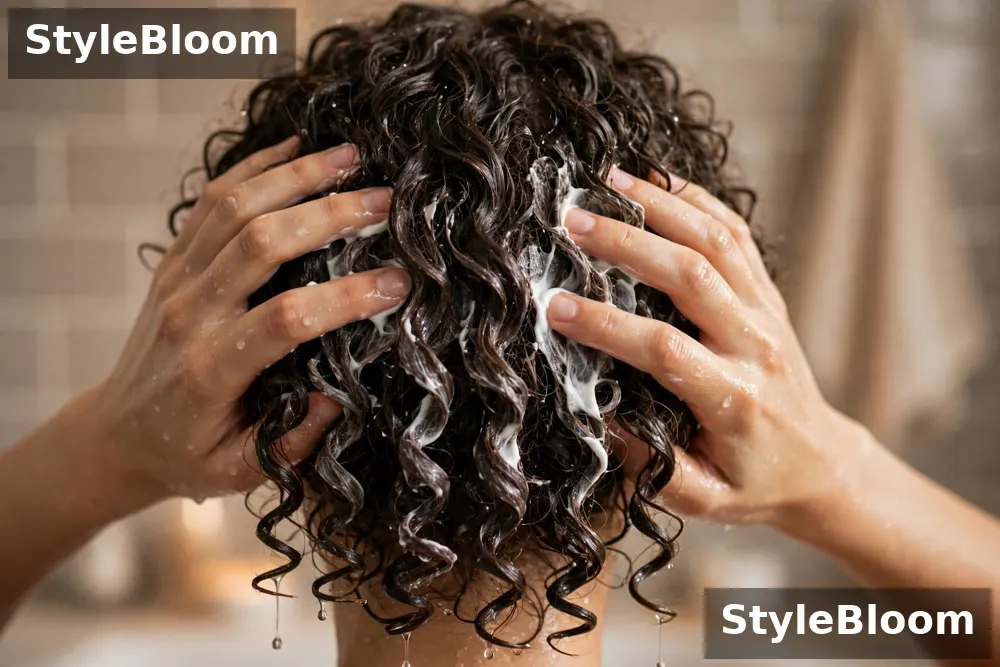
Application order is the second half of the technique, and it is not optional folklore. Work on soaking wet hair — dripping, not damp — because cream needs water to distribute evenly and to help clumps form; styling on damp hair is the number one cause of frizz that no product can fix afterwards, and a spray bottle in the other hand fixes it mid-routine. Then apply cream with praying hands: palms pressed together around each section, smoothing from root to tip, so the product coats evenly without breaking clumps apart. Follow with scrunching upwards to encourage the curl shape, then — if you are layering — gel over the top while everything is still wet, using the same praying-hands motion. Then leave the hair completely alone. Air-dry if you have time, or diffuse on low airflow and low-to-medium heat, cupping sections gently. Keep your hands off until the hair is one hundred percent dry, then scrunch out any gel cast. Touching, scrunching or brushing before it is dry breaks the set early and invites frizz back in, and patience here is worth more than any product upgrade.
Two application details separate good wash days from great ones. Second, water: if the hair starts drying while you style, re-wet it. A microfibre hair towel or an old cotton T-shirt for scrunching afterwards removes water without the friction of a rough bath towel, which breaks clumps and raises the cuticle. Rubbing with a terry towel is the single most common mechanical cause of a bad curl day after dry-brushing, and it is entirely avoidable.
Refresh days without rewashing
Most curls do not need daily washing, and daily washing is one of the fastest routes to dryness. Refreshing is how you stretch a wash day across the week, and cream plays a smaller, more precise role here than on wash day itself. Mist only the sections that need help, using a spray bottle of water from about eight to twelve inches away. You want lightly damp hair, not saturated strands.

Smooth fuzzy sections with flat palms, then add a pea-sized amount of leave-in or cream, emulsified between wet hands, using praying hands or light scrunching. Reshape individual curls by finger-coiling stretched pieces in their natural direction. Then — again — leave it alone until dry. Knowing when to restyle instead of refresh saves a lot of frustration, and a restyle day is not a failure — it is part of the routine.
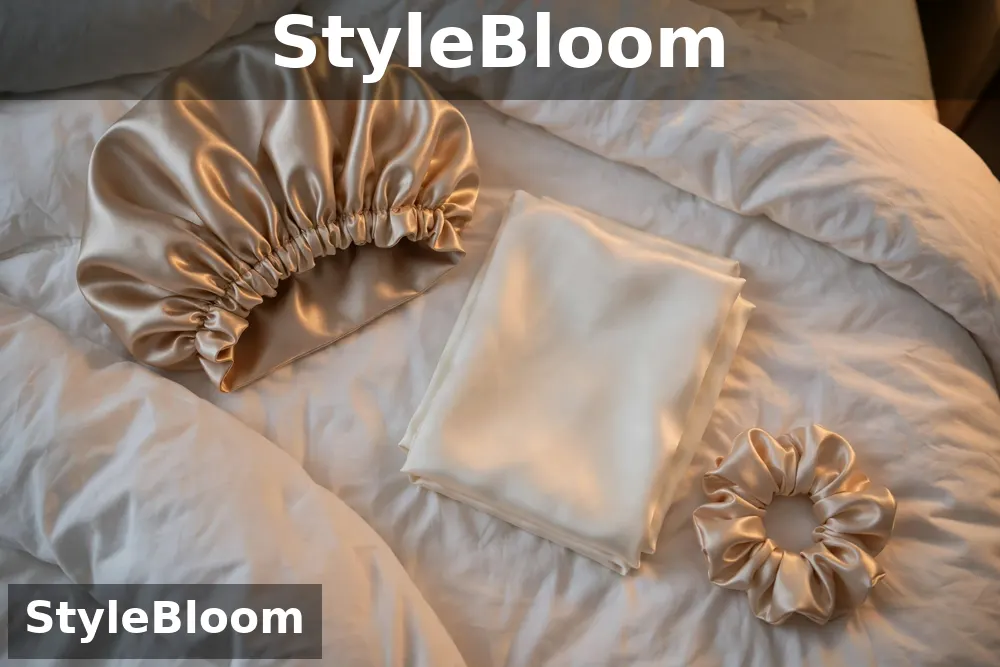
Night is where good wash days go to die, and the fix is simple. Gather the hair loosely on top of the head — the pineapple — with a silk scrunchie, or use a satin bonnet if your hair is long or you move a lot in your sleep. Sleep on a silk or satin pillowcase, which cuts the friction that a cotton case creates. The principle is the same at any length — less friction, less flattening, and no tight elastic pulling curls straight overnight.
Eight frizz mistakes and their fixes
1. Styling on damp hair. Fix: style on soaking wet hair, and re-wet with a spray bottle if it starts drying mid-routine.
2. Brushing dry curls. Fix: detangle only when wet and slippery, with fingers or a wide-tooth comb.
3. Skipping gel in humidity. Fix: add a gel after cream when the forecast or your climate demands hold.
4. Touching curls while they dry. Fix: hands off until one hundred percent dry, then scrunch out the cast.
5. Oil before water-based products. Fix: water, then leave-in, then cream, then hold, then oil last in a few drops on the ends.
6. Over-washing. Fix: stretch washes with refresh days, and wash on a schedule that fits your porosity rather than the calendar.
7. Heavy products on fine hair. Fix: lighter layers, smaller amounts, and butters kept for the ends only if at all.
8. Never clarifying. Fix: a clarifying wash every two to four weeks, followed by a deep conditioner, to clear the residue that makes good products stop working.
Protein vs moisture: reading the signs
Curls need both protein and moisture, and the balance shifts over time. Too much moisture makes curls limp, stretchy and unable to hold shape. Too much protein makes them stiff, brittle and prone to snapping. Most people swing between the two without realising, because the symptoms overlap with ordinary dryness, and the fix for each is the opposite of the fix for the other — which is why guessing wastes washes.
Signs of moisture overload: curls that stretch without springing back, hair that feels mushy when wet, and styles that drop within hours. Fix: a protein-containing mask or treatment, lighter leave-ins for a wash or two, and less heavy cream. Signs of protein overload: hair that feels straw-like, snaps easily, and looks dull despite conditioning. Fix: stop protein products for a few washes, use a rich moisture mask, and let the balance come back gradually.
US climate, humidity and hard water
American weather is not one climate, and cream choice should follow the zip code, not the national average. The Gulf Coast, Florida and the humid Southeast punish soft hold: damp air swells the hair shaft and breaks curl clumps apart, which is exactly why gel layered over cream matters more in Houston or Miami than in Denver.
Hard water is the quieter American variable, and it varies county by county rather than state by state. Mineral build-up from hard water can leave curls dull, coated and unresponsive to products that used to work — the classic sign is a routine that "suddenly stopped responding" with no product changed. A clarifying wash every two to four weeks, followed by a deep conditioner, clears it, and if your area is known for hard water, keep the clarifying wash at the more frequent end of that range rather than letting it slide.
Skip if: who should not buy what
Skip heavy butters and rich creams if you have fine waves — they will flatten your pattern by lunchtime, and a light lotion plus mousse will serve you better. Skip co-washing as your only wash if your scalp itches or your curls go flat — that is build-up, and you need a real shampoo. Skip a new product every week; changing one thing at a time is how you learn what your hair actually likes, and a shelf of half-used jars teaches nothing.
Budget tiers and your starter plan
Price is the question every curly buyer asks, and the honest answer is uncomfortable for both ends of the market: price does not predict performance. Some supermarket curl creams outperform premium ones on definition, and some premium shampoos and creams are worth their price for fragrance, texture and a better wash experience rather than for any measurable curl improvement. What you are mostly paying for at the premium end is nicer ingredient lists, better scents, prettier packaging, and smaller production runs — not a different curl outcome.
Under $10: learn the category. Cantu Activator Cream at $4.99 and Not Your Mother's Curl Talk from $5.50 cover rich and light-to-medium weights between them, and either one teaches you amounts, application and refresh technique for the price of two coffees. If your budget only stretches to three products, buy a gentle sulfate-free shampoo, one good conditioner, and one of these two creams. Use the conditioner as a leave-in in a small amount on your first washes, and add a dedicated leave-in and gel in week two.
$10–$25: the working range. Briogeo ($12.00), TPH ($13.00), Mielle ($14.00), Rizos Curls ($18.40 direct), Olaplex No. 6 ($22.00) and Kinky-Curly ($23.00) sit here, and most American curls will find their long-term cream in this band. $25 and up: pay for a specific problem. Mizani ($26.00), PATTERN ($29.00), OUAI ($30.00), Bumble and bumble ($32.00–$37.00), Moroccanoil ($36.00) and Living Proof ($38.00) earn their prices only when they solve a named problem — extreme lightness, coil-specific richness, damage repair, or wave-specific movement. Buying premium before naming the problem is how shelves fill with half-used jars.
Keep a simple note after each wash: what you used, how much, and how the hair looked on day one and day two. After three washes you will have a personal answer to every question in this guide — your amount, your hold strength, your wash frequency — and that answer will be worth more than any list of recommendations, including this one.
- Cream weight matters more than brand: light lotion for fine waves, medium cream for classic curls, rich cream or butter for coils.
- No cream creates curls on straight hair — it enhances the pattern that already exists, and finishes heat- or roller-created curls.
- Apply to soaking wet hair, in sections, with praying hands; leave it alone until fully dry.
- Layer leave-in, then cream, then gel; oil goes last, in a few drops, on dry ends only.
- Clarify every two to four weeks, refresh instead of rewashing, and judge every change after three washes.
After you buy: the first three washes
Wash one is for learning amounts, not for judging the cream. Use the starting amounts in the application section, style on soaking wet hair, and note what happened: how much you used per section, how long the hair took to dry, and how it looked at lunchtime and at bedtime.
After the first three washes, the routine settles into a rhythm: wash on your porosity schedule, refresh on the days between, clarify every two to four weeks, protect at night, and re-check the routine when the seasons change or the water changes.
Frequently asked questions
- Does curl cream make straight hair curly?
- No. Curl cream enhances the curl or wave pattern your hair already has; it cannot change the follicle shape that decides whether hair grows straight, wavy or curly. On straight hair it can add moisture, frizz control, shine and a little texture, and it can finish curls created with heat tools or rollers — but it will not create ringlets on its own.
- What does curl cream do that gel does not?
- Cream gives moisture, softness and definition with light, touchable hold. Gel gives structure and lasting hold, drying into a cast you scrunch out once the hair is dry. Cream is the right tool when softness matters more than structure; gel is the right tool when hold must survive humidity and a long day.
- Do I need both curl cream and gel?
- Not always. For soft, natural curls with movement, cream alone is enough. For hold that lasts through humidity, add a gel on top while the cream is still wet. Try cream alone for one wash, then cream plus gel on the next, and keep whichever result you prefer.
- Should I use leave-in conditioner before curl cream?
- Yes, for most curls. Leave-in goes first on soaking wet hair as the moisture base, then cream for shaping, then gel for hold. Skipping the leave-in and going straight to cream is a common reason curls end up under-moisturized by evening.
- How much curl cream should I use?
- Start with less than you think: a pea-sized amount per section for short or fine hair, a coin-sized amount per section for medium or thick hair, in four to six sections. Limp by lunchtime means too much or too heavy; frizz within an hour means too little or too light.
- Should I apply curl cream to wet or damp hair?
- Soaking wet hair. Cream needs water to distribute evenly and help clumps form. Styling on damp hair is the most common application mistake, and no product fixes it afterwards — re-wet with a spray bottle if the hair starts drying mid-routine.
- Can I use curl cream every day?
- On wash days, yes. On refresh days, use water first and only a pea-sized trace of product between wet hands — daily full-strength cream without water builds up fast and leaves hair coated. A clarifying wash every two to four weeks keeps the balance.
- Why does my hair feel greasy or limp after curl cream?
- Usually too much product, too heavy a formula, or both — most often on fine or low-porosity hair. Use less, switch one step lighter in weight, and apply in thinner layers to very wet hair. If richness sits on the surface instead of absorbing, low porosity is the likely reason.
- Can curl cream cause build-up?
- Yes, like any styler. Creams, gels and hard water all leave residue that a gentle shampoo cannot shift. A clarifying wash every two to four weeks, followed by a deep conditioner, clears it. Curls that suddenly stop responding to products that used to work are usually asking for a clarifying wash.
- Is curl cream good for wavy hair?
- Yes, with the right weight. Wavy hair needs a light lotion or light cream — heavy butters flatten waves by midday. Start with a lightweight formula, use a small amount, and consider mousse instead of gel if volume matters more than definition.
- What is the best curl cream for fine hair?
- A lightweight cream that defines without weight: OUAI Curl Crème and Living Proof Curl Definer are the table's fine-hair picks. Apply thin layers to very wet hair, keep butters away from the roots, and layer mousse rather than heavy gel when you need lift.
- Does curl cream work on coily 4C hair?
- Yes — coils are where rich creams earn their keep. Use a rich cream or butter, worked through in sections, with a gel layered on top for hold. Light creams vanish into coily hair without defining it, so start rich: PATTERN Styling Cream, TPH Twist & Set, Cantu Activator or Mielle Avocado & Tamanu.
- Can I use curl cream on color-treated hair?
- Yes. Colouring raises porosity, so coloured curls usually need a richer cream and a weekly mask kept up. If your curls changed after colouring, the hair itself changed — get richer to match, and protect coloured curls from sun with a hat or scarf.
- How long should I try a new curl cream before judging it?
- Three full washes. Old build-up needs to wash out first, and you need time to learn the right amount. Change one thing at a time across those washes — amount, layering or weight — so you know what actually helped.
- Can I use curl cream on dry hair to refresh curls?
- Only a trace, and only on dampened hair. Mist the section with water first, then smooth a pea-sized amount between wet hands over it with praying hands or light scrunching, and leave it alone until dry again. Full-strength cream on dry hair coats rather than defines.