SEESE Pressure Washer: Is It the Right One for Home Cleaning?
Published October 28, 2026 · StyleBloom Home Cleaning Guide
Direct answer: If your jobs are washing the car, cleaning the patio, freshening patio furniture, washing a deck, and tackling a normal driveway, a mid-size electric pressure washer is the right class of machine for most homes — and right now, SEESE is the name suddenly surging in that class. A Kalodata estimate (TikTok US, last 7 days, window October 20–26, 2026) puts the SEESE pressure washer at roughly $420,700 in estimated revenue, up about 35.5% over the previous 7 days and about 33% over 30 days. That is an estimate for direction only, not verified sales. And here is the honest part: a trend is not a review. I have not verified the actual SEESE listing's specs, price, or reviews for this guide, so treat this article as the buying guide that helps you choose the right machine and check the listing properly — not as a claim that one specific model is the best.
Why SEESE is suddenly trending
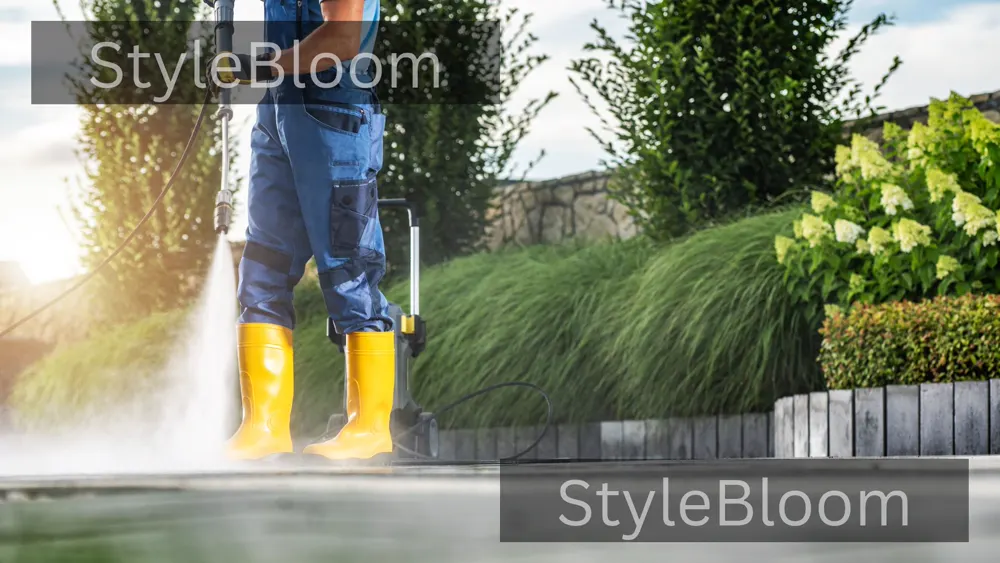
Every few weeks, a home-cleaning product jumps on TikTok Shop, and this week it is the SEESE pressure washer. The Kalodata estimate I mentioned above — roughly $420,700 in estimated revenue in the last 7 days, up about 35.5% week over week and about 33% over 30 days — tells us that a lot of people are buying, or at least a lot of sellers are selling, in a short window. Estimates like this are useful for spotting momentum. They are not proof of quality, durability, or value, and they say nothing about whether the machine suits your driveway, your outlet situation, or your storage space.
So why do pressure washers trend at all in late October? Think about the season. Fall leaves are down, gutters are full, patios are stained from a summer of use, and the driveway has had months of tire marks, oil drips, and mildew building up. A lot of people look at the outside of their home in October and think, "this needs one good clean before winter." A pressure washer promises exactly that: a fast, satisfying reset. The videos that drive the trend show the satisfying part — a dirty patch turning clean in seconds. What the videos rarely show is the setup, the hose management, the nozzle choice, and the cleanup. This guide covers all of that, because the unglamorous parts are what decide whether you love the machine or leave it in the garage.
If you are here because you saw a SEESE video, start with the decision guide below, then read the listing checklist near the end before you spend anything. If you are here because you just want a clean driveway and patio, the same guide applies — the brand matters less than matching the machine to your jobs.
Search SEESE pressure washers on Amazon — check the listing's real specs, included accessories, and current price before deciding.
Comparison: match the job to the machine
Most buying guides start with a list of products. This one starts with your jobs, because the job decides the machine. The table below reflects the broad consensus across the major buying guides: light-duty machines for cars and furniture, medium-duty for decks and patios, and heavier machines for large or badly stained concrete. Use it to find your row before you look at any product page.
| Your main job | Machine class to look at | What matters most |
|---|---|---|
| Washing the car, bikes, patio furniture | Light-duty electric | Gentle nozzle, foam option, easy storage |
| Patio, deck, fence, siding | Mid-size electric | Balanced pressure and flow, longer hose |
| Normal concrete driveway, walkways | Mid-size electric or medium gas | Flow rate (GPM) and a surface cleaner |
| Large driveway, heavily stained concrete, paint stripping | Medium to heavy gas | High flow, durability, and time — this is slow work |
| Everything, but only a few times a year | Rent first, or mid-size electric | Whether ownership earns its storage space |
The single biggest insight from the comparison is that most homeowners overbuy. A machine built for stripping paint off a barn will clean a patio, but it will also chew up soft wood, blast mortar out of joints, and scare you every time you point it at the car. The right machine is the smallest one that handles your toughest regular job comfortably — not the biggest one you can afford.
The 60-second decision guide
Answer these five questions in order, and the right class of machine usually picks itself:
1. Where is your nearest outdoor outlet, and how far is the farthest thing you will wash? Electric machines are cord-limited. If your driveway is far from any outlet, or you plan to wash a fence at the back of a large lot, measure the distance before you buy. A long hose helps, but the power cord is the real limit. If the answer is "too far," you are looking at gas or battery — or at washing in sections.
2. What is the single toughest job you will do regularly? Not the job you dream about once, but the one you will actually do twice a year. Car washing points to light-duty. Patio and deck point to mid-size electric. A big stained driveway points to higher flow and possibly gas. Buy for the regular job, and rent for the once-in-five-years job.
3. Where will it live? A pressure washer needs dry, frost-free storage with room for the hose, lance, and nozzles. If your only storage is a small shed or a balcony closet, a compact electric unit you can carry with one hand is a very different purchase from a heavy gas machine on wheels. Be honest about this one — a machine that is hard to get out is a machine that stays put.
4. How much noise and maintenance will you tolerate? Electric machines start with a switch, run quietly, and need almost no engine care. Gas machines are louder, need fuel care, oil changes, and winterizing, and they produce exhaust, so they never run in a garage. If you hate small-engine maintenance, that alone settles it: go electric.
5. How often will you really use it? Twice a month in summer is ownership territory. Twice a year is the grey zone where renting, borrowing, or hiring deserves a real look — see the rent-vs-buy section below before you decide.
Notice what is not on this list: brand, color, and the biggest PSI number on the box. Those come later, after the class is settled.
PSI, GPM, and cleaning units, explained plainly
Three numbers dominate every pressure washer box, and only two of them matter for your decision. PSI (pounds per square inch) is the pressure — how hard the water hits. GPM (gallons per minute) is the flow — how much water arrives. Cleaning units are PSI multiplied by GPM, and they are the best single-number rough guide to how fast a machine actually cleans, because pressure loosens dirt and flow carries it away.
Here is why that matters in real life. A machine rated at 3,000 PSI but only 1.1 GPM can clean slower than a machine rated at 2,500 PSI and 2.0 GPM, because the second machine rinses dirt away twice as fast. Shoppers who buy on PSI alone often end up with a slow machine that feels powerful but takes all afternoon on a driveway. When you compare two machines, compare cleaning units first, then check the separate PSI and GPM to make sure neither is wildly out of balance for your surfaces.
The buying guides broadly agree on these ranges for home use, and they are a good starting map. Light-duty machines, roughly 1,300 to 1,900 PSI, suit cars, outdoor furniture, and small patios. Medium-duty machines, roughly 1,900 to 2,800 PSI, cover decks, fences, siding, and normal driveways. Heavy-duty machines, roughly 2,800 PSI and up with higher flow, are for large concrete areas, heavy stains, and paint stripping. These are guide ranges, not rules for any single product — always check the specific listing, and remember that many listings quote maximum figures rather than the sustained figures you get during normal use.
One more plain-English warning: more pressure is not always better. The same jet that lifts mildew off concrete can gouge soft wood, strip paint you wanted to keep, cut skin, and force water behind siding. The nozzle and your distance from the surface control the real pressure on the surface far more than the number on the box. Start gentle, test a hidden spot, and only step up if the surface is unharmed and still dirty.
Electric vs gas vs battery
| Electric (corded) | Gas | Battery | |
|---|---|---|---|
| Best for | Most homes: cars, patios, decks, normal driveways | Large areas, heavy stains, far from outlets | Small jobs far from an outlet |
| Starting | Switch on, instant | Pull-start, fuel, choke | Switch on, instant |
| Noise | Quieter | Loudest | Quiet |
| Maintenance | Pump care only, mostly | Oil, fuel, filters, spark plug, winterizing | Battery care, shorter run time |
| Range | Limited by power cord | Goes anywhere | Limited by battery |
| Storage | Compact, indoors fine | Needs ventilation, fuel rules | Compact |
For a first pressure washer, the honest default is a corded electric machine. It is quieter, cheaper to run, easier to store, and strong enough for the jobs most people actually do. Gas earns its keep when you regularly clean large areas or work far from power, and when you are willing to maintain a small engine. Battery machines are convenient for quick jobs, but run time and flow usually limit them to lighter work — check the run time on a full charge before you count on one for a whole driveway.
Browse electric pressure washers on Amazon and browse gas pressure washers on Amazon to compare the classes side by side.
What the top guides cover — and what they miss
Before writing this guide, I read the top-ranking pressure washer guides — the big buying guides from home-improvement retailers, the tested-pick roundups, and the PSI/GPM explainers. They are genuinely useful on the basics, and this guide agrees with them on the core facts: cleaning units beat PSI alone, electric suits most homes, and flow rate decides how long a driveway takes. If you only read one thing, their PSI ranges will steer you right.
But they also share the same blind spots, and those blind spots are where buyers actually get hurt or waste money. Here is what I found missing, and what this guide adds to cover it:
1. No first-use workflow. The top guides tell you what to buy, then stop. Nobody walks you through your first Saturday: setup, test spot, nozzle order, soap, rinse, and pack-away. That section is below, because the first use is when most damage and most frustration happen.
2. No rent-vs-buy math. Every guide assumes you should buy. None of them ask whether twice-a-year use earns the purchase, the storage, and the maintenance. The honest math is below.
3. Thin damage warnings. Most guides mention "be careful on wood" in one line. They rarely list everything you should never point a jet at: soft wood, loose mortar, old windows, car paint at close range, roof shingles, air-conditioning fins, and people or pets. The full list is below, and it deserves more than a line.
4. No detergent and plant safety. Soap choice matters: the wrong detergent kills plants, harms pets, and can damage the pump if it is not rated for pressure washers. Almost no top guide covers this properly.
5. No storage and winter plan. A pressure washer that freezes with water in the pump can crack. Winterizing takes minutes and saves the machine, yet it is usually an afterthought.
6. No small-home reality. Townhouse patios, shared driveways, and apartment balconies have their own constraints — outlet access, water access, noise rules, and drainage. The guides assume a suburban house with a garage. The small-home section below does not.
If a guide you are reading skips all six, it is a shopping list, not a buying guide. Use it for product names, then come back here for the parts that protect your home and your money.
What you should NOT pressure wash
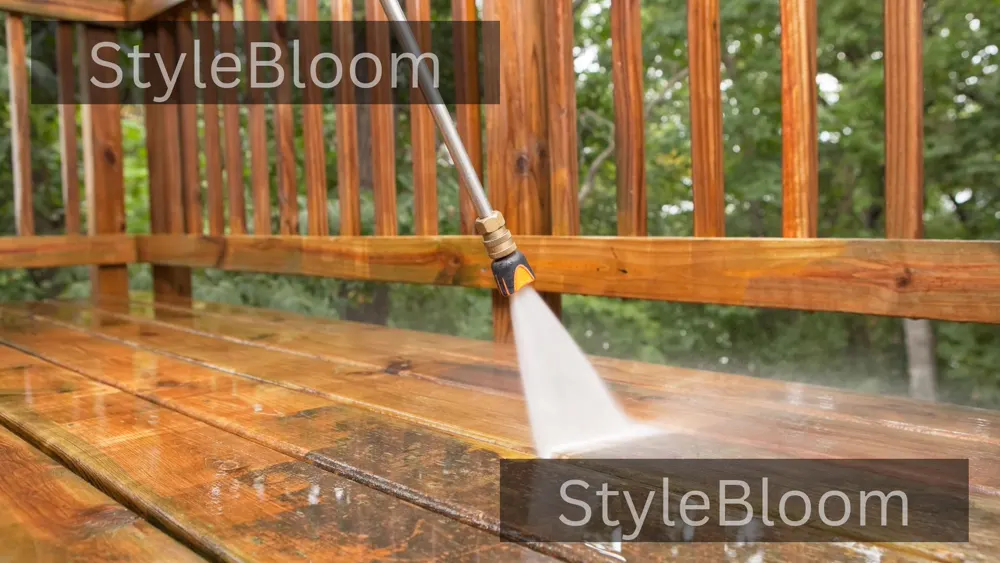
Soft or damaged wood. Old deck boards, weathered fences, and softwood can splinter, fuzz, and gouge. If the wood is already soft or rotting, pressure washing makes it worse — repair or replace first, and use the widest, gentlest nozzle if you wash it at all.
Loose mortar, crumbling brick, and cracked concrete. The jet finds every weak joint and opens it further. Re-point or repair first, or you will turn a small crack into a weekend project.
Windows, especially old or single-pane glass. High pressure can break seals, force water into frames, and crack old glass. Wash windows by hand or with a very low-pressure rinse from a safe distance, and never aim at the edges of the seal.
Car paint at close range, and any car with damaged paint. A narrow nozzle held close can strip paint, lift clear coat, and force water into trim and electronics. Use a wide fan nozzle, keep your distance, and never use the pinpoint jet on a vehicle.
Roof shingles. Pressure washing a shingle roof strips the protective granules and shortens the roof's life. Roofs are cleaned with low-pressure chemical treatment, not a jet — this is a hire-a-professional job.
Air-conditioning units, vents, and electrical fittings. Fins bend, water gets into places it should never be, and outdoor outlets and light fixtures are not designed to take a direct jet. Keep the spray away, and switch off power to anything you wash near.
People, pets, and skin — always. A pressure washer jet can cut skin and cause serious injury. Never point it at a person or animal, even as a joke, and keep children and pets inside or well away while you work.
When in doubt, the rule is simple: test the gentlest nozzle on a hidden spot, from farther away than you think you need, and only step up gradually. A surface you under-clean can be washed again. A surface you damage cannot be unwashed.
The accessories that matter more than the brand
Here is a secret the product pages will not tell you: for most homes, the accessories change the result more than the brand on the machine. A mid-size electric washer with the right attachments will beat a stronger machine used with the wrong nozzle, every time. Budget for at least one or two of these, and check whether the listing you are considering already includes them — that changes the real price of the deal.
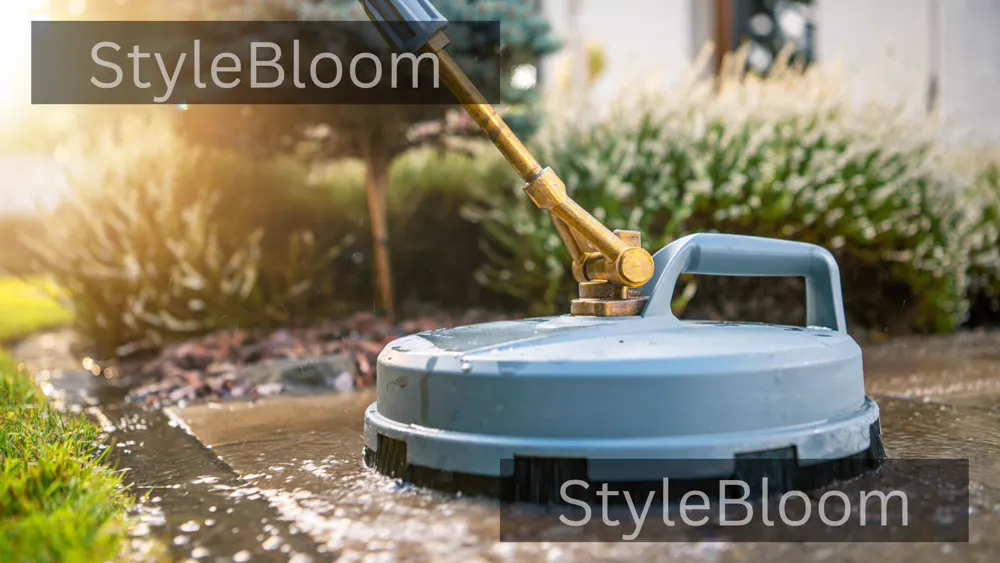
Surface cleaner. This is the spinning disc attachment that cleans driveways and patios in wide, even passes without the zebra stripes a lance leaves behind. If your main job is concrete, this is the single best add-on you can buy. It also keeps dirty water from spraying everywhere, which your shoes and your siding will appreciate.
Nozzle set. Nozzles are color-coded by spray angle, from the pinpoint jet to the wide fan. The wide fan is your everyday nozzle; the narrow ones are for stubborn spots on hard surfaces only. A turbo or rotary nozzle spins a narrow jet in a circle and cleans faster on concrete, but it is aggressive — keep it off wood, paint, and anything soft.
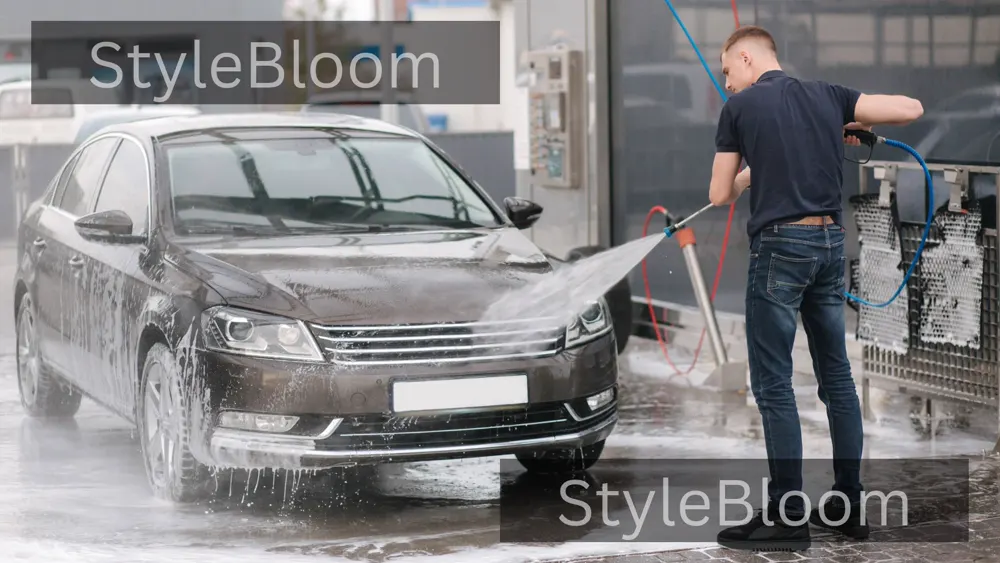
Foam cannon or soap applicator. For car washing, foam matters: it loosens dirt and lets it slide off instead of being ground into the paint. A foam cannon on a pressure washer gives thick, clinging foam that a garden hose cannot match. Use car-wash soap rated for pressure washers, not household detergents.
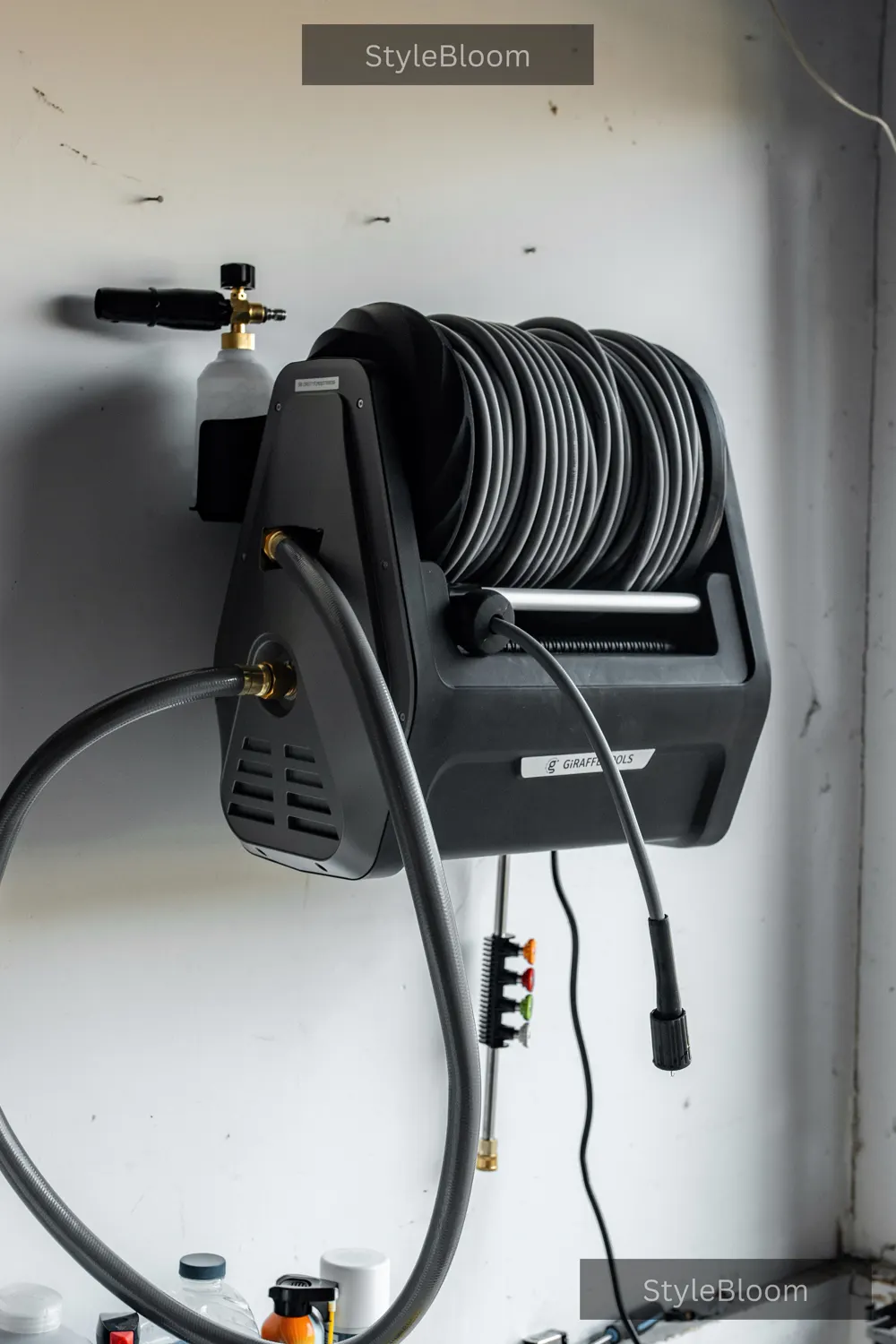
Hose length and extension wand. The standard hose is often shorter than people expect, and the far corner of the driveway is always farther than you think. An extension hose or wand saves you from dragging the machine around and from stretching the power cord to its limit. Check the included hose length on the listing before you order, not after delivery.
Detergent rated for pressure washers. Use only detergents made for pressure washers, and follow the dilution on the label. Household bleach and dish soap can damage seals, kill plants, and leave residue. Rinse plants and grass before and after soaping, and keep pets off treated surfaces until they are rinsed and dry.
Search surface cleaners on Amazon, foam cannons, nozzle tip sets, and pressure washer detergents — compare what is included with the machine you are considering before buying extras you may already get.
Your first Saturday with the machine
Unbox the day before if you can, so the first use is not a race against daylight. Read the manual for your specific machine — the steps below are general, and your model's instructions win over any guide, including this one.
Step 1: Set up on flat ground near water and power. Connect the garden hose to the water supply first, and run water through it briefly to flush out debris. Connect it to the machine, then connect the high-pressure hose and lance. Use an outdoor outlet with ground-fault protection, keep connections dry and off the ground, and never run a gas machine indoors or in a garage.
Step 2: Purge the air. With the machine off, squeeze the trigger until water flows steadily without sputtering. Air in the line causes pulsing and can strain the pump. Only then switch the machine on.
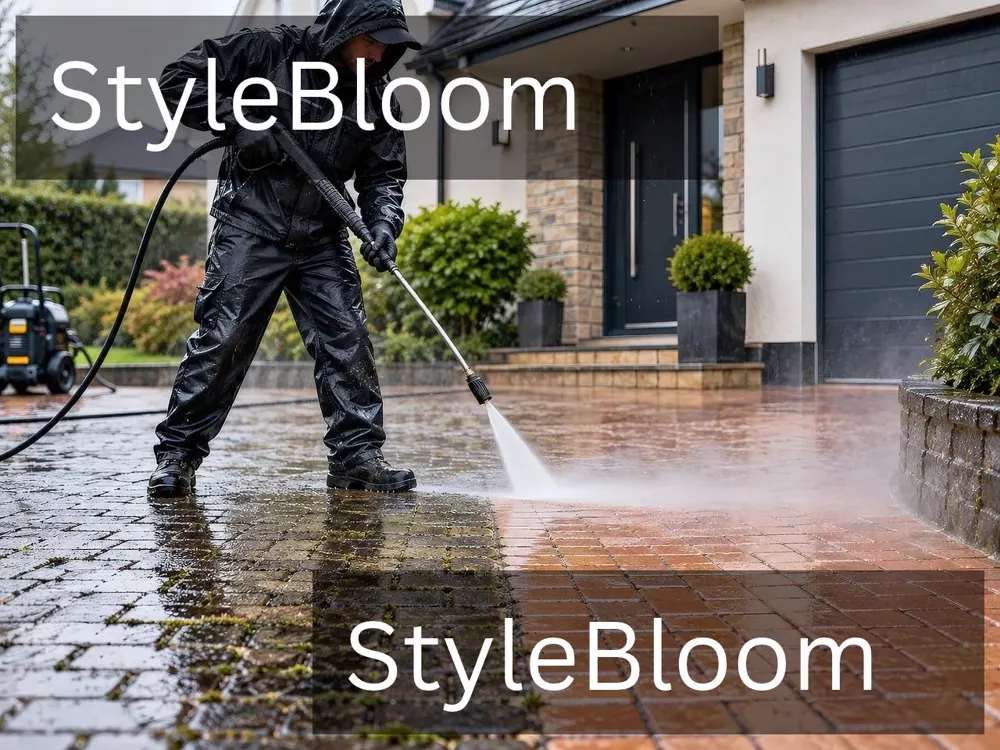
Step 3: Start with the widest nozzle on a hidden test spot. Pick a corner nobody sees. Hold the lance at least two feet from the surface, make one slow pass, and inspect. If the surface is unharmed and still dirty, move a little closer or step to a narrower nozzle — one change at a time.
Step 4: Work in sections, top to bottom. On siding and walls, work top to bottom so dirty water does not run over cleaned areas. On flat ground, work in overlapping passes like mowing a lawn, and keep a steady distance — waving the lance closer and farther leaves stripes.
Step 5: Soap, dwell, rinse. If you are using detergent, apply it with the soap nozzle at low pressure, let it sit for the time on the label (usually a few minutes — never let it dry on the surface), then rinse with the fan nozzle. Soap that dries leaves marks that are harder to remove than the original dirt.
Step 6: Pack away properly. Switch off, disconnect power, squeeze the trigger to release pressure, disconnect hoses, drain them, and coil everything without kinks. Wipe the machine down, store nozzles together where you will find them, and put the machine somewhere dry. Ten minutes of pack-away saves an hour of untangling and a damaged pump next spring.
Mistakes that cost money (or damage)
Buying on PSI alone. As covered above, a high PSI with low flow is a slow machine. Compare cleaning units, and check the flow figure before you fall for the big number.
Starting with the pinpoint nozzle. The narrowest nozzle is the most aggressive. Starting with it on a deck, a car, or siding is how gouges and stripped paint happen. Start wide, always.
Skipping the test spot. Every surface is different, and age and weather change what a surface can take. Thirty seconds on a hidden corner prevents a visible scar across the middle of your deck.
Letting detergent dry. Soap that dries on a surface leaves residue and marks. Work in shade or on a cloudy day when you can, work in sections, and rinse before the soap dries.
Running the pump dry. Never switch the machine on without water flowing to it. A dry pump overheats and can be ruined in minutes. Water first, power second, every time.
Ignoring the cord and hose. Stretching a power cord to its limit, running it through puddles, or kinking the high-pressure hose causes trips, damage, and frustration. Plan the layout before you start, and keep connections dry.
Storing it wet and full of water. Water left in the pump over winter can freeze and crack it. Drain the machine, run the winterizing steps in your manual, and store it dry and frost-free.
Buying the machine before measuring. The most common regret is not the brand — it is discovering the hose is too short, the outlet is too far, or the machine does not fit the storage space. Measure first, order second.
Who should skip buying one
A pressure washer is not for everyone, and saying so is part of an honest guide. Skip buying one for now if any of these describe you:
You will use it once a year or less. Ownership means storage, maintenance, and a machine that may not start cleanly after a year in the shed. Renting or hiring is cheaper and simpler at this frequency.
You have no suitable water or power access. If your outdoor tap is shared, your outlets are far, or your building rules restrict outdoor washing, a pressure washer will fight you every time. A hose, a brush, and a bucket may honestly serve you better.
Your main job is a roof, a badly damaged deck, or crumbling masonry. These are not pressure washer jobs at all. A roof needs low-pressure treatment, and damaged surfaces need repair first. Buying a machine for the wrong job wastes money and risks damage.
You cannot store it dry and frost-free. A machine stored wet, outside, or in a freezing shed will not last. If storage is genuinely impossible, rent instead and let the rental company handle the machine.
You want a spotless car every week. Weekly car washing is better served by a foam gun on a garden hose or a local hand wash. A pressure washer is overkill for that job, and the risk to paint is real if you get careless.
Rent vs buy: the honest math
Do this math before you order, with your local numbers, because rental prices and machine prices vary too much by area to quote a single figure honestly here. Add up one year of ownership: the machine, the surface cleaner, nozzles, detergent, and your time for maintenance and storage. Then price two rental days (or two professional cleaning visits) for the same jobs. If ownership costs more than twice the rental route for the number of uses you will realistically get, renting wins — and it wins without storage, maintenance, or a machine gathering dust.
Ownership wins when you use the machine at least several times a season, when you like doing the work yourself, and when you have the storage. It also wins on convenience: a machine in your garage gets used on a free Saturday morning, while a rental needs booking, pickup, and return. Convenience is a real benefit — just be honest about whether you will actually use it, or whether you are buying the idea of a clean driveway rather than the habit.
One middle path is worth considering: buy the mid-size electric machine, and rent the heavy gas machine for the one big job every few years. That combination covers nearly every home without paying for power you use once.
Maintenance and winter storage checklist
Electric machines are low-maintenance, not no-maintenance. After every use: release pressure, drain hoses, coil without kinks, wipe the machine, and store nozzles together. Check the inlet filter for debris — a clogged filter starves the pump. Check hoses and connections for cracks and leaks, and replace worn O-rings before they become a spray in your face. For gas machines, follow the manual for oil, fuel stabilizer, air filter, and spark plug, and never store fuel indoors.
For winter: drain all water from the machine, hoses, and lance. Run the winterizing step in your manual (many machines use a pump-protectant fluid). Store the machine indoors, dry and frost-free, with the power cord and hoses coiled loosely. In spring, inspect everything before the first use, flush the garden hose before connecting, and purge air before switching on. Ten minutes in autumn saves a cracked pump and a dead machine in spring.
A simple seasonal cleaning calendar
Spring: Wash siding, patio, and furniture after winter. Clear gutters by hand first (never pressure wash gutters from a ladder — the recoil and the height are a dangerous combination). This is the big reset clean.
Summer: Car washing, patio furniture touch-ups, and spot-cleaning the driveway after gatherings. Work in the morning or evening so detergent does not dry in the heat.
Fall: Driveway, walkways, and patio before winter. Leaves and algae make surfaces slippery, and a fall clean keeps them safer through the wet months. This is the season driving the current trend, and it is the best time to buy if you plan to clean before winter.
Winter: Mostly, leave the machine alone. In mild climates, a quick rinse of walkways on a dry day is fine — but never pressure wash in freezing weather, when water turns to ice on the surface you just cleaned.
Small homes, townhouses, and apartments
If you do not have a garage, a long driveway, and a private tap, you can still use a pressure washer — with adjustments. A compact electric machine that one person can carry matters more than power. A balcony or small patio needs the gentlest nozzle and a plan for where dirty water drains — it will go somewhere, and your downstairs neighbor will notice. Check building rules before you start: some buildings restrict outdoor washing, noise, and water use. Shared driveways need a word with neighbors first, especially about noise and spray drift onto their cars. And if your only outdoor outlet is far away, measure the run before you buy, or plan to wash in sections near the outlet. For a small patio and a car, a compact electric machine with a foam option is usually the whole answer — anything bigger is hard to store and harder to justify.
How to check the actual SEESE listing before you order
Since this guide deliberately does not quote the SEESE listing's specs, price, or ratings — those change, and I have not verified them — here is the checklist to run on the listing itself before you spend anything:
1. Rated vs maximum figures. Check whether the PSI and GPM are rated (sustained) or maximum figures, and compare cleaning units across the machines you are considering, not just the headline PSI.
2. What is in the box. Nozzles, hose length, lance, soap bottle, and whether a surface cleaner or foam cannon is included. A cheaper machine that needs three accessory purchases is not cheaper.
3. Hose and cord length. Measure against your real distances — outlet to farthest job, tap to machine. Short hoses are the most common post-purchase complaint.
4. Warranty and seller. Who sells it, what the warranty covers, and how returns work. A trending product from an unknown seller deserves more caution, not less.
5. Recent reviews, read skeptically. Look for reviews that mention your specific jobs (driveway, car, deck), that have been updated after months of use, and that mention problems — a page with only glowing launch-week reviews tells you less than one with a mix. Ignore any review that reads like an advertisement.
6. Total cost. Machine plus the accessories you actually need, plus detergent. Compare that total against the next machine up, not just the headline price.
If the listing hides specs, skips hose length, or has no clear warranty, that is information too — and it points to waiting or choosing a listing that answers these questions plainly.
Search pressure washer hose extensions on Amazon, extension wands, and storage covers to fill the gaps a basic listing leaves open.
Bottom-line verdict
The SEESE pressure washer's surge — roughly $420,700 in estimated TikTok US revenue in the last 7 days, up about 35.5% week over week — makes it worth a serious look, but the trend is the beginning of the decision, not the end of it. Buy the class first: for most homes, that is a mid-size electric machine. Check the listing against the checklist above. Budget for a surface cleaner if concrete is your main job, and for a foam option if the car matters to you. Measure your outlet, your hose run, and your storage before you order. And if you will only use it once a year, rent the machine and spend the savings on something else.
A pressure washer is one of the most satisfying home tools you can own — a dirty driveway turning clean in an afternoon is genuinely rewarding. It is also a tool that punishes carelessness, so start wide, test first, and respect the surfaces you wash. Do that, and the machine earns its garage space. Skip it, and you will learn the expensive lessons this guide just gave you for free.
Frequently asked questions
Is a SEESE pressure washer good for home use?
SEESE is trending strongly right now, with a Kalodata estimate of roughly $420,700 in TikTok US revenue in the last 7 days, but a trend is not a durability test. For home use, what matters is whether the specific listing's class, flow, hose length, and included accessories match your jobs — check those on the listing before deciding, using the checklist in this guide.
What size pressure washer do I need for a driveway?
For a normal concrete driveway, most buying guides point to a medium-duty machine with a surface cleaner attachment, because flow rate decides how long the job takes. A light-duty machine can do it, but slowly; a heavy gas machine is only worth it for large or heavily stained concrete.
Can a pressure washer damage car paint?
Yes, if you use a narrow nozzle at close range or wash damaged paint. Use a wide fan nozzle, keep your distance, use car-wash soap, and never use the pinpoint jet on a vehicle. When in doubt, wash the car by hand or with a foam gun on a garden hose.
Is electric or gas better for a first pressure washer?
For most first-time buyers, electric is better: it starts instantly, runs quieter, needs almost no engine maintenance, and handles cars, patios, decks, and normal driveways. Gas is better only if you regularly clean large areas or work far from any power outlet.
What does PSI vs GPM actually mean?
PSI is pressure — how hard the water hits. GPM is flow — how much water arrives. Multiply them to get cleaning units, which is the best rough guide to how fast a machine cleans, because pressure loosens dirt and flow carries it away. Compare cleaning units, not PSI alone.
Can I use a pressure washer on a wood deck?
You can, but gently: use the widest nozzle, start from at least two feet away, test a hidden spot first, and never use a narrow or turbo nozzle on wood. If the wood is soft, rotted, or already damaged, repair it first — pressure washing will make it worse.
Do I need a surface cleaner attachment?
If your main job is a driveway or patio, yes — it is the single most useful accessory. It cleans in wide, even passes without zebra stripes, works faster than a lance alone, and keeps spray under control. If you only wash a car, you do not need one.
Can I wash my house siding with a pressure washer?
Yes, with care: use a wide fan nozzle, work top to bottom, keep your distance, and never aim upward under siding laps or directly at window seals, vents, and electrical fittings. Soft or damaged siding should be washed by hand instead.
How far should I stand from the surface?
Start at least two feet away with the widest nozzle, test a hidden spot, and only move closer gradually if the surface is unharmed and still dirty. Distance controls the real pressure on the surface more than the number on the box.
Can I use soap or detergent in a pressure washer?
Yes, but only detergents made for pressure washers, mixed exactly as the label says. Apply at low pressure, let it dwell for the labeled time, and rinse before it dries. Household bleach and dish soap can damage seals and harm plants.
Is it safe to pressure wash around plants and pets?
Only with precautions: rinse plants and grass before and after soaping, use only pressure-washer-rated detergents, keep pets and children away while you work, and never point the jet at any person or animal. Keep pets off treated surfaces until they are rinsed and dry.
Should I rent a pressure washer or buy one?
Buy if you will use it several times a season and have dry storage; rent if you will use it once a year or less, or if you cannot store it properly. Compare one year of ownership (machine plus accessories and detergent) against two rental days or professional visits, using your local prices.
How do I store a pressure washer in winter?
Drain all water from the machine, hoses, and lance, run the winterizing step in your manual, and store it indoors, dry and frost-free, with hoses coiled loosely. Water left in the pump can freeze and crack it, so never store a wet machine in a freezing shed.
Why is SEESE trending right now?
SEESE is surging on TikTok Shop in the fall cleaning season, with a Kalodata estimate of roughly $420,700 in TikTok US revenue in the last 7 days (window October 20–26, 2026), up about 35.5% week over week and about 33% over 30 days. These are estimates for direction only, not verified sales or proof of quality.
What should I check on the listing before I order?
Check whether PSI and GPM are rated or maximum figures, what is in the box, the hose and cord length against your real distances, the warranty and seller, recent reviews that mention your specific jobs, and the total cost including the accessories you actually need.