Last updated: 29 October 2026
A home organization hub is not a product you buy or a weekend you survive. It is a whole-house system with three parts that work together: one command center where papers, schedules, and keys live, zones in every room where each category has exactly one labeled home, and a short weekly reset that puts the strays back. Build those three parts, in that order, and the house stops sliding back into clutter — not because you became a tidier person, but because putting things away finally became easier than leaving them out.
As of October 2026, Semrush shows this exact hub query drawing about 5,400 searches a month in the United States, with a keyword difficulty of 41. The search page for it is a mess in a useful way: half the top results are about household command centers and room-by-room systems, and the other half are about smart home tech hubs, chargers, and automations. No top page gives the complete household system — a comparison of approaches, a command-center build, room-by-room zones, a maintenance routine, renter-friendly options, and honest answers to the fifteen questions people actually ask. Most pages are either a short idea list or a single-room project. This guide attacks those gaps: it separates the two meanings of "hub" up front, builds the three-part system step by step, links the rooms into one map, and tells you what to skip. No product here is presented as tested by us; the picks are Amazon search links so you can compare current listings yourself.
Start tonight with one wall: a calendar, one tray per person, hooks for keys and bags, and a small outgoing bin. That is the command center, and it is the whole system in miniature. Then organize one zone per weekend, starting with the room that bothers you most, and run a ten-minute reset on the same day every week. Do not buy a matching set of containers first — use boxes you already own until a zone has stayed organized for two weeks, then buy containers that fit the measured shelf.
Disclosure: As an Amazon Associate, StyleBloom earns from qualifying purchases made through links on this page, at no extra cost to you. Links below are Amazon search links so you can compare current options; no product here is presented as tested by us.
Most homes do not have a clutter problem so much as a decision problem. Every object that comes through the door - mail, keys, bags, chargers, school papers, pantry goods, laundry - needs a decision about where it lives, and when no decision has been made in advance, the default home becomes the nearest flat surface. A home organization hub fixes the decision problem by deciding, once, where each category lives, and then making that home visible, labeled, and easier to use than the counter. The hub is the set of those decisions, made visible: a wall or cabinet for the household's moving parts, zones in each room for the things that belong there, and a routine that catches what drifts.
It helps to think of the hub as infrastructure rather than decoration. A matching set of pretty bins is not a system, and a single heroic decluttering weekend is not a system either - both feel productive for a week and then quietly fail, because neither changes what happens to the next piece of mail or the next grocery bag. Infrastructure changes the default path: keys go to the hook because the hook is by the door and labeled, not because someone remembered to be tidy. When the default path is the organized path, the house stays organized with less effort than it took to stay messy, and that is the only kind of system that survives real life with kids, jobs, and tired evenings.
Search results for this topic mix two different things, and the confusion costs people money. A household organization hub manages the physical life of the home: papers, schedules, keys, bags, pantry goods, laundry, and the zones that hold them. A smart home hub manages the digital life of the home: routers, voice assistants, smart bulbs, sensors, chargers, and automations. The two share a name and sometimes a wall, but they solve different problems, and buying smart-home gear will not fix a paper pile, just as a wall calendar will not fix a tangle of chargers. This guide builds the household system, because that is the system that makes a home feel calm, and it includes one short note on giving chargers a home inside it so the tech clutter does not undo the rest.
The overlap is real and worth handling once, deliberately. Give shared devices one charging spot inside or beside the command center — a small tray or basket with a multi-port charger — so phones, watches, and earbuds stop colonizing every counter. Keep routers and smart hubs where they stay ventilated and reachable, which usually means an open shelf or a ventilated cabinet rather than a closed basket. And resist the temptation to merge the two systems into one giant wall of screens and boards: a command center works because it is glanceable in five seconds, and a wall crowded with devices, calendars, and cables is not glanceable at all. Two small, clear stations beat one impressive, confusing one, and the household station is the one to build first.
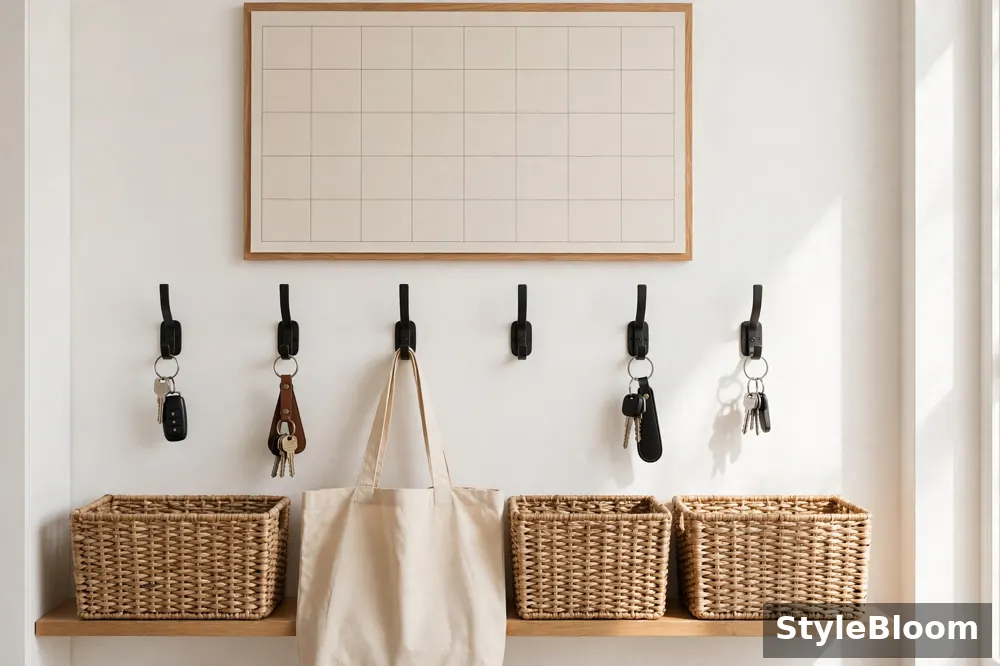
Part one is the command center: one visible spot, usually a kitchen or entryway wall, holding the five elements that run the household's daily traffic — a calendar everyone can see, one tray or slot per person for incoming papers, hooks for keys and bags, a small bin for outgoing items, and a charging spot for shared devices. Five elements, no more, until they are habit. The command center earns its place because it answers the three questions a household asks every day — what is happening, whose paper is this, and where are the keys — without anyone opening a drawer or asking another person. If your home has only one organized spot, make it this one, because it protects every other spot you build later.
Part two is zones: every room divided by use, and every category given exactly one labeled home inside its zone. The kitchen zone holds food, cooking tools, and cleaning supplies, each in its own container or shelf section. The entry zone holds coats, shoes, bags, and keys. The point of a zone is not that everything is hidden - it is that everything has one address, so putting it away is a two-second decision instead of a fresh dilemma. Label every home, even the obvious ones, because labels tell other people where things go, and they tell you when a home is full, which is the signal to stop adding to it.
Part three is the reset: ten minutes, same day every week, walking the house with a basket, returning strays to their zones, clearing the command center trays, and noting the one zone that needs attention next. The reset is not cleaning and it is not decluttering — it is maintenance, the same way brushing teeth is maintenance rather than dentistry. Daily life constantly creates strays: bags left by the door, papers left on the counter, a charger left on the sofa. Without a reset, strays accumulate until the system looks broken and gets abandoned. With a reset, strays never accumulate past one week, and the system looks like it works, which is what keeps everyone using it. Skip the reset and the other two parts will fail within a month; keep the reset and the other two parts will survive years.
There are four common ways people try to organize a whole home, and they fail in different ways. The purge weekend clears everything at once but builds no homes for what remains, so clutter returns at the speed of daily life. The container shopping spree buys matching bins before measuring or decluttering, so half the bins fit nothing and the other half hide categories that were never sorted. The single-room project organizes one beautiful room while the rest of the house absorbs its overflow, so the total clutter never falls. The zone system — this guide's approach — is slower and less photogenic, but it is the only one of the four that changes the default path for every new item, which is why it is the only one that still works six months later.
| Approach | Best for | Where it fails | Effort to maintain |
|---|---|---|---|
| Purge weekend | A home with obvious excess and a free weekend | No homes built for what stays; clutter returns fast | High, because it must be repeated |
| Container shopping spree | Already-sorted categories needing uniform storage | Unmeasured bins fit nothing; sorting never happened | Medium, but wasted spending |
| Single-room project | One room that causes daily pain | Overflow moves to other rooms; total clutter unchanged | Low for that room, zero for the house |
| Zone system (this guide) | A whole home that should stay organized | Slower start; needs the weekly reset | Low, once the reset is habit |
Choose by your real constraint, not by the prettiest photo. If the house is drowning and you have one weekend, run a purge first — then build zones for what remains, or the purge will be undone by next month. If you love matching containers, buy them last, after zones have proven themselves with cardboard boxes for two weeks. If one room is ruining your mornings, start there — but treat it as zone one of the system, not as a standalone project, and build the command center the same evening so the finished room has a guardian. And if you rent, skip nothing: the zone system is the most renter-friendly approach of the four, because it needs no drilling and moves with you, as the renters section shows.
Pick the wall first, and pick it by traffic, not by looks. The right wall is the one every member of the household passes daily without thinking: the kitchen wall beside the fridge, the entryway wall beside the door, or a hallway stretch between the two. Stand there at the busiest time of day and watch what people already do - drop keys, set down bags, leave mail, check the time. The command center goes exactly there, because a system placed where behavior already happens gets used, and one placed where behavior should happen gets ignored. If the only available wall is inside a closet or behind a door, pick a different wall, even a smaller one: visibility beats size every time.
Mount the five elements in this order. First, the calendar, at eye level, big enough to read from two steps back — a wall calendar, a dry-erase board, or a printed monthly sheet, whichever your household will actually look at. Second, one tray or wall slot per person, labeled with names, for incoming papers: school letters, bills, invitations, anything that arrives and needs an action. Third, hooks for keys and bags, one hook per person plus one spare, placed where hands naturally reach when entering. Fourth, a small bin or basket for outgoing items — library books, returns, letters to post — so leaving the house becomes a single grab instead of a search. Fifth, a charging tray or basket with a multi-port charger for shared devices. Then stop. Do not add a menu board, a chore chart, a photo wall, or a second calendar until the five elements have survived two full weeks of real use, because every extra element is another thing to maintain, and maintenance is the scarce resource.
The first evening's real work is not mounting but deciding: what counts as incoming, who owns each tray, and what leaves the house tomorrow. Walk the house with a bag and collect every loose paper, every orphan key, every bag by the door, and sort them into the trays and the outgoing bin in one pass. This single sorting pass is what makes the wall feel like a system instead of a decoration, and it takes most households under an hour. Photograph the finished wall, not for social media but for yourself: in three weeks, when the wall looks messy again, the photo shows you what "working" looked like, and the reset — not a rebuild — restores it. A command center that survives its first messy week is a command center that will survive years, because the messy week is the test, not the failure.
Zones work because they shrink every organizing decision to a single question: which room does this belong in, and which labeled home inside that room? Start the map by listing the rooms you actually have, then assign each household category to exactly one room, even when a category could plausibly live in two. Cleaning supplies live in one place — the kitchen or the laundry, not both — because a category with two homes has no home at all, and people will default to the counter when they cannot remember which home is the real one. Write the map down, one line per room, and tape it inside a kitchen cabinet for the first month. The map looks obvious once written, and that obviousness is the point: obvious is what other people can follow without asking you.
Build zones in the order of daily pain, not in the order of a magazine. The room that ruins your mornings - usually the kitchen or the entryway - goes first, because an early win buys patience for the rest. The room guests see goes second, because visible progress keeps the household's goodwill. Bedrooms, bathrooms, laundry, and office follow, one per weekend, with the command center guarding the finished zones between weekends. Each zone follows the same four steps: empty the space completely, sort into keep, relocate, and remove piles, assign each keep category a labeled home that fits the measured space, and return only what has a home.
Link the zones together with two house rules that cost nothing. One in, one out: when a new item enters a zone, an old item in the same category leaves it, by donation, recycling, or relocation. This single rule is what stops zones from slowly refilling, and it works because it is easier to enforce than a spending ban — it allows buying, but it charges a visible price. Second, the landing rule: nothing lands on a flat surface that has a labeled home elsewhere; it goes to its home immediately, or it goes into the reset basket for the weekly round. The landing rule sounds strict and feels strict for about a week, then it becomes automatic, because walking ten steps to a labeled bin is genuinely faster than living with a cluttered counter. Together, the two rules are the maintenance system in miniature, and the weekly reset is just their formal version.
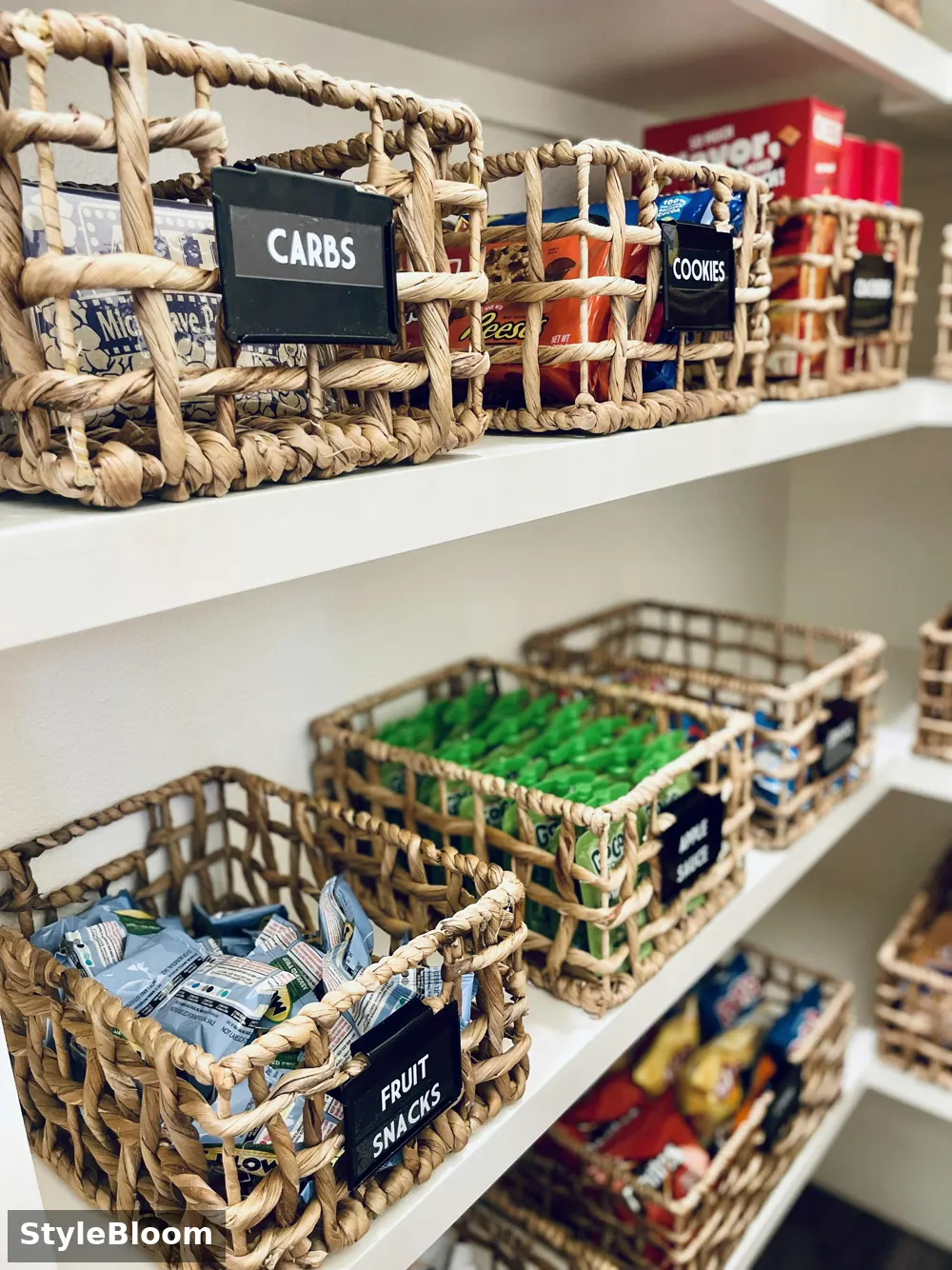
The kitchen fails first because it handles the most categories: food, cooking tools, cleaning supplies, papers, chargers, and school bags all pass through it, and every category without a home lands on the counter. Start by evicting the non-kitchen categories — papers go to the command center, bags to the entry, chargers to the charging tray — and watch the counter reappear before you organize a single shelf. Then divide the kitchen itself into sub-zones by task: cooking (stove, oils, spices, utensils), prep (cutting boards, knives, mixing bowls), food storage (pantry, fridge, dry goods), and cleaning (sink, dishwasher supplies, trash). Each sub-zone gets its own shelf section or drawer, labeled, so cooking flows in one direction instead of crossing the kitchen five times per meal. For pantry detail, our pantry organization ideas for a small kitchen and our step-by-step pantry guide cover containers, labels, and shelf layouts room by room.
Pantry containers deserve a specific warning, because they are where most kitchen spending goes wrong. Clear, airtight containers work when bought after measuring, in one size per staple family, with labels facing out - and they fail as a matching set bought before measuring, because a beautiful set that fits nothing becomes expensive clutter. Keep daily staples at eye level, weekly items one shelf up or down, and rare items highest or lowest. Decant only what you use weekly; keeping the rest in original packaging is inventory honesty, not laziness.
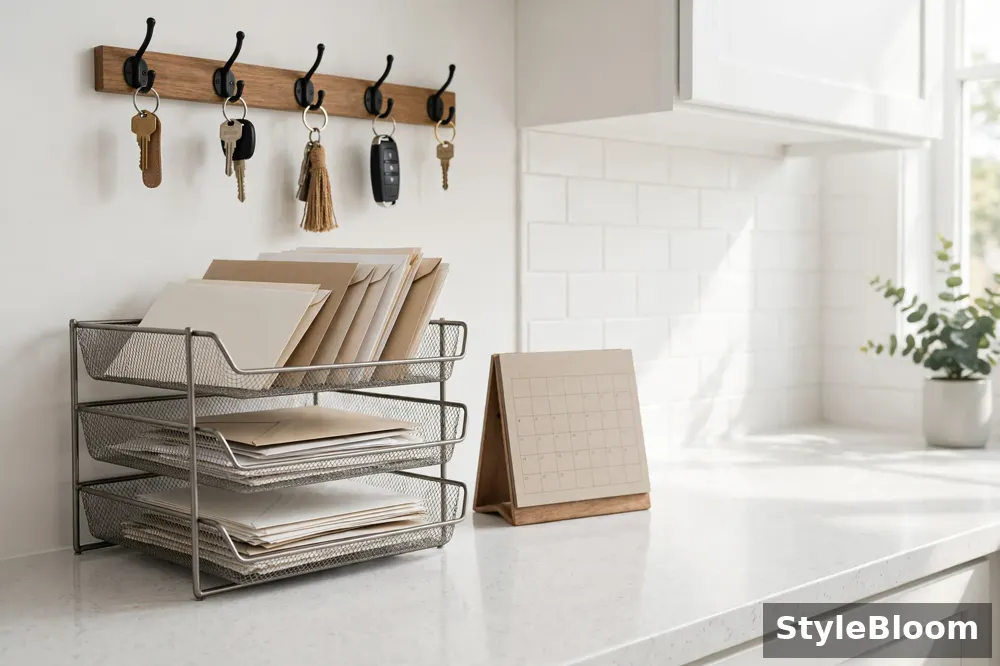
The entryway is the smallest zone and the highest-leverage one, because the first five minutes home decide the state of the whole house for the evening. When bags, coats, shoes, and keys have no home at the door, they migrate inward — to the kitchen counter, the sofa, the bedroom chair — and each migration creates a second cleanup later. A working drop zone needs only four things: hooks for coats and bags at adult and child heights, a shoe home (rack, tray, or bench with storage), a key home (hooks or a small bowl, in the exact spot hands reach on entry), and a small basket for the day's outgoing items. Everything else — umbrellas, pet gear, sports equipment — gets a labeled home only if it genuinely lives at the door; otherwise it belongs in its own room's zone, and forcing it into the entry makes the entry fail.
The drop zone's secret is that it is also a departure station. The evening reset empties it, the morning routine fills it, and the outgoing basket turns leaving the house from a scavenger hunt into a single grab. If your entryway is a narrow hallway, go vertical: wall hooks, an over-door rack, a slim wall shelf, and a shoe tray against the wall. If children use the zone, put their hooks at their height and their basket on the floor, because a system children cannot reach is a system adults maintain alone. And keep the footprint honest: when the shoe rack overflows, shoes leave by one-in-one-out, rather than colonizing the hallway.
Bedrooms fail differently from kitchens: not from too many categories, but from one category with no boundary — clothes. The chair, the bed corner, and the floor become the overflow for a closet that has no labeled homes, and the fix is the same four steps, applied ruthlessly to one closet at a time. Divide the closet by use — daily wear, work wear, seasonal, accessories — and give each division a labeled section, bin, or shelf. Move out-of-season clothes to a single high or under-bed home, so the daily sections stay roomy. And enforce the bedroom's one special rule: nothing that belongs in another room sleeps in the bedroom. Bags, papers, chargers for other rooms, and hobby gear all have zones elsewhere, and the bedroom stays calm precisely because it refuses to absorb them.
Bathrooms fail from duplication and from products with no home: five half-used bottles, three of the same cream, and a drawer of samples nobody will use. Empty the space, keep one of each product type in use, store backups in a single labeled bin elsewhere, and give daily items one tray or shelf section each. Small bathrooms benefit most from vertical and door-mounted storage, and from a strict rule that nothing new enters until something old leaves, because bathroom storage is the scarcest in the house. Mornings get faster not from more products but from fewer decisions: when every daily item has one visible home, the routine runs without searching, and the room stays presentable without a daily deep clean. A calm bedroom and a fast bathroom are the two zones whose payoff you feel every single day, which makes them worth building early even though guests rarely see them.

Living rooms fail from drift: chargers, remotes, books, toys, and hobby supplies all migrate to the sofa and the coffee table, because the living room is where the household relaxes and relaxing people set things down. Give the living room three homes and no more: a basket or ottoman with storage for the current hobby or toy rotation, a single charging spot for the room's devices, and a shelf or cabinet for books and media. Rotate rather than store: keep the current rotation visible and the rest in a labeled bin elsewhere, swapping monthly, so the room feels full of life without being full of things. And keep one surface — the coffee table or one side table — deliberately clear, as the room's breathing space; a room with one clear surface feels organized even when the rest is lived-in, while a room with no clear surface feels chaotic even when it is tidy.
Laundry zones fail from piles without addresses: clean clothes waiting to be put away, dirty clothes waiting to be washed, and single socks waiting for partners. Give laundry four labeled homes: a hamper per person or load type, a folding surface, a put-away basket that travels room to room, and a small lost-sock bin emptied monthly. The put-away basket is the key invention: fold into it, carry once, distribute in a single round. Offices fail from paper and cable drift, fixed the same way: one inbox tray, one filing home per category, one cable home per device type, and a desk kept clear except for the current task.
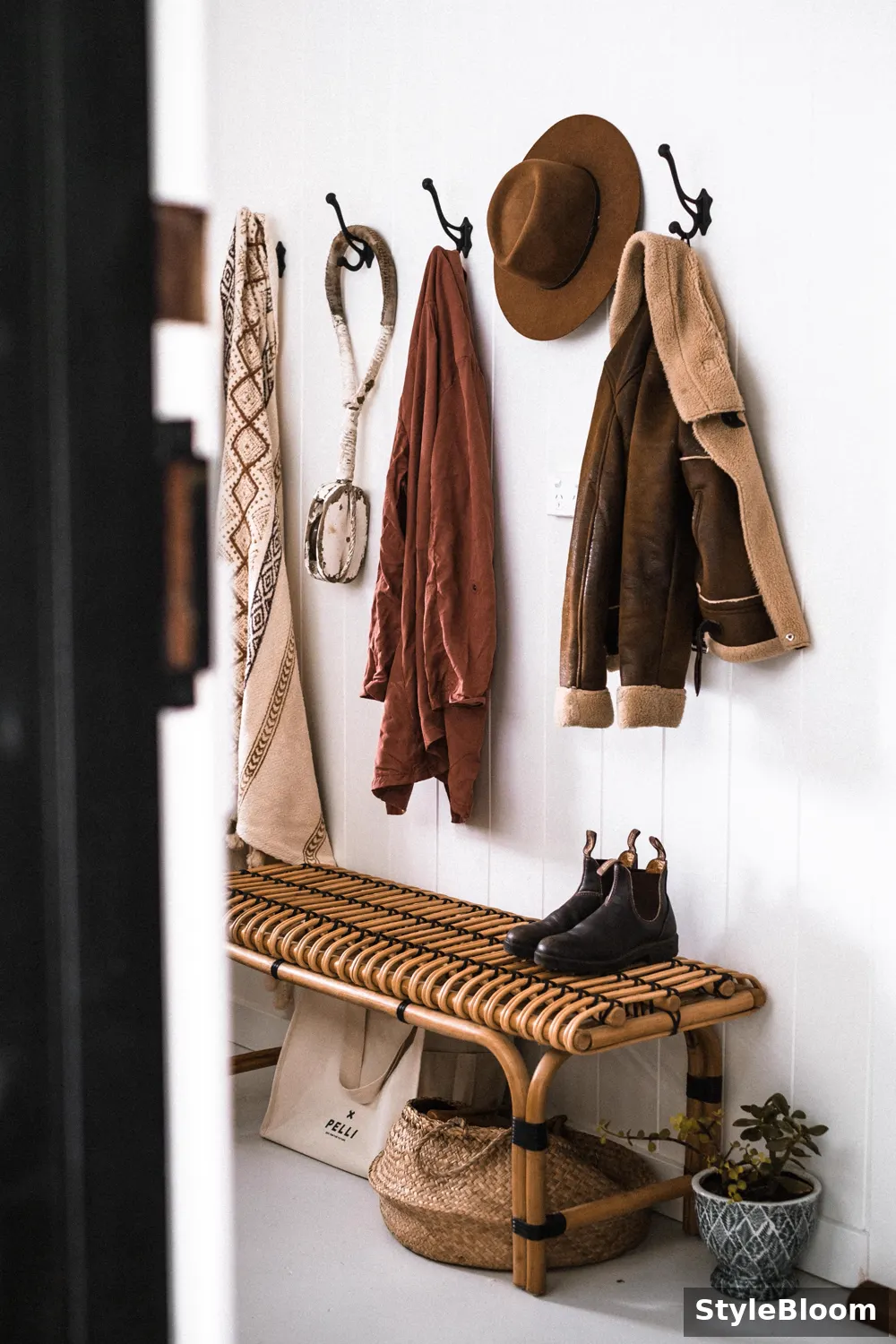
Renters are often told to wait for a home they own before organizing properly, and that advice wastes years. Every element of this system has a no-drill version, and a renter's system has one advantage owners lack: it must be portable, which forces it to stay simple. Use adhesive hooks rated for the weight they will actually hold, and test one hook for a week before trusting a whole row with coats and bags. Use freestanding shelves, over-door racks, tension rods inside cabinets, and stackable bins that need no mounting at all. Keep the command center on a single portable board — a corkboard, a magnetic board, or a clipboard rail hung from two adhesive hooks — so the whole hub moves in one trip. And keep containers standardized across rooms, so a bin that worked in this apartment's pantry works in the next apartment's closet.
The renter's real constraint is not the walls but the lease's storage: small closets, shallow shelves, and kitchens with no pantry. Answer with doors and vertical space: over-door racks, shelf risers inside cabinets, and rolling carts that live in a gap and roll out for use. Photograph every wall and shelf before mounting anything adhesive, so move-out restoration is a single evening. And keep the system cheap by design: prove each zone for two weeks with cardboard boxes, then buy the proper container - a renter who buys first often buys for a shelf they will not have in a year.
Small homes do not need a smaller system; they need a stricter one. When there is no spare room to absorb strays, every category without a home lands somewhere visible within hours, and the home feels chaotic even when the total amount of stuff is modest. The answer is smaller homes for each category, not fewer categories: a compact command center on one wall strip instead of a whole wall, a single shoe tray instead of a rack, a single pantry shelf section instead of a pantry room. Use the backs of doors, the tops of cabinets, the space under beds, and the vertical foot above every shelf — small homes hide an astonishing amount of storage in the top twelve inches of every closet and the inside of every door. And enforce one-in-one-out without exceptions, because in a small home the rule is not a nice habit but the only thing standing between organized and overwhelmed.
Multi-use furniture earns its place in small homes: an ottoman with storage for the toy or hobby rotation, a bench at the door for shoes and bags, a rolling cart for kitchen overflow. But buy it only after the zones exist - a beautiful storage bench in an unzoned entry becomes another surface for piles, while the same bench in a zoned entry becomes the shoe home that saves the hallway. Zones first, furniture second.
Pick a day and a time, write it on the calendar, and protect it the way you protect any other appointment, because the reset only works if it happens weekly without negotiation. Ten minutes is enough for most homes: grab a basket, walk room by room, and return every stray to its labeled home. Empty the command center trays into actions — file it, act on it, or recycle it — and clear the outgoing bin by putting its contents by the door. Then note the one zone that looked worst during the round, and give it five extra minutes, or schedule it for next weekend's zone work. That is the whole routine. It is deliberately boring, because boring routines survive and exciting overhauls do not.
Two details make the reset stick. First, do it with the household, not for it, even if children carry one basket and partners clear one tray - a system maintained by one person breeds resentment, while one maintained by everyone breeds ownership. Second, treat the reset as a diagnostic: if the same zone is worst every week, its design is wrong - its home is too small, too high, too far, or unlabeled - and the fix is to redesign that one home, not to scold anyone. Systems that get redesigned when they fail get better every month.
The first mistake is buying containers before decluttering and measuring, which fills the house with beautiful bins that fit nothing and hide unsorted categories. Fix it by reversing the order: empty, sort, measure, and only then buy — one bin to test before a matching set. The second mistake is building a private system: homes only you know, labels only you understand, heights only you can reach. Fix it by labeling everything in plain words and placing children's and shared zones at the heights their users can actually reach. The third mistake is hiding the command center — inside a closet, behind a door, or in a room nobody passes — which guarantees it stops being used within days. Fix it by moving the hub to the highest-traffic visible wall, even if that wall is smaller. The fourth mistake is skipping the reset, which lets one week of strays become a month of clutter until the system looks broken. Fix it by calendaring the reset and treating a missed week as a double-length reset, not as a reason to quit.
Three subtler mistakes deserve the same attention. Over-zoning — splitting one room into twenty micro-categories — makes putting things away feel like filing taxes, so people stop; keep categories broad enough that a child can decide in two seconds. Under-labeling — assuming everyone remembers where things go — fails the moment anyone else uses the house; label the obvious homes too, because obvious to you is invisible to everyone else. And perfectionism — waiting for the ideal containers, the ideal wall, or the ideal weekend — delays the system indefinitely; a command center made of cardboard boxes and tape labels, built tonight, beats a perfect system planned for next month, because tonight's system starts teaching the household while next month's system is still a plan. Start ugly, improve monthly, and let the system earn its upgrades.
"I don't have time" is the most common objection, and it has the system backwards: disorganized homes consume far more time than organized ones, in daily searching, repeated buying of duplicates, and weekend cleanups that never end. The command center takes one evening, each zone takes one weekend, and the reset takes ten minutes a week — and the time it returns, in mornings without searching and evenings without tidying, repays the investment within the first month. "My family won't follow it" is answered by starting with the shared pain point and making the new home easier than the old habit, as the FAQ explains; systems imposed from above fail, while systems built around a complaint everyone shares get adopted. "I rent, so it's not worth it" is answered by the renters section: the whole system is portable, and renters benefit most, because small rented spaces punish disorganization fastest.
"I need to declutter first" is half true: remove the obvious excess before zoning, but do not wait for a perfectly decluttered home - that wait is procrastination. Zone one room with its current contents, and let the zone itself reveal the excess: a labeled home that overflows is the clearest signal that something must leave. "It won't last" is what experience teaches, because purges and container sprees failed - but they failed precisely because they lacked the three parts this system has. Judge this system by its maintenance routine, not its first weekend, and give the reset four weeks; a design that survives four resets usually survives years.
Skip the full system, for now, if you are moving within the next month — build only the command center, and let the zones wait for the new home, because zones built for one floor plan rarely transfer cleanly. Skip it if the household is in crisis — illness, a new baby, a bereavement — and run a minimal version instead: one command wall, one reset basket, and forgiveness for everything else, because a system should reduce stress, not add obligations during the hardest weeks. Skip the full container purchase if money is tight: the system works with cardboard boxes and tape labels, and buying proper containers is an upgrade, not a prerequisite. And skip a zone that serves nobody — a formal dining room nobody uses, a hobby corner for a hobby nobody pursues — because organizing unused space is procrastination disguised as productivity, and that energy belongs in the kitchen or the entryway, where daily life actually happens.
Tonight, pick the wall, mount the five elements, and run the sorting pass. Calendar up, trays labeled, hooks in, outgoing bin placed, charging tray set. Collect every loose paper and orphan key in the house and sort them in one pass. When the wall is done, stand back and notice the two things that changed: the counter nearest the wall is clearer, and tomorrow morning has one fewer search in it. That is the first win, and it is deliberately small, because small wins compound — the command center guards the first zone, the first zone inspires the second, and by the fourth weekend the house has a system rather than a project. Take the photo of the finished wall, put the reset on the calendar for the same day next week, and let the system start teaching you what it needs next.
Every system slips, usually after a holiday, a house guest, a busy season, or a move, and the slip is not a failure but a predictable event with a known fix. Do not restart from scratch and do not throw the system away: run a double-length reset, twenty minutes instead of ten, room by room, returning strays and clearing trays, and then ask the diagnostic question — which zone slipped worst, and what changed about its design? Usually the answer is simple: a home got too full, a label fell off, a new category arrived without a home, or the reset was skipped for three weeks. Fix that one thing, resume the weekly reset, and the system is back within a week. Systems that recover quickly are systems that last, and the recovery routine is what separates a hub from a purge: a purge has no recovery path, so a slip becomes a collapse, while a hub has a reset, so a slip becomes a round.
Browse these categories when a zone has proven itself with temporary boxes for two weeks and you are ready to buy containers that fit measured shelves. Each link is an Amazon search so you can compare current listings, sizes, and materials yourself; measure before ordering, and buy one piece to test before a matching set.
This guide started from the live search page for its keyword, where the top results split between household command centers and smart-home tech hubs, and where no page offered the complete household system — comparison, command-center build, room zones, maintenance, renter options, and full question coverage. It was built against that gap, with each section answering a question the top pages left open, and with product links kept as searches rather than specific picks, so readers compare current listings instead of trusting a single recommendation. Related StyleBloom guides cover the pantry in detail, and the home page links the wider organizing cluster; this hub page is the map that ties those rooms together. No product here is presented as tested by us, and no outcome is promised — a system works when its maintenance routine survives, and the routine is yours to keep.
A home organization hub is three decisions made visible: a command center on the wall your household already passes, a labeled home for every category in every room, and a ten-minute reset on the same day every week. Build the wall tonight, one zone per weekend, and let the reset teach you which homes need redesigning. Do not buy containers first, do not hide the hub, and do not skip the reset — those three mistakes account for most failed systems, and avoiding them is most of the work. Start ugly with boxes and tape labels, improve monthly, and the house will stay organized not because you became tidier, but because putting things away finally became the easiest thing to do.
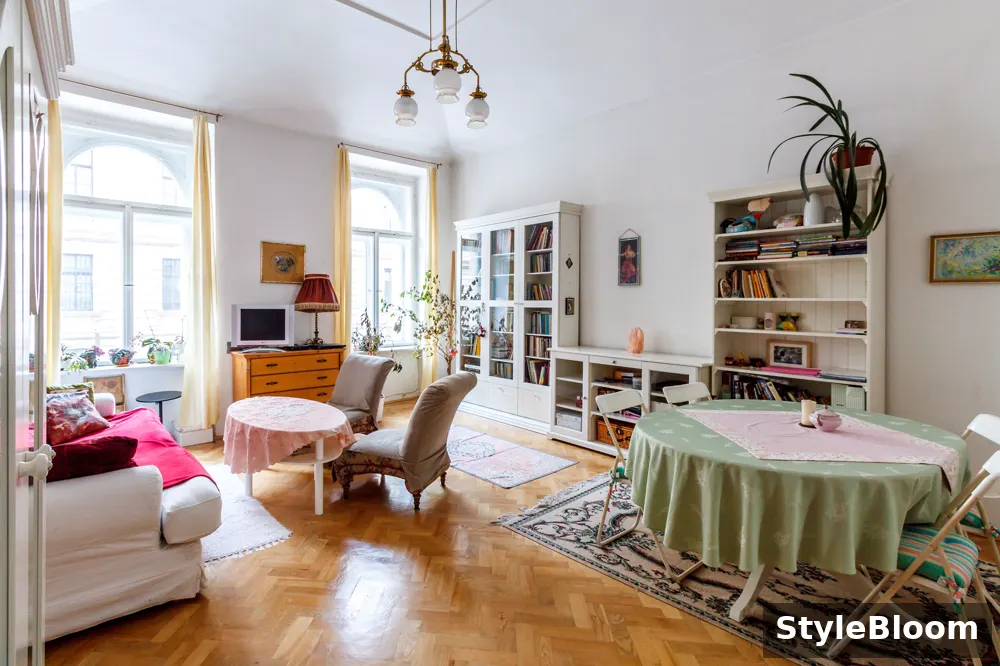
A home organization hub is a whole-house system with three parts: one command center where papers, schedules, and keys live, zones in every room where each category has a labeled home, and a short weekly reset that puts strays back. It is a system, not a single product or a one-weekend purge, and it works because every item has a place decided in advance.
No. A household organization hub manages papers, schedules, keys, and storage zones, while a smart home hub manages devices, chargers, and automations. The two can share one wall or cabinet, but they solve different problems, and this guide covers the household system, with a short note on keeping charging cables inside it.
Put the command center where your household already pauses: near the kitchen, the entryway, or a hallway wall that everyone passes daily. It must be visible and reachable without opening a closet, because a hub hidden behind a door stops being used within days.
A calendar everyone can see, one tray or slot per person for incoming papers, hooks for keys and bags, a small bin for outgoing items, and a charging spot for shared devices. Keep it to those five elements at first; extra boards and gadgets can wait until the five are habit.
Start with one wall and one zone, not the whole house: build the command center first, then organize the room that bothers you most, one category at a time. A whole-house system is built zone by zone over weeks, and the command center keeps the finished zones from sliding back while you work on the rest.
The zone system divides the home into areas by use — kitchen, entry, bedroom, bathroom, living, laundry, and office — and gives every category one labeled home inside its zone. When an item has exactly one home, putting it away takes seconds and finding it takes seconds, which is the whole point of the system.
Use vertical space, doors, and multi-use furniture, and give every category a smaller home rather than skipping the system. Small homes need zones more, not less, because there is no spare room to absorb strays, so a compact command center and strict one-in-one-out rules matter most.
Clear bins for pantries and closets so contents stay visible, baskets for living areas where looks matter, and a label maker or simple adhesive labels for every bin. Measure the shelf before buying anything, and buy one bin to test before buying a matching set.
Run a ten-minute weekly reset on the same day each week: return strays to their zones, clear the command center trays, and note one zone that needs attention. Systems fail without a reset because daily life constantly creates strays, and the reset is the habit that catches them.
Give each child one labeled bin or cubby for their own things, keep their zones low and reachable, and make putting away a two-minute end-of-day routine rather than a weekend event. Kids follow a system they can reach and understand, and they ignore one built for adult heights and adult patience.
Build the system around the one shared pain point everyone already complains about, such as lost keys or kitchen counter clutter, and make the new home easier than the old habit. Agreement follows results: when the keys are always on the hook, even skeptics start using the hook.
Yes. Use adhesive hooks, freestanding shelves, over-door racks, and tension rods instead of drilling, and keep the command center on a portable board or a single wall strip. Everything in this guide has a no-drill version, and the whole system can move with you.
It depends on the size of the home and the amount of clutter, but most homes reach a working system in three to six weekends of zone-by-zone work, with the command center done on the first evening. It is a gradual build, not a single weekend, and the house gets easier to live in after each zone, not only at the end.
Buying containers before decluttering, building a system nobody else in the house can reach or understand, hiding the command center behind a door, and skipping the weekly reset. Each of these has a simple fix, and this guide covers all four in the mistakes section.
No. Start with boxes, bags, and jars you already own, label them with paper and tape, and buy proper containers only after a zone has stayed organized for two weeks. Buying first is the most common waste in home organization, because unmeasured containers fit nothing.